Alabama Deer Antler Growth Timeline
It's always a bit of a mystery, isn't it? One week you're looking at a fresh scrape, wondering if it was made by a yearling or a mature buck, and the next you see a picture from a buddy's trail camera with a deer suddenly sporting impressive headgear. Understanding the rhythm of antler growth in Alabama's whitetails can feel like trying to predict a sudden summer storm, but it's crucial for effective scouting and management. This guide will walk you through the fascinating, year-long journey of antler development, from shedding to hardening, helping you anticipate what you'll see in the woods throughout the seasons.
The Annual Cycle of Antler Growth and Shedding
The life of a whitetail buck's antlers is a truly remarkable annual cycle, a process that’s deeply tied to their hormones, health, and environment. It's not just about a rack appearing for hunting season; it's a continuous, energy-intensive process that defines a buck's year.
Why Bucks Shed Antlers
For hunters, finding a shed antler is like finding buried treasure, but for the buck, it's a natural and necessary physiological process. The primary trigger for antler shedding is a drop in testosterone levels, which typically occurs in late winter or early spring, usually between January and March here in Alabama. As the rut winds down and breeding activity ceases, the buck's body no longer needs the antlers for fighting or display.
This drop in testosterone causes a weakening of the pedicle, the bony base on the skull from which the antler grows. Over a period of days or even weeks, an abscission layer forms at this connection point. Eventually, the antler detaches, often with very little effort. Sometimes you’ll find two sheds close together, meaning a buck lost them both around the same time, perhaps by shaking his head or bumping a tree. Other times, they can drop weeks apart. Factors like a buck's age, overall health, nutritional intake, and even whether he suffered an injury during the rut can influence the exact shedding timeline. A healthy, mature buck might hold his antlers longer than a younger, stressed, or injured animal. This is why you might spot a buck still carrying his rack well into March some years, especially if he's in prime condition or the winter has been mild, while another might be bareheaded by mid-January.
Early Antler Development: The Velvet Stage
No sooner do the old antlers fall off than the incredible process of regrowth begins, sometimes within just a few weeks. This new growth starts as soft, cartilaginous tissue, covered in a fuzzy, highly vascularized skin known as velvet. This velvet isn't just a covering; it's a living tissue, rich with blood vessels, nerves, and soft hairs that supply the rapidly growing bone underneath with vital nutrients, oxygen, and minerals.
Throughout spring and early summer, typically from April through August, antlers enter their most rapid growth phase. It’s truly astounding how quickly they can develop. A buck can add significant inches to his rack in a matter of days during peak growth. This is a period of immense nutritional demand for the buck, as his body is literally building bone at an incredible rate. Bucks that have access to high-quality forage rich in protein and minerals during this time will naturally develop larger, healthier antlers. Think about those lush green fields, abundant forbs, and tender new browse that pop up after spring rains. If a buck is struggling for food during this critical period, his antler growth will be stunted, regardless of his age or genetic potential. This early development, fueled by good nutrition, sets the stage for the final rack you'll see later in the year.
Mid-Summer Hardening and Early Season Appearance
As summer progresses and the days begin to shorten, a crucial shift occurs in the antler growth process, moving from soft, velvet-covered growth to hard, calcified bone, ready for the rigors of the upcoming breeding season.
Mineralization and Velvet Shedding
By late summer, usually in August or early September here in Alabama, the antlers are nearly at their full size for the year. At this point, the antlers undergo a process called mineralization, where calcium and other minerals are deposited, transforming the soft, spongy tissue into dense, hardened bone. Simultaneously, a surge in testosterone, prompted by the changing photoperiod (shorter days), signals the end of the velvet stage.
The velvet begins to dry up, restricting blood flow to the outer covering. This causes it to shrivel and become itchy for the buck. To relieve this discomfort and fully expose his new rack, the buck will rub his antlers vigorously on saplings, bushes, and low-hanging branches. This velvet shedding process can be quite dramatic, often leaving strips of bloody velvet hanging from the antlers, which eventually get rubbed clean. For hunters running trail cameras, this is a clear sign that fall is approaching and deer are transitioning from their summer patterns. When you see a buck with a clean, hard rack, you know he’s ready for action. This is the stage when we really start to get excited about the upcoming season, anticipating the bucks we've seen on camera throughout the summer.
Factors Influencing Antler Size and Quality
It’s often a point of conversation around the campfire: what makes some bucks grow bigger antlers than others? The truth is, it's a complex interplay of several factors, with some being far more influential than others. Understanding these helps in managing deer and setting realistic expectations.
| Factor | Impact on Antler Size and Quality |
|---|---|
| Age | This is arguably the most significant factor. Bucks generally do not reach their peak antler potential until they are 4.5 to 6.5 years old. Younger bucks, even with excellent nutrition, are still prioritizing body growth and development, which limits resources for antler production. They may have spikes or small forks in their early years, gradually adding mass and points as they mature. Hunting areas that allow bucks to reach these older age classes consistently produce larger racks. |
| Nutrition | Without adequate nutrition, even an older buck with great genetics won't produce a trophy rack. High-quality forage rich in protein, minerals (especially calcium and phosphorus), and vitamins is essential during the velvet growth phase. Access to diverse food sources like acorns, tender forbs, various browse species, and planted food plots (clover, chicory, winter wheat) directly correlates to antler development. Regions like Alabama’s Black Belt are famous for their rich soils, which produce superior forage, leading to bigger antlers compared to areas like the Piedmont, where soil quality can be more acidic and nutrient-poor, as discussed in Black Belt Versus Piedmont Deer. |
| Genetics | While often talked about, genetics are less controllable in a wild deer herd than age and nutrition. A buck inherits the potential for antler size and conformation from its parents. However, if that genetic potential isn't met with sufficient age and nutrition, it will never be fully expressed. It’s why you might see a yearling spike in an area that also produces Boone and Crockett bucks; that spike might have great genetics but simply isn't old enough yet. |
| Health | A buck's overall health plays a critical role. Any injury, disease, or prolonged period of stress can divert resources away from antler growth, impacting both size and symmetry. For example, a severe leg injury could cause a buck to grow an atypical antler on the opposite side due to the body compensating for the injury. While rare, understanding the general Alabama Deer Population Estimate and any known health challenges can give insight into herd health. |
The reality is that while genetics provide the blueprint, age and nutrition are the builders. If you want to see bigger antlers in your hunting area, focusing on letting bucks get older and ensuring they have access to quality food sources are the most impactful strategies.
Antler Maturity Through the Alabama Hunting Season
Once the velvet is shed, a buck's antlers are complete for the year, but their appearance and condition will change throughout the hunting season, reflecting the demanding lifestyle of a mature whitetail.
Antlers During the Rut
As Alabama’s deer season gets into full swing, especially leading up to and during the peak of the rut, a buck’s antlers become his primary tool for dominance and breeding. During this intense period, bucks use their antlers in a variety of ways: to rub on trees and scrape branches, leaving scent marks; to spar with other bucks to establish hierarchy; and, ultimately, to engage in serious fights with rivals for breeding rights.
These battles, while crucial for the reproductive cycle, can take a toll on a buck's rack. It's common to see tines broken, points chipped, or even entire sections of an antler snapped off during a fierce confrontation. A buck that went into the rut with a pristine, symmetrical rack might emerge looking a bit battered and bruised. Observing these battle scars can offer clues about the intensity of the rutting activity in a particular area. If you're hunting in the southern zones, where the rut often peaks later, as discussed in Hunting the Rut in the Southern Zones, you might notice bucks carrying their full racks for longer before significant breakage occurs, compared to those bucks in the northern zones where the rut can be earlier, detailed in Hunting the Rut in the Northern Zones. This wear and tear is a natural part of the cycle, a testament to the buck's efforts in propagating his genes.
Late Season Antlers and Approaching Shedding
By the late stages of Alabama's deer season, especially as January and February roll around, the antlers on many bucks will show significant signs of wear. The once sharp points might be blunted, the main beams scarred from countless rubs and encounters. The testosterone levels that soared during the rut gradually begin to decline post-breeding season. This physiological shift signals the body to prepare for the shedding process once again.
While the primary shedding trigger is the significant drop in testosterone, external factors can also play a role in hastening or delaying the process. Harsh, sustained cold weather can sometimes accelerate shedding as a buck's body diverts energy from antler maintenance to basic survival. Conversely, a mild winter with abundant late-season food sources, like those mentioned in Late-Season Food Sources for Alabama Whitetails, might allow a buck to hold his antlers longer. Hunters often refer to this time as the "shedding window," a period of anticipation for finding those coveted dropped antlers. Searching for sheds in late winter or early spring on known buck travel routes, feeding areas, or bedding thickets can be a rewarding way to extend your time in the woods and get a sneak peek at the potential of next year's crop of bucks. If you're specifically interested in When Alabama Bucks Shed Antlers, it's worth noting the variability across individual deer and local conditions.
Practical Implications for Alabama Hunters
Understanding the intricate timeline of antler growth isn't just for academic interest; it has real, tangible benefits for hunters looking to be more successful and make informed decisions in the field.
Scouting and Camera Strategies
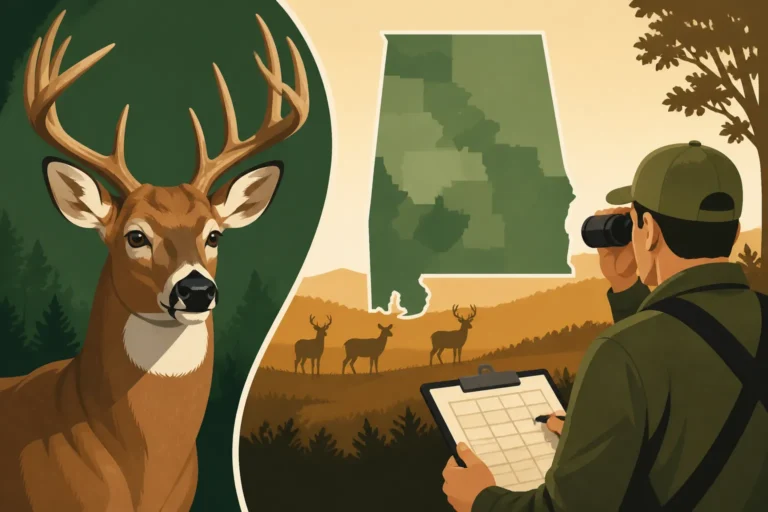
Knowing when antlers are growing, hardening, and being carried can dramatically improve your scouting efforts. For example, in the early summer, when antlers are in velvet and rapidly growing, bucks are typically less secretive and more predictable, often visiting consistent food sources. This is prime time to place trail cameras on mineral licks or lush food plots. You'll get clear pictures of individual bucks, allowing you to track their progress and gauge their potential for the upcoming season.
As velvet sheds in late summer, bucks become more reclusive, focusing on rubbing and scraping. This signals it's time to shift your camera locations to rub lines, scrape areas, and funnel points. Tools like GoHunt can be incredibly valuable here, allowing you to map out potential travel corridors, locate likely bedding areas, and analyze historical data on buck movement. By overlaying property lines and topographic features, you can identify key funnels or pinch points where bucks might be moving during this transitional period. GoHunt’s detailed maps and features allow hunters to strategically place cameras and interpret the patterns of buck movement based on the stage of antler development, giving you a better understanding of the bucks frequenting your hunting grounds well before opening day. Understanding Scouting Alabama Public Land Before Season becomes much more effective when you combine this knowledge with modern mapping tools.
Age Estimation and Management
For many Alabama hunters, especially those focused on quality deer management, understanding antler growth is vital for estimating a buck's age in the field and making ethical harvest decisions. While antlers alone aren't a perfect age indicator (a young buck with good nutrition might have a decent rack, while an older, stressed buck might have a smaller one), observing the progression of antler development year after year provides crucial clues. Generally, bucks will show a significant jump in antler size between 2.5 and 3.5 years old, then continue to add mass and length until they reach their peak between 4.5 and 6.5 years. After that, antler quality can decline with senescence.
This understanding is paramount for adherence to regulations like Alabama's Three-Buck Season Limit, where one buck must have at least four points on one side or a 3-inch main beam. Knowing the typical antler growth curve for your area helps you judge whether a buck truly meets the quality you're aiming for, rather than just raw size. If you're passing on younger bucks, you're investing in their future antler potential. This knowledge also informs discussions around Alabama Deer Antler Restrictions Debate, helping hunters understand the biological basis for various management strategies designed to shift the herd's age structure towards older, more mature animals. Effective management relies on letting young bucks walk to reach their full potential.
Understanding Regional Differences
While the general antler growth timeline remains consistent across Alabama, there are subtle but important regional differences driven by factors like soil quality, climate, and the timing of the rut. For example, bucks in the fertile Black Belt region, with its rich soils and abundant food sources, might exhibit faster antler growth and achieve larger racks at a younger age compared to bucks in the more rugged, less fertile areas of the Appalachian foothills. Similarly, the timing of the rut can vary significantly across Alabama’s five deer zones, as detailed in Comparing Alabama's Five Deer Zone Calendars, which can subtly influence when bucks shed velvet and begin to spar.
Hunters often find that consistently applying scouting methods and observations, perhaps tracking data within a platform like GoHunt that allows for localized data recording, reveals these regional nuances. A buck in the extreme southern part of the state might be velvet-free and rubbing weeks after his counterpart in northern Alabama due to differing rut triggers and forage availability. Recognizing these local patterns is key to adjusting your hunting tactics and expectations throughout the diverse landscapes of Alabama.
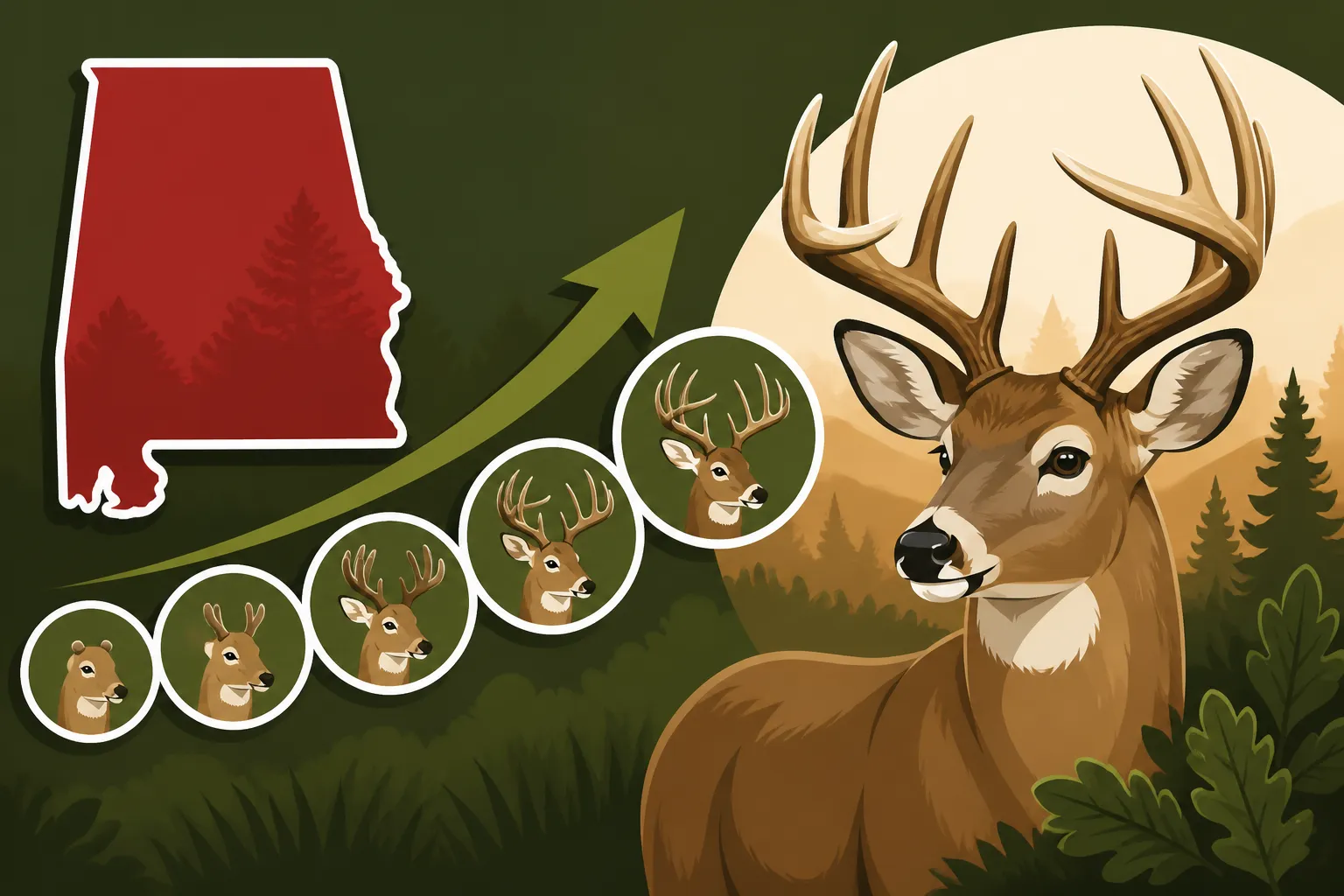
Antler Growth Timeline Overview
Here's a general overview of the typical antler growth timeline for white-tailed deer in Alabama, though individual deer and local conditions can cause variations:
| Period | Antler Stage | Key Activities/Observations |
|---|---|---|
| January – March | Shedding Old Antlers / Button Nubs | Bucks drop their antlers as testosterone levels decline. Look for shed antlers. Very soon after, new pedicle growth begins, often just small hairy bumps or "buttons." Factors like age, nutrition, and health can influence the exact shedding date. |
| April – May | Early Velvet Growth | Rapid initial growth of new antlers, covered in velvet. Antlers are soft and highly vascularized. Bucks begin to look more "normal" after shedding. Critical period for protein and mineral intake from fresh spring forage. |
| June – July | Peak Velvet Growth | Antlers grow rapidly, adding length and developing tines. Bucks are typically focused on feeding to fuel this growth. Often seen in consistent patterns around food sources. This is a great time to track individual bucks on trail cameras. |
| August – Early September | Velvet Hardening / Shedding | Antlers reach full size and begin to mineralize, turning from soft cartilage to hard bone. Testosterone surge triggers velvet to dry and peel off. Bucks rub trees to remove velvet, often leaving bloody strips. Bucks become harder to pattern as they transition to fall behaviors. |
| September – November | Hard Antlers / Rutting Behavior | Antlers are fully hardened and clean. Bucks use antlers for sparring, rubbing, and fighting during the rut. Expect some antler breakage from combat. This is prime hunting season across much of Alabama. |
| December – January | Worn Antlers / Post-Rut | Antlers may show significant wear and tear from rut activity. Testosterone levels gradually decline after the breeding season. Bucks are often focused on rebuilding body condition after the rut. Hunters might see bucks carrying antlers well into January. |
Disclaimer
This article is for general informational purposes only and does not constitute professional advice. Laws, prices and regulations vary by location and change over time. Consult a qualified professional for guidance on your specific situation.