Alabama Duck Daily Bag Limit
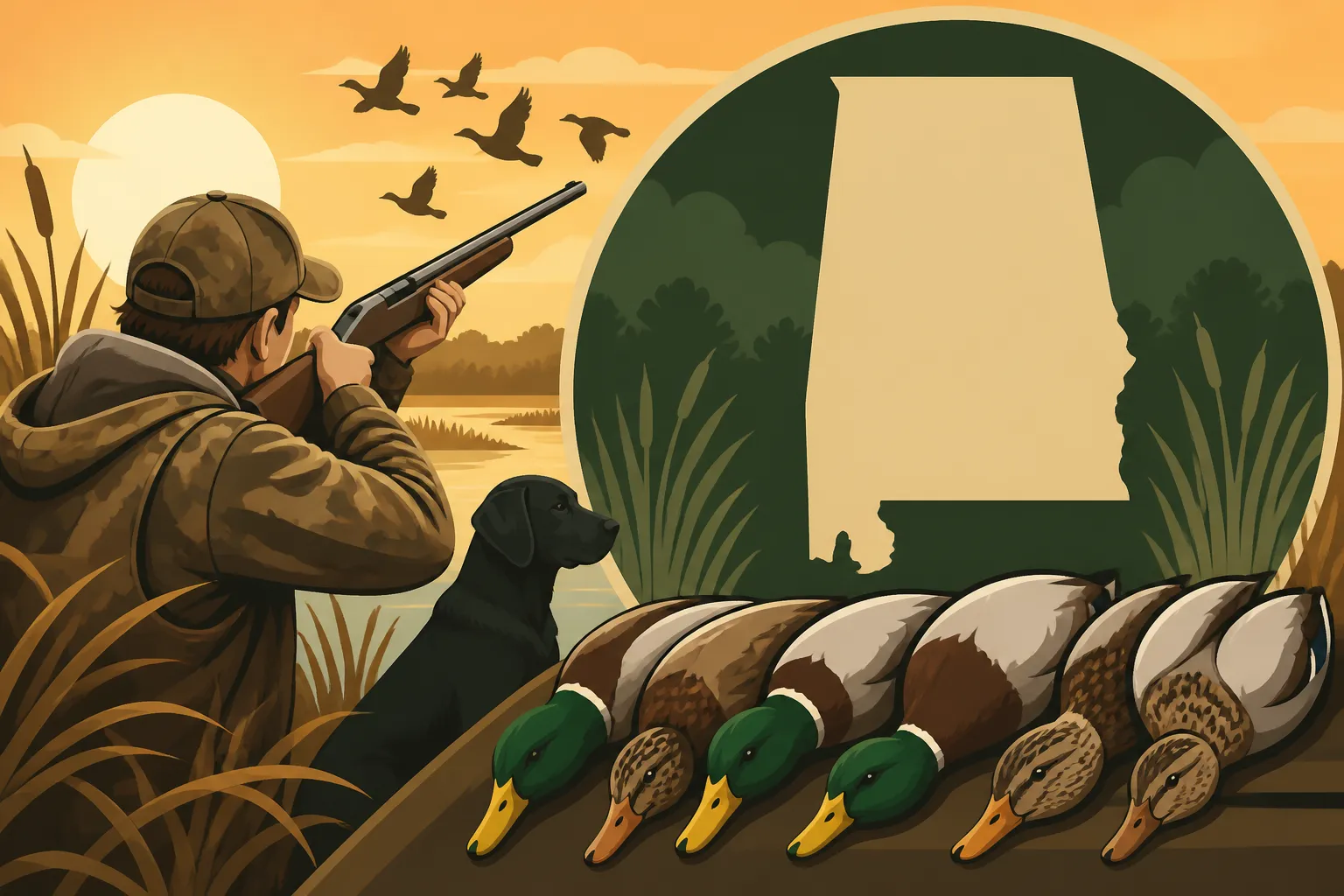
There's nothing quite like the thrill of a morning in the duck blind, the whistle of wings overhead, and the splashdown of a decoy spread. But let's be honest, trying to keep up with Alabama's duck daily bag limits can feel like a pop quiz you're never quite prepared for. Between aggregate limits and species-specific restrictions, it's easy to get confused and, worse, accidentally break a rule. This guide is here to untangle the complexities, giving you a clear, comprehensive breakdown of what you can legally harvest in an Alabama duck season.
Understanding Alabama's Duck Season Structure
Before we dive into the specific numbers, it’s really helpful to understand the bigger picture of how duck hunting regulations are set. It’s not just a bunch of folks in an office throwing darts at a board; there's a lot of science and conservation effort behind every rule. Knowing this context can help you appreciate why these limits are in place and why they sometimes feel like they change with the wind.
Why Bag Limits Matter So Much
When you’re out there in the marsh or flooded timber, the bag limit isn't just a number to hit; it's a critical tool for conservation. These limits are designed by wildlife biologists to ensure sustainable populations of waterfowl, managing harvest pressure so that enough birds survive to breed and migrate again next year. Without them, it would be all too easy for hunters to unintentionally deplete local or regional duck populations, impacting future generations of both birds and hunters. Think about it: every duck you pass on or every bird you correctly identify and don't shoot if it's over the limit, contributes to the overall health of the flyway. The penalties for violating these limits aren't just a slap on the wrist either; they can include hefty fines, license revocation, and even confiscation of equipment. So, staying informed isn't just about legality; it's about being a responsible steward of the resource we all cherish.
The Different Duck Zones in Alabama
One of the first things to wrap your head around is that "Alabama duck season" isn't a singular, monolithic entity. Our state is actually divided into specific duck hunting zones – typically North, Middle, and South. These zones aren't just arbitrary lines on a map; they reflect different ecological conditions, migration patterns, and waterfowl concentrations across the state. For instance, the northern zone might see different species arriving earlier or later than the southern zone, or experience different weather patterns that impact migration. Consequently, season dates and specific hunting regulations, while often similar, can vary slightly from one zone to another. It's absolutely crucial to know which zone your hunting grounds fall into, as getting this wrong could mean hunting out of season or misinterpreting bag limits. The official Outdoor Alabama website is always your best friend for verifying current zone boundaries and dates. For a deeper dive into these specifics, check out our guide on Alabama Waterfowl Zones and Seasons.
Federal and State Regulations at Play
The regulatory framework for waterfowl hunting is a fascinating dance between federal and state agencies, and understanding it can make the seemingly complex rules a lot clearer. At the top, the U.S. Fish and Wildlife Service (USFWS) sets the broad, overarching frameworks for migratory bird hunting. They look at continent-wide population surveys, breeding success data, and habitat conditions across the entire Mississippi Flyway (which Alabama is part of) to determine things like maximum season lengths and the most restrictive daily bag limits for certain species. These are the federal "guardrails." Then, within those federal guidelines, states like Alabama have the authority to set their own more specific season dates, shooting hours, and daily bag limits. This two-tiered system allows for both broad conservation efforts across North America and localized management that accounts for Alabama's unique waterfowl populations and hunting traditions. This means if the USFWS says you can harvest up to six ducks per day, Alabama might decide to implement a six-duck limit, or they might set it lower for specific conservation goals.
Deciphering the Alabama Duck Daily Bag Limit
Alright, let's get down to the brass tacks: what you can actually shoot on a given day in Alabama. It’s not just one number you need to remember; it’s a tiered system that takes into account the overall aggregate and then specific species within that aggregate. It can be a little like a math problem sometimes, especially when you’re cold, wet, and tired!
The Standard Aggregate Daily Bag Limit
Generally, the Alabama duck daily bag limit is an aggregate number, meaning it's the total number of ducks you can harvest, regardless of species, in a single day. For many seasons, this has been set at six ducks per day. Now, that sounds simple enough, right? Just six ducks, any kind. But here's where it gets interesting, and where many hunters (especially new ones) can run into trouble. This "six duck" total isn't a free-for-all; it's the maximum you can reach, and within that six-duck limit, there are often stricter sub-limits for certain species. So, while you might be able to bring home six ducks, you can't necessarily bring home six mallards or six wood ducks, depending on the specific rules for that season. It’s a crucial distinction, and one that requires hunters to be constantly aware of what’s flying into their spread. Make sure you're checking the official Outdoor Alabama regulations each year for the precise Alabama Duck Daily Bag Limit as these can shift based on population data.
Species-Specific Restrictions Within the Bag
This is truly where the duck hunting regulations can feel like a mind-bender. While you have an overall aggregate limit, many individual species have much tighter restrictions. These are put in place because certain species might have lower populations, slower breeding rates, or are simply more vulnerable to overharvest.
Here’s a common breakdown of species with specific restrictions that typically fall within the overall aggregate limit (e.g., of six ducks):
| Species | Typical Daily Limit (within aggregate) | Notes |
|---|---|---|
| Mallard (hen) | 2 | Often specifically restricted to two hens, while the drake limit is more generous. Identification is key! |
| Mottled Duck | 1 | A species of special concern, often a very low limit. |
| Black Duck | 1 | Another species with tighter protection due to population concerns. |
| Pintail | 1 | Known for declining populations, pintail limits are typically very restrictive. |
| Canvasback | 2 | A sought-after diving duck, usually a low limit. |
| Redhead | 2 | Another diving duck with specific restrictions. |
| Wood Duck | 3 | A popular puddle duck, often with a dedicated, lower limit. |
| Scaup (Bluebill) | 1 or 2 (often split) | Can vary greatly depending on "early" and "late" splits of the season. Always check! |
| Gadwall, Wigeon, Shoveler, Green-winged Teal, Blue-winged Teal, Ring-necked Duck, Bufflehead, Goldeneye, etc. | Varies, usually no specific individual limit within the aggregate | These species typically fill out the remainder of your aggregate limit once you've accounted for the more restricted birds. |
So, for example, if the aggregate limit is six ducks, and you shoot three wood ducks (hitting that specific limit), you'd then only be able to shoot three other ducks that aren't restricted. You couldn't, for instance, shoot three wood ducks and then four mallard drakes, because that would put you over your aggregate of six. It's a balancing act! Keeping track of these numbers in the field can be tough, especially when the birds are flying fast. That's why tools like the GoHunt app or a quick glance at the official Outdoor Alabama hunting guide are absolutely critical. Knowing your ducks on the wing becomes paramount, so you don't accidentally exceed a species-specific limit. This intricate system is designed to allow harvest of abundant species while carefully protecting those that need a bit more help to thrive.
The Gadwall, Wigeon, Shoveler, and Teal Factor
While some species have those strict, low limits, others often serve as the "filler" for your daily bag, meaning you can shoot more of them (up to your aggregate limit) without running into a specific individual species cap. This is where species like gadwalls, American wigeon, northern shovelers, green-winged teal, blue-winged teal, and even ring-necked ducks frequently come into play.
For these species, the regulations typically don't impose a specific limit beyond the overall daily aggregate. So, if the overall aggregate limit is six ducks, and you've already harvested one pintail and one black duck (hitting their respective individual limits), you would still have four spots left in your bag. You could then fill those four spots with any combination of gadwalls, wigeon, various teal, or other non-specifically-restricted ducks, as long as you don't exceed the total of six birds. This flexibility allows hunters to still have a productive day afield even if the more tightly regulated species aren't cooperating. It's a smart way to manage the harvest, directing pressure towards more abundant waterfowl populations. Remember, this isn't a license to just blast away, but it does offer more options for hunters to reach their daily aggregate.
Practical Application and Staying Compliant
Knowing the rules on paper is one thing, but applying them in the cold, misty reality of an Alabama duck blind is another. Compliance isn’t just about reciting limits; it’s about making smart decisions before, during, and after your hunt.
Identifying Ducks on the Wing
This is arguably the most critical skill for any waterfowl hunter, and frankly, it's where many of us (myself included, in my earlier years!) have struggled. It's one thing to look at a picture in a bird guide, and another entirely to identify a duck flashing through the fog at 40 yards, wings cupped for a landing. But if you don't know what you're shooting, you can easily violate a species-specific bag limit. Imagine seeing a pair of what you think are mallard drakes, only to find out post-shot that one was actually a mottled duck or a black duck, and you've already got one in your bag – now you're over the limit.
Focus on key identifiers: size, shape, flight pattern (is it agile like a teal or heavier like a mallard?), and vocalizations (a whistling wigeon is distinct). Pay attention to bill color, speculum color, and overall body plumage. Dedicated practice is essential. Spend time scouting without a gun, just watching birds. Use guides, watch online videos, and utilize apps. The more familiar you become with distinguishing features, the more confident you'll be when it's time to make the call. This skill isn't just about avoiding a ticket; it's about ethical hunting and respecting the resource. While you're working on identifying ducks on the wing, you might also find our guide on Alabama Duck Harvest Numbers helpful for understanding population trends.
Possession Limits and Transporting Your Harvest
Beyond the daily bag limit, there's also the possession limit, which is a separate but equally important rule to understand. The possession limit dictates the maximum number of migratory game birds that can be in your possession at any given time, including birds at your home, in your vehicle, or at a processing facility. In Alabama, for most migratory birds, the possession limit is typically three times the daily bag limit. So, if the daily aggregate duck limit is six, your possession limit would be 18 ducks.
This is especially important for multi-day hunts. Let's say you hunt Friday and bag six ducks, then hunt Saturday and bag six more. You're legal on both days for daily limits. However, if you store those 12 ducks at your camp and then go out Sunday and bag another six, bringing your total at camp to 18, you're at your possession limit. You cannot take another duck until some of those harvested birds are consumed or legally transferred to someone else.
When transporting your harvest, especially if you're traveling a significant distance or across state lines, remember the "wing attached" rule. For most migratory birds, you must retain one fully feathered wing on the bird until it reaches your permanent residence or a processing facility. This allows game wardens to identify the species and ensure compliance with species-specific limits. Also, don't forget the required paperwork: in addition to your regular Alabama hunting license, you need a federal duck stamp (available at post offices or online) and an Alabama migratory bird stamp and Harvest Information Program (HIP) certification. Without these, even a perfectly legal bag can become an illegal one. You can find more details on these requirements in our articles about Alabama Duck Stamp Requirement and Alabama Migratory Bird Certification.
Essential Resources for Up-to-Date Information
Given how dynamic waterfowl regulations can be, relying on last year's guide or what your buddy thinks are the rules is a recipe for disaster. It is absolutely your responsibility as a hunter to stay current. Here are the essential resources you should be checking before every season, and even during it:
- Outdoor Alabama Website: This is the official source for all Alabama hunting regulations. They publish the annual migratory bird hunting guide, which details season dates, bag limits, shooting hours, and any special provisions for each zone. It's usually available online as a PDF well before the season opens.
- Official Hunting & Fishing Guide: Pick up a physical copy wherever hunting licenses are sold. Sometimes it's easier to flip through a paper guide in the blind than try to navigate a website on a cold morning with spotty cell service.
- Mobile Apps: Many hunters find apps incredibly useful for quick reference. While there are several options, apps like GoHunt can provide readily accessible summaries of regulations, often with visual aids for species identification. Just remember to cross-reference with the official Outdoor Alabama guide to ensure absolute accuracy, as app data can sometimes lag slightly behind official updates.
- ADCNR Local Offices: If you have specific questions or need clarification on a particularly tricky rule, don't hesitate to call your local Alabama Department of Conservation and Natural Resources (ADCNR) office. Their biologists and enforcement officers are there to help you understand and comply with the regulations.
Remember, conditions change, and so do duck populations. Factors like drought, avian influenza outbreaks, or successful breeding seasons can all influence bag limits. Checking these resources regularly, especially before Hunting the Tennessee River Delta for Waterfowl or any other significant hunt, will keep you on the right side of the law and ensure you're participating in responsible waterfowl management.
Common Misconceptions and Troubleshooting
Even with all the information in the world, there are still some common areas where hunters get tangled up. Let's clear up a few of these, because a small misunderstanding can lead to big problems in the field.
The "What Counts as a Duck?" Conundrum
This might sound like a silly question, but it’s a source of confusion for many. When we talk about the "duck daily bag limit," we're generally referring to what are commonly known as "ducks" – mallards, wood ducks, teal, gadwalls, divers, etc. However, many waterfowl hunters also pursue other migratory birds that aren't counted towards the regular duck limit, but have their own separate limits.
The prime examples here are coots and mergansers. In Alabama, coots typically have a very generous daily bag limit (often 15 birds), and mergansers (common, red-breasted, and hooded) also have their own specific aggregate limit (often five, with only two being hooded mergansers). Critically, these birds do not count towards your overall six-duck aggregate. So, if you shoot six ducks and five mergansers, you are perfectly legal, assuming all species-specific restrictions within the duck limit were also observed. It's important to know the difference and understand that while they're often hunted in the same environments, they fall under distinct regulatory categories. Don't let a zealous coot shoot push you over your duck limit!
Youth Hunters and Special Regulations
Alabama is fantastic about encouraging the next generation of hunters, and that includes specific provisions for youth. While the standard daily bag limits generally apply to all legal hunters regardless of age, there are often special youth-only waterfowl hunting days. During these designated weekends, typically before the regular season opens or during a mid-season break, only youth hunters (usually under 16, though ages can vary) are allowed to hunt migratory waterfowl.
The intent behind these youth days is to provide a less pressured, more focused opportunity for young hunters to learn and experience waterfowl hunting, often with an adult mentor present. On these days, youth hunters still observe the regular daily bag and possession limits for ducks and other migratory birds. The key difference is that adults accompanying them cannot hunt. It's a wonderful way to introduce kids to the sport without the added competition of a full public hunting day. If you're planning on taking a young hunter out, make sure to review the specifics of Alabama Mentored Youth Hunting Rules and the youth-only waterfowl dates in the annual regulations.
Why Limits Change Season to Season
It can be frustrating when you remember a certain limit from a few years ago, only to find it's different this season. "Why do they keep changing the rules?" is a common lament. But there's a very good, science-based reason behind these shifts. Duck limits, especially for species like pintails, canvasbacks, and scaup, are incredibly sensitive to annual population fluctuations.
Wildlife biologists conduct extensive surveys each year, particularly focusing on breeding ground conditions in the northern prairies where many of our ducks originate. They assess factors like spring rainfall (which creates critical nesting habitat), nesting success, and brood survival rates. On the wintering grounds, they also monitor habitat quality and disease prevalence. For example, a severe drought in the prairies can lead to fewer successful nests and lower duck populations, which then often results in more restrictive bag limits the following season to protect the breeding stock. Conversely, a few good water years can lead to more liberal limits.
Beyond habitat and breeding success, emerging threats like Avian Influenza in Alabama Birds can also prompt regulatory changes to minimize transmission or protect vulnerable populations. This adaptive management approach is essential for ensuring the long-term health and abundance of migratory waterfowl. So, while it might seem inconvenient, these changes are a sign that wildlife agencies are actively managing the resource based on the best available science, all with the goal of ensuring future generations can experience the same incredible opportunities that we do. Understanding this helps us appreciate that these rules aren't arbitrary but vital to conservation, ensuring we'll have birds flying on the Alabama Waterfowl Migration Timing for years to come.
Disclaimer
The information provided in this article is for general guidance only and is not a substitute for the official regulations published by the Alabama Department of Conservation and Natural Resources (ADCNR). Hunting laws and regulations can change annually or even mid-season. Always consult the current official Alabama Hunting and Fishing Digest or the Outdoor Alabama website before heading afield to ensure full compliance.