Sitting a Field Edge in Late Season
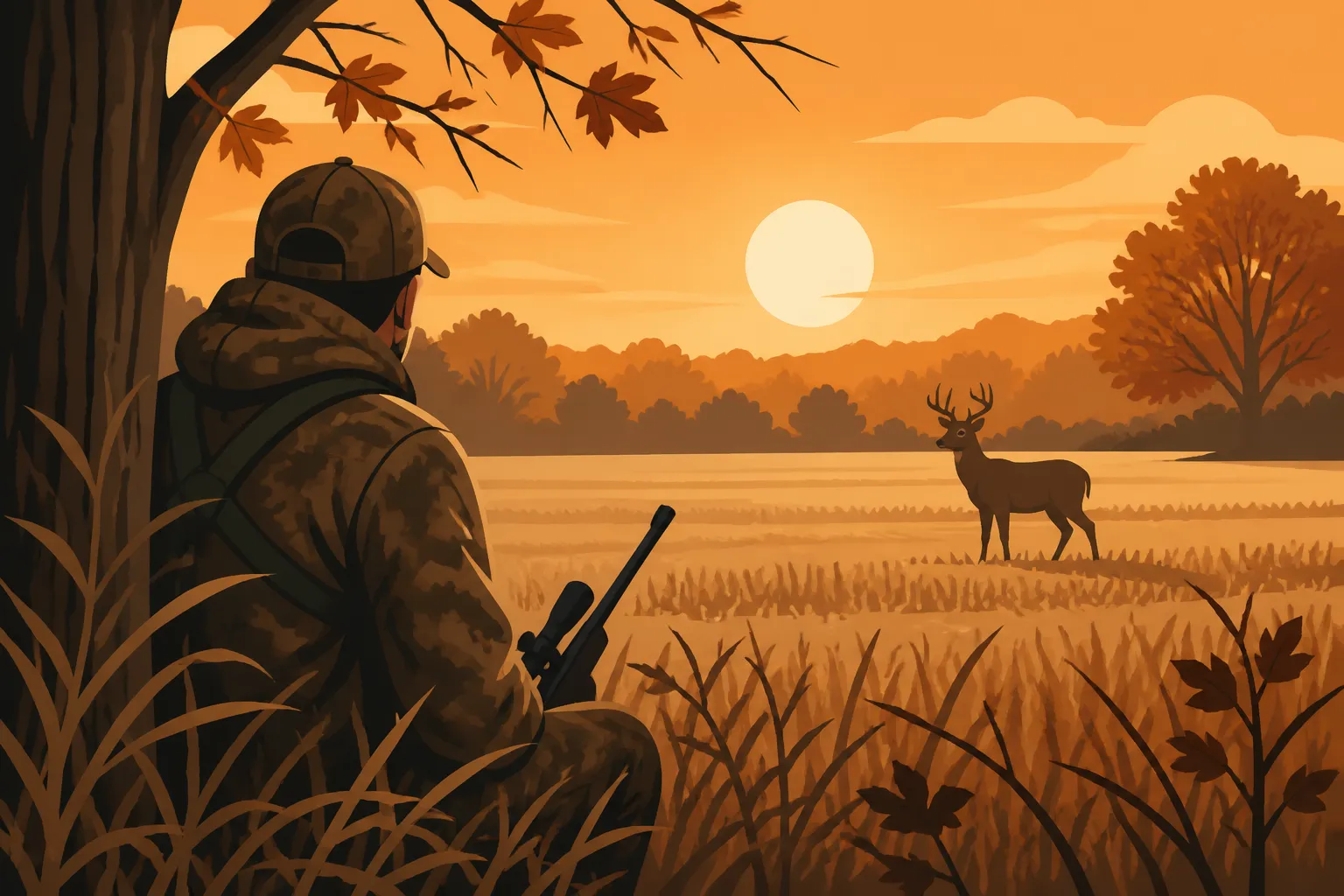
As the late season grinds on here in Alabama, many of us start to feel that familiar frustration: where did all the deer go? The woods seem empty, the acorns are long gone, and those early-season hotspots are now ghost towns. But don't give up hope just yet! This comprehensive guide is all about honing in on one of the most productive, yet often overlooked, strategies for bagging a buck or filling an antlerless tag in the closing weeks: sitting a field edge.
Why Field Edges Become Late-Season Hotspots
When the leaves are off the trees and the temperatures dip, the deer's priorities shift dramatically. Survival becomes paramount, and that means finding calories. Those open fields, which might have seemed too exposed earlier in the year, transform into crucial feeding grounds.
The Scarcity of Natural Food Sources
Let's be honest, by mid-December, and certainly into January and February, the natural buffet for deer has dwindled significantly. The early-fall acorn crop, especially from those coveted white oaks, has been devoured, either by deer, squirrels, or the hordes of feral hogs that roam our woods. You might find a few scattered red oak acorns still lingering, but they're often few and far between and don't provide the consistent energy deer need. Browse, the tender shoots and twigs deer nibble on, becomes tougher, less palatable, and picked over.
This scarcity forces deer to look elsewhere, and that's where agricultural fields or planted green fields become absolute magnets. Think about it: a deer needs to eat a lot to maintain its body weight, especially if it's a buck recovering from the rut or a doe carrying fawns. They'll spend more time, and take greater risks, to access a concentrated food source. It's a simple equation of energy in versus energy out, and those dense patches of nutrition offer the best return on their foraging investment when everything else is sparse. This is especially true as you get closer to the end of the season, extending even into the Hunting Into the Late February Either-Sex Window.
The Allure of Green Fields and Crop Residue
Alabama's diverse agricultural landscape means we have a variety of fields that can draw deer like magnets in the late season. Winter wheat, rye, and clover plots, whether planted by farmers or hunters, are verdant oases in an otherwise brown and barren landscape. These tender green shoots are highly digestible and packed with nutrients that deer crave.
Beyond planted food plots, don't overlook the residual value of harvested crop fields. A standing soybean field, even after combines have run through, will have dropped beans that deer will meticulously glean. The same goes for cornfields, where shattered ears or individual kernels can provide a concentrated food source. Even a cotton field, which might seem counterintuitive, can offer food. Deer will browse the leftover stalks or find weeds growing amongst them. I've personally seen deer literally picking leftover cotton bolls, likely for the few seeds inside. These overlooked spots, like a Hunting Standing Cotton for Late Deer scenario, can be surprisingly productive. The contrast between these lush or calorie-rich fields and the surrounding sparse woods is stark, making them obvious destinations for hungry deer.
Thermal Cover and Escape Routes
A field edge isn't just about food; it's also about security. Deer, especially older, wiser animals, are incredibly wary of exposing themselves in the open. The ideal late-season field edge isn't just a straight line of trees. It's often irregular, with fingers of timber extending into the field, brushy fence rows, or creek bottoms that provide immediate thermal cover and a quick escape route.
During cold snaps, the sun can warm the edge of a timberline quicker than the deep woods, creating a microclimate that deer appreciate. Plus, they need places to bed down and feel safe before venturing out to feed. A thicket or dense pine stand right on the edge of a field offers both concealment and warmth. When you're scouting, pay close attention to where the cover is thickest and where those transition zones meet the open field. This proximity to dense cover gives deer the confidence to feed, knowing they can vanish in a heartbeat if danger appears.
Scouting and Setup for Success on Field Edges
You can't just pick any old field edge and expect success. Late-season deer are under immense pressure and are acutely aware of their surroundings. Intelligent scouting and strategic setup are absolutely critical.
Identifying Key Entry and Exit Points
Deer are creatures of habit, even more so when food is scarce and pressure is high. They won't just randomly pop out into a field. Look for distinct trails leading from the woods into the field. These paths are often well-worn, especially at pinch points where a finger of timber extends into the field or where a creek crosses a field edge. These funnel points are high-traffic areas.
Also, consider the time of day. In the evenings, deer will typically stage in the cover just inside the woods before moving into the open field at last light. In the mornings, they'll often feed into the field and then retreat back into cover before sunrise. Identifying these specific entry and exit corridors, even down to the individual deer path, is paramount. You can confirm these routes by looking for fresh tracks in the mud or frost, or by strategically placing trail cameras. Tools like GoHunt's mapping features can help you visualize these natural funnels and approach routes on a satellite image, saving you boots-on-the-ground time.
Understanding Wind, Thermals, and Sun Position
Ignoring the wind in late season is a surefire way to educate every deer on your property. Deer rely on their nose more than any other sense. For field edge hunting, this means understanding not just the prevailing wind, but also how thermals play a role, especially at dawn and dusk. In the mornings, cold air sinks, pulling your scent downhill and out into the field. In the evenings, as the ground cools, air rises, carrying your scent upwards.
Consider the sun's position too. If you're sitting a western field edge for an evening hunt, you'll be staring directly into the setting sun, making it hard to see and potentially silhouetting you. Conversely, on a morning hunt, the sun could be at your back, illuminating you for any deer approaching from the opposite side. Always try to position yourself so the wind is in your favor, blowing your scent away from where you expect deer to approach or feed, and so the sun isn't a hindrance. Sometimes, this means choosing one side of a field over another, or even opting for a ground blind over a treestand. This keen awareness of Wind and Thermals on a Piedmont Ridge applies just as much to field edges.
Strategic Stand or Blind Placement
Once you've identified key entry points and understood the wind, it's time to pick your specific setup location. For elevated stands, look for a mature oak or pine that offers good cover and allows you to watch the entire field edge without excessive movement. Aim for a spot that's 20-30 yards inside the timber line, not right on the edge, to give you some concealment and a better shot angle into the field.
Ground blinds are fantastic for late-season field edges, especially if you can get them brushed in well in advance. They offer incredible concealment from wary deer and protection from the elements. Just remember to set them up with shooting lanes that cover those identified entry points. If you're hunting public land or don't want to leave a blind out, natural cover like a downed tree, a thick cedar, or a cluster of pines can also work, provided you can remain absolutely motionless. Whether you're in a stand or a blind, your access and exit routes are critical. You must be able to get to and from your setup without spooking deer that might already be in the field or approaching. You can learn more about specific tactics like Brushing In a Blind on a Field Edge for maximum effectiveness.
| Setup Type | Pros | Cons | Ideal Scenario |
|---|---|---|---|
| Elevated Treestand | Good vantage, scent dispersal, less visible. | Requires suitable trees, can be cold, harder to move. | Overlooking consistent entry points from dense timber. |
| Ground Blind | Excellent concealment, weather protection, comfortable. | Requires brushing in, potential scent pooling, limited vision. | Where natural cover is sparse, or for all-day sits. |
| Natural Cover | Highly adaptable, mobile, no setup time. | Minimal concealment, requires stillness, poor sight lines. | Quick scout-and-hunt situations, high-pressure areas. |
Effective Tactics for Hunting Late-Season Field Edges
Even with the perfect setup, the late season demands a refined approach. Deer are smarter, warier, and less forgiving of mistakes.
Timing Your Sit for Peak Activity
In the late season, deer generally don't move as much during the middle of the day. Their primary movement is driven by hunger and takes place closer to dawn and dusk. For most field edges, especially those frequented by mature bucks, evening hunts are often the most productive. Deer will typically move out of their bedding areas in the late afternoon, stage just inside the timber, and then step into the field as light fades.
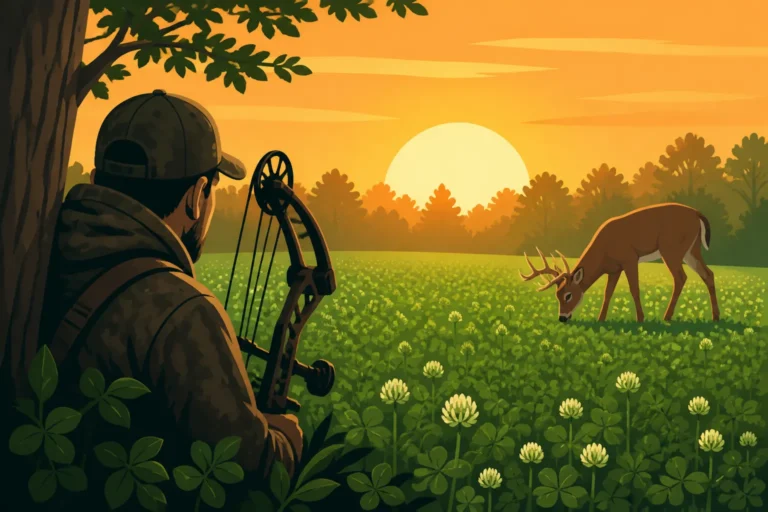
However, don't completely rule out morning hunts. If deer have been feeding in the field all night, a cold morning might keep them grazing longer before they retreat to bed. A classic strategy is to slip in before first light and catch them still feeding, or just as they're heading back to cover. This is particularly effective in a Hunting a Clover Plot at First Light scenario. Pay attention to weather patterns; a sudden cold front after a warm spell can often trigger increased daytime movement as deer need more calories to stay warm.
Minimizing Pressure and Managing Your Approach
This might be the single most important piece of advice for late-season hunting: minimize your intrusion. Every time you walk into a property, every time you bump a deer, you're educating them. In late season, deer are already on high alert from months of hunting pressure. Choose your hunting days wisely, perhaps focusing on weekdays or during adverse weather when other hunters might stay home.
Your entry and exit routes must be meticulously planned. Approach your stand or blind in the dark, using a route that avoids potential bedding areas or known travel corridors. The same goes for leaving. Wait until it's completely dark before climbing down, even if it means sitting for an extra 30 minutes. If you bump deer on your way out, they'll associate that field with danger. This low-impact approach is crucial, especially when Hunting Pressure on Alabama Public Land where deer are already sensitive. Using an app like GoHunt to mark your exact entry and exit routes, away from known deer travel, can make a huge difference.
Utilizing Calls and Scents Sparingly
Unlike the rut, when bucks might come charging into a grunt tube, late-season calling is usually a more subtle affair. Deer are focused on food and survival, not breeding. A soft doe bleat or a few quiet grunts might pique their curiosity, especially if you see a deer at a distance that needs a little encouragement. However, aggressive calling can easily spook an already wary animal.
Scents can be used, but again, sparingly. Stick to general curiosity scents or doe-in-estrus scents (if you believe a secondary rut is occurring in your area), but avoid overdoing it. Place a scent wick on a branch near your stand, or use a dripper, but don't douse the whole area. The goal is to subtly attract, not alarm. Focus primarily on being a silent, scent-free predator, letting the natural draw of the food plot do most of the work for you. Remember that Rattling Volume in Thick Pine Cover or even using Grunt Calls in Mature Alabama Timber will be very different in the open environment of a field edge.
Overcoming Common Late-Season Field Edge Challenges
Late-season hunting isn't always easy. There are specific hurdles that field edge hunters in Alabama frequently face, but with a bit of foresight, you can overcome them.
Dealing with Hunting Pressure
One of the biggest frustrations, especially on public land or smaller private tracts, is dealing with other hunters. More pressure means deer become more nocturnal, moving into fields primarily after dark. If you're encountering a lot of other hunters on foot or seeing vehicles frequently, you might need to adjust.
First, try to find areas that see less pressure. This might mean walking a little further, going into thicker cover along the field edge, or even hunting during the middle of the day if you know deer are only using the field briefly. Use mapping tools like GoHunt to identify areas less accessible by roads, or look for features that might deter other hunters, such as wet areas or dense briar patches. Sometimes, simply altering your timing can help; hunting during a light drizzle or a cold snap might mean fewer competitors. Finding Ground Others Walk Past is often key to late-season success.
Adapting to Unpredictable Weather
Alabama weather in late season can be a roller coaster. You might have a 70-degree day in January, followed by a freezing cold front. Deer movement is heavily influenced by these changes. During warm spells, deer might move very little during daylight, primarily moving at night. In these conditions, focusing on the last hour of daylight and the first hour of legal shooting light is even more critical. Consider a Warm-Weather Sitting Strategy in Alabama for those unusually balmy winter days.
However, a sharp cold front can invigorate deer. They need to pack on calories to stay warm, often leading to increased daytime activity. If a front is coming through, try to be in your stand as the temperatures drop, or the day after. Rain, especially a light, steady rain, can also be a good time to hunt. The rain dampens sound, masking your approach and movement, and deer often feel more secure moving during these times. Just be sure you're dressed for it!
Managing Expectation and Persistence
Let's be realistic: late-season hunting is tough. Deer numbers are down, they're wary, and daylight activity can be limited. Don't go into it expecting to see dozens of deer every sit. It's often a grind, requiring patience and persistence. There will be slow sits, and you might even go several hunts without seeing anything.
The key is to stay positive, learn from every outing, and adjust your tactics. Did the wind shift? Did you spook a squirrel that alerted deer? Are there fresh tracks somewhere you didn't anticipate? Every piece of information helps you refine your strategy. And remember, that one deer, the one that finally steps out into the field edge, can make all the previous frustrations melt away. It's often that last sliver of hope, that commitment to Hunting Deer After a Cold Front or persisting through a warm spell, that finally pays off.
Disclaimer
Hunting is an inherently dangerous activity. Always prioritize safety, understand and follow all local and state regulations, and obtain proper licenses and permits. The information provided here is for educational purposes only and should not replace professional guidance or personal judgment.