Lauderdale County CWD Zone Public Ground
If you hunt in Northwest Alabama, especially around Lauderdale County, you've likely felt the added layer of complexity and worry that Chronic Wasting Disease (CWD) brings to our cherished deer season. It's tough enough finding good public ground, but throw CWD regulations into the mix, and it can feel overwhelming trying to figure out where you can hunt, what you need to do differently, and how to stay compliant. This guide is here to walk you through everything you need to know about hunting public lands in Lauderdale County's CWD Management Zone, ensuring you're prepared for a safe, responsible, and compliant hunt.
Understanding the CWD Zone in Lauderdale County
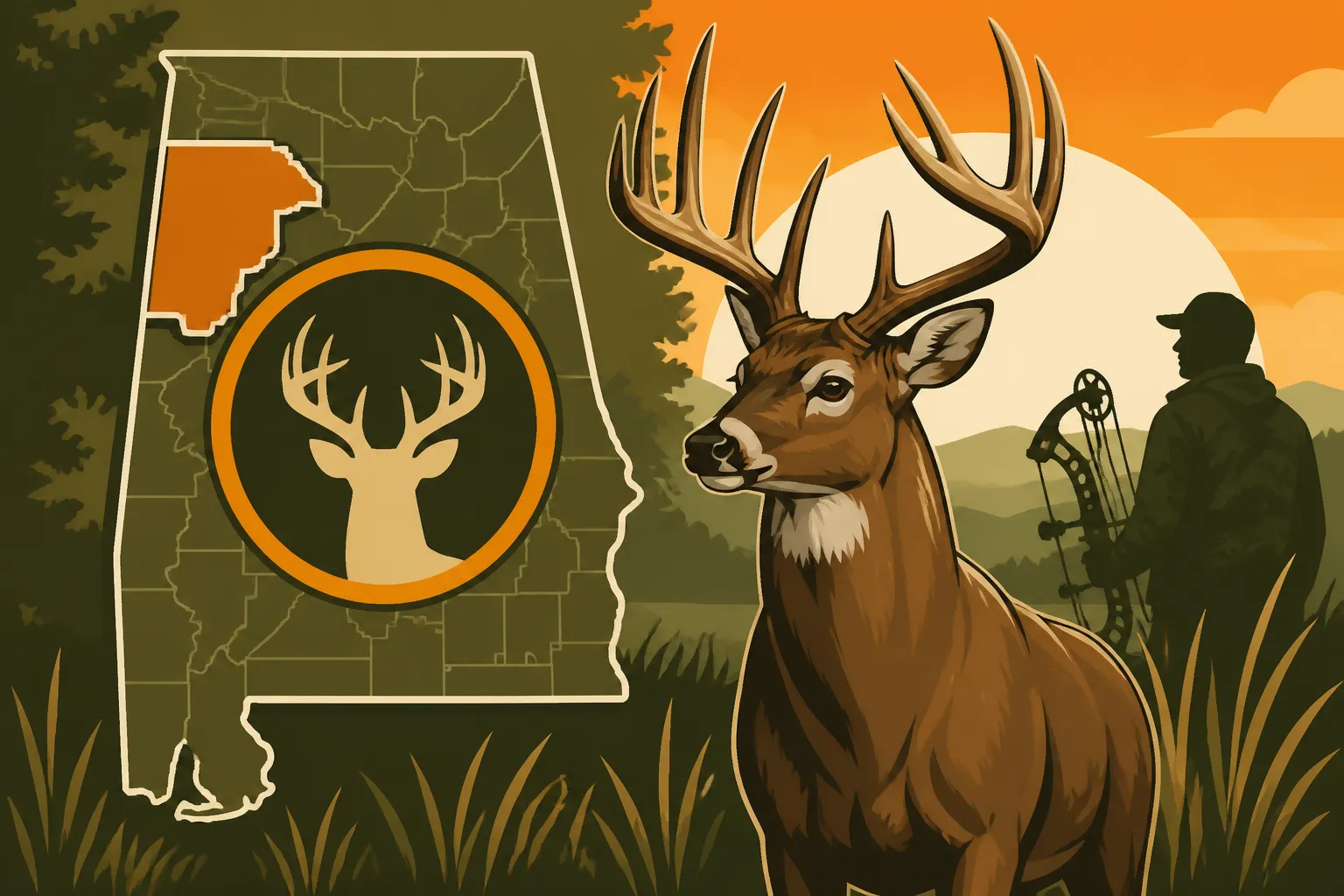
For Alabama hunters, the emergence of Chronic Wasting Disease (CWD) has brought a new set of challenges and responsibilities, particularly for those of us who frequent the northwestern part of the state. Lauderdale County isn't just near the CWD Management Zone (CMZ); it's an integral part of it, which significantly impacts how we plan and execute our hunts on public ground. It's a tough pill to swallow, knowing this disease is on our home turf, but understanding the details is the first step toward adapting.
What is the CWD Management Zone (CMZ)?
Let's be honest, hearing about CWD can sound a bit like a scary science lesson, but it’s crucial for us hunters to grasp. CWD is a neurological disease that affects deer, elk, and moose. It's always fatal and, unfortunately, there's no known cure or vaccine. The scary part is that it's highly contagious and can persist in the environment for a long time. When the Alabama Department of Conservation and Natural Resources (ADCNR) confirmed CWD in our state, they didn't just throw up their hands. Instead, they quickly established the CWD Management Zone (CMZ), a designated area where specific hunting and carcass movement rules are put in place to monitor the disease and try to slow its spread. This zone is a direct response to confirmed cases, a concentrated effort to protect our deer herd and our hunting heritage. For more general information on the disease, check out Chronic Wasting Disease Risk in Alabama.
Specifics of Lauderdale County's CWD Status
Lauderdale County is unfortunately at the forefront of Alabama's CWD situation. It's one of the primary counties that form the core of the state's CWD Management Zone. This designation isn't arbitrary; it's based on where CWD-positive deer have been found. The presence of CWD in Lauderdale County means that any public lands within its borders, or even parts of it, fall under the strict CMZ rules. This includes restrictions on how you can transport deer harvested from the county and often involves mandatory testing requirements during specific periods. When you're planning a hunt here, you can't just think about deer season dates; you also have to consider the CWD overlay. This is precisely Which Counties Sit in Alabama's CWD Zone, and Lauderdale County is a significant player in Why Lauderdale County Drives Alabama's CWD Count. It’s vital to remember that these rules are dynamic, so always check the latest ADCNR updates before heading out.
Impact on Hunters and Hunting Practices
The CWD Management Zone status in Lauderdale County means hunting here isn't quite business as usual. The most immediate impacts you'll feel are usually around carcass movement and mandatory testing. You can't just harvest a deer and drive it straight home if you live outside the CMZ without following specific guidelines for carcass debone and processing. This can be a real headache, especially after a long day in the woods, but it's a necessary step to prevent the disease from spreading further. Beyond that, the ADCNR often institutes special Mandatory CWD Testing Weekends where you're required to bring your harvested deer to a sampling station for CWD testing. This means an extra stop, extra time, and sometimes waiting for results. It also means you need to be familiar with Alabama Carcass Movement Restrictions if you plan to take any part of your deer out of the CWD zone. It’s an adjustment, for sure, and it can add a layer of stress that none of us want, but it's essential for the health of our deer and the future of hunting in Alabama.
Identifying Public Hunting Opportunities Within Lauderdale's CWD Zone
Despite the challenges presented by CWD, Lauderdale County still offers public hunting opportunities for those willing to adapt to the regulations. It requires a bit more planning and awareness, but the chance to be in the woods is always worth it. Understanding where these public lands are and what rules apply to them specifically is key to a successful and compliant hunt.
Key Public Lands in Lauderdale County
When you're looking for public land opportunities within the CWD Management Zone in Lauderdale County, one name likely comes to mind first: Freedom Hills Wildlife Management Area (WMA). This WMA is a significant tract of public ground that provides diverse hunting experiences. It's a beautiful area, but because it falls within the CWD zone, every hunter who steps foot there needs to be acutely aware of the CWD-specific rules. While other small public access points might exist, Freedom Hills is the primary destination for many, offering a mix of hardwoods and pines, ridges, and creek bottoms that can hold deer. Finding good access can sometimes be a challenge, but using mapping tools like onX Hunt can reveal lesser-known entry points and help you identify property boundaries, making your scouting trips much more productive.
Navigating Regulations and Restrictions
Hunting public land in Lauderdale County, particularly in the CMZ, means doing your homework on regulations. The ADCNR typically has specific rules that apply to WMAs within the CWD zone, which can differ slightly from the broader state regulations. For example, during mandatory sampling weekends, you'll need to know the location of CWD sampling stations and their operating hours. You might be required to present your harvested deer (or at least the head) for testing. Furthermore, rules regarding the transport of deer carcasses are particularly stringent. Generally, you can't take whole carcasses out of the CMZ. This usually means you need to debone the meat and remove the skull plate before leaving the area, leaving the high-risk parts of the animal behind. This can be cumbersome, especially if you're not used to processing a deer in the field, but it's a critical measure to prevent CWD spread. Always consult the current Alabama Hunting and Fishing Digest and the ADCNR website for the latest updates before your hunt.
Scouting and Accessing Public Ground
Scouting is always crucial for public land success, but it takes on added importance in a CWD zone. You're not just looking for deer sign; you're also assessing potential processing sites or routes to sampling stations. Before you even set foot in the woods, leverage mapping applications. Tools like onX Hunt are invaluable for identifying property lines, access roads, and potential pinch points or bedding areas. They can help you visualize the terrain and plan your approach, identifying areas that might see less pressure. GoHunt also offers robust mapping features that can help you scout from your couch, pinpointing features like elevation changes, water sources, and cover that might attract deer. Once you're on the ground, focus on finding fresh sign, but also keep an eye out for any ADCNR signage regarding CWD stations or special area rules. It's also a good idea to scout for areas that would allow for discreet field dressing and carcass breakdown, should you be successful. Planning your Entry Routes Through Standing Peanuts or Hunting a Funnel Between Two Creek Bottoms becomes even more strategic with these added considerations.
Practical Hunting Strategies in a CWD-Affected Public Land Setting
Hunting in a CWD-affected area means integrating disease prevention and regulation compliance into your core hunting strategy. It’s not just about the shot anymore; it’s about what happens before and after, too. This isn't meant to scare anyone off, but rather to empower you with the knowledge to hunt responsibly and confidently.
Adapting to CWD-Specific Rules in the Field
When you're actually out in the woods in Lauderdale County's CMZ, these CWD rules need to be top of mind, not an afterthought. For instance, if it's one of the designated mandatory testing weekends, you need to have a plan for getting your deer to a sampling station. This might mean hunting closer to an access point or having a vehicle ready for transport. Instead of immediately dragging a whole deer out, you might need to perform a field debone right where the deer fell, or at least take the animal to a nearby accessible spot for quartering. This can be extra work, especially in warm Alabama weather, but it's part of the new reality. Think about what tools you’ll need: sharp knives, game bags, perhaps a small tarp or even a portable saw to remove the skull cap. Knowing Field Dressing a Deer in Warm Weather is critical here, as fast, clean work minimizes spoilage and disease risk. It sounds like a lot, but with a little preparation, it becomes a routine part of the hunt.
Ethical Considerations and Disease Prevention
Beyond the regulations, there's a strong ethical component to hunting in a CWD zone. As hunters, we are stewards of the land and its wildlife. This means doing everything we can to prevent the spread of CWD. One of the most important things is to never feed deer or create artificial congregation points. While well-intentioned, baiting can increase deer-to-deer contact, which is exactly how CWD spreads. Be mindful of where you dispose of carcass parts; if you debone in the field, ensure those high-risk parts (brain, spinal cord, lymph nodes) are left at the kill site or disposed of properly as per ADCNR guidelines. Also, be aware of any signs of sick or unhealthy deer and report them to the ADCNR; this helps with disease monitoring and management. For more on this, look into Alabama Wildlife Disease Monitoring. We all want a healthy deer herd, and our actions as individual hunters play a huge role in achieving that.
Deer Behavior and Tactics in Pressured Public Lands
Public lands, by their nature, often see more hunting pressure, and in a CWD zone like Lauderdale County, this pressure might even be amplified as hunters seek out accessible areas. Deer on these lands are savvy. They know how to avoid hunters, often bedding in the thickest cover or utilizing nocturnal movements. To be successful, you need to adjust your tactics. Focus on early morning and late evening hunts, and consider hunting mid-week when pressure is typically lower. Scouting before the season is absolutely paramount. Look for areas that are difficult to access, perhaps a mile or more from a main road, or across natural barriers like creeks. These often hold older, less pressured deer. Think about Hunting a Ridge-Top Saddle for Rutting Bucks or Working a Creek Bottom for Late-Season Deer. Utilize natural funnels, pinch points, and cover changes. Understanding Hunting Pressure on Alabama Public Land is key, and sometimes it means literally walking past others to find the ground they overlook. Using a ground blind can also be an effective strategy for minimizing your footprint in these sensitive areas, especially if you're hunting smaller, more isolated pockets.
Resources and Tools for Hunters in Lauderdale County's CWD Zone
Navigating the complexities of hunting in a CWD-affected area like Lauderdale County means having the right tools and information at your fingertips. From mapping applications to official state resources, being well-informed is your best defense against confusion and non-compliance.
Essential Mapping and Information Tools
In today's hunting world, digital mapping tools are non-negotiable, especially when you're dealing with specific zones and regulations. onX Hunt is an absolute game-changer. It allows you to see property boundaries, public land ownership, and often even topographic details and satellite imagery right on your phone. In Lauderdale County, this means you can clearly see the borders of Freedom Hills WMA, differentiate it from private land, and identify potential CWD sampling station locations if marked. It’s also incredibly useful for marking your stands, tracking routes, and finding your way back in the dark. Another excellent resource is GoHunt, which provides detailed maps and often overlays with specific hunt unit information or regulation highlights. Both tools are invaluable for pre-season scouting and real-time navigation in the field. They help you stay found, stay legal, and stay on target. You can also explore Scouting With the Outdoor Alabama App for additional official mapping resources.
ADCNR Resources and Updates
The Alabama Department of Conservation and Natural Resources (ADCNR) is your primary source for official CWD information and hunting regulations. Their website is regularly updated with the latest news, changes to the CWD Management Zone boundaries, and specific guidelines for carcass handling and testing locations. It's not the most thrilling reading, I know, but it's essential. Make it a habit to check their "Wildlife and Freshwater Fisheries" section before every season, and especially before heading to Lauderdale County. They often publish maps of the CMZ, lists of mandatory testing dates, and detailed instructions on how to submit a deer for testing. Don't rely on word-of-mouth for critical regulations; go straight to the source. This is particularly important for understanding How Many Deer Have Tested CWD-Positive in Alabama and any new directives regarding the high-risk zone.
Local Support and Community
While the internet provides a wealth of information, there's immense value in connecting with local hunters and conservation groups. Join a local hunting club or forum where you can discuss CWD-specific challenges and solutions with people who are actively hunting in Lauderdale County. These communities can share firsthand experiences with sampling stations, offer advice on field processing, and even point out common pitfalls. Local ADCNR biologists are also excellent resources. They're usually passionate about wildlife and are often willing to answer questions or clarify regulations. Don't be afraid to reach out to them. They're on the front lines of CWD management and can offer insights that you won't find anywhere else. Remember, we're all in this together, and sharing knowledge makes us all better, more responsible hunters.
To help visualize some of the key differences when hunting in a CWD zone, here's a quick comparison:
| Aspect | General Alabama Public Land Hunt | Lauderdale County CWD Zone Public Land Hunt |
|---|---|---|
| Carcass Movement | Generally unrestricted, within bag limits | Specific restrictions on moving high-risk parts out of CMZ |
| Mandatory Testing | Typically voluntary or localized at specific check stations | Mandatory testing on specified dates/locations within the CMZ |
| Baiting Rules | Follows general statewide baiting regulations | Often stricter, with prohibitions or restrictions within CMZ (check current regs) |
| Information Check | Annual digest and ADCNR website | Annual digest, ADCNR website, and specific CWD updates/maps |
| Equipment Prep | Standard hunting gear | Standard gear + field processing tools (knives, bags, saw if needed) |
| Scouting Focus | Deer sign, terrain, access | Deer sign, terrain, access + CWD station locations, field processing spots |
Disclaimer
This article is for general informational purposes only and does not constitute professional advice. Laws, prices and regulations vary by location and change over time. Consult a qualified professional for guidance on your specific situation.