Perry County Public Hunting Ground
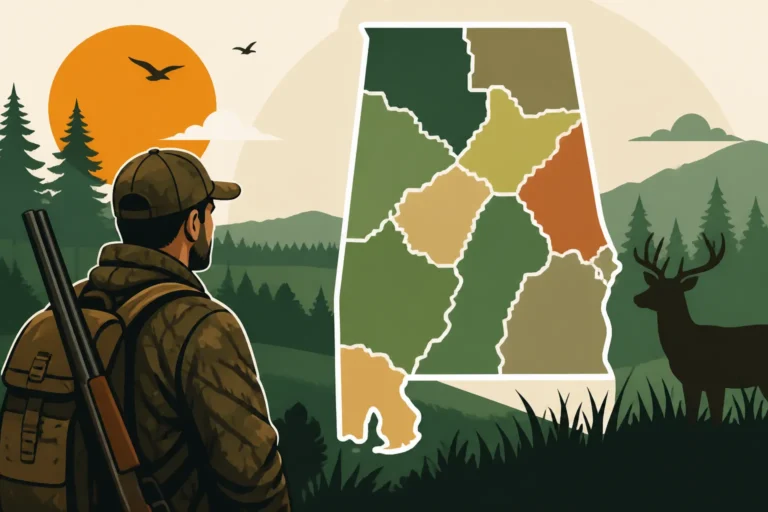
Finding quality public hunting ground in Alabama can sometimes feel like searching for a hidden gem, especially in counties that might not always be the first mentioned in online forums or magazine articles. Perry County, nestled in the heart of Alabama, offers some fantastic public hunting opportunities, primarily through its expansive sections of the Talladega National Forest's Oakmulgee District. This guide is here to walk you through what to expect, how to prepare, and how to make the most of your hunting adventures in this often-overlooked area.
The Unique Landscape of Perry County's Public Hunting Ground
Perry County's public hunting opportunities are predominantly found within the Oakmulgee District of the Talladega National Forest. This isn't just a patch of woods; it's a significant portion of central Alabama, offering a diverse landscape that provides habitat for a variety of game species. Understanding this unique environment is key to planning a successful hunt.
Oakmulgee District's Diverse Habitat
The Oakmulgee District is characterized by a mix of mature pine plantations, hardwood bottoms, natural pine stands, and areas of mixed pine-hardwood forests. This mosaic of habitat types is what makes it so appealing to hunters. The pine plantations, often found on higher ground, offer dense bedding cover for deer and excellent thermal cover in cooler months. These areas can be tough to navigate, but they often hold bucks that are looking for seclusion.
Conversely, the hardwood bottoms, often paralleling creek drainages and river systems, are crucial for food production. Think about those big white oaks dropping acorns in the fall, drawing deer, turkeys, and squirrels from miles around. These areas are magnets for game and can be prime locations for setting up a stand or still-hunting. The mixed forests provide transition zones, travel corridors, and diverse forage, acting as vital bridges between bedding and feeding areas. Understanding these transitions is paramount, especially when you're scouting with a tool like onX Hunt, which can help you identify these different habitat types from an aerial perspective.
Terrain and Its Impact on Hunting
While Perry County might not have the dramatic elevation changes of North Alabama's mountains, the Oakmulgee District still offers plenty of topographical variety that influences game movement. You'll encounter rolling hills, subtle ridges, and numerous creek drainages. These features are not just pretty scenery; they are natural funnels and pinch points for deer. A small saddle between two hills or a narrow strip of hardwoods along a creek bottom can be a high-traffic area, especially during the rut.
The creek bottoms, while often productive, can also present challenges. They can be muddy, overgrown, and difficult to cross, particularly after heavy rains. However, these obstacles often mean fewer hunters venture into these areas, creating sanctuaries for wary game. Navigating this terrain requires good physical conditioning and the right gear, including waterproof boots and perhaps even a machete for particularly dense thickets. Pay attention to how the terrain directs game movement, as deer will almost always choose the path of least resistance.
Prime Game Species and Seasons in Perry County
The Oakmulgee District in Perry County offers fantastic opportunities for several popular game species. Knowing what's available and when is the first step in planning your hunt.
White-tailed Deer Opportunities
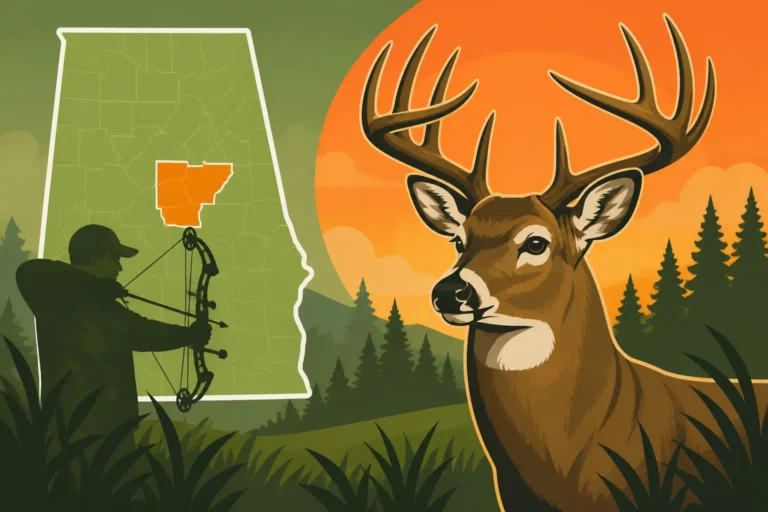
Deer hunting is arguably the most popular pursuit in the Oakmulgee District. While it may not produce the consistent "trophy" bucks of some of Alabama's private Black Belt lands, it offers solid numbers of deer and the chance at a mature animal for those willing to put in the effort. Perry County falls within Alabama's Zone A for deer season, which typically boasts one of the longest seasons in the state, often extending well into February. This provides ample opportunity to hunt various phases of the season, from early archery to the late-season gun hunts.
The deer herd here thrives on the diverse forage provided by the mixed forest. Scouting for sign like rubs, scrapes, and tracks is critical, especially in the transition zones between pines and hardwoods, or along creek edges. The rut timing in this central Alabama region can vary, but generally peaks in mid-January, offering some exciting hunting during the later parts of the gun season. Hunters should be mindful of the statewide three-buck limit and the daily antlerless limits that apply to Zone A. For a deeper dive into statewide rules, check out Alabama Deer Season Structure Explained.
Wild Turkey Prospects
Spring turkey hunting in the Oakmulgee District can be an incredibly rewarding experience. The mix of hardwoods and pines provides excellent roosting and foraging habitat for gobblers. You'll find turkeys strutting in open timber, along logging roads, and often in the hardwood bottoms where they feed on insects and acorns. Perry County generally falls into Zone 1 for Alabama's spring turkey season, meaning an earlier opener, usually in mid-March.
Calling tactics vary, but often a run-and-gun approach, covering ground and stopping to call, can be effective, especially on public land where gobblers might be more spread out. Don't be afraid to put on some miles. Early morning roost hunts are classic, but midday hunting can also be productive as birds move off the roost and look for hens. Remember to always check the most current regulations for bag limits and hunting hours. Spring Turkey Hunting in Alabama offers more information on these majestic birds.
Small Game and Feral Hog Hunting
Beyond deer and turkey, Perry County's public lands offer excellent opportunities for small game and year-round hunting for feral hogs. Squirrel hunting is fantastic in the hardwood bottoms, especially during acorn crop years. Both gray and fox squirrels are present, providing fast-paced action and delicious table fare. Rabbit hunting can also be productive in areas with thick brush and briar patches, particularly along the edges of clearcuts or natural openings.
Feral hogs are a persistent presence throughout the Oakmulgee District and can be hunted year-round with no bag limit on private land, and specific rules on public land. These destructive animals offer a thrilling challenge and are excellent for the dinner plate. Look for hog rooting, wallows, and tracks near water sources and dense cover. Night hunting with lights is often allowed on private land, but always check specific WMA rules for public land. For detailed hog hunting strategies, refer to Hunting Alabama's Year-Round Feral Hogs.
Navigating and Strategizing Your Hunt in Perry County
Hunting public land in Perry County, particularly the vast Oakmulgee District, requires more than just showing up. Strategic planning, effective navigation, and adaptable tactics are crucial for success.
Essential Mapping and Scouting Tools
In today's hunting world, digital mapping tools are indispensable, especially on public land. Services like onX Hunt are game-changers for navigating the Oakmulgee. You can clearly see property lines, which is critical to avoid trespassing onto adjacent private land. Imagine you're deep in the woods, following a hot deer track, and suddenly you realize you're about to cross onto private property. With onX Hunt, you can see those boundaries instantly on your phone or GPS device, allowing you to stay legal and respectful. This tool also displays topographical features, different habitat types (like timber stands or clearcuts), water sources, and access roads, all vital for effective scouting and planning your approach.
Before you even step foot in the woods, use these tools to virtually scout. Look for funnels, saddles, creek crossings, and areas of dense cover adjacent to potential food sources. Identifying potential bedding areas and travel corridors from an aerial perspective can save you countless hours of unproductive walking once you're on the ground. When you do scout in person, use your mapping app to mark sign like rubs, scrapes, tracks, and droppings. This helps build a picture of deer movement over time. Scouting Alabama Public Land Before Season provides further insights into effective scouting strategies.
Access Points and Terrain Challenges
Accessing the remote corners of the Oakmulgee District often involves a network of gravel and dirt logging roads. While many of these are open to public vehicle traffic, some may be gated or impassable during wet weather. Always be prepared to walk significant distances from main access points. The deeper you go, the less hunting pressure you're likely to encounter. Parking strategically and being willing to hike a mile or two can put you into areas that others overlook.
The terrain itself presents its own challenges. Creek bottoms can be muddy and overgrown, requiring cautious navigation. Steep ravines and dense thickets, while difficult to traverse, can also serve as natural sanctuaries for game. Learning to read the terrain and anticipate how game will use it—for travel, bedding, or feeding—is a skill that improves with experience. Consider the wind and thermals, especially in hilly terrain. Warm air rises and cool air falls, which can significantly affect how your scent travels in these varied landscapes.
Stand Placement and Hunting Tactics
For deer hunting, selecting the right stand location is paramount. Look for pinch points where natural features funnel deer movement, such as a narrow strip of hardwoods between two clearcuts or a saddle on a ridge. Creek crossings are also excellent spots, especially during the rut when bucks are actively searching for does. Consider Treestand Setups in Talladega National Forest for detailed advice on positioning. Don't overlook ground blinds, especially in areas with good natural cover. Using a Ground Blind on Alabama Public Land offers practical tips.
Still-hunting can also be very effective in the Oakmulgee, particularly in the mixed pine-hardwood stands or along the edges of dense cover. Move slowly, pause frequently, and use your binoculars to pick apart the cover. The key is to blend in and become part of the environment, observing more than you move. For turkeys, understanding their vocalizations and patterns is crucial. Roosting birds the evening before a hunt can give you a significant advantage, allowing you to set up close before daylight.
Understanding Regulations and Ethical Considerations
Hunting on public land in Perry County, like anywhere else, comes with a set of rules and responsibilities. Adhering to these regulations and practicing ethical hunting is vital for maintaining access and preserving the resource.
Navigating WMA and National Forest Specific Rules
While the Oakmulgee District is part of the Talladega National Forest, it also functions as a Wildlife Management Area (WMA). This means there are often specific WMA regulations that hunters must follow in addition to statewide rules. These can include mandatory WMA permits, sign-in/sign-out procedures, restrictions on vehicle access, weapon limitations for certain seasons, and rules regarding baiting or feeding. It's crucial to obtain and read the current year's Alabama Hunting and Fishing Digest, available online through the Outdoor Alabama website or at license vendors. Many WMAs require a specific Alabama WMA Permit Requirement in addition to your general hunting license.
Always check for any local area closures, specific zones within the WMA, or mandatory harvest reporting requirements for particular game species. Ignorance of the rules is not an excuse, and violations can result in significant fines and loss of hunting privileges.
Respecting Private Land Boundaries
Public land often borders private property, and it's your responsibility to know exactly where those lines are. This is where a reliable mapping application like onX Hunt becomes invaluable. Before you head into the woods, especially when exploring new areas, download offline maps to your device. Cell service can be spotty or non-existent in many parts of the Oakmulgee, and having your maps readily available ensures you can always determine your exact location relative to property lines.
Trespassing, even accidentally, can lead to serious legal issues and gives all hunters a bad name. Always err on the side of caution. If you're unsure, stay away from the boundary. Furthermore, retrieving game that crosses onto private land requires explicit permission from the landowner. Never assume you can cross a fence or enter private property without first asking. For a comprehensive understanding of these laws, review Alabama Trespass and Permission Law.
Public Land Ethics and Hunting Pressure
Hunting on public land often means sharing the woods with other sportsmen and women. Practicing good public land ethics ensures a positive experience for everyone and helps maintain access for future generations. This includes:
- Minimizing Your Impact: Pack out everything you pack in. Leave no trash, spent shells, or flagging tape behind. The goal is to leave the area better than you found it.
- Respecting Other Hunters: If you encounter another hunter, give them plenty of space. Avoid crowding their setup or disturbing their hunt. A friendly wave and a wide berth are usually all that's needed. Knowing that Hunting Pressure on Alabama Public Land is a reality, consider trying to find ground that others walk past.
- Vehicle and ATV Use: Adhere strictly to any rules regarding vehicle or ATV use on WMA roads. Many roads are gated or designated for foot traffic only.
- Safety First: Always follow firearm safety rules, wear appropriate blaze orange during applicable seasons, and clearly identify your target before shooting.
By understanding the unique landscape, knowing your target species, utilizing modern tools for navigation, and respecting all regulations and fellow hunters, you can have a very rewarding experience exploring the public hunting grounds of Perry County.
| Game Species | Primary Season | Key Tactics in Perry County Oakmulgee | Typical Habitat in Oakmulgee |
|---|---|---|---|
| White-tailed Deer | Archery: Mid-Oct to Mid-Feb | Stand hunting near funnels/food | Mixed pine-hardwood, creek bottoms, dense pine plantations |
| Gun: Late-Nov to Mid-Feb | Still-hunting, rattling/grunting (rut) | ||
| Wild Turkey | Spring: Mid-March to Mid-May | Run-and-gun, calling, roost hunting | Hardwood ridges, open pine timber, creek edges |
| Feral Hog | Year-round (private land) | Trapping, night hunting (private land) | Creek bottoms, rooting areas, dense cover |
| WMA rules apply on public land | Stalking, stand hunting (public land) | ||
| Squirrel | Mid-Sept to Mid-March | Still-hunting, sitting near mast trees | Hardwood bottoms, oak ridges |
| Rabbit | Mid-Sept to Mid-March | Stalking thickets, working fencerows | Briar patches, clearcut edges, dense undergrowth |
Disclaimer
This article is for general informational purposes only and does not constitute professional advice. Laws, prices and regulations vary by location and change over time. Consult a qualified professional for guidance on your specific situation.