Bringing Your Own Rifle on a Guided Hunt
It's a common dilemma when you've finally booked that exciting guided hunt here in Alabama: you've got your trusty rifle, the one you've sighted in countless times, the one that feels like an extension of yourself. But then you wonder, "Should I bring it, or will the outfitter have gear for me?" This guide will walk you through all the ins and outs of bringing your own rifle on an Alabama guided hunt, from making the initial inquiry to packing it safely, ensuring your trip is as smooth and successful as possible.
Why You'd Want to Bring Your Own Rifle on a Guided Hunt
There's a deep connection many of us have with our hunting rifles. It's not just a tool; it's a companion that has shared successes, endured long waits in the stand, and been meticulously cared for. The thought of leaving it behind for a big hunt can feel a little bit like leaving a piece of your luck at home.
Familiarity and Confidence with Your Gear
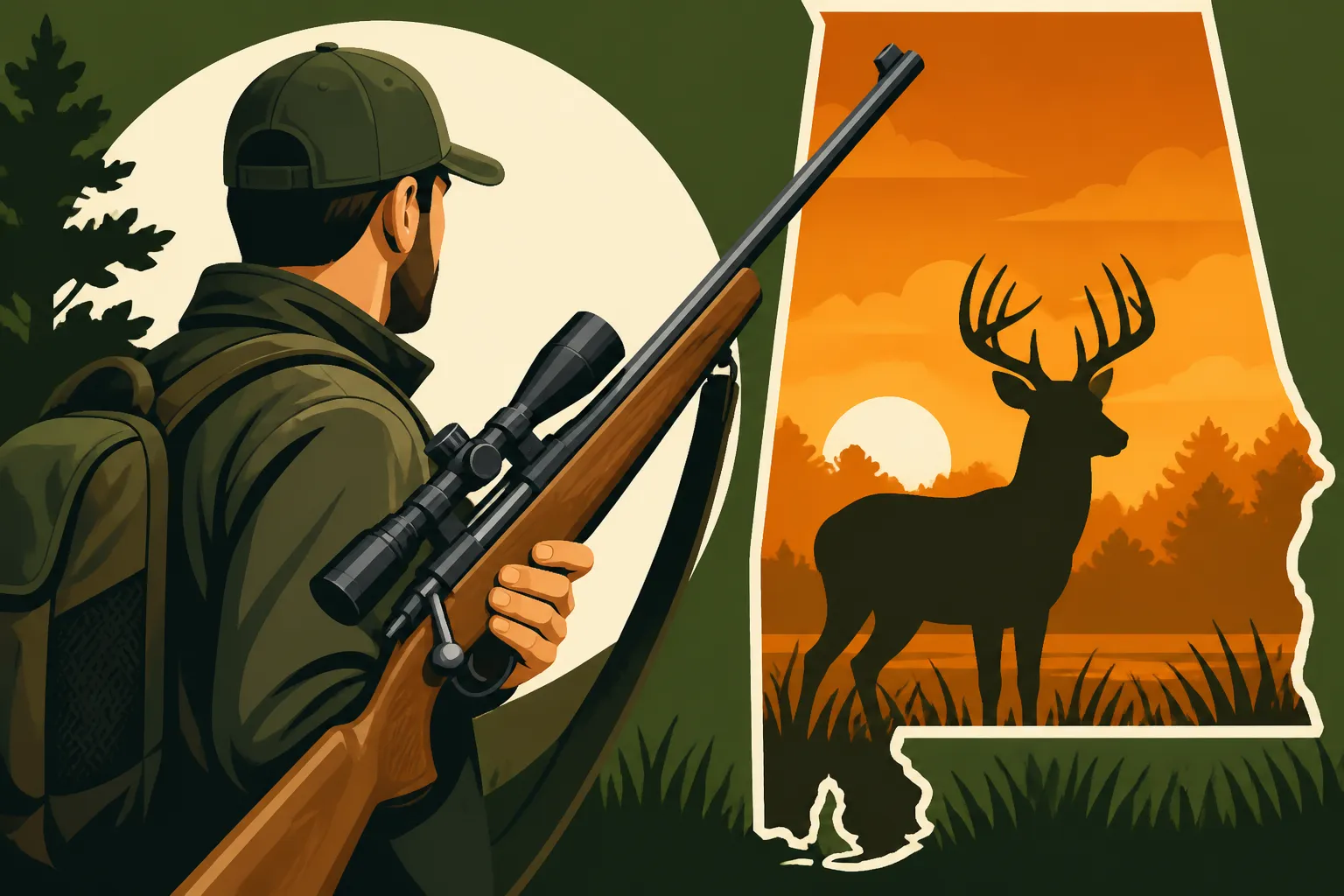
One of the biggest reasons hunters prefer to bring their own rifle is the sheer comfort and confidence that comes with using equipment you know intimately. You've spent hours at the range with this rifle, understanding its quirks, mastering its trigger pull, and etching its sight picture into your muscle memory. This familiarity reduces a huge variable when you're under pressure in the field.
Imagine a beautiful Alabama buck stepping out into a clearing at last light. You've got mere seconds to make the shot count. With your rifle, you instinctively shoulder it, your eye finds the scope's sweet spot, and your finger knows exactly how much pressure to apply to the trigger. There's no fumbling with an unfamiliar safety, no surprise in the trigger break, and no wasted precious seconds trying to adapt to a different stock fit or scope eye relief. That confidence, built from years of practice, is invaluable. When you're paying for a guided experience, you want every advantage you can get to make the most of that opportunity, and a familiar rifle is certainly one of them.
Specific Caliber or Setup Preferences
Beyond just familiarity, many hunters have very specific preferences when it comes to their rifle's caliber or overall setup, tailored to the type of game or terrain they anticipate. Perhaps you've spent years perfecting a specific load for your .308 that consistently groups tight, or you prefer a larger caliber like a .300 Win Mag for longer shots across vast fields in the Black Belt region.
You might also have a rifle that’s already outfitted with specialized optics, like a low-light scope for those early morning or late evening encounters, or maybe a thermal scope for Night Hog Hunting With Lights on Private Land. Perhaps you prefer a rifle with a suppressor to protect your hearing and reduce disturbance to other game, or a particular stock material that handles Alabama's often humid weather better. These custom setups are an investment, and they're optimized for your hunting style and needs. Using an outfitter's loaner, while often perfectly adequate, might mean compromising on these specific advantages you've built into your own system.
What to Discuss with Your Alabama Outfitter About Your Rifle
While bringing your own rifle is often perfectly fine, it's absolutely crucial to have a clear conversation with your outfitter well in advance. Don't ever assume. This isn't just about courtesy; it's about ensuring safety, legal compliance, and a smooth hunting experience for everyone involved.
Early Communication is Key
The most important step is to talk about your desire to bring your own rifle during your initial communications with the outfitter, ideally before you put down a deposit. This early conversation allows them to factor it into their planning and address any potential concerns they might have. It's far better to clarify everything upfront than to show up with your rifle and discover there's a problem.
When you're researching potential outfits, perhaps browsing through options on platforms like BookYourHunt, make a note to ask this question as soon as you connect with an outfitter. You might include it in a list of questions like: "What's What's Included in an All-Inclusive Deer Package?" and "What are your policies on clients bringing their personal firearms?" This proactive approach demonstrates you're a serious, prepared hunter, and it sets a good tone for your working relationship. Transparency from both sides ensures there are no surprises once you arrive at camp.
Outfitter Policies on Personal Firearms
Outfitters, especially those operating larger lodges or on managed properties, often have specific policies regarding client-owned firearms. These policies are usually in place for safety, liability, and logistical reasons. They might want to know the caliber you intend to use to ensure it's appropriate for the game you're pursuing, especially if it's a White-Tailed Deer Across Alabama or Feral Hogs Across Alabama hunt where different calibers might be employed.
Some outfits might have a dedicated range on site and require all client rifles to be checked for zero upon arrival, even if you just shot it at home. This isn't a sign of distrust; it's a safety measure to confirm your rifle is shooting true after travel and to prevent wounded game. They might also have rules about how and where your rifle is stored when not in use, often requiring it to be unloaded and locked in a secure area. Be prepared for potential caliber restrictions, though these are generally rare for common hunting calibers. More often, they might specify that certain ammunition types, like full metal jacket (FMJ) rounds, are prohibited due to their potential to cause excessive damage to game or ricochet concerns. Asking these specific questions, such as "What are your rules regarding ammunition types?" or "Do you have a place to Setting Decoys on a Farm Pond and check my rifle's zero?" will show your preparedness.
Legality and Licensing
When bringing your rifle to Alabama, you'll need to be aware of the state's hunting regulations and general firearm laws. First and foremost, you must possess a valid Alabama hunting license. This isn't something your outfitter provides for you. You'll need to purchase the appropriate Alabama Hunting Licenses and What They Cost for residents or non-residents, depending on your status. Be sure to understand the specific license requirements for the game you'll be pursuing, whether it's deer, hog, or turkey.
Regarding firearms themselves, Alabama has clear guidelines on what constitutes Alabama Legal Firearms for Deer Hunting. Generally, most common centerfire rifle calibers are perfectly legal for hunting deer and hogs. You should also be familiar with general firearm transport laws. While specific state-to-state nuances exist, a good rule of thumb for vehicle transport is to keep your rifle unloaded and cased, with ammunition stored separately. While the outfitter will handle the hunting experience, the responsibility for legal firearm ownership and transport always falls on you, the hunter. You'll also want to make sure you understand the Alabama Hunter Education Requirements if you're a new hunter or a non-resident of a certain age.
Logistics of Traveling with Your Rifle to an Alabama Hunt
Once you've confirmed with your outfitter that bringing your own rifle is fine, the next step is planning the logistics of actually getting it there safely and securely. Whether you're driving across state lines or considering air travel, preparation is paramount.
Safe Transport and Storage
Safe transport of your firearm is non-negotiable. If you're driving, invest in a good quality hard-sided gun case that can be locked. Your rifle should always be unloaded, and it's best practice to store the ammunition in a separate, secure container, distinct from the rifle itself. This applies to your journey to Alabama and any movement around your hunting camp or lodge. When you arrive at your destination, especially if staying at a lodge with other hunters, ensure your rifle is stored securely in your room or a designated storage area provided by the outfitter. Never leave it unsecured in your vehicle or common areas.
For those flying to Alabama, the rules for firearm transport are much stricter and are governed by federal regulations, primarily those of the Transportation Security Administration (TSA). Your firearm must be unloaded and declared to the airline when checking your luggage. It must be in a hard-sided, locked container, and only you should have the key or combination. Ammunition must also be in its original packaging or a secure container separate from the firearm, typically within the same locked case or another checked bag. Always check with your specific airline for their policies, as they can sometimes be more stringent than TSA's minimum requirements. Even though this might be a longer discussion for a separate article, being aware of these general rules is important.
Pre-Hunt Preparation and Gear Check
Before you even leave home, perform a thorough inspection of your rifle. Clean it, check all screws and mounts, and ensure your scope is tightly secured. It's highly recommended to shoot your rifle at a range just prior to your trip to confirm its zero. Even a short car ride can sometimes shift a scope ever so slightly, and the last thing you want is to miss a shot on a Alabama Deer Season Structure Explained buck because of a minor adjustment.
Once you arrive at your Alabama hunting destination, ask your outfitter if there’s an opportunity to take a few shots to re-confirm your zero. Many reputable outfitters will have a small range set up for this very purpose. Bring ample ammunition—more than you think you'll need for the hunt itself, allowing for sighting in and practice shots. A small, portable cleaning kit is also a wise addition to your packing list. You never know when you might need to quickly clear a barrel or wipe down your optics after a wet morning in the stand. Having a good understanding of the topography and conditions of the specific hunting area, perhaps through tools like GoHunt that offer detailed mapping and insights, can also help you fine-tune your gear and preparations, ensuring you have the right setup for the terrain, whether it's Still-Hunting Bankhead Forest Ridges or Hunting Black Belt Prairie Farmland Deer.
Potential Drawbacks or Considerations of Bringing Your Own
While the comfort of your own rifle is undeniable, there are also practical considerations and potential downsides to weigh when deciding whether to bring your personal firearm on a guided hunt. Sometimes, the benefits of convenience or even outfitter preference might lead you to consider using their equipment.
Added Travel Hassle and Risk
Traveling with a firearm, whether by car or especially by air, introduces an additional layer of hassle and potential risk. If you're driving, it's another heavy, bulky item to secure in your vehicle, and you're responsible for its security at every stop. For air travel, the process of declaring your firearm, checking it, and then waiting for it at baggage claim can be time-consuming and add stress to your journey. There's also the remote but real risk of your rifle being lost, delayed, or damaged in transit.
Beyond the logistics, there's the mental burden of worrying about your expensive equipment. Is it safe in the truck while you grab dinner? Will it make it through the airport system intact? These concerns, though minor, can detract from the excitement and relaxation of your hunting trip. Sometimes, the peace of mind that comes from knowing the outfitter is responsible for the gear, and you only need to What to Pack for a Guided Alabama Hunt for yourself, is worth leaving your personal rifle at home.
Outfitter's "Loaner" Program Advantages
Many Alabama outfitters, particularly those running high-volume or all-inclusive operations, offer quality loaner rifles as part of their package, or for a nominal fee. There are often distinct advantages to utilizing these. First, it completely eliminates the travel hassle and risk associated with transporting your own firearm. You simply arrive, and a sighted-in, appropriate rifle is ready for you.
Furthermore, outfitters often provide loaner rifles that are specifically chosen and tuned for the local conditions and game. For instance, if you're Hunting the Tennessee River Delta for Waterfowl and want to take a deer afterward, they might have specific calibers or rifle configurations that perform best in dense Alabama woods or open fields. Their rifles are frequently maintained, sighted in regularly by their guides, and they are intimately familiar with how each rifle shoots. This standardization can also contribute to overall camp safety and consistency, as guides know exactly what their clients are shooting. For some hunters, especially those new to guided hunts or traveling long distances, the convenience and reliability of an outfitter's loaner rifle can make for a more relaxed and focused hunting experience, allowing you to concentrate solely on the thrill of the hunt.
Here’s a quick comparison to help you weigh your options:
| Feature | Bringing Your Own Rifle | Using an Outfitter's Loaner Rifle |
|---|---|---|
| Familiarity | High – muscle memory, known trigger, custom fit | Low – may feel awkward, unfamiliar trigger |
| Confidence | High – trust in your equipment and skill | Moderate – reliant on outfitter's maintenance/zero |
| Customization | Full control over caliber, optics, ammo | Limited – standard setups provided by outfitter |
| Travel Hassle | High – requires careful packing, security, declarations | Low – no extra baggage, no firearm declarations |
| Risk (Damage/Loss) | Moderate to High – during transit and handling | Low – outfitter assumes responsibility |
| Cost | No additional cost for rifle use | May incur a rental fee or be included in package |
| Pre-Hunt Prep | Must confirm zero, clean, and inspect yourself | Outfitter ensures rifle is hunt-ready |
| Safety | Your responsibility to know your rifle's function | Guide's familiarity with all loaner rifles |
Ultimately, the decision to bring your own rifle or use an outfitter's loaner comes down to your personal preferences, comfort level, and the specific dynamics of your guided hunt in Alabama. As long as you communicate openly and early with your outfitter, you'll be well on your way to a memorable and successful trip, regardless of whose rifle is in your hands when that trophy animal steps out.
Disclaimer
This article is for general informational purposes only and does not constitute professional advice. Laws, prices and regulations vary by location and change over time. Consult a qualified professional for guidance on your specific situation.