Best Alabama Counties for Wild Quail
For many of us who grew up hearing tales of endless coveys exploding from fencerows, the modern reality of chasing wild bobwhite quail in Alabama can feel like a heartbreaking treasure hunt. It's a real struggle to find those truly wild birds, not because they don't exist, but because their habitat has changed so drastically over the decades. This guide aims to pull back the curtain on where those precious pockets of wild quail still thrive in Alabama and what makes those areas so special, giving you a roadmap to potentially hear that iconic "bob-white!" call once again.
The Long Road Back: Alabama's Wild Quail Decline and Recovery Efforts
It’s no secret that wild quail populations across the Southeast have faced an uphill battle for decades. When you talk to older hunters, they'll tell you stories of fields absolutely crawling with birds, where flushing a dozen coveys in a day was commonplace. Those days, sadly, are largely gone, and it’s due to a complex mix of changes in our landscapes and land management practices. Understanding why they declined is the first step to knowing where to look for them now.
Habitat Loss and Fragmentation: The Primary Culprit
The biggest reason for the decline in wild bobwhite quail is habitat loss, plain and simple. Imagine a quilt, where each patch is a different type of habitat: a field of native grasses, a patch of longleaf pine with an open understory, a fencerow full of blackberry bushes, and a small patch of cultivated crops. Quail need all these patches close together. They need open ground for feeding, dense cover for nesting, escape cover from predators, and plenty of "edge" habitat where these different types meet.
Over the years, agricultural practices shifted dramatically. Small family farms with diverse crops, fallow fields, and brushy fencerows gave way to vast monoculture fields – huge expanses of just corn or soybeans, often sprayed to eliminate all "weeds." Timber operations also changed, moving away from the open, fire-maintained longleaf pine forests that quail loved, towards dense pine plantations grown for quick pulpwood. These dense, shaded forests offer very little in the way of food or nesting cover for quail. When you combine these factors, the patchwork quilt of ideal quail habitat became more like a few isolated postage stamps, too far apart for coveys to thrive and expand. It's a frustrating reality for anyone who remembers the good old days. You can dive deeper into this history by reading about Alabama's Historic Quail Decline.
Predator Pressure and Other Environmental Factors
While habitat is king, it's not the only piece of the puzzle. As landscapes changed, so did predator populations. Increased numbers of raccoons, opossums, skunks, and even feral cats and coyotes found it easier to prey on quail nests and chicks, especially in fragmented habitats where cover was sparse. Quail are ground-nesters, and their eggs and young are incredibly vulnerable.
Disease can also play a role, though often exacerbated by poor habitat. For instance, if quail are stressed due by a lack of food or cover, they become more susceptible to parasites and illnesses. Weather patterns, like unusually wet springs that can drown nests or cold snaps that impact chick survival, are also factors. However, it's critical to remember that if quail have robust, well-interconnected habitat, they are much better equipped to withstand these natural pressures. When their living spaces are optimized, they are more resilient.
Identifying Prime Wild Quail Habitat: What to Look For
So, if finding wild quail is about finding the right habitat, what exactly does "right" look like in Alabama today? It's far more nuanced than just "open woods" or "farm fields." It's about a very specific blend of features, often actively managed to mimic the natural conditions these birds evolved to thrive in.
The Critical Role of Managed Pine and Native Grasses
When you're looking for counties with strong wild quail potential, you're essentially looking for areas with a significant presence of actively managed longleaf or even loblolly pine forests. But it's not just any pine forest; it needs to be open pine forest. This means trees are widely spaced, allowing sunlight to reach the forest floor. That sunlight is crucial because it allows native warm-season grasses and forbs (broad-leaf plants) to grow in abundance.
These native grasses, like bluestem and switchgrass, are the foundation of good quail habitat. They provide excellent nesting cover, hiding nests from predators. Their clumpy growth also creates ideal brood-rearing cover, offering shade and protection for chicks while allowing them to move easily and forage for insects. The forbs mixed in provide essential seeds and attract insects, which are a vital protein source for growing quail chicks. Without this combination, even an otherwise good piece of land will fall short. For a deeper dive, check out Alabama Longleaf Pine and Quail Habitat.
Land Management Practices: Fire, Thinning, and Food Plots
The presence of managed pine and native grasses doesn't just happen; it's the result of dedicated land management. In Alabama, the most effective tool for maintaining this habitat is prescribed fire. Regular, controlled burns mimic the natural fire regimes that historically shaped the Southern landscape. These burns do several things: they reduce woody brush, encourage the growth of native grasses and forbs, control parasites, and create open ground for quail to scratch and feed.
Beyond fire, timber thinning is critical. Removing some trees in a dense pine stand opens up the canopy, allowing more sunlight to hit the forest floor and promoting that essential understory growth. Disking fields to break up old sod and stimulate new plant growth, and planting small, strategically placed food plots of millet, milo, or even legumes, can provide supplemental food sources during lean times. These practices are labor-intensive and require knowledge, which is why counties with landowners committed to this level of management are often your best bet. You can learn more about how some of these methods have been successful in How Managed Pine Restored Black Belt Quail.
Best Alabama Counties Known for Wild Quail Potential
Given the specific habitat requirements and the intense management needed, it's perhaps not surprising that the "best" counties for wild quail in Alabama often share certain characteristics: a history of quail hunting, committed landowners, and a landscape that lends itself to restoration efforts. While truly wild, self-sustaining populations are rare, some areas hold more promise than others.
The Black Belt Region's Enduring Legacy
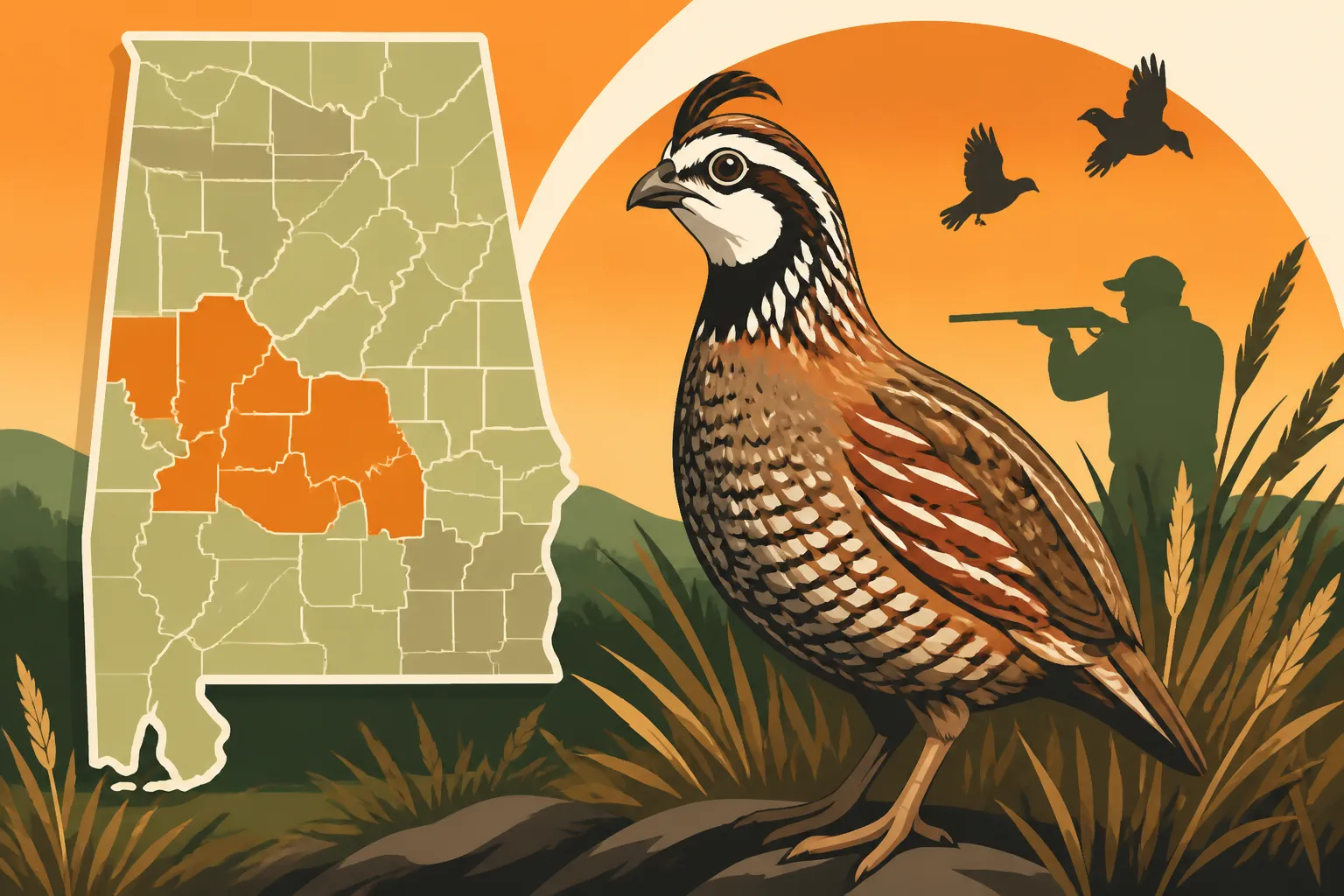
When you talk about wild quail in Alabama, the conversation inevitably turns to the Black Belt region. This crescent-shaped band of fertile, dark soil stretching across central Alabama was historically the epicenter of quail hunting in the state. While much has changed, dedicated landowners in counties within this region have worked tirelessly to bring back these iconic birds.
Counties like Barbour, Wilcox, and Lowndes are often mentioned as having some of the strongest remaining wild quail populations, particularly on large, privately managed estates. These aren't places where you just walk into any patch of woods and expect to find birds. They are typically tracts where landowners are intentionally managing for quail, often with a focus on longleaf pine restoration, native grass plantings, and aggressive prescribed fire regimes.
For example, in Barbour County, while many larger tracts are leased by hunting clubs or operated as commercial plantations (which you can learn more about in Hunting a Managed Quail Plantation), there are still private landowners who are passionate about wild birds. These areas benefit from the traditional land use patterns and the commitment to habitat work. Exploring the region with a robust mapping tool like GoHunt can help you visualize the landscape, pinpointing areas that look like quail habitat (open pine, patchy fields) even before you set foot on the ground.
Pockets of Opportunity Beyond the Black Belt
While the Black Belt gets much of the attention, other regions of Alabama can also hold pockets of wild quail. These are often more localized and might require even more dedicated scouting and networking.
For instance, parts of the Wiregrass Region in Southeast Alabama, particularly areas bordering Georgia and Florida, might offer opportunities on private land with good pine and agricultural interfaces. Similarly, some of Alabama's National Forests, like Conecuh, which contains significant longleaf pine stands, or parts of the Talladega National Forest, may occasionally hold wild coveys, though hunting them on public land presents its own unique set of challenges. These areas generally see less intensive management specifically for quail, so finding birds can be more like finding a needle in a haystack, but it’s not impossible. Conecuh National Forest Hunting details some of the opportunities there.
It really comes down to finding that dedicated landowner, whether it's a private individual or a managing agency, who is doing the intense habitat work needed. Using GoHunt, you can examine satellite imagery for these areas, looking for the tell-tale signs of managed pine, clearings, and diverse edges that scream "quail habitat." The platform can help you identify property boundaries and land ownership, which is crucial for Getting Private Land Permission in Alabama.
Here's a quick look at some counties and what makes them potential quail hotspots:
| County/Region | Key Habitat Features | Notable Characteristics | Best for Wild Quail Hunting? |
|---|---|---|---|
| Barbour County | Longleaf pine, native warm-season grasses, agricultural edges | Strong tradition, private land management, part of the Black Belt | High Potential |
| Wilcox County | Pine savannas, prescribed burns, diverse understory | Part of the Black Belt, focused restoration efforts | High Potential |
| Lowndes County | Open pine stands, fallow fields, food plots | Historical stronghold, good private land management | High Potential |
| Bullock County | Managed timber, interspersed food plots, natural areas | Adjacent to Barbour, similar habitat types, strong private ownership | High Potential |
| Conecuh National Forest | Managed longleaf, patchy clearings, some public access | Public land option, but requires extensive scouting | Moderate Potential |
| Private holdings in other regions | Varies, depends on landowner effort and specific habitat | Pockets of opportunity, highly localized | Variable Potential |
How to Approach Hunting Wild Quail in These Promising Areas
Even if you've pinpointed a county with good potential, finding and hunting wild quail requires a specific approach that differs significantly from hunting other game animals. It's often about persistence, observation, and developing a deep understanding of habitat.
Scouting for Quality Habitat: Eyes on the Ground and Sky
Scouting for quail isn't just about looking for tracks; it's about looking for habitat. Before season, or even during an off-season scouting trip, you need to literally walk the ground, observing the types of plants, the density of cover, and the presence of food sources. Are there native grasses? Is the pine timber open enough to walk through easily? Are there plum thickets or blackberry patches for escape cover? Look for bare ground where birds might dust, and listen for their calls, especially in the early morning or late afternoon.
This kind of detailed scouting takes time, but it's invaluable. Tools like GoHunt can significantly speed up this process by allowing you to Reading Aerial Photos for Piedmont Deer or other areas, identifying potential habitat visually from above. You can mark promising areas on your digital map, cross-referencing with ground observations. Look for transitions – where a field meets a pine stand, or where dense cover gives way to more open foraging areas. These are the edges that quail love.
The Indispensable Role of Landowner Relationships
Let's be realistic: almost all quality wild quail hunting in Alabama today is going to be on private land. The habitat requirements are too specific, and the management too intensive, for large, consistent wild bird populations to thrive on publicly accessible land. This means that building relationships with landowners is absolutely crucial.
Approach farmers and timberland owners with respect, explain your interest in quail, and perhaps even offer to help with habitat work. Many landowners, especially those who remember the "good old days," would love to see quail return to their property and might be open to controlled access if you prove yourself responsible and knowledgeable. It's a long game, not a quick ask, but the rewards of finding wild birds on well-managed private land are immense. You can read more about the nuances of securing access in Getting Private Land Permission in Alabama. Remember, a good relationship can open doors to experiences you simply won't find anywhere else.
Finding that covey of wild bobwhites, hearing the roar of wings, and watching a well-trained dog work these elusive birds is one of the most rewarding hunting experiences Alabama has to offer. It takes effort, a keen eye for habitat, and often, strong connections, but for many, it's a pursuit well worth the challenge.
Disclaimer
This article is for general informational purposes only and does not constitute professional advice. Laws, prices and regulations vary by location and change over time. Consult a qualified professional for guidance on your specific situation.