Alabama Outfitter Contracts and What to Read
It’s an exciting time when you’re about to book that dream Alabama hunting trip—whether it's for a trophy buck in the Black Belt, a hard-gobbling longbeard, or some fast-flying doves. But before you get lost in visions of big antlers or strutting birds, there's a crucial, often overlooked step: understanding the outfitter's contract. Many hunters gloss over these documents, only to discover unwelcome surprises later. This guide will walk you through the essential clauses and considerations in Alabama outfitter contracts, ensuring your next hunt goes off without a hitch.
Why a Solid Contract is Your Best Hunting Buddy
Think of an outfitter contract not as a tedious legal document, but as your personalized hunting agreement, outlining the expectations and responsibilities for both you and the outfitter. It's the framework that protects your experience and their business, laying out all the details so there are no awkward misunderstandings when you're deep in the piney woods or a river bottom. Skipping over it is like heading into the woods without checking your treestand straps – you might get away with it, but you're taking a big, unnecessary risk.
Protecting Your Investment and Expectations
Hunting trips, especially guided ones, represent a significant investment of time, money, and anticipation. You've likely saved up, rearranged your schedule, and spent countless hours dreaming of the hunt. A well-understood contract is your safeguard. It ensures that what was verbally promised is formally agreed upon. Without it, if something goes awry—say, the lodging isn't what you expected, or the guide isn't available—you have very little recourse. This document becomes your evidence, clearly stating what you paid for and what you are entitled to receive, giving you peace of mind before you even pack your bags. Platforms like BookYourHunt often provide a general overview, but the specific outfitter's contract is where the true details lie.
Clarifying Services and Responsibilities
Imagine arriving at camp, ready for your deer hunt, only to find out that "fully guided" means your guide drops you off at a stand and picks you up at dark, rather than actively scouting with you or calling. These kinds of ambiguities are exactly what a good contract clarifies. It should explicitly detail what services are included, such as meals, lodging, transportation to hunting areas, game retrieval, and initial processing. It also spells out your responsibilities as a hunter, from adhering to safety rules to respecting property boundaries and following Alabama hunting regulations. Knowing these expectations upfront allows you to prepare properly and ensures that everyone is on the same page, avoiding potential conflicts during your valuable hunting time.
Decoding the Key Sections of an Alabama Outfitter Contract
Outfitter contracts can sometimes feel like they're written in another language, full of legal jargon and fine print. But with a little guidance, you can learn to spot the critical information and understand what each section means for your hunt. Here are the core components you absolutely need to scrutinize.
Dates, Species, and Bag Limits – Getting the Hunt Details Right
This might seem obvious, but always double-check the precise dates of your hunt, including arrival and departure times. Ensure the contract clearly states the game species you'll be pursuing (e.g., White-Tailed Deer Across Alabama, Wild Turkeys in Alabama, or Feral Hogs Across Alabama), and, crucially, the specific bag limits and antler restrictions that apply to your hunt. This is especially vital in Alabama, where deer zones have different regulations, and some outfitters may impose stricter limits than state law. For example, if you're targeting a trophy buck, does the contract specify antler points or spread? Is there an extra fee for a larger animal? Will your hunt fall during Hunting the Rut in the Southern Zones or Hunting the Rut in the Northern Zones? These details directly impact your hunting strategy and expectations, so make sure they align perfectly with what you discussed and what Alabama's specific rules are.
Payment Terms, Deposits, and Refund Policies
Money matters are usually the most contentious areas if a dispute arises. The contract should clearly outline the total cost of the hunt, what that cost includes, and any potential additional expenses (e.g., license fees, trophy fees, processing costs, taxidermy, or tips for guides and staff). Pay close attention to the deposit requirement: how much is it, is it refundable, and under what conditions? Understand the schedule for remaining payments, usually a final balance due before the hunt or upon arrival. It's also vital to grasp the refund policy. If you have to cancel, how much of your money, if any, will be returned? If the outfitter cancels, what's their obligation? Does it outline what happens if you cannot show up due to unforeseen circumstances? Make sure you know exactly what is expected financially before you commit.
Cancellation, Rescheduling, and "Act of God" Clauses
Life happens, and sometimes hunts get derailed. This section is often overlooked but can save you a lot of heartache (and money). A robust contract will detail the procedure for canceling a hunt, whether by the hunter or the outfitter, and the associated penalties or refunds. It should also address rescheduling options, particularly if you need to move your dates.
Then there's the "Act of God" clause. This covers circumstances beyond anyone's control, such as extreme weather events like hurricanes that impact coastal Alabama hunting, widespread disease outbreaks (like EHD in deer), or even unexpected closures of public land. What happens if a severe ice storm shuts down travel to your north Alabama turkey hunt, or a sudden flood makes access impossible for a duck hunt in the Mobile-Tensaw Delta Public Hunting Ground? Does the outfitter offer a full refund, a credit for a future hunt, or is your deposit simply forfeited? This is where many hunters get caught out, so always clarify these terms upfront. You can often compare Deposits and Cancellation Terms in Alabama across various outfitters to see what's standard.
Hunter Responsibilities, Safety, and Legal Compliance
Your part of the bargain is just as important. This section will cover your duties, which typically include arriving on time, bringing appropriate gear, adhering to hunting schedules, and, most importantly, following all safety protocols. This might include wearing blaze orange where required by Alabama law, proper firearm handling, and respecting the guide's instructions.
It will also stress your responsibility to possess all necessary and valid Alabama hunting licenses and permits, including state and federal duck stamps if applicable. Make sure you understand What License Fees a Guided Hunt Does Not Cover. The outfitter usually won't be held liable if you're found in violation of hunting laws because you didn't have the correct tags or didn't report your harvest properly. Understand these expectations fully to ensure a safe and legal hunt.
Questions to Ask and Red Flags to Watch For
Even with a detailed contract in hand, you’ll likely have questions. It’s better to ask them now than to have assumptions turn into frustrations later. Don't be shy; a reputable outfitter will welcome your diligence.
Verifying Land Access and License Status
One crucial area to probe is the outfitter's land access. Does the contract specify where you will be hunting? Is it private land, leased land, or a combination? How much acreage is involved? It's fair to ask for specifics. You might even want to verify their permits or proof of land access, especially if you're hunting a high-demand area or a larger operation that might be leasing Alabama Hunting Club Territory Sizes. A key question to ask, as covered in Verifying Land Access Before You Book, is whether they actually own or lease the hunting rights to the property advertised. Additionally, while Alabama does not require specific guiding licenses in the same way some states do, it’s still wise to ensure the outfitter operates as a legitimate business, has appropriate insurance, and maintains a good reputation. Tools like GoHunt can provide some background on outfitters, but direct communication and contract review are essential.
Understanding Success Guarantees and Disclaimers
Be wary of any outfitter contract that offers "guaranteed success" or "guaranteed kill." While they might assure you verbally that success rates are high, a truly ethical and realistic outfitter knows that hunting involves wild animals and unpredictable conditions. A contract might state that they guarantee "opportunity" or "fair chase," which is a much more realistic promise. If the contract uses strong language about guarantees, read it extremely carefully to understand the fine print. Often, such guarantees come with conditions (e.g., you must pass on smaller animals, or the guarantee only applies if you don't take a shot). Always review Reading Outfitter Success Claims with a critical eye, both in their marketing and their contract. What happens if you don’t get an animal? Is there a discounted re-hunt, or a refund? Often, the answer is "no," and that's usually acceptable for a fair chase hunt, as long as it's clear.
| Contract Clause | What to Look For | Questions to Ask | Potential Red Flag |
|---|---|---|---|
| Dates & Hunt Details | Exact start/end dates, specific species, bag limits. | Are specific stand locations or hunting methods guaranteed? | Vague dates; "opportunity to hunt any game" without specifics. |
| Payment & Refunds | Clear total cost, deposit amount, payment schedule, refund policy. | What are the refund terms if I cancel? If you cancel? | Non-refundable deposit with no clear cancellation policy for outfitter. |
| Cancellation (Act of God) | Provisions for weather, natural disasters, epidemics. | What happens if my flight is canceled or roads are closed? | No clause or only "no refunds for any reason." |
| Included Services | Meals, lodging, guide, game retrieval, initial processing. | Is field dressing included? Caping for taxidermy? | "Standard services" without itemized list. |
| Hunter Responsibilities | Safety rules, license requirements, ethical conduct. | What are the rules on alcohol, guest policy, firearm types? | No mention of safety or legal compliance. |
| Liability Waiver | Releases outfitter from liability for injury/loss. | What insurance does the outfitter carry? | Overly broad waiver that seems to absolve all responsibility. |
| Trophy Fees | Clear fees for certain size animals or additional game. | Are there any hidden fees not listed? | Unspecified "trophy fees" or surprise charges post-hunt. |
The Importance of a Written Agreement
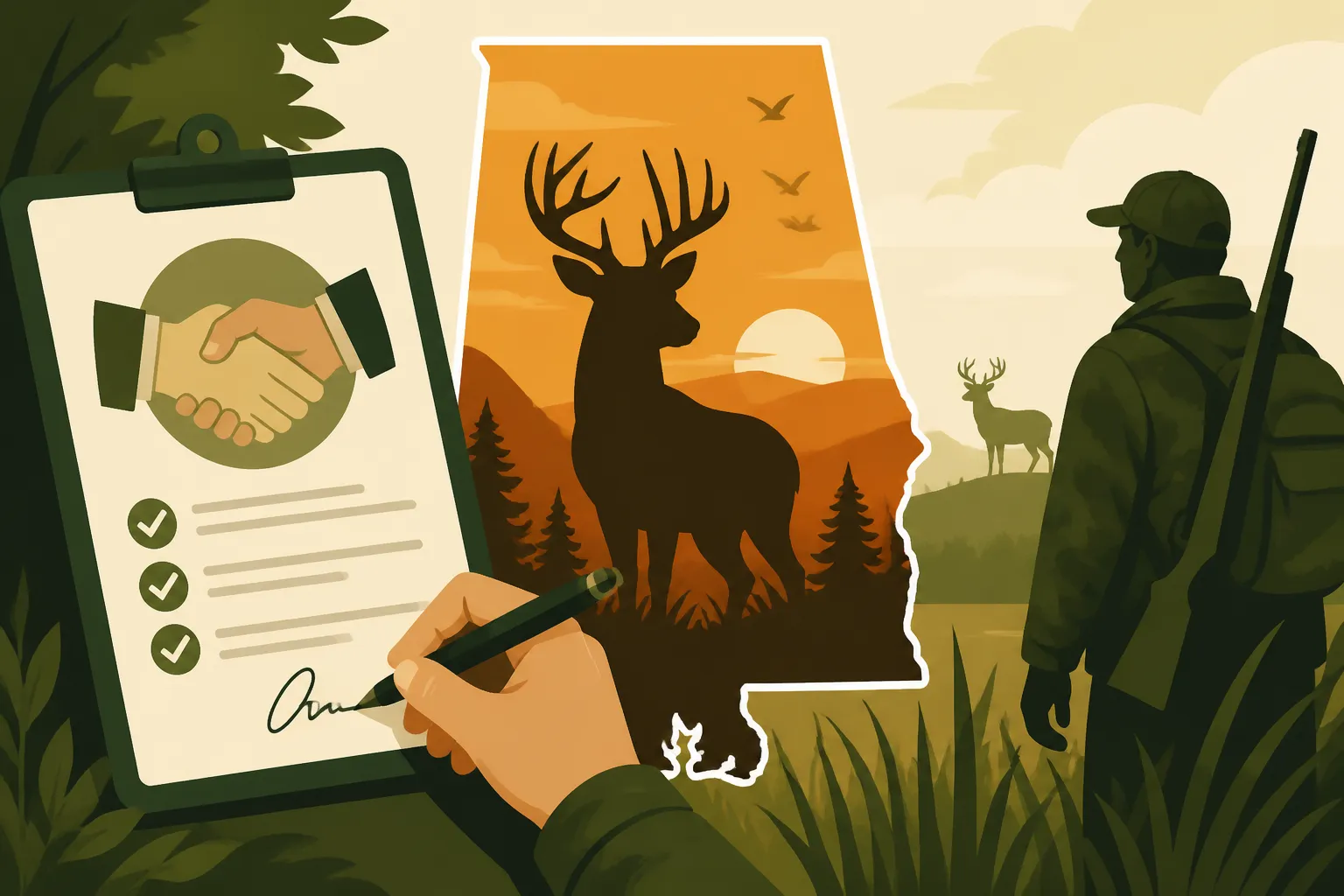
Never, under any circumstances, rely solely on verbal agreements. A handshake deal might feel old-school and trustworthy, but it offers zero protection if disagreements arise. Insist on a written contract for any guided hunt in Alabama. This applies whether you're booking a full lodge package or just a day hunt for Predator Calling Alabama Pine Plantations. If an outfitter is hesitant to provide one, or pressures you to bypass it, consider that a major red flag. A legitimate business will always have formal documentation. It's often helpful to gather Questions to Ask Before Booking an Alabama Hunt and jot down the answers provided by the outfitter, then compare those notes against the written contract. This is also where checking Getting References From Past Alabama Clients can reveal if an outfitter has a history of contract disputes or unmet expectations.
After the Signature: What Comes Next
Signing the contract isn't the end of your preparation; it's the beginning. With the agreement in place, you can now focus on the exciting parts of getting ready for your Alabama hunting adventure, knowing you’ve covered your bases.
Keeping Records and Communication
Once you've signed the contract, make sure you keep a copy in a safe, accessible place. Print it out, save it digitally, or both. Along with the contract, keep a record of all correspondence with the outfitter—emails, texts, even notes from phone calls. If you ever have questions or a dispute arises, having a clear paper trail is invaluable. Don't hesitate to reach out to the outfitter with questions as your hunt date approaches, perhaps to clarify Warm-Weather Sitting Strategy in Alabama or confirm specific gear requirements. Proactive communication helps cement a good relationship and resolve minor issues before they become major problems.
Contingency Planning for the Unexpected
Even with a perfect contract, unforeseen circumstances can still throw a wrench in your plans. While the "Act of God" clause covers big issues, what about smaller ones? What if your truck breaks down en route? What if you get sick a week before the hunt? Having personal travel insurance or hunt cancellation insurance can be a smart move, especially for significant investments. This kind of insurance can provide reimbursement for non-refundable expenses if you have to cancel for a covered reason. While your contract protects you regarding the outfitter's responsibilities, a personal insurance policy protects your investment from your own unexpected issues. It adds an extra layer of security, allowing you to focus on the thrill of the chase rather than worrying about what might go wrong. For those debating Self-Guided Versus Outfitted Alabama Hunts, these contingency plans often look very different, but both require careful thought.
Disclaimer
This article is for general informational purposes only and does not constitute professional advice. Laws, prices and regulations vary by location and change over time. Consult a qualified professional for guidance on your specific situation.