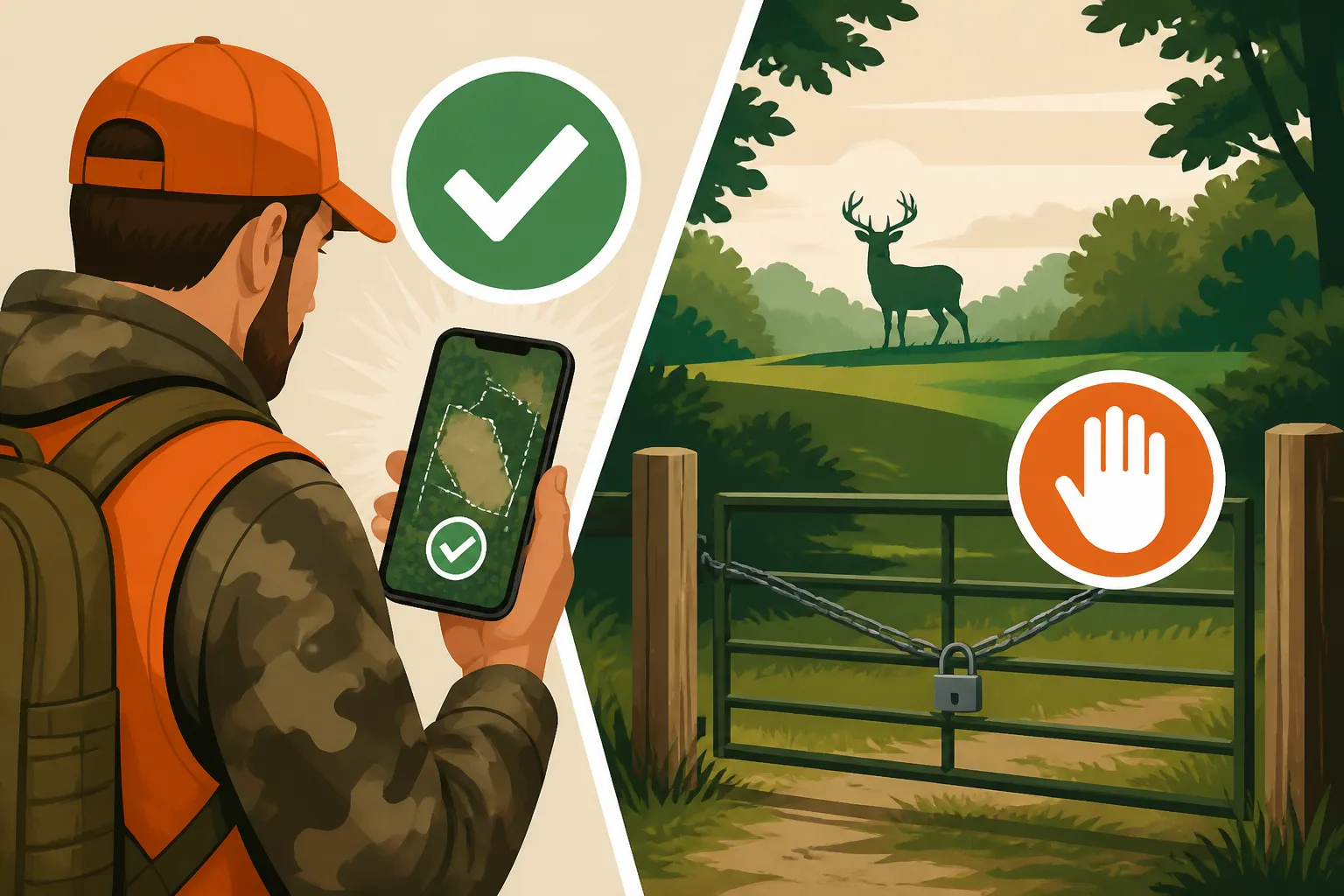
Verifying Land Access Before You Book
It's an absolute gut punch to spend your hard-earned money, take time off, and drive hours to an outfitter, only to find out the land you were promised isn't actually accessible, or worse, isn't truly leased by the guide. This kind of experience can ruin a hunt before it even begins, leaving you frustrated and out of pocket. This guide will walk you through the essential steps to verify land access with an Alabama outfitter before you ever commit, helping you avoid a potentially disastrous hunting trip.
Why Land Access Verification is Crucial and Often Overlooked
When you book with an outfitter, there’s an inherent trust that they’ve got their ducks in a row – that their leases are solid, their permits are in order, and the land they advertise is genuinely available for hunting. Unfortunately, that's not always the reality. Hunters often get caught up in the excitement of the hunt itself, the promises of big bucks or gobblers, and overlook the fundamental need to confirm the logistical details of land access. This oversight can lead to a lot of heartache and wasted resources.
Imagine driving from Birmingham down to the Black Belt, excited for a trophy buck hunt you've saved all year for. You arrive, only to hear the outfitter vaguely mention a "hiccup" with a landowner, and suddenly, the prime acreage you saw in pictures is off-limits. Or perhaps you booked a public land turkey hunt with a guide who claims to have special access, only to find out when you arrive that the necessary permits haven't been secured, or that their "special access" is simply walking into a crowded WMA like everyone else. These scenarios are more common than you might think, and they highlight why taking the time for due diligence upfront is so incredibly important. A legitimate outfitter will understand and respect your need to confirm these details.
The financial hit is one thing – a lost deposit, the cost of travel, gear, and time off work. But the emotional toll of a hunt that falls apart due to easily avoidable access issues can be even worse. Hunting is about experience, tradition, and the pursuit of game. When that pursuit is thwarted by something as basic as land access, it sours the entire endeavor. Protecting your investment and ensuring a positive experience starts with asking the right questions and doing your homework.
Key Questions to Ask Your Outfitter About Land Access
A reputable outfitter will be transparent and forthcoming with information about their hunting grounds. Don't be shy about asking direct questions; this is your hunt, your money, and your time. Here's a breakdown of what you should be asking, and why:
Understanding the Specific Hunting Grounds
First and foremost, you need to know exactly where you'll be hunting. Vague answers should be a red flag. Ask the outfitter to identify the specific parcels of land they intend for your hunt. Don't just settle for a county name or a general region like "the Black Belt." A good guide will be able to provide details, potentially even parcel numbers or map coordinates. While they might not share every secret honey hole, they should be able to delineate the general hunting boundaries.
Ask if the land is entirely private, entirely public, or a mix of both. This distinction is vital because the rules, regulations, and even the type of hunting experience can differ dramatically. If it's a mix, understand which days or which parts of the hunt will take place on private versus public land. You should also inquire about the size of the hunting area. A large, well-managed tract often offers a better experience and less pressure than a small, heavily hunted parcel.
Confirming Legal Lease or Ownership for Private Land
For any private land hunts, it's absolutely critical to understand the outfitter's legal right to hunt there. Ask directly: "Do you own this land, or do you have a written lease agreement for it?" If they own it, that's straightforward. If they lease it, which is very common for outfitters, you need to verify the lease's existence and its validity. While you won't typically be given a copy of the lease agreement itself – that's private business between the outfitter and the landowner – you can ask about its duration. A short-term, month-to-month, or verbal lease, especially for prime hunting ground, carries a higher risk of last-minute changes or cancellations than a multi-year written agreement.
You want reassurance that the outfitter has a secure, long-term arrangement for the land. Verbal agreements, while sometimes honored, offer no legal protection if a landowner changes their mind or sells the property. This is especially important given what Do You Need Written Permission in Alabama? states about hunting private land. A legitimate outfitter will understand why you're asking and should be able to confidently confirm their secure land tenure.
Clarifying Public Land Permits and Regulations
If your guided hunt involves public land, such as a National Forest or a Wildlife Management Area (WMA), the questions shift. Outfitters guiding on public land often require special permits or licenses beyond what you as a hunter need. Ask them what specific public lands they guide on and what permits they hold to do so. Inquire about whether these permits are secured for the dates of your hunt.
You should also be aware of the general rules and regulations for public hunting in Alabama, which can vary by area. For example, some WMAs might have quota hunts, specific vehicle rules, or antler restrictions that differ from statewide regulations. Confirm with your outfitter that they are fully aware of and compliant with all public land rules, and that your hunt will adhere to them. Reviewing information like Alabama WMA Permit Requirement and Alabama Public Land Hunting Hours can empower you with knowledge before you even talk to the outfitter.
Here's a quick comparison table of questions to consider:
| Aspect | Private Land Questions | Public Land Questions |
|---|---|---|
| Specifics | What are the parcel numbers or precise boundaries? | Which specific WMA, National Forest, or refuge? |
| Access Authority | Do you own the land, or do you have a written lease? How long is the lease valid? | Do you hold all required commercial guiding permits for this public land? |
| Restrictions | Are there any specific landowner rules (e.g., entry/exit points, timber ops)? | Are there any special regulations (quota hunts, ATV rules, stand restrictions)? |
| Other Users | Are other groups hunting the same land concurrently? | What is the typical hunting pressure in this area? |
| Contingency Plans | What if the lease falls through before my hunt? | What if permits are denied or public access changes? |
Due Diligence Beyond the Conversation: Tools and Tactics
While asking direct questions is crucial, you shouldn't stop there. Modern technology provides excellent tools for verifying information independently. This extra step helps safeguard your investment and peace of mind.
Leveraging Mapping Applications for Property Research
One of the most powerful tools at your disposal is a good mapping application like OnX Hunt or even detailed satellite views on Google Maps. If your outfitter provides specific property descriptions, parcel numbers, or even just a general location with boundary lines, plug that information into one of these apps.
- OnX Hunt: This app, widely used by hunters, offers property line overlays that show land ownership. If an outfitter claims to lease or own a specific piece of private land, you can often verify the ownership details directly through the app. It's a fantastic way to visually confirm the boundaries and ensure the outfitter's claims align with public records. For Alabama hunters, using onX Layers for Alabama Land Status can be incredibly insightful.
- County Tax Assessor Websites: Most Alabama counties have online resources where you can search property records by owner name or parcel number. This is public information. If your outfitter gives you specific parcel details for private land, you can often cross-reference this information to confirm who the recorded owner is. This doesn't mean you're prying into their private lease, but rather confirming the ownership of the land itself aligns with their claims.
- Satellite Imagery: Even without property line overlays, satellite imagery can help you visualize the terrain, nearby roads, and potential access points. If an outfitter describes a property a certain way, you can see if the aerial view matches.
This independent verification is not about distrusting the outfitter outright, but about exercising smart consumer behavior. You're investing significant time and money; it's reasonable to confirm the core asset of the hunt – the land – is legitimately secured.
Consulting Official Public Land Resources
For hunts on public lands, your due diligence involves checking official state and federal websites. Alabama's Department of Conservation and Natural Resources (ADCNR) website, Outdoor Alabama, is an invaluable resource.
- Outdoor Alabama Website: This site provides detailed maps of WMAs, national forests, and other public hunting areas. It also lists regulations, special hunt dates, and permit requirements. If an outfitter tells you they guide on, say, the Skyline WMA, you can navigate to the Skyline WMA section on Outdoor Alabama and review the rules for yourself. This will help you understand if the outfitter's plans align with the official regulations. You can get a lot of information by Using the Outdoor Alabama Map Tool to explore different WMAs.
- National Forest Service Websites: For hunts in the Talladega, Bankhead, or Conecuh National Forests, you can visit the USDA Forest Service website for Alabama. These sites often provide maps, rules for commercial operations, and contact information for local rangers. Confirming that the outfitter has the necessary permits to guide on these federal lands is a responsible step.
Remember, the goal is to confirm that the outfitter operates legally and transparently on all land, whether private or public. While platforms like BookYourHunt or GoHunt might list various outfitters and provide reviews, it's still your responsibility to conduct this deeper dive into land access specifics. These platforms serve as a directory, but they don't always verify every detail of an outfitter's operations.
Identifying Potential Red Flags in Land Access Claims
Knowing what to look for in terms of red flags can save you a lot of headache and disappointment. When an outfitter is evasive or reluctant to provide clear answers regarding land access, it should immediately raise your antenna.
Vague or Evasive Responses
A major red flag is an outfitter who gives vague or overly generalized answers when you ask for specifics about their hunting land. If they say things like, "Oh, we've got access to thousands of acres around Selma," but can't or won't pinpoint specific tracts, parcel numbers, or even general map areas, that's a problem. A professional operation should be able to clearly define their hunting domain. This vagueness could mean they don't have solid, defined access, or they're trying to hide something. It’s a common tactic when land agreements are flimsy or non-existent.
Similarly, be wary of outfitters who dismiss your questions as unnecessary or imply you're being overly cautious. Your due diligence is a fundamental part of booking any outdoor experience, especially one involving a significant investment. A confident, reputable outfitter will understand and appreciate your thoroughness. Questions to Ask Before Booking an Alabama Hunt delves into many similar concerns.
Over-Reliance on Verbal Agreements
While verbal agreements might suffice for a neighbor letting you squirrel hunt their back forty, they are incredibly risky for a commercial outfitting operation. If an outfitter claims extensive private land access based solely on a "handshake agreement" or a "gentleman's agreement," proceed with extreme caution. These agreements offer no legal recourse if the landowner changes their mind, sells the property, or simply decides they don't want hunters there anymore.
A professional outfitter will have written lease agreements in place for private land, providing stability and security for both their business and your hunt. This is a business, and written contracts are standard practice. If they can't confirm a written lease, especially for high-dollar hunts, it’s a significant risk you would be taking. Consider what Alabama Trespass and Permission Law outlines regarding needing explicit permission to hunt.
Negative Reviews and Past Incidents
Always, always check online reviews and testimonials for any outfitter you're considering. While a few negative reviews aren't necessarily disqualifying, patterns are crucial. Look for reviews that specifically mention issues with land access, last-minute changes to hunting locations, or canceled hunts due to land problems. If multiple past clients recount similar frustrations regarding where or even if they got to hunt, those are strong indicators of systemic issues.
You might find these reviews on aggregator sites, social media groups, or even general web searches. Pay attention to the details of these complaints. Were hunters promised prime ground and then relegated to less desirable areas? Were hunts canceled with little notice due to "land issues"? These kinds of patterns signal that the outfitter may not have consistently reliable land access. Understanding these Red Flags When Booking in Alabama can help you make a more informed decision and protect your hunting experience.
Conclusion
Booking a guided hunt in Alabama should be an exciting prospect, full of anticipation for the adventure ahead. But to ensure that excitement doesn't turn into bitter disappointment, taking the time to thoroughly verify land access is absolutely paramount. Don't be swayed solely by impressive photos or promises of record-book animals. Take a proactive stance by asking the right questions, utilizing available mapping and public land resources, and recognizing the red flags that indicate potential problems. A reputable outfitter will welcome your thoroughness and be happy to provide the information you need. By taking these steps, you're not just booking a hunt; you're securing a solid, legitimate experience on the ground, making sure your Alabama hunting dream doesn't turn into a land-access nightmare.
Disclaimer
This article is for general informational purposes only and does not constitute professional advice. Laws, prices and regulations vary by location and change over time. Consult a qualified professional for guidance on your specific situation.