How Alabama Quail Numbers Fell Since the 1960s
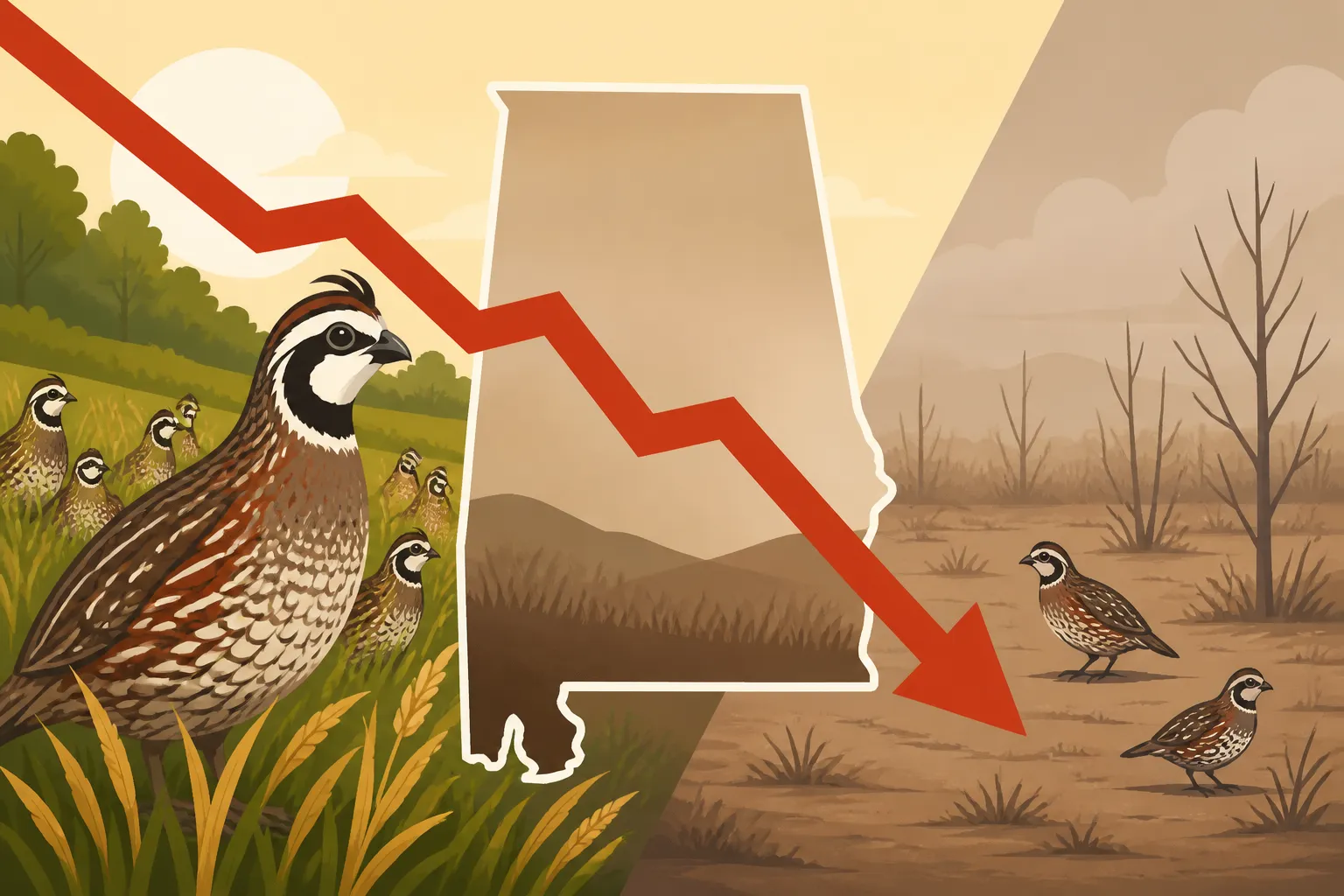
It's no secret that the bobwhite quail population across Alabama, and indeed much of the Southeast, has faced a dramatic and heartbreaking decline since the mid-20th century. For many of us who grew up hearing the distinctive "bob-WHITE!" call from every fencerow, the silence in once-thriving quail country is a stark and painful reminder of what we've lost. This guide will dig deep into the complex factors that contributed to this drastic reduction in quail numbers, examining the changes in our landscape, agricultural practices, and predator dynamics that reshaped the habitat once so rich with these iconic game birds.
A Look Back: The Golden Age of Alabama Quail Hunting
To truly grasp the magnitude of the decline, we first have to understand what Alabama's landscape looked like when quail were king. From the late 1800s through the mid-1960s, Alabama was a veritable paradise for bobwhite quail. It wasn't just good; it was exceptional. This wasn't accidental, but rather a fortunate byproduct of how people lived and worked the land.
Patchwork Farming and Ideal Habitat
Imagine Alabama's rural landscape seventy or eighty years ago. You wouldn't see vast, unbroken expanses of single crops. Instead, you'd find a mosaic of small family farms. These farms were diverse, growing cotton, corn, peanuts, and various other row crops, often on relatively small plots. Crucially, these fields were interspersed with patches of woodlands, fallow fields, hedgerows, and brushy fence lines. This created an incredible "edge effect" – a blend of cover, food, and nesting sites that was absolutely perfect for quail.
These traditional farming methods, with their reliance on crop rotation, smaller fields, and less intensive chemical use, inadvertently created prime quail habitat. The weedy field edges provided seeds and insects, while the thick hedgerows offered escape cover from predators and harsh weather. Farmers often left fields fallow for a season, allowing native grasses and weeds to flourish, creating essential nesting cover. It was a symbiotic relationship: the farms provided for the families, and in doing so, they also provided for an abundant quail population. Hunters could almost always find a covey rise, and the sound of calling bobwhites was a common soundtrack to rural life. It's a memory many of us cherish, and one that feels increasingly distant.
Fire's Role in a Healthy Ecosystem
Beyond agriculture, the natural and managed use of fire played a significant role in maintaining open, diverse understories, especially in Alabama's pine forests. Before widespread fire suppression efforts, both natural lightning strikes and intentional burns by landowners (often to clear land or improve forage for livestock) kept brush in check. This created an open understory with plenty of native grasses and forbs that quail need for nesting, foraging, and easy movement.
The periodic burning prevented dense thickets from forming, which, while offering some cover, ultimately reduced the diversity of plant life that quail relied on. It also opened up the ground for easier access to seeds and insects. This historical fire regime, coupled with the varied agricultural landscape, provided the complex habitat structure that allowed quail populations to thrive across vast stretches of the state.
The Winds of Change: Primary Drivers of Decline
The decline didn't happen overnight, but rather was a gradual erosion, driven by a series of interconnected changes that began in earnest after the 1960s. It wasn't one single culprit, but a "perfect storm" of landscape-level alterations that steadily chipped away at the bobwhite's world.
Habitat Loss and Fragmentation: A Devastating Blow
Perhaps the most significant factor in the collapse of Alabama's quail populations has been the wholesale transformation and fragmentation of habitat. What was once a diverse mosaic became increasingly simplified and specialized.
Industrial Agriculture's March
The biggest shift came with the industrialization of agriculture. Small family farms gave way to larger, more efficient operations. This meant bigger fields, often planted with single crops like corn, soybeans, or peanuts, sometimes stretching for hundreds of acres without interruption. The beloved fencerows and brushy field borders, once seen as vital elements of the landscape, were now viewed as inefficient or impediments to machinery. They were cleared, sprayed, and plowed under. This "clean farming" approach, while boosting crop yields, eliminated vast amounts of critical quail habitat. Without those edges, quail lost their travel corridors, their escape cover, and their primary food sources.
Moreover, the widespread use of herbicides to control weeds in these large fields had a devastating secondary effect. Many of the "weeds" were actually vital food plants for quail, providing seeds that were a crucial part of their diet. Eliminating these plants meant removing a key food resource, further stressing populations. Setting Up on a Black Belt Field Edge or Hunting a Standing Soybean Field are examples of modern scenarios that look very different from historical ones.
The Pine Plantation Explosion
Simultaneously, the timber industry underwent its own revolution. Instead of diverse, naturally regenerating pine and hardwood stands, landowners increasingly turned to fast-growing, monoculture pine plantations. These operations involve planting pines incredibly dense and managing them for rapid growth. While economically beneficial, the dense canopy quickly shades out the understory. The diverse native grasses, wildflowers, and shrubs that quail need simply cannot grow in such dark, thick conditions.
A mature, unthinned pine plantation offers very little to a bobwhite quail. There's no open ground for foraging, no suitable nesting cover, and the dense structure makes it difficult for them to move and avoid predators. This widespread conversion of varied woodlands into dense pine monocultures effectively turned vast swathes of Alabama into "green deserts" for quail.
Altered Fire Regimes and Succession
As touched on earlier, the shift away from regular burning practices has also played a crucial, albeit often overlooked, role. For decades, there was a widespread societal and governmental push for fire suppression, aimed at preventing wildfires. While understandable, this approach allowed natural ecological succession to run its course unimpeded.
In many areas, particularly in pine forests, the absence of fire led to the proliferation of dense, woody undergrowth and brush. This thick vegetation creates difficult conditions for quail. It makes it harder for them to move, find food, and detect predators. More importantly, it chokes out the native grasses and forbs that are essential for nesting and chick rearing. Without fire, the habitat becomes too dense and unsuitable, gradually losing its ability to support healthy quail populations. This is why Prescribed Burns and Alabama Hunting Closures are now an important part of habitat management.
Indirect Pressures: Predation, Disease, and Environmental Factors
While habitat loss is undoubtedly the primary driver, other factors have complicated the picture, acting as compounding stressors on an already vulnerable population.
The Rise of Mesopredators
One frequently discussed factor is increased predation pressure. As the landscape changed and habitat became more fragmented, the balance of predator and prey shifted. With the clearing of large predators like wolves (which were extirpated from Alabama long ago) and cougars, and the proliferation of human-modified landscapes, smaller "mesopredators" like raccoons, opossums, skunks, and even feral cats and coyotes have thrived.
These animals are highly efficient nest predators, and in fragmented or degraded quail habitat, their impact can be significant. A quail hen might lay a clutch of a dozen eggs, but if multiple nests are predated throughout the nesting season, the reproductive success plummets. While predators have always been a part of the ecosystem, the combination of reduced escape cover, more accessible nests in simplified landscapes, and potentially higher predator densities creates an unsustainable burden for quail. Coyote Calling in Alabama Farm Country is an indicator of the presence of some of these predators.
Feral Hogs: A Modern Threat
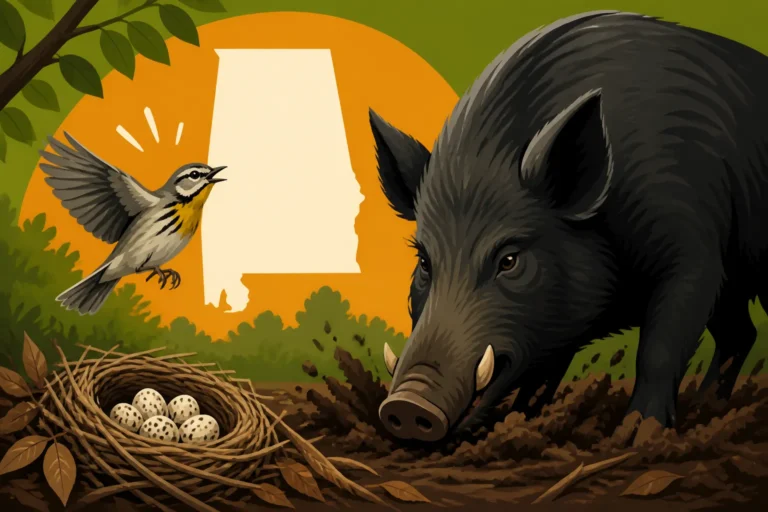
Adding to the complexity, the unchecked proliferation of feral hogs across Alabama has introduced another significant threat. While not traditional quail predators in the same way a raccoon is, hogs are opportunistic omnivores. They will readily root up and consume quail nests and chicks if they encounter them. More broadly, their destructive rooting habits can degrade fragile quail habitat, especially nesting cover, by disturbing soil and consuming important plant tubers and seeds. Their presence adds another layer of pressure to a species already struggling to survive. Hunting Alabama's Year-Round Feral Hogs highlights their widespread presence.
The Role of Disease and Parasites
While often playing a secondary role to habitat and predation, diseases and parasites can also impact quail populations, especially when birds are already stressed. High densities of quail in confined areas, or birds living in degraded habitats with poor nutrition, can be more susceptible to outbreaks of diseases like avian pox or various parasitic infections. These factors can reduce survival rates, particularly in young birds, further hampering recovery efforts.
Hope on the Horizon: Restoration Efforts in Alabama
Despite the grim reality of the decline, there are dedicated individuals, landowners, and organizations working tirelessly to reverse the trend and bring bobwhites back to Alabama's landscapes. It's a long, uphill battle, but one with increasing understanding and some promising strategies.
Prescribed Fire: Rekindling Habitat
One of the most crucial tools in quail habitat restoration is the reintroduction of prescribed fire. Land managers, conservation organizations, and private landowners are increasingly recognizing the vital role of fire in maintaining healthy ecosystems, particularly in longleaf pine forests and other fire-dependent communities. Controlled burns, conducted under specific conditions, help to:
- Reduce dense woody undergrowth, creating open ground for quail movement and foraging.
- Stimulate the growth of native grasses and forbs, providing critical nesting cover and food sources.
- Control invasive species that can outcompete native plants.
Organizations are working with landowners to implement burn plans, demonstrating how fire can transform dense, unproductive woods into vibrant, quail-friendly habitat. This involves careful planning and execution, but the results can be truly transformative. Alabama Longleaf Pine and Quail Habitat is a key piece of the puzzle here.
Native Grass Restoration and Habitat Management
Beyond fire, efforts are focused on actively restoring the diverse plant communities that quail depend on. This often involves planting native warm-season grasses like indiangrass, big bluestem, and switchgrass, which provide excellent nesting and brooding cover that stands up well through the winter. These grasses also support a rich insect community, crucial for quail chicks.
Other management practices include:
- Thinning pine plantations: Opening up dense stands allows sunlight to reach the forest floor, promoting understory growth.
- Creating early successional habitat: Disturbing small areas through disking or light timber harvest to encourage weeds and young plants.
- Establishing diverse food plots: While not a standalone solution, strategically placed food plots with species like millet, sorghum, and native legumes can supplement natural food sources.
Understanding the specific needs of quail, from nesting to foraging to escape cover, helps guide these focused habitat improvements.
Private Landowner Programs and Partnerships
The vast majority of Alabama's land is privately owned, making private landowner involvement absolutely critical for quail recovery. State agencies like the Alabama Department of Conservation and Natural Resources (ADCNR), along with non-profits such as Quail Forever, the National Wild Turkey Federation (NWTF), and other conservation groups, offer technical assistance and cost-share programs to help landowners implement quail-friendly habitat practices.
These programs might help fund prescribed burns, provide native seed mixes, or offer expert advice on how to manage timber or agricultural land for quail. By empowering and assisting private landowners, these initiatives aim to create a larger network of connected, suitable habitat across the state. This is especially true in areas like the Black Belt, where large tracts of private land historically supported robust populations. How Managed Pine Restored Black Belt Quail often occurs on these private lands.
The Role of Managed Quail Plantations
While perhaps not representative of widespread wild quail hunting, managed quail plantations play a vital role in showcasing what ideal quail habitat can look like and serving as living laboratories for restoration techniques. These operations often dedicate significant resources to intensive habitat management, including frequent prescribed burning, native grass plantings, and predator control.
These plantations not only offer incredible hunting experiences, often featuring Working Pointing Dogs on Black Belt Quail and Wagon Hunts Versus Walking Quail Hunts, but they also contribute valuable data and demonstrate best practices. They provide a glimpse into the past abundance and offer hope for what can be achieved with dedicated, science-based land management. Many hunters participate in Hunting a Managed Quail Plantation to experience the thrill of a covey rise. Companies like GoHunt, while primarily a hunting data platform, also emphasize the importance of understanding habitat trends and the impact of management practices.
Citizen Science and Data Collection
Accurate data on quail populations is essential for effective conservation. Various surveys, such as the annual Breeding Bird Survey and specific quail call count routes, help biologists monitor population trends. Additionally, organizations are exploring ways to engage hunters and citizens in reporting observations, contributing to a broader understanding of where quail are still found and where efforts are most needed. Data platforms, including resources that GoHunt might provide, help hunters and land managers make informed decisions based on observed trends and habitat characteristics. Knowing Best Alabama Counties for Wild Quail requires solid data.
The road to recovery for Alabama's bobwhite quail is a long one, requiring sustained effort and a commitment to restoring diverse, fire-managed landscapes. But with increased awareness, scientific understanding, and the dedication of passionate landowners and conservationists, there's a growing hope that the iconic "bob-WHITE!" call might once again become a common sound across the Alabama countryside.
Disclaimer
This article is for general informational purposes only and does not constitute professional advice. Laws, prices and regulations vary by location and change over time. Consult a qualified professional for guidance on your specific situation.