Best Alabama Counties for Turkeys
There’s nothing quite like the thrill of a gobbler hammering back at your call, but finding those prime locations where turkeys consistently strut their stuff can feel like a lifelong quest for many Alabama hunters. It’s a common frustration to scout tirelessly only to find sparse birds, leaving you wondering if you’re even looking in the right place. This guide is here to shed some light on the subject, walking you through the best Alabama counties for wild turkeys, explaining why they stand out, and giving you the tools to find your own slice of turkey heaven.
Understanding Alabama's Turkey Zones and Population Dynamics
Before we dive into specific counties, it's really important to understand the bigger picture of how Alabama manages and monitors its wild turkey population. The state isn't a monolith when it comes to gobblers; different regions have different characteristics that directly impact where you'll find the most birds and when you can hunt them. It's all about habitat, management, and those crucial breeding cycles.
Zone 1 vs. Zone 2: What's the Difference?
Alabama wisely divides the state into two distinct turkey hunting zones, primarily to account for the varying spring green-up and breeding timelines across the state. Zone 1, generally the northern and central portions of Alabama, typically has an earlier opening date for spring turkey season. This makes sense because the birds in those cooler northern climes tend to start their breeding activities a bit later than their southern counterparts, aligning the season opener with peak gobbling activity. Hunters eagerly anticipate Alabama Zone 1 Spring Turkey Opening Day.
On the other hand, Zone 2, which covers the warmer southern counties, usually sees its season open a week or so later. This staggered approach is a scientifically sound way to maximize hunting opportunity while still protecting the turkey population during the most critical part of their reproductive cycle. If you're planning a trip, knowing Alabama Spring Turkey Zones and Dates is absolutely paramount. Understanding these zones is crucial, because a county might be fantastic, but if you're there at the wrong time relative to their breeding cycle, your success will suffer. It's not just about when the season opens, but when the birds are most active and responsive to calls.
Poult-to-Hen Ratios and Their Impact
Wildlife biologists use various metrics to gauge the health of a turkey population, and one of the most telling is the poult-to-hen ratio. Simply put, this number tells us how many young turkeys (poults) are surviving per hen. A high ratio, say three or more poults per hen, indicates a healthy, growing population with good nesting success and poult survival. Conversely, a low ratio can signal trouble, like poor hatches, high predation on poults, or even habitat degradation.
When you see reports or hear anecdotal evidence of certain counties having robust turkey numbers, it's often because they've consistently maintained good poult-to-hen ratios. These are the counties where hens are successfully bringing off broods, and those young birds are making it to maturity, replenishing the population. Areas with consistent natural food sources, like abundant mast crops, and good brood-rearing habitat, such as open pine stands with diverse undergrowth, tend to fare better. This ecological success translates directly into more gobblers to chase in the spring.
Habitat is King: Why Certain Areas Excel
You can talk about zones and ratios all you want, but at the end of the day, it all comes back to habitat. Wild turkeys thrive in diverse landscapes, particularly those that offer a mosaic of mature hardwood forests, open pine stands, agricultural fields, and well-watered creek bottoms. They need those big, mature trees for roosting, especially the tall oaks and pines that provide security from ground predators. Then they need good nesting cover, often found in thicker underbrush or regenerating clear-cuts, to hide their clutches from predators like raccoons and coyotes.
Crucially, they need abundant food sources throughout the year. Acorns are a huge draw in the fall and winter, but they also rely heavily on insects and seeds found in open areas during spring and summer, which is vital for growing poults. Areas that have undergone Prescribed Burns and Alabama Hunting Closures often see an increase in turkey activity due to the fresh growth and insect abundance that follows. The best counties aren't just patches of woods; they are complex ecosystems that cater to every stage of a turkey's life cycle. Think of river bottoms offering lush green growth year-round, adjacent to rolling hills of mixed pine and hardwood, interspersed with small fields or clearings. That's turkey paradise, and that's where you'll find consistent gobbling action.
Top Counties for Wild Turkeys in Alabama
Alright, let's get down to brass tacks: where are the best places to hang your spurs in Alabama? While turkeys can be found in every county, some just consistently produce more birds and offer a better hunting experience due to their unique blend of habitat, land use, and historic populations.
The Black Belt's Reign: Marengo, Sumter, and Wilcox
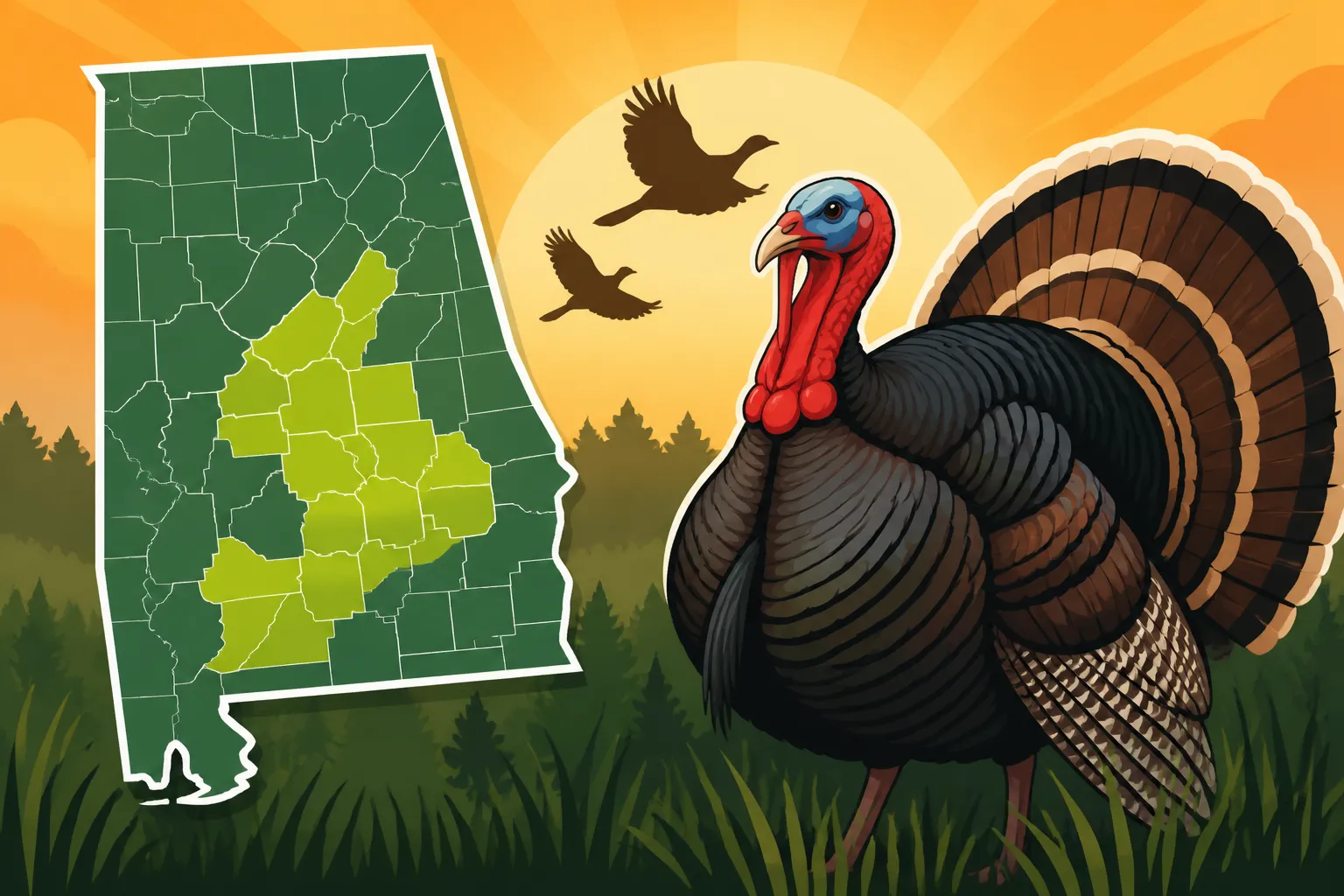
When you talk about wild turkeys in Alabama, the conversation inevitably turns to the Black Belt. This crescent-shaped region, known for its rich, dark soil and vast agricultural lands interspersed with hardwood river bottoms, is legendary for its deer and equally impressive for its turkeys. Counties like Marengo, Sumter, and Wilcox often top the lists for turkey harvest and overall bird numbers. The combination of nutrient-rich soils leading to abundant forage, sprawling private land holdings with quality management, and diverse habitat is simply unparalleled.
Imagine vast tracts of privately managed timberland meeting fertile agricultural fields, all bisected by meandering creeks and river systems. This is the recipe for success. These counties offer ample roosting sites in towering hardwoods, excellent nesting cover in brushy thickets, and endless food sources from both natural mast crops and agricultural spills. Hunters lucky enough to get access to private land in these areas often experience incredible gobbling activity. It's not uncommon to hear multiple birds on the roost at daybreak, a truly magical experience. This region is home to some of the Best Alabama Counties for Big Bucks too, showcasing its overall wildlife richness.
Northern Hotspots: Pickens, Tuscaloosa, and Fayette
While the Black Belt gets a lot of the spotlight, don't sleep on some of the northern and west-central Alabama counties. Pickens, Tuscaloosa, and Fayette counties have consistently strong turkey populations, offering fantastic hunting opportunities. These areas tend to be more rolling topography, often with larger blocks of timber, making for classic turkey country. Here, you'll find a healthy mix of hardwood ridges, pine plantations, and bottomland hardwoods that provide excellent habitat for wild turkeys.
Many of these counties benefit from extensive public land holdings, like parts of the Bankhead National Forest or various Wildlife Management Areas, offering access to hunters who don't have private land. For instance, the Black Warrior WMA within Bankhead National Forest provides significant turkey habitat. While the pressure on public land can be higher, savvy hunters who are willing to put in the miles and get away from easy access points can find unpressured birds. Knowing how to Still-Hunting Bankhead Forest Ridges can be a great asset in these areas, not just for deer, but for turkeys too, as you move quietly through their preferred habitat. These northern areas present a different kind of challenge and reward, often requiring more scouting and legwork, but the payoff can be substantial.
Hidden Gems: East-Central and Southeast Regions
Beyond the usual suspects, Alabama holds several "hidden gem" counties for turkey hunting that might not always make the headlines but consistently produce birds. Counties in the east-central region, such as Bullock and Barbour, often provide excellent opportunities, especially on well-managed private properties. These areas share some of the Black Belt's agricultural advantages, combined with significant timber tracts. The terrain can be a bit more varied, offering good roosting cover and diverse foraging.
In the Wiregrass region of Southeast Alabama, counties like Butler and Conecuh also offer solid turkey populations. Here, you'll often find a mix of pine flatwoods, agricultural fields, and hardwood drains. While the habitat might look different, the fundamentals remain: good food, good cover, and responsible management. These areas can sometimes offer less pressure than the more famous Black Belt counties, especially if you can gain access to private land. Hunters might find success even when Hunting Wiregrass Region Pine Flats for deer, as these same areas often hold pockets of turkeys. It's worth researching these slightly less-talked-about areas, as they can sometimes yield exceptional results for those willing to explore.
Here's a quick look at some key characteristics of these top turkey counties:
| County Name | Typical Habitat | Primary Turkey Zone | Public Land Opportunities | Noted For |
|---|---|---|---|---|
| Marengo | Hardwood Bottoms, Agriculture | Zone 2 | Limited WMA access | High Density, Large Tracts |
| Sumter | Mixed Hardwood/Pine, Agriculture | Zone 2 | Limited WMA access | Private Land Management |
| Wilcox | River Bottoms, Mixed Forests | Zone 2 | Limited WMA access | Strong Gobbling Activity |
| Pickens | Rolling Hills, Mixed Timber | Zone 1 | Large WMA, National Forest | Consistent Populations |
| Tuscaloosa | Diverse Forests, Creek Drainages | Zone 1 | WMA, National Forest Access | Good Public Land Potential |
| Fayette | Timberland, Smaller Farms | Zone 1 | WMA access | Lower Pressure Spots |
| Bullock | Agriculture, Pine & Hardwood | Zone 2 | Limited WMA access | Managed Private Estates |
| Butler | Pine Plantations, Bottomland | Zone 2 | Limited WMA access | Good Balance of Habitat |
Factors Influencing Turkey Abundance and Hunting Success
It's not just about a county having turkeys; it's about your ability to find and hunt them successfully. Several factors beyond simply "being there" will dictate your experience, from the type of land you're hunting to the environmental conditions of the year.
Land Ownership and Access: Public vs. Private
The debate between hunting public versus private land is eternal, and for turkeys in Alabama, it's particularly relevant. Counties with a high percentage of privately owned and well-managed timberland or agricultural properties often hold the most robust turkey populations. These landowners frequently implement habitat management practices, control predator numbers, and limit hunting pressure, creating ideal conditions for turkeys to thrive. If you have the privilege of access to such ground, your chances of success are significantly higher. This is where Knocking on Doors in Black Belt Farm Country can really pay off.
Public lands, while offering invaluable access to everyone, often come with more hunting pressure. Turkeys on public land tend to be warier, less vocal, and can be harder to locate consistently. However, this doesn't mean public land is a lost cause. Dedicated hunters who are willing to put in the time for scouting, hike deep into remote areas, and adapt their tactics can absolutely find success. Areas with extensive public acreage, like those within the William B. Bankhead National Forest or specific WMAs, hold good turkey numbers, but you'll need to work for them. Knowing how to use tools like the GoHunt app to identify public boundaries and topographic features can give you an edge.
Pressure and Poaching: Keeping a Low Profile
Hunting pressure is a huge factor, especially for turkeys. A gobbler that has been called to by multiple hunters over several days or weeks will become "call-shy" or simply ignore calls altogether. This is why some of the more accessible public land spots can be tough. The more hunters that walk an area, the more educated the birds become. This is also why areas with extensive private land management and controlled hunter numbers often have more responsive birds.
Poaching, unfortunately, is another reality that can decimate local turkey populations in some areas. Responsible hunters understand the importance of adherence to bag limits and ethical hunting practices. When populations are hit hard by illegal activities, it can take years for them to recover, regardless of how good the habitat is. This is why reporting suspicious activity is crucial for the health of our wildlife. Being aware of Alabama Spring Turkey Bag Limit and respecting it helps maintain healthy populations for everyone. The key for hunters is to find spots where birds haven't been relentlessly pursued, whether that's deep in a public land block or on a piece of private ground where pressure is carefully managed.
Weather and Acorn Crops: Annual Variations
Wild turkey populations and their behavior are intrinsically linked to natural cycles, and two of the biggest are weather patterns and acorn crops. A severe drought during nesting season, for example, can reduce insect availability, which is critical protein for young poults, leading to lower poult survival. Conversely, an overly wet spring can lead to hypothermia in young birds, especially if sustained cold rains hit shortly after hatching. Mild winters, however, generally mean less stress on the adult population, leading to healthier birds going into the breeding season.
Acorn crops, while more directly impacting fall and winter foraging, also play a role in the overall health of the flock. A bumper acorn crop provides abundant food, allowing birds to build up fat reserves, leading to healthier hens entering the spring breeding season. A poor acorn year can force birds to travel more widely for food, potentially exposing them to more predators and entering the spring in poorer condition. Hunters might notice that in years with abundant acorns, turkeys are more spread out, whereas in lean years, they concentrate around limited food sources. These natural variations mean that even the best counties can have "off" years, and a truly successful turkey hunter learns to adapt to these changes.
How to Research and Scout Your Next Turkey Destination
Finding the best turkey hunting in Alabama isn't always about knowing the "secret spot"; it's about being diligent in your research and putting in the boots-on-the-ground effort. Even in a top-tier county, you still need to locate the birds.
Utilizing Online Resources and Maps
We live in a digital age, and that's a huge advantage for turkey hunters. Start your research with the Alabama Department of Conservation and Natural Resources (ADCNR) website, particularly the Outdoor Alabama app, which offers incredible mapping tools. This app provides detailed WMA boundaries, public land designations, and often layers showing habitat types. It's an indispensable tool for Scouting Alabama Public Land Before Season.
Third-party mapping applications like GoHunt or onX Hunt are also incredibly powerful. They allow you to overlay property lines, topographic maps, aerial imagery, and even historic burn data. By studying these maps, you can identify potential roosting areas (tall timber near water), travel corridors (ridges, creek bottoms), and feeding areas (open fields, oak flats). You can often spot subtle terrain features, like saddles on a ridge or benches along a hillside, that act as natural funnels for turkey movement. I use GoHunt extensively to identify areas with a good mix of hardwoods and pines, looking for those key transitions where turkeys like to hang out.
Boots on the Ground: Pre-Season Scouting
As invaluable as digital maps are, there's absolutely no substitute for pre-season scouting. Hitting the woods before the season opener allows you to confirm what you saw on the map, and more importantly, find fresh sign. Look for turkey tracks, droppings (especially larger gobbler droppings), strut marks in open fields, and shed feathers. Listen for gobbling at first light from potential roost sites. A locator call (owl hooter, crow call) can help you pinpoint roosted birds without over-calling them before the season.
Walking creek bottoms and ridge lines will give you a sense of the terrain and where birds are likely to travel. Pay attention to food sources; are the red oaks dropping acorns? Are there bugs in the fields? This kind of intelligence is critical. Early season scouting, ideally a few weeks before the opener, helps you identify active areas without disturbing birds too much. Remember, even in the best counties, birds move, and a spot that was hot last year might be cold this year, and vice versa.
Connecting with Local Knowledge
Finally, don't underestimate the power of local knowledge. Talk to farmers, landowners, and other reputable hunters in the areas you're considering. They live and breathe the land and can offer invaluable insights into turkey movements, preferred roost sites, and general population trends. Local feed stores, gas station convenience stores, or even small-town diners can be unexpected hubs of information. Of course, approach these conversations with respect and genuine curiosity, not just demanding secret spots.
Joining a local hunting club or participating in an Alabama hunting club can also be a fantastic way to gain access to prime land and benefit from collective knowledge. Be a good listener, share your own experiences respectfully, and you'll find that many in the Alabama hunting community are happy to help a fellow hunter, especially if you show a passion for conservation and ethical hunting. This human element can be the final piece of the puzzle, turning good map research and diligent scouting into a successful turkey hunt.
Disclaimer
This article is for general informational purposes only and does not constitute professional advice. Laws, prices and regulations vary by location and change over time. Consult a qualified professional for guidance on your specific situation.