Why Alabama Hogs Have No Natural Predator Check
It's a frustrating reality for anyone who spends time in Alabama's woods or fields: feral hogs are everywhere, and they're causing untold damage. You see the rooted-up ground, the muddy wallows, and sometimes, the hogs themselves, often in numbers that would make your jaw drop. The biggest challenge, and perhaps the most disheartening, is that unlike most other game animals, these invasive swine simply don't have natural predators keeping their populations in check here in the Yellowhammer State, leading to an explosion in their numbers that impacts everything from native wildlife to agricultural yields. This guide will deep dive into why Alabama's ecosystem struggles to control feral hog populations and what that means for our beloved outdoors.
The Alarming Truth: Feral Hogs Run Wild in Alabama
When you talk about wildlife management in Alabama, feral hogs often come up as one of the most persistent and destructive issues facing landowners, hunters, and conservationists alike. They're not just a nuisance; they're an ecological wrecking ball, transforming habitats and outcompeting native species at an alarming rate. The problem is so widespread that it’s nearly impossible to find a county in Alabama that hasn’t felt their impact.
The Scale of the Problem
The sheer numbers are staggering. If you've ever wondered How Many Feral Hogs Alabama Has, estimates vary, but it's safe to say there are well over a million, and possibly significantly more, free-ranging feral hogs rooting and breeding across the state. This isn't a problem confined to remote wilderness areas; hogs are just as comfortable on the edges of suburban developments as they are deep in the delta swamps. Their adaptability, combined with an incredible reproductive rate, means that even with extensive human intervention, their numbers often continue to climb. They reproduce faster than any other large mammal in North America, with sows capable of having multiple litters a year, often with 4-8 piglets per litter.
What we're dealing with is essentially an invasive species that has found an ideal environment to thrive without the natural checks and balances that might typically exist. This population density creates significant pressure on our forests, fields, and waterways. The visible damage, like plowed-up fields or destroyed food plots, is just the tip of the iceberg, hinting at a much deeper ecological crisis unfolding beneath the surface. For instance, Crop Damage Hogs Cause in Alabama is a massive financial burden on farmers, often leading to hundreds of thousands of dollars in losses annually.
Understanding the Feral Hog's Biology
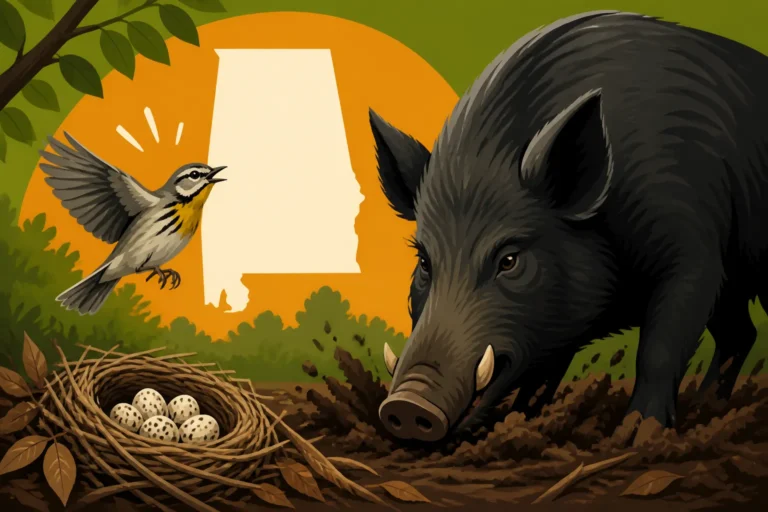
To truly grasp why these animals pose such a problem, you have to understand their basic biology. Feral hogs are descendants of domestic pigs that either escaped or were released and have reverted to a wild state. This means they carry the robust genetics for rapid growth and prolific breeding from their domestic ancestors, coupled with the survival instincts sharpened by generations in the wild. They're omnivores, meaning they'll eat just about anything: roots, tubers, acorns, insects, small reptiles, eggs of ground-nesting birds, fawns, and even carrion. This incredibly broad diet allows them to exploit nearly every available food source in any given environment.
Furthermore, hogs are incredibly intelligent and resilient. They learn quickly, adapt to hunting pressure by changing their patterns, and are exceptionally tough animals. Their thick hides and powerful bodies make them formidable, and they often travel in social groups called sounders, which can consist of a dozen or more individuals. This collective behavior aids in their survival, foraging efficiency, and defense, especially when young piglets are present. Their ability to adapt their behavior to avoid hunters is one of the key reasons why traditional hunting methods alone often fall short of population control.
A Missing Link: Why Alabama's Ecosystem Fails to Control Hogs
The core of the problem stems from a fundamental imbalance in Alabama's current ecosystem. Unlike other regions where large predators might help regulate wild pig populations, Alabama simply lacks the necessary native carnivores to make a dent in the booming feral hog numbers.
The Absence of Apex Predators
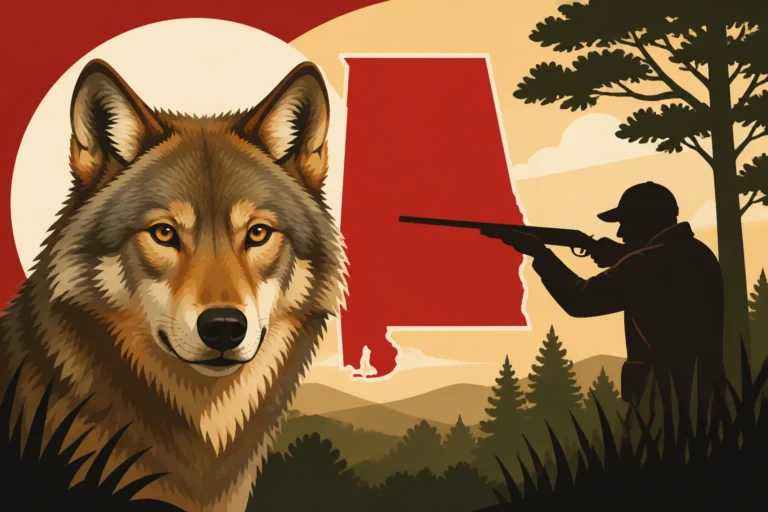
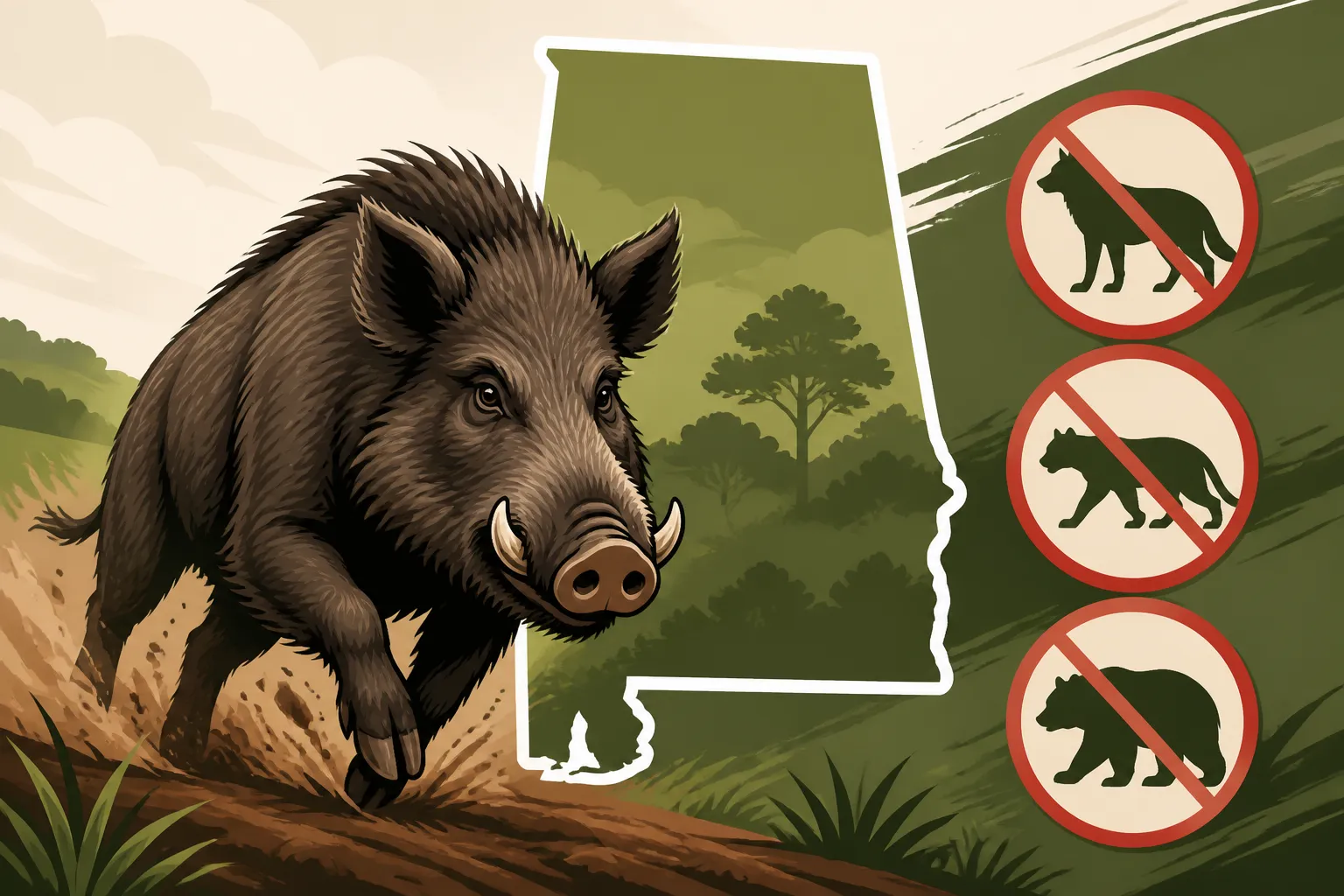
Historically, apex predators such as wolves and cougars (mountain lions) played a crucial role in controlling populations of large herbivores and, by extension, introduced species like wild pigs in other parts of the continent. However, these magnificent predators were largely extirpated from Alabama centuries ago due to human settlement and hunting pressure. While there's a Red Wolf History in Alabama and efforts for their recovery have been discussed, their populations are nowhere near what would be required to impact hog numbers. Similarly, while there are occasional, unconfirmed sightings of cougars, there is no established breeding population in Alabama that could exert significant predatory pressure on feral hogs.
Even other potential predators like coyotes, while numerous in Alabama, are generally not large enough or numerous enough to consistently prey on adult feral hogs, especially the larger boars and sows. Coyotes might take very young piglets, but a full-grown sow can easily defend her litter, and the sheer number of piglets born far outstrips any losses to coyotes. Black bears, which are Alabama's Recovering Black Bear Population, are primarily omnivores and while they might occasionally scavenge a hog carcass or even take a very young piglet, they are not natural predators of adult feral hogs and their population density is too low to act as a significant control factor. This leaves an enormous void in the food chain, allowing hogs to multiply virtually unchecked by natural forces.
Historical Predator Shifts
The landscape of Alabama has changed dramatically over the last few hundred years. As European settlers arrived, forests were cleared for agriculture, and the larger predator species that might have kept a balance were aggressively hunted to protect livestock and, honestly, out of fear and misunderstanding. This human-driven alteration of the natural environment created a perfect storm for an invasive species like the feral hog. With no significant natural enemies, and a climate that offers ample food and mild winters, hogs have truly found their paradise here.
Consider the role of disease. While diseases can sometimes act as a natural check on animal populations, feral hogs are notoriously hardy. While they can contract various illnesses, including some that can be transmitted to livestock and humans (a significant concern discussed later), these diseases rarely lead to widespread mortality events that would naturally reduce their numbers. Unlike, say, a severe winter that might cull weaker deer, Alabama's mild climate and abundant resources further insulate hogs from natural population suppressors.
The Untapped "Natural" Check: Human Hunters and Their Limitations
Given the absence of natural predators, the primary "natural" check on feral hog populations in Alabama falls squarely on human shoulders. Hunters and land managers are on the front lines, but even their significant efforts face considerable challenges in truly controlling the problem.
Recreational Hunting Pressure
Hunting feral hogs in Alabama is a year-round affair, with Alabama's Year-Round Hog Rule on Private Land making it legal to hunt them 365 days a year without a closed season or bag limit on private property. This seems like a dream scenario for population control, right? Unfortunately, while recreational hunting removes a substantial number of hogs, it's often not enough to keep pace with their incredible reproductive rate. Many hunters target hogs for sport, meat, or opportunity, rather than with a dedicated population reduction strategy in mind. The casual hunter might take a hog or two, but it takes sustained, intense pressure to truly thin a sounder or impact an entire local population.
Furthermore, hogs are incredibly intelligent. They quickly learn to associate human presence and hunting pressure with danger. They become nocturnal, move to thicker cover, and avoid areas where they've been pursued. This makes them notoriously difficult to consistently hunt, especially during daylight hours. While tactics like Night Hunting Hogs With Lights on Private Land have proven effective, they require specialized equipment and often land access that not every hunter possesses. You can find useful mapping and scouting tools through platforms like GoHunt that can help you identify potential hog hotspots and plan your approach, but even with the best tech, hogs are a formidable adversary.
Commercial Control Efforts
Beyond recreational hunting, there's a growing industry around commercial hog control, including professional trappers and specialized hunting outfits. These operations often employ more systematic approaches, utilizing large, sophisticated traps, thermal imaging equipment, and sometimes even helicopters in larger, more open areas. For instance, Trapping Alabama Feral Hogs is one of the most effective methods for removing large numbers of animals at once, especially when targeting entire sounders. These professional efforts can make a significant localized impact, but they are expensive and require consistent application across vast landscapes to be truly effective statewide.
However, even with these dedicated efforts, the challenge persists. Hogs quickly become trap-shy, and successful trapping requires meticulous planning, baiting strategies (like Building and Freshening a Hog Bait Site), and constant monitoring. Many of these professional services are geared towards protecting high-value agricultural crops or specific wildlife habitats, meaning their reach, while impactful, isn't always comprehensive enough to cover every acre of Alabama that hogs inhabit. It’s an ongoing battle where ground is gained, only for new hog populations to emerge elsewhere.
| Management Technique | Pros | Cons | Effectiveness for Population Control |
|---|---|---|---|
| Recreational Hunting | Accessible to many, provides food, recreation, no cost to state | Inconsistent pressure, hogs adapt quickly, doesn't keep pace with reproduction | Low-Moderate (localized) |
| Night Hunting | Hogs more active, thermal/night vision effective | Specialized equipment, often private land only, requires significant effort | Moderate-High (localized) |
| Trapping | Removes multiple hogs at once (sounders), targeted | Hogs become trap-shy, labor-intensive, requires baiting and monitoring | High (localized) |
| Dog-Assisted Hunting | Exciting, can root out hogs from thick cover, reduces cripples | Requires trained dogs and handlers, controversial for some, high risk to dogs | Moderate-High (localized) |
| Aerial Gunning | Extremely efficient for large-scale removal, fast | Very expensive, requires specific terrain and regulations, not widespread | Very High (broad-scale) |
This table illustrates why a multi-faceted approach, often incorporating elements from several techniques, is crucial for any hope of significant hog management. Using tools like GoHunt to analyze land features and access points can help hunters and managers better strategize their approach to these elusive animals.
Ecological Fallout: The Devastating Impact of Unchecked Hog Populations
The lack of natural predators for feral hogs in Alabama isn't just an abstract biological fact; it has tangible, often devastating consequences across the state's natural and agricultural landscapes. The damage they inflict ripples through ecosystems, affecting everything from delicate flora to native wildlife and, ultimately, human livelihoods.
Habitat Destruction and Native Wildlife Displacement
One of the most visible impacts of unchecked hog populations is the extensive habitat destruction they cause. Their incessant rooting for food turns forest floors into churned-up dirt, destroying native plant communities, tree seedlings, and the vital duff layer that protects soil from erosion. This rooting also damages agricultural fields, leaving them unfit for planting or harvest. Imagine miles of river bottoms and hardwood forests looking like they've been tilled by a tractor, and you start to get the picture.
This habitat alteration directly impacts native wildlife. Ground-nesting birds, like wild turkeys, and species such as bobwhite quail, find their nests, eggs, and poults vulnerable to hog predation. Hogs compete directly with white-tailed deer and other native species for critical food sources like acorns and other mast crops. Deer might find their preferred browse destroyed, and their fawns become easy targets for opportunistic hogs. Amphibians and reptiles, often with limited mobility, are particularly susceptible to being rooted up or consumed. The sheer biomass of hogs in an area can literally starve out native species by consuming all available resources or by destroying their necessary cover. It’s a silent, relentless siege on our indigenous fauna and flora.
Disease Vectors and Agricultural Ruin
Beyond direct environmental damage, feral hogs are notorious carriers of diseases and parasites that can pose serious threats to livestock, other wildlife, and even humans. They can carry diseases like brucellosis, leptospirosis, salmonella, and even pseudorabies, which, while not typically transmissible to humans, can be devastating to domestic swine populations. If you’re ever handling a hog after the shot, it’s critical to use proper precautions and hygiene, especially considering the potential for disease transmission. These diseases can be spread through direct contact, contaminated water sources, or through soil, creating a persistent health risk for any animals sharing their habitat.
For Alabama's agricultural sector, the presence of feral hogs is a constant nightmare. We touched on Crop Damage Hogs Cause in Alabama earlier, but it’s worth reiterating the scale. Hogs will decimate fields of corn, peanuts, soybeans, and other row crops, often just before harvest. They don't just eat; they trample, root, and foul fields, making large portions unmarketable. Livestock farmers face threats too, as hogs can prey on newborn calves, lambs, or goats, and, as mentioned, transmit diseases to their herds. The economic losses are immense, driving up costs for farmers and sometimes forcing them to abandon certain crops or fields altogether. It's a relentless financial drain on rural communities.
The Path Forward: Managing Alabama's Feral Hog Crisis
Addressing Alabama's feral hog problem requires a multi-pronged, sustained approach that combines various strategies and leverages both state resources and individual hunter efforts. There's no single silver bullet, but rather a commitment to integrated management.
Integrated Management Strategies
Effective hog control hinges on applying a combination of techniques, often simultaneously, and with significant coordination. Trapping remains one of the most effective methods for removing large numbers of hogs, especially when targeting entire sounders. The Alabama Department of Conservation and Natural Resources (ADCNR) often works with landowners and provides guidance on the most effective trapping methods and What Hog Trappers Use in Alabama. This usually involves large corral traps that can capture an entire group of hogs at once, rather than smaller box traps that might only catch a few individuals. The goal is always to remove as many hogs as possible from an area.
Hunting, both recreational and targeted, continues to play a vital role. Encouraging hunters to participate year-round and to employ strategies that maximize removal, rather than just selective harvest, is key. This might mean encouraging hunters to take multiple hogs from a sounder when the opportunity arises, or to utilize Running Dogs on Alabama Feral Hogs to push animals from dense cover. State agencies often provide educational resources and workshops on effective hog control, emphasizing that this isn't just about sport, but about conservation and land management. GoHunt, for example, can be a great resource for hunters looking for information on specific game species and regulations, helping them understand how their hunting efforts can contribute to broader conservation goals.
Public Awareness and Hunter Participation
Perhaps the most critical component in the long-term fight against feral hogs is widespread public awareness and active hunter participation. Many hunters are passionate about deer and turkey, but sometimes overlook the vital role they can play in controlling hog populations. Educating hunters on the devastating impact of hogs and the importance of year-round efforts can significantly boost the overall removal rate. This means making sure people understand that taking a Shot Placement on a Feral Hog accurately and then effectively retrieving and Handling a Hog After the Shot are contributions to the health of the ecosystem.
For those without private land access, understanding Alabama Feral Hog Regulations on public lands is crucial. While public land rules can sometimes be more restrictive, many WMAs allow hog hunting during open seasons for other game, and some even have specific hog hunts. Using the Outdoor Alabama app or resources like GoHunt can help hunters identify public access points and areas where hogs are prevalent, allowing them to contribute to control efforts even without private land. The more hunters actively engage in hog removal, the more pressure is applied, and the better the chances of mitigating their impact on Alabama's cherished wildlife and agricultural bounty.
Disclaimer
Please remember that hunting regulations, license requirements, and season dates can change. Always consult the latest official Alabama Department of Conservation and Natural Resources (ADCNR) regulations before planning any hunting trip. Safety should always be your top priority in the field.