Alabama Squirrel and Rabbit Populations
It’s a common frustration for folks in Alabama: you want to get out and enjoy some small game hunting, maybe introduce a new hunter to the woods, but you're just not sure where to even start looking for squirrels or rabbits. These fast-moving, elusive little critters can be hard to pin down if you don't understand their habits and preferred hangouts. This guide is here to shed light on the populations of Alabama's beloved squirrels and rabbits, helping you understand their world so you can plan a successful hunt.
Alabama's Rich Small Game Hunting Heritage
For generations, hunting squirrels and rabbits has been more than just a pastime in Alabama; it's a deep-seated tradition, a way of life that connects us to the land and to those who came before us. Before deer and turkey populations rebounded to their current levels, small game was often the primary pursuit for many families, providing vital sustenance and countless hours of outdoor enjoyment. It’s still one of the best ways to introduce young hunters to the outdoors, teaching them basic woodsmanship, gun safety, and the thrill of the chase without the intensity or long waits often associated with larger game.
The Enduring Appeal of Squirrel and Rabbit Hunting
There’s something truly special about a crisp fall morning, the crunch of leaves underfoot, and the eager bark of a squirrel announcing its presence. Or the excitement of hearing beagles open up on a fresh rabbit track. These hunts are accessible, often requiring less specialized gear than deer or waterfowl, and they provide constant action. For many, it's about the simplicity, the connection to nature, and the delicious table fare these animals provide. It’s also an incredible way to explore the diverse habitats across our state, from the dense bottomland hardwoods to the tangled briar patches along a field edge. These hunts are perfect for teaching patience, observation, and quick decision-making, skills that translate to all types of hunting.
Small Game as a Gateway to the Outdoors
Think about it: a child can carry a .410 or a .22 rifle much easier than a deer rifle, and the opportunities for success are often higher and quicker with squirrels and rabbits. This immediate gratification, or at least the frequent action of seeing game, is crucial for keeping new hunters engaged. Beyond the hunt itself, it’s an opportunity to teach about habitat, animal behavior, and the importance of conservation. Learning to identify squirrel sign, like cut nuts on a log, or spotting a rabbit crouched under a brush pile, builds fundamental scouting skills. It’s also a chance to bond with family and friends, sharing stories and making memories in the fields and forests that define Alabama's wild spaces. Many seasoned hunters still cherish small game hunts as a cherished annual ritual, a chance to step back from the pressures of big game and simply enjoy the woods.
Understanding Alabama's Squirrel Populations
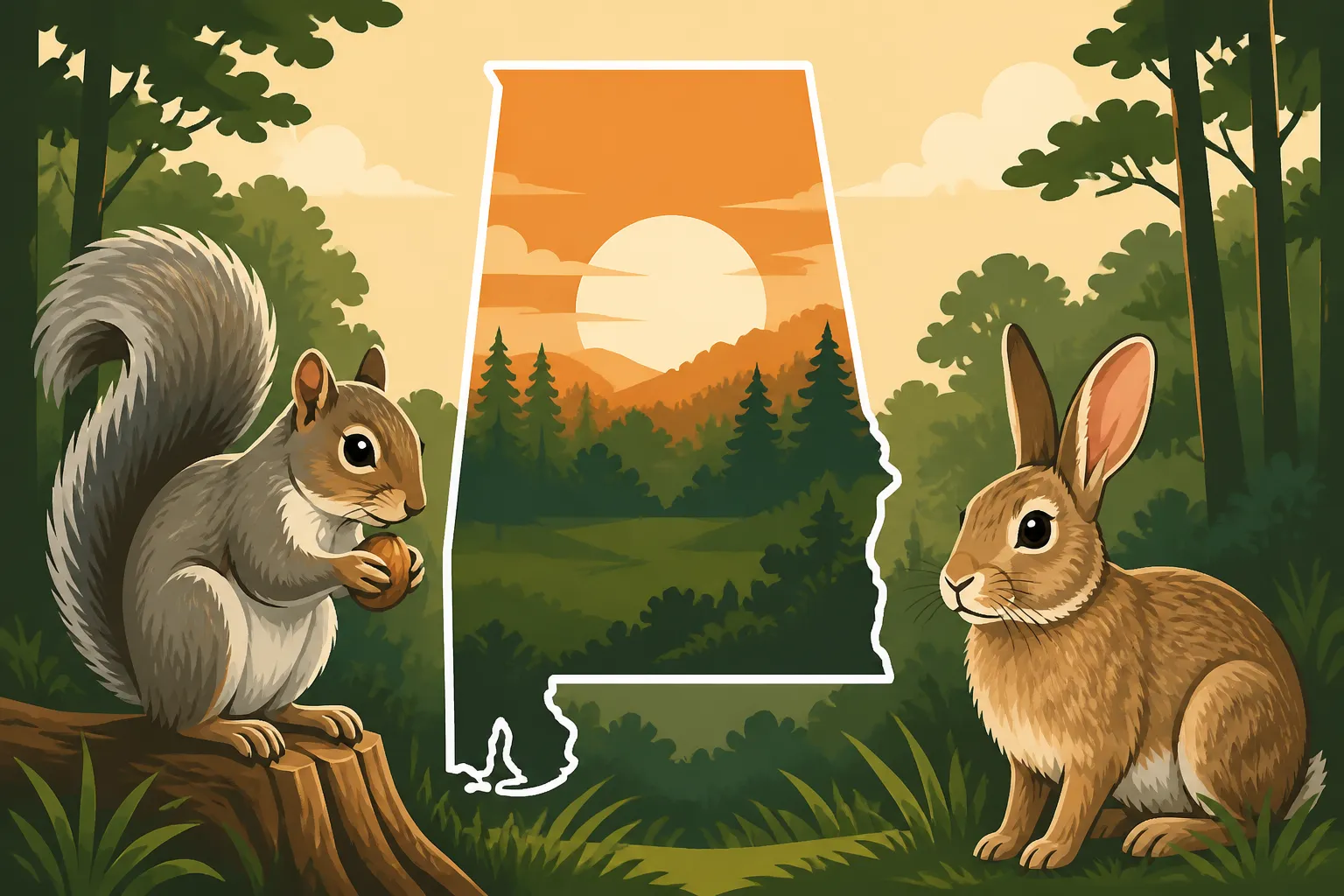
When we talk about squirrels in Alabama, we're primarily focusing on two species: the gray squirrel and the fox squirrel. Both are common, but they prefer slightly different habitats and exhibit distinct behaviors that hunters learn to recognize. Their populations are generally robust across the state, though local densities can fluctuate based on food availability and habitat quality.
Gray Squirrel Dominance in Alabama Forests
The gray squirrel (often just called a "cat squirrel" here in Alabama) is the most widespread and abundant squirrel species throughout the state. You’ll find them practically everywhere there are mature trees, especially in vast tracts of mixed hardwoods or bottomland forests, particularly those rich in oaks, hickories, and other mast-producing trees. They are smaller, quicker, and more agile than their fox squirrel cousins, often seen darting up and down tree trunks with incredible speed. Their population success is largely tied to acorn and hickory nut crops, which vary year to year. A good mast crop often means a boom in squirrel numbers the following season, while a poor crop can lead to local declines or shifts in movement as they search for food.
Hunters often encounter gray squirrels by still-hunting slowly through mature timber, pausing frequently to listen for their tell-tale barks, the rustling of leaves, or the sound of nuts being gnawed. Early morning and late afternoon are prime times for activity. It’s also common to find them working diligently in river bottoms, where abundant hardwoods provide a consistent food source. Places like the William B. Bankhead National Forest Hunting areas or the vast tracts within the Talladega National Forest Hunting often hold excellent gray squirrel populations, especially in the mature timber that defines those landscapes. When scouting, keep an eye out for cut nut shells on logs or stumps—a sure sign of active squirrels. Mapping tools like GoHunt can be invaluable for identifying prime hardwood stands and potential travel corridors, helping you pinpoint where the best hunting opportunities might be.
Fox Squirrel Distribution and Characteristics
The fox squirrel is Alabama's largest tree squirrel, easily distinguishable from the gray squirrel by its larger size, typically more reddish or yellowish fur, and often a black mask or white nose patch depending on the subspecies. Unlike gray squirrels, which thrive in dense, unbroken forests, fox squirrels tend to prefer more open, park-like pine forests, pine-hardwood mixes, or scattered stands of mature hardwoods near agricultural fields. They are less arboreal than grays, spending more time on the ground foraging, and are generally less numerous than gray squirrels, though they can be locally abundant.
Hunting fox squirrels requires a slightly different approach. Because they are less common and more scattered, a hunter might cover more ground, often focusing on the edges of pine plantations, old fields, or isolated stands of mature oaks within a pine landscape. They are less frantic than gray squirrels and often hold tighter when approached, sometimes allowing for a closer shot. Their larger size also makes them a prized target for many small game enthusiasts. These squirrels are particularly prominent in the Wiregrass region and parts of the Black Belt, where mixed agricultural and timber lands provide their preferred habitat. Understanding the subtle differences in their calls and movements is key; fox squirrels have a deeper, more drawn-out bark than the chattering of a gray squirrel.
Rabbit Populations Across the Yellowhammer State
Rabbits, particularly the Eastern cottontail, are another cornerstone of Alabama's small game tradition. These quick, elusive mammals provide fast-paced hunting action and are a favorite for hunters who enjoy working with dogs. Their populations are widespread, thriving in habitats often found near human activity.
Eastern Cottontail Habitat and Behavior
The Eastern cottontail is by far the most common rabbit species encountered in Alabama. These adaptable creatures thrive in what wildlife biologists call "early successional habitat"—areas undergoing change. Think brushy fields, fencerows, power line clearings, briar patches, regenerating timber cuts, and the edges of agricultural fields. Essentially, any place with thick cover close to a food source is prime cottontail habitat. They feed on a variety of vegetation, including grasses, clover, tender shoots, and even the bark of young saplings, especially in winter.
Hunting cottontails often involves walking through dense cover or, more traditionally and effectively, running beagles. The sound of a pack of beagles hot on a rabbit’s trail is pure music to a small game hunter’s ears. As the dogs push the rabbit, it often circles back to its home territory, presenting shot opportunities. When Rabbit Hunting Alabama Fencerows or brushy fields, pay attention to thick, almost impenetrable spots; that’s where cottontails will hunker down. Farmers often welcome rabbit hunters, as these animals can cause crop damage, making access to private land easier than for deer hunting in some cases. Identifying good rabbit cover can be enhanced by using mapping apps like GoHunt, which can highlight thickets and field edges that stand out as potential rabbit havens.
Swamp Rabbit Niches and Localized Presence
While less common than the Eastern cottontail, the swamp rabbit (also known as a cane cutter or canecutter) is another species hunters might encounter, particularly in the southern and western parts of Alabama. As their name suggests, these rabbits are true inhabitants of wetlands, floodplains, river bottoms, and cypress swamps. They are larger than cottontails, with coarser fur, and are excellent swimmers. Their legs are also slightly shorter, a useful adaptation for navigating dense, wet environments.
Hunting swamp rabbits is a more specialized pursuit, requiring access to their unique wetland habitats. They are often found in the thickest, wettest areas, making for a challenging but rewarding hunt. Beagles are still the go-to for these rabbits, as pushing through dense cane brakes and flooded timber is difficult for hunters alone. These areas can be found along major river systems, like the Mobile-Tensaw Delta or the Tombigbee River. Unlike cottontails, which are prolific breeders and found virtually everywhere, swamp rabbits are more localized and tied to specific, wet ecosystems. Understanding their preference for these challenging environments is key to finding them.
Habitat, Management, and Population Influences
The health and abundance of Alabama's squirrel and rabbit populations are intrinsically linked to habitat quality and ongoing management efforts. Both species thrive when their specific habitat needs—food, water, and cover—are met, and when predator-prey dynamics are in a healthy balance.
Forest Health and Mast Crops for Squirrels
For gray squirrels, a thriving hardwood forest is paramount. This means not just any trees, but mature, mast-producing trees like various oak species (red oak, white oak, water oak, pin oak), hickories, and even pecans where they occur naturally. These trees provide the critical high-energy food sources squirrels need to survive winter and successfully reproduce. Years with abundant mast crops generally lead to higher squirrel populations the following year, as more young survive. Conversely, poor mast years can cause local declines as squirrels face food shortages, sometimes leading to more visible activity as they range farther in search of food.
The Alabama Department of Conservation and Natural Resources (ADCNR) plays a crucial role in managing public lands to ensure these habitats remain productive. Through timber management practices on Wildlife Management Areas (WMAs) and national forests, biologists work to maintain a healthy age diversity of trees, promoting mast production while also considering other wildlife needs. Hunters can also contribute by promoting diverse tree species on private lands and avoiding overharvesting of critical mast trees. Understanding the relationship between mast production and squirrel numbers helps hunters plan their outings; for instance, after a poor acorn year, squirrels might concentrate more heavily around remaining food sources.
Brushy Cover and Early Successional Habitat for Rabbits
Rabbits, particularly Eastern cottontails, are creatures of the edge. They need dense, brushy cover to hide from predators, nest, and find refuge, always close to open areas where they can feed. This "edge habitat" is often found where forests meet fields, along fencerows, in power line clearings, old farmsteads, and young clear-cuts. Early successional habitat, which is often created by disturbances like timber harvesting, prescribed burns, or land clearing, is absolutely vital for robust rabbit populations. Without it, their numbers decline dramatically.
Unfortunately, modern agricultural practices, which often favor large, clean fields, and the maturation of forests, can reduce these critical brushy areas. Programs by the ADCNR, often in partnership with private landowners, encourage habitat diversity. This can include maintaining brush piles, planting native grasses and legumes, and selectively managing timber to create those crucial thickets and regenerating areas that rabbits depend on. Hunters on public lands might look for areas within WMAs that have recently undergone clear-cutting or prescribed burns, as these areas will often feature the dense, regenerating growth that rabbits love. Learning about "(Rabbit Hunting Alabama Thick Alabama Brush)" can further inform your scouting efforts.
ADCNR Surveys and Population Monitoring
The Alabama Department of Conservation and Natural Resources continuously monitors game populations, including squirrels and rabbits, to ensure sustainable harvest and healthy ecosystems. While deer and turkey get a lot of attention, small game populations are also carefully tracked through various surveys and hunter harvest data. This information helps biologists understand trends, assess habitat quality, and make informed management decisions regarding season lengths and bag limits.
Data collected from hunters, such as voluntary harvest reports, provide valuable insights into population health and distribution. For instance, knowing the "Alabama Squirrel Harvest Numbers" or "Alabama Cottontail Population Trend" helps the state manage resources effectively. This scientific approach ensures that these cherished small game species will be available for future generations of Alabama hunters. Organizations like GoHunt, while primarily focused on big game, demonstrate the general trend toward data-driven hunting, which underscores the importance of the data collected by state agencies for all game species.
Hunting Strategies and Ethical Conservation
Hunting small game in Alabama is a rewarding endeavor that connects hunters to tradition and provides excellent table fare. Effective and ethical hunting hinges on understanding the animals' behavior and adhering to responsible practices.
Still-Hunting and Stalking for Squirrels
For many, Squirrel Hunting Alabama Bottomland Hardwoods or Squirrel Hunting Alabama Hickory Groves means still-hunting or stalking. This method involves moving slowly and quietly through the woods, stopping frequently to scan the trees and listen. The key is patience and observation. Squirrels are experts at using cover, and they often "tree" on the opposite side of a trunk from a perceived threat. Approaching from different angles or simply waiting them out can reveal their location. Focusing on active feeding areas, especially where cut nut shells are visible, is a highly effective tactic. A keen ear for the subtle rustle of leaves or the soft cutting sound of a squirrel gnawing on a nut can be your best asset. Early morning, just after sunrise, is often the most productive time, as squirrels are actively foraging.
Another popular method is simply finding a good stand of mast trees, settling down against a comfortable trunk, and waiting. This "sit and wait" approach can be incredibly relaxing and effective, especially on calm days when sounds carry well. Understanding "How Early Season Squirrels Give Themselves Away" can significantly improve your chances. Remember to wear camouflage to break up your outline, and use binoculars to scan limbs for wary critters. A good mapping app can really help you pinpoint those productive groves before you even step foot in the woods.
Running Dogs for Rabbits: A Classic Pursuit
While you can "walk up" rabbits by slowly pushing through thick cover, the quintessential Alabama rabbit hunt involves beagles. There’s nothing quite like the sound of a pack of well-trained beagles as they strike a track, their barks growing more excited as they close in on a cottontail. The dogs' job is to flush the rabbit and keep it moving, typically in a circle back towards where it was jumped, or at least within earshot of the hunters. This allows hunters to position themselves on runways or openings, waiting for the rabbit to come through.
Safety is paramount when Running Beagles on Alabama Cottontails. Hunters need to be aware of each other's positions, shoot only at clearly identified game, and always know what lies beyond their target. This is truly a social hunt, often involving multiple generations and friends. The camaraderie and the thrill of the chase make it an enduring tradition. It's also a great way to cover large areas of dense rabbitat effectively. Understanding Rabbit Hunting Thick Alabama Brush will make you appreciate how much work those dogs put in!
Ethical Harvest and Bag Limits
Adhering to ethical hunting practices and understanding current regulations is crucial for the sustainable management of squirrel and rabbit populations. Alabama has clearly defined seasons and bag limits for small game, designed to allow for ample hunting opportunity while protecting the resource. For specifics, always check the current "Alabama Small Game Season Rules" provided by the ADCNR.
For example, both squirrels and rabbits typically have generous daily bag limits, allowing hunters to take a fair number of animals during a successful outing. There are also designated "Alabama Squirrel Season Opening Day" and "Alabama Rabbit Season Opening Day" dates, which vary slightly by year. Responsible hunters practice selective shooting, avoid wasteful harvests, and always strive for clean, humane kills. Respect for the game and the land is at the heart of ethical hunting. Knowing your "Alabama Squirrel Daily Bag Limit" and "Alabama Rabbit Daily Bag Limit" before you head out is non-negotiable.
Challenges and the Future Outlook for Small Game
While Alabama's squirrel and rabbit populations are generally healthy, they do face challenges. Habitat changes, predator pressures, and disease are constant factors that wildlife managers monitor. The future of small game hunting also relies heavily on hunter recruitment and continued conservation efforts.
Habitat Loss and Fragmentation
The most significant long-term threat to small game populations, particularly rabbits, is habitat loss and fragmentation. As Alabama's population grows, development encroaches on rural landscapes. Forests are sometimes clear-cut and replaced with monoculture pines, which offer limited food and cover diversity for squirrels and rabbits. Agricultural lands are increasingly managed "clean," removing fencerows and brushy borders that are critical for rabbits. This leads to smaller, isolated pockets of habitat, which can make populations more vulnerable and less resilient to other pressures.
However, the silver lining is that landowners, even those with smaller parcels, can make a huge difference. Creating brush piles, maintaining hedgerows, and planting diverse native vegetation can significantly enhance small game habitat. Even on public lands, the ADCNR strives to implement management practices like prescribed burning and selective timber harvests to create and maintain early successional habitats beneficial to rabbits and diverse forest structures for squirrels.
Predator Impact and Disease Monitoring
Both squirrels and rabbits are prey species, and their populations are naturally impacted by predators such as bobcats, foxes, hawks, owls, and especially coyotes. While predation is a natural and healthy part of the ecosystem, abnormally high predator densities, particularly of "Alabama Coyote Range and Density", can put additional pressure on small game. This is part of the natural balance that wildlife biologists consider when assessing population health.
Diseases can also play a role, though typically localized. Rabbits can be susceptible to tularemia ("rabbit fever"), especially during warmer months, and observant hunters will avoid harvesting animals that appear lethargic or sickly. Squirrels, too, can sometimes contract diseases or parasites. The ADCNR actively monitors for wildlife diseases and encourages hunters to report any unusual observations of sick or deceased animals, contributing to overall wildlife health surveillance.
Youth Hunting and Conservation Partnerships
The future of small game hunting, and indeed all hunting, in Alabama hinges on recruiting new hunters, especially youth. Squirrel and rabbit hunting, with their high action and relatively low barriers to entry, are perfect for this. Many programs and mentors focus on introducing young people to the outdoors through these pursuits, teaching them not only how to hunt but also the importance of conservation and stewardship.
Conservation organizations, working alongside state agencies, are vital in maintaining and improving habitat. These partnerships focus on land acquisition, habitat restoration projects, and educating landowners on wildlife-friendly practices. By ensuring healthy habitats and robust populations, we can ensure that the cherished tradition of small game hunting remains a vibrant part of Alabama's outdoor heritage for many generations to come.
Here's a quick look at some key differences between Alabama's primary small game species:
| Feature | Gray Squirrel | Eastern Cottontail Rabbit | Fox Squirrel | Swamp Rabbit |
|---|---|---|---|---|
| Size | Small (1-1.5 lbs) | Medium (2-4 lbs) | Large (1.5-3 lbs) | Large (3-6 lbs), stocky |
| Preferred Habitat | Mature hardwood forests (oaks, hickories), bottomlands | Brushy fields, fencerows, briar patches, regenerating clear-cuts, field edges | Open pine forests, pine-hardwood mixes, edges of fields | Swamps, floodplains, river bottoms, cane brakes |
| Primary Food | Nuts (acorns, hickory, pecan), seeds, buds, fungi | Grasses, clover, tender shoots, bark | Nuts (pine nuts, acorns), seeds, buds, fungi, corn | Aquatic vegetation, bark, shoots, grasses |
| Activity Peak | Early morning, late afternoon | Dawn, dusk, overcast days | Mid-morning, late afternoon | Dawn, dusk, nocturnal |
| Hunting Methods | Still-hunting, stalking, sitting over mast, squirrel dogs | Dog drives (beagles), walking up, sitting on runways | Still-hunting, stalking, spot-and-stalk | Dog drives (beagles), often requires wading/boats |
| Abundance | Very Common statewide | Very Common statewide | Common, but less dense than gray squirrels | Localized, common in specific wetland areas |
Disclaimer
This article is for general informational purposes only and does not constitute professional advice. Laws, prices and regulations vary by location and change over time. Consult a qualified professional for guidance on your specific situation.