Rattling and Grunting in Alabama
We've all been there – sitting motionless in the cold, watching the sun rise and set over an empty landscape, wondering if the deer are even real sometimes. Deer hunting in Alabama can be incredibly rewarding, but it's also fraught with long periods of silence and the frustrating feeling that the deer are just laughing at your efforts. This guide is dedicated to turning the tide, exploring how the age-old tactics of rattling and grunting can transform a quiet sit into an exhilarating encounter with one of Alabama's elusive whitetails.
Understanding the Language of the Whitetail Woods
Before you even think about picking up a grunt tube or a set of rattling antlers, it’s crucial to understand why these sounds work. You’re not just making noise; you’re attempting to speak the language of the whitetail deer, tapping into their most primal instincts. It’s about more than just mimicking a sound; it’s about understanding the context, the emotion, and the behavioral response you’re trying to elicit.
The Rationale Behind Rattling
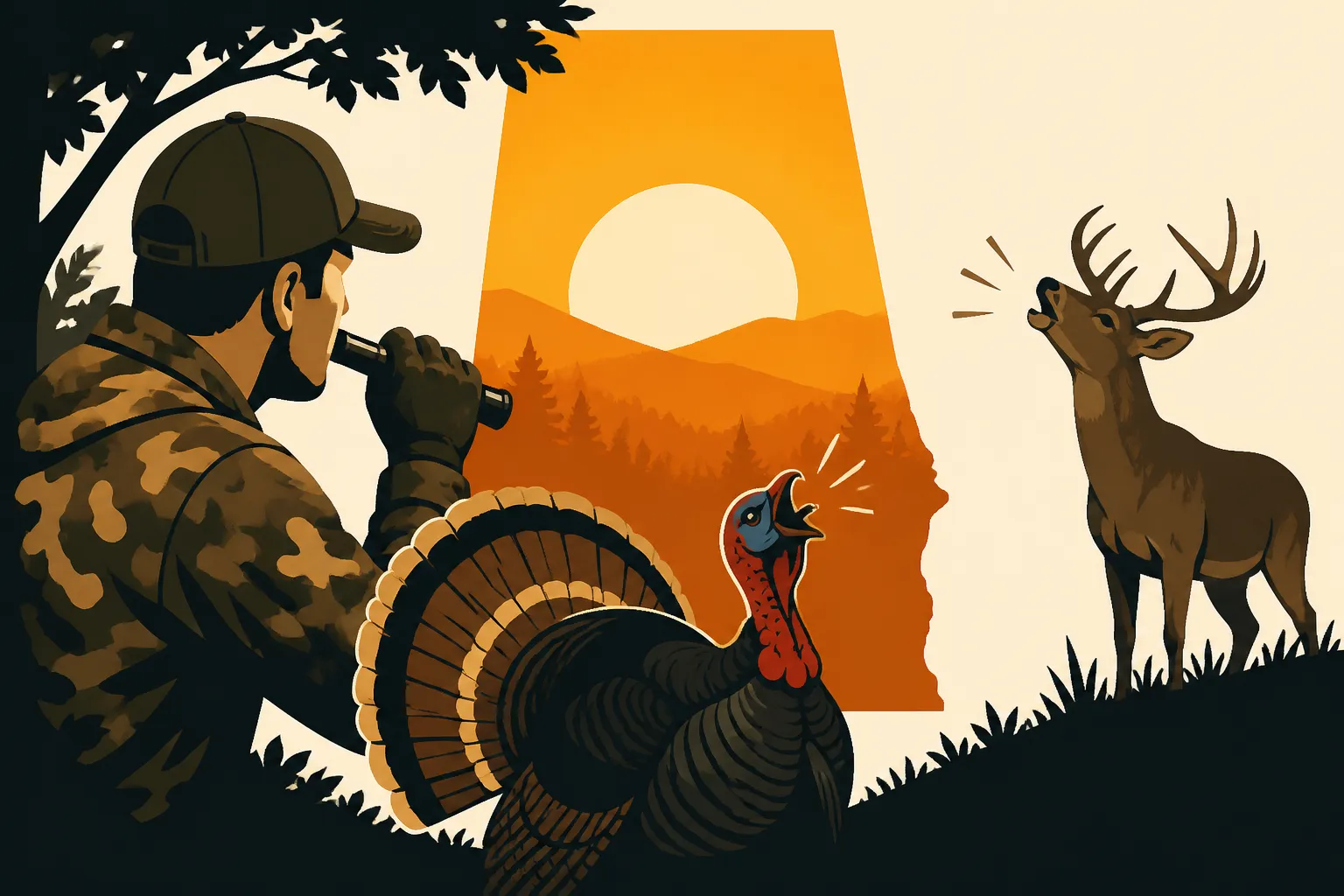
Picture this: two bucks, antlers locked, pushing and shoving for dominance. This isn't just a friendly wrestling match; it's a high-stakes encounter, especially during the breeding season. Bucks fight for a variety of reasons, primarily to establish dominance within the herd and, crucially, to gain breeding rights with receptive does. When you rattle, you're essentially mimicking the sound of this intense interaction. The objective isn't necessarily to trick a buck into thinking you're a deer, but to pique his curiosity or challenge his dominance.
A younger, subordinate buck might be drawn in, hoping to catch a glimpse of the action or perhaps even sneak in and breed a doe while the bigger boys are distracted. A more dominant buck, on the other hand, might approach with a territorial swagger, ready to break up the fight, assert his authority, or even join in if he perceives a challenger. It’s a powerful trigger, rooted deeply in their social hierarchy, and when executed correctly, it can bring a hesitant buck right into your shooting lane. This tactic is especially potent during the pre-rut and peak rut phases when bucks are already feeling feisty and competitive.
Decoding Deer Grunts
While rattling taps into the competitive spirit, grunting is more about direct communication and invitation. Deer use a surprisingly complex array of vocalizations, and grunts are among the most common and versatile. A simple "grunt" to us can mean many different things in the whitetail world. There are contact grunts, used to keep the herd together; social grunts, often heard between does and fawns; alarm grunts, a sharp snort that signals danger; and, most importantly for hunters, tending grunts and aggressive grunts.
Tending grunts are the sounds a buck makes when he’s actively pursuing a doe, often just before or during breeding. It’s a low, guttural sound, almost like a satisfied sigh, that tells other bucks he’s got a doe locked down. Replicating this can infuriate a rival buck, pulling him in to investigate or challenge. Aggressive grunts or the distinctive "snort-wheeze" are direct challenges, signaling a buck's readiness to fight. These are particularly effective on dominant, mature bucks who won't back down from a challenge. Learning to differentiate these sounds and understanding their context is paramount. It’s about speaking to the buck in his own language, telling him exactly what you want him to hear – whether it’s a challenge, an invitation, or simply a query.
The Importance of Timing and Context
Knowing what to call is only half the battle; knowing when and where to call makes all the difference. Imagine trying to call a buck with aggressive rattling in the middle of summer when velvet antlers are still soft, and breeding is months away – it just doesn't make sense to the deer, and it won't work. The seasonality of deer behavior in Alabama, dictated by the varying rut timings across the state's different zones, is absolutely critical. For instance, the rut in the southern zones might peak weeks later than in the northern zones, meaning your calling strategy needs to adapt accordingly.
Beyond the calendar, the immediate context of your hunting situation plays a huge role. Are you in thick cover, where sounds won't carry far? Are you near a known bedding area or a popular scrape line? What's the wind doing? Is there high hunting pressure in the area, making deer more wary? All these factors influence how a buck perceives and reacts to your calls. A well-placed contact grunt might bring a curious doe or young buck out of a thicket, while aggressive rattling might be best reserved for when you know a mature buck is in the vicinity and the conditions (like wind direction) are perfect for him to approach without winding you. It's a game of chess, not checkers, and understanding the board is just as important as knowing how your pieces move.
Mastering the Art of Rattling in Alabama
Rattling is one of the most exciting and dynamic forms of deer calling. There's nothing quite like the adrenaline rush of clashing antlers together and hearing a buck crash through the timber towards your position. But like any art, it requires practice, nuance, and an understanding of the conditions unique to Alabama's diverse landscapes.
Choosing Your Rattling Repertoire
When it comes to rattling, you have a few options, each with its own advantages and disadvantages. The classic choice, of course, is a pair of real antlers. Many hunters swear by the authentic sound produced by actual bone-on-bone contact. The density and irregular shape of real antlers create a rich, varied sound that's hard to replicate perfectly. However, real antlers can be bulky, noisy to carry if not secured, and frankly, they can be painful if you accidentally whack yourself in the face during an enthusiastic sequence!
For those who prioritize portability and convenience, synthetic rattling bags or compact rattling horns are excellent alternatives. These are designed to mimic the sound of fighting antlers without the bulk or clatter. Brands offer various designs, from bags filled with small rods that simulate sparring to molded plastic horns that nest together. While some argue they lack the exact authenticity of real antlers, modern synthetic calls have come a long way and can be incredibly effective, especially in scenarios where minimizing bulk and noise while moving is crucial. Whichever you choose, the key is to practice with it and learn to control the volume and intensity of the sound you produce.
Techniques for Effective Rattling Sequences
Rattling isn't just about smashing antlers together; it's about telling a story. Are you simulating a light sparring match between two young bucks or an all-out brawl between two heavyweights? The distinction matters. For light sparring, gently tickle the tines together, creating a soft, intermittent clicking sound. This can be effective during the early pre-rut or when bucks are less aggressive, merely sparking curiosity.
For more aggressive sequences, which are often most effective during the peak of the rut, you'll want to clash the antlers together harder, grinding them, and pushing them as if two bucks are truly locked up. Don't be afraid to break branches, scuff the ground, and even grunt a few times during the sequence to add realism. A common and highly effective strategy is the "tickle and wait" method: a short, soft rattling sequence, followed by a long period of absolute stillness and intense scanning. Bucks might approach cautiously, often circling downwind, so remaining motionless and ready is paramount. A good sequence might involve 30-60 seconds of rattling, followed by 5-10 minutes of silence, before repeating. Varying the intensity and duration keeps deer guessing and can pull in bucks that might ignore a repetitive, predictable call. Remember, the objective is to sound like an unpredictable, real fight.
Situational Rattling for Alabama's Diverse Terrain
Alabama's hunting terrain is incredibly varied, from dense pine plantations to sprawling hardwood bottoms and rocky ridges. How sound travels in these environments greatly influences your rattling strategy. In thick pine cover, where sound doesn't carry as far and visibility is limited, you might need to increase the volume of your rattling to be heard. However, in these dense areas, a buck might get very close before you see him, so be prepared for a quick shot. You can dive deeper into specific tactics for these environments by checking out our guide on Rattling Volume in Thick Pine Cover.
Conversely, in more open hardwood forests or along large food plots, your calls will carry much further, so you might not need to be as loud. Here, subtlety can be just as effective, allowing curious bucks to approach without feeling pressured. Rattling can be particularly effective when trying to pull deer out of thick creek bottoms or off of a secluded ridge line. If you've been scouting with a tool like GoHunt and identified potential bedding areas or travel corridors in these challenging spots, strategic rattling can sometimes coax a mature buck into an accessible shooting lane. Always consider the local hunting pressure too; in heavily hunted public land, deer might be more wary of aggressive calling, requiring a softer, more infrequent approach. On private land with less pressure, you might get away with more aggressive, frequent sequences.
Grunting Your Way to an Alabama Buck
Grunting is arguably even more versatile than rattling because it mimics a wider array of deer communication. Where rattling is mostly a challenge or a curiosity trigger, grunts can be used to locate, attract, or stop a deer in its tracks. It's a subtle but powerful tool that, when used correctly, can seal the deal on an Alabama whitetail.
Selecting the Right Grunt Call
The market is flooded with grunt calls, and choosing the right one can feel overwhelming. Many calls today are "adjustable," featuring a rubber or plastic tube that can be manipulated to change pitch and tone, allowing you to mimic a wide range of deer vocalizations from a fawn bleat to a deep, mature buck grunt. Others are fixed-tone, designed to produce one specific sound reliably.
The most important factor is realism. Your call should sound like a deer, not a kazoo. Practice is key here. Spend time listening to actual deer grunts (you can find many examples online, and tools like GoHunt often include sound libraries). Then, practice with your call to match those natural tones. Can you produce a soft, inquiring grunt? A deep, guttural tending grunt? A sharp, assertive challenge? The ability to vary your tone and inflection will make your calling much more believable and effective. Don't just go for loudness; focus on authenticity. A realistic, softer grunt often pulls in more deer than an overly loud, artificial one.
Different Grunts for Different Scenarios
The beauty of grunting is its adaptability. You can use specific grunts to target different deer and situations:
- Tending Grunts: These are perhaps the most potent grunts during the rut. They mimic a buck actively pursuing or breeding a doe. Imagine a buck making a series of low, rhythmic grunts as he chases a doe. Replicating this sound can be a huge challenge to any buck within earshot, often causing them to come in aggressively to break up the party or steal the doe. Use these when you suspect a hot doe is in the area or when you want to directly challenge a buck you know is on the move.
- Contact Grunts: These are softer, more inquisitive grunts, often used by deer to communicate their presence or locate other deer. If you're hunting a thick area and suspect deer are nearby but unseen, a couple of soft contact grunts can draw them out of cover or encourage them to reveal their position. These are excellent for early season or when deer are less aggressive.
- Aggressive Grunts/Snort-Wheezes: This is the ultimate challenge. The snort-wheeze is a distinct, explosive sound a buck makes when he's angry and ready to fight. It's often preceded by a few aggressive grunts. Use this sparingly and strategically on mature, dominant bucks you've either seen or have strong evidence (like a fresh scrape line) are in the immediate area. This call should only be used when you're fully prepared for a confrontation, as it can often bring a buck in fast and hard, ready to engage. Understanding the subtle differences in these calls can elevate your success when hunting Alabama's unique Hunting the Alabama Rut by Zone.
Combining Grunts with Other Tactics
Grunts rarely work in isolation for maximum effect. They are incredibly powerful when combined with other strategies. For instance, after a rattling sequence, especially an aggressive one, a few tending grunts or an aggressive snort-wheeze can add another layer of realism, making the simulated fight even more believable. It can sound like one buck is celebrating his victory or daring another to come closer.
Grunts are also invaluable for stopping a moving deer. We've all had those moments when a buck is cruising through, offering no shot, heading right out of your area. A sharp, loud grunt can often make him stop dead in his tracks, giving you just enough time to raise your weapon and make a clean shot. This is especially useful in open areas or when a deer is moving quickly. Additionally, if you're hunting near a popular scrape line, a few contact grunts might pull a curious buck in to check out the "new" deer in his territory, particularly if you’ve been monitoring that Scrape Lines Along a Logging Road. Using a ground blind, you can often get away with a little more movement to make a shot after a grunt stops a deer, so consider strategies like Using a Ground Blind on Alabama Public Land.
Seasonal Strategies for Alabama's Rut
Alabama's deer season is long and varied, and so is the timing of the rut. What works in early October in one part of the state might be completely ineffective in late January in another. Understanding the nuances of the rut in your specific hunting zone is critical to deploying rattling and grunting effectively.
Pre-Rut Excitement: Early Season Aggression
The pre-rut, typically spanning from late October through early November in many parts of Alabama, is a period of increasing buck activity. Testosterone levels are rising, and bucks are starting to rub trees and make scrapes more frequently. They're still somewhat in bachelor groups but are beginning to establish dominance hierarchies. This is a great time to introduce light rattling and contact grunts.
Focus on simulating short, less intense sparring matches. The objective here isn't to draw in a fighter, but a curious observer or a buck looking to gauge the competition. Bucks are still somewhat cautious, but their natural curiosity about other deer activity is heightened. Contact grunts can work wonders to locate unseen deer or draw in young bucks. Pay close attention to fresh sign like rubs and scrapes; if you see a lot of activity, you know bucks are in the area and receptive to calling. This is a period of anticipation, where you're setting the stage for the main event, and a strategic approach can yield surprising results.
Peak Rut Mania: Go All In
This is the golden window for aggressive calling. For many parts of Alabama, this often falls between mid-November and early to mid-December, though it can vary significantly. If you're hunting in the northern zones, for example, the peak rut might hit a bit earlier than in some of the southern zones. Our guide on Hunting the Rut in the Northern Zones or Hunting the Rut in the Southern Zones can provide specific timelines. During the peak rut, bucks are singularly focused on finding and breeding does. They are less cautious, more aggressive, and often on the move during daylight hours.
This is the time to go all in with your rattling and grunting. Aggressive rattling sequences, combined with tending grunts and even snort-wheezes, can be incredibly effective. Bucks will often come charging in, ready to break up a fight or steal a receptive doe. Don't be afraid to be loud and sustained, especially if you're hunting in thick timber where sound can be muffled. This is when a dominant buck might not hesitate to cross a food plot or come out of a thicket to investigate. It’s a high-reward, high-risk strategy, as a wary buck might still circle downwind, but when it works, it’s unforgettable. Remember, bucks are highly distracted by does during this period, making them more vulnerable to calls that simulate competition for breeding.
Post-Rut Challenges: Subtle Approaches
Once the peak of the rut passes, often moving into late December and January in many areas, bucks are often exhausted, have lost significant body weight, and are less aggressive. Many does have been bred, and the intense competition has subsided. This doesn't mean rattling and grunting are useless, but your approach needs to shift dramatically.
During the post-rut, focus on less aggressive, more subtle calls. Light, infrequent rattling can still pique the curiosity of a buck that might be feeling lonely or still looking for an unbred doe. Contact grunts, used sparingly, can sometimes draw in a deer that's simply curious or looking for other deer. The aggressive snort-wheeze is usually out of place here. Bucks are primarily focused on recovering from the rut and finding consistent food sources to regain weight. Tactics shift towards locating deer near late-season food sources like acorn flats or planted green fields. While calling might not be your primary strategy, a well-timed, subtle grunt can still be the trick that brings a weary buck into range when other methods fail.
Advanced Tips and Common Pitfalls
Even with the best calls and the perfect timing, success isn't guaranteed. Deer are intelligent, wary animals, and they've evolved to survive. Incorporating advanced strategies and understanding common mistakes can significantly improve your odds when trying to speak their language in the Alabama woods.
Wind, Cover, and Scent Management
These three elements are the holy trinity of deer hunting, and they become even more critical when calling. The wind is paramount; a deer's nose is its primary defense. Any buck approaching your calls will almost always try to circle downwind to scent-check the area before exposing itself. If your scent cone blows directly into their approach path, the game is over. Always set up with the wind in your favor, anticipating a downwind approach from any responding deer. Using tools like GoHunt can help you visualize wind direction and terrain features to predict where a deer might approach.
Cover is your friend. When rattling or grunting, you want enough cover to conceal your movements as you call and, more importantly, to break up your silhouette as a deer approaches. A dense thicket, a cluster of pines, or a strategically placed fallen log can make all the difference. Never call from an exposed position. And finally, scent management is non-negotiable. Scent-eliminating sprays, ozone generators, and clean hunting clothes are vital. Even a perfectly executed call can be ruined if a buck winds you from a hundred yards away. You can explore more about advanced scouting with the Scouting Alabama Public Land Before Season guide to help with these considerations.
Patience, Observation, and Adaptability
One of the biggest mistakes hunters make is being impatient. Not every call will work, and deer don't always respond immediately. After a calling sequence, remain absolutely motionless and scan your surroundings intently for at least 5-10 minutes, sometimes longer. Bucks can approach silently, moving through cover like ghosts. Many hunters have missed opportunities by moving too soon or looking down at their phone.
Observe how deer react (or don't react) to your calls. If an aggressive rattling sequence only spooks deer, dial it back. If a soft grunt doesn't get a response, try a slightly louder one. Adaptability is key. Don't be afraid to change your strategy mid-hunt based on the conditions, time of day, and deer behavior you're witnessing. A good way to learn is by studying deer on trail cameras, identifying when they're shedding antlers, and analyzing their movement patterns. GoHunt's mapping features and community insights can also help you analyze deer movement and behavior in your specific area, informing your calling strategy.
Practicing for Real-World Success
Like any skill, calling deer takes practice. Don't wait until opening day to pull out your grunt tube or rattling antlers for the first time that year. Practice at home, in the off-season, to master the sounds. Record yourself and compare it to actual deer vocalizations. The more realistic your calls, the better your chances of fooling a wise old Alabama buck.
Consider setting up mock scrapes and placing trail cameras to see how deer react to new "sign" and how frequently they visit. This can give you insights into their behavior and what might trigger a response. Learning from experienced hunters is also invaluable. Spend time with those who have successfully used these tactics, observe their techniques, and ask questions. There's always something new to learn in the whitetail woods.
| Calling Tactic | Primary Purpose | Best Conditions | Effective Sounds |
|---|---|---|---|
| Rattling | Challenge, Curiosity | Pre-rut, Peak Rut, High Buck Activity | Light Sparring, Aggressive Fights, Grinding |
| Grunting | Communication, Invitation, Challenge, Stop | All Season, Specific Scenarios | Contact Grunts, Tending Grunts, Aggressive Grunts, Snort-Wheeze |
Disclaimer
Hunting is an inherently dangerous activity. Always prioritize safety, follow all local and state regulations, and obtain proper licenses and permits before heading afield. The information provided here is for educational purposes only and should not replace professional guidance or hunter education courses. Be aware of your surroundings and the limitations of your equipment.