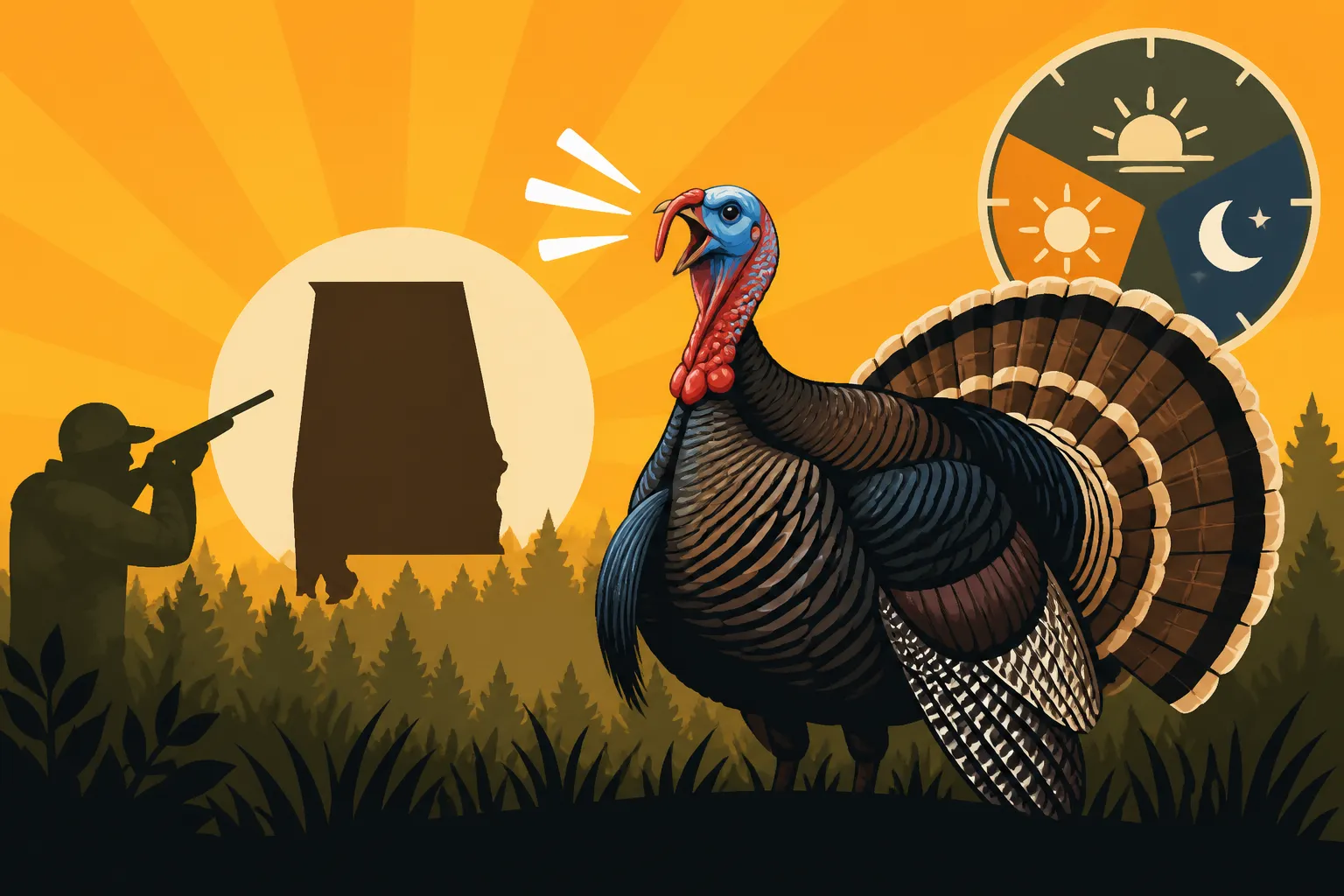
Alabama Turkey Gobbling Activity Timing
One of the most frustrating things for an Alabama turkey hunter is sitting in the woods, hearing nothing, and wondering if you've missed the show entirely. It’s a common struggle – understanding when those longbeards are most vocal can feel like cracking a secret code. This guide is all about helping you decipher the mystery of Alabama turkey gobbling activity timing, giving you insights into when to be in the woods and how to adapt your tactics.
Understanding the Rhythms of Alabama Turkey Gobbling
Gobbling isn't just a random act; it's a critical part of a wild turkey's breeding cycle and communication. While it sounds like a challenge to us, it's primarily a way for gobblers to advertise their presence to hens and establish dominance among other toms. Knowing this fundamental behavior helps us predict when and why they're making noise.
The Dawn Chorus: Roost Gobbling and Fly-Down
There’s nothing quite like that first booming gobble cutting through the pre-dawn stillness. This "gobble from the roost" is the most anticipated sound for any turkey hunter. Turkeys typically roost in tall pines or hardwoods, seeking safety from predators overnight. As the sky begins to lighten, usually about 30-45 minutes before actual sunrise, gobblers will start sounding off. They're letting the hens in the area know where they are, and often, the hens will yelp back, indicating their position. This initial volley of gobbling is often the most intense and consistent of the day.
Once there's enough light to safely see, typically right at or just after legal shooting light, turkeys will begin to fly down from their roosts. This fly-down period is another peak for gobbling activity. A gobbler, once on the ground, will often strut, drum, and gobble furiously, trying to gather his harem of hens. This is a prime time for hunters who have positioned themselves carefully within calling distance of a known roost. For more on this, check out Roost Hunting Alabama Gobblers. If you're not set up for the fly-down, you might be out of luck as the birds quickly disperse with hens.
Mid-Morning Lull and Re-Grouping
After the initial fly-down excitement, gobbling activity often tapers off. This can be the most frustrating part of a hunt. The hens have likely joined the gobblers, and the breeding activities begin. When a gobbler has hens with him, he has little reason to gobble. He already has what he's looking for! They'll often feed, loaf, and move through the woods quietly. Many hunters get discouraged during this mid-morning lull and head home, but that can be a mistake.
While the loud, booming gobbles might be infrequent, this doesn't mean the birds aren't still active. They might be subtly clucking, purring, or drumming, especially if they feel pressure or are in thick cover. This is when patience pays off, and understanding the bird's natural movement patterns becomes crucial. Hens might eventually wander off to nest or feed, leaving the gobbler alone. When this happens, often between 9:00 AM and 11:00 AM, the lonely gobbler might start sounding off again, looking for new company. This can be a fantastic second opportunity for hunters.
Afternoon to Roosting Time: Building Anticipation
As the day progresses into the afternoon, gobbling can pick up again, though usually not with the same intensity as the early morning. Hens are often done with nesting duties for the day or have finished feeding, and they might start moving back towards roosting areas. Gobblers will sometimes start gobbling again in the late afternoon, especially if they are looking to round up hens for the evening roost or if they've been separated from their morning group.
The period just before dark, as turkeys prepare to fly back up to their roosts, can also see a resurgence in gobbling. These "tree yelps" and "tree gobbles" are usually brief, but they can be a critical scouting tool, helping you locate birds for the next morning's hunt. Remember, in Alabama, Alabama Legal Turkey Hunting Hours end at sunset, so you cannot legally hunt a bird on the roost in the evening. However, knowing where they roost is half the battle for a successful morning hunt. Many mapping apps, like the ones you find on GoHunt, allow you to mark these locations for future reference, making your scouting efforts much more efficient.
How Weather and Conditions Influence Gobbling Activity
It’s not just the clock that dictates when turkeys gobble; environmental factors play a massive role. Being able to read the weather and understand its impact on turkey behavior can make or break your hunt.
The Impact of Clear, Calm Mornings
Hands down, clear, calm mornings with stable temperatures are often the best for gobbling activity. Turkeys, like many wild creatures, seem to be more vocal and active when conditions are pleasant. When the air is still, sound carries further, which benefits a gobbler trying to attract hens. A crisp, cool morning following a warm night can be particularly good, as it seems to energize the birds.
On such mornings, expect gobblers to be loud and consistent from the roost and through the fly-down period. This is when your calls are most likely to get a response, and birds are often more eager to investigate. Hunters often note that during ideal conditions, birds on public lands, which are notoriously pressured, tend to be more responsive. It's almost as if they forget their wariness for a bit. If you’re planning your Spring Turkey Hunting in Alabama trip, aim for these windows if possible.
Rainy, Windy, or Cold Weather Effects
Conversely, adverse weather conditions can put a damper on gobbling. Heavy rain, high winds, or sudden drops in temperature often lead to less vocal turkeys.
- Rain: During a downpour, turkeys generally hunker down. They might still gobble occasionally, but it will be much less frequent and often softer. Drizzly conditions can sometimes be good, as the rain muffles human sounds, but heavy rain is usually a deterrent.
- Wind: Wind is arguably the biggest enemy of gobbling. Not only does it make it harder for the gobbler's call to carry, but it also makes it harder for them to hear, and for hunters to hear them. Turkeys also become more wary in windy conditions, as their natural alarm system (hearing) is compromised, making them more hesitant to expose themselves. Don't expect much gobbling on a blustery day.
- Cold Fronts: A sudden cold front can put birds in a slump, especially if it brings freezing temperatures after a period of warmth. Turkeys will often focus on feeding and conserving energy rather than breeding. However, a steady, seasonal cold snap that lasts a few days might see gobbling pick up again once the birds adjust.
Here's a quick reference for general gobbling activity based on conditions:
| Condition | Gobbling Activity Level | Notes |
|---|---|---|
| Clear, Calm, Cool | High | Ideal conditions, especially post-roost and mid-morning. |
| Light Rain/Drizzle | Moderate | Can be good for stealth, but calls may not carry as far. |
| Heavy Rain | Low | Birds hunker down, very little vocalization. |
| High Winds | Very Low | Sound doesn't carry; birds are wary and quiet. |
| Sudden Cold Front | Low to Moderate | Can slow activity; birds may become more active after adjusting to sustained cold. |
| Overcast, Mild | Moderate to High | Good conditions, but can be less intense than clear skies. |
| Hot, Humid | Moderate to Low | Early morning activity may be intense but short-lived. |
Pressure and Time of Season
Another often-overlooked factor is hunting pressure. On public lands or heavily hunted private tracts, turkeys can become "gobble shy" very quickly, especially after the opening days. They learn that gobbling attracts danger. While they might still gobble from the roost, they'll often hit the ground silently and move off with hens. This is where patience and subtle calling techniques, like those discussed in Calling an Alabama Gobbler Off the Roost, become vital.
The timing within the season also impacts gobbling. Early in the season, when the hens aren't bred yet, gobblers are usually more active and eager. As the season progresses and more hens become bred and begin nesting, gobblers can become "henned up" more frequently, meaning they'll stay with their hens for longer periods, reducing their need to gobble. By late May, especially if you're hunting Alabama's later turkey zones, gobbling activity can really slow down. This is particularly true for When Alabama Gobblers Go Quiet in May.
Tactics for Hunting Alabama Turkeys Based on Gobbling Patterns
Understanding when and why turkeys gobble gives you a huge advantage. It allows you to tailor your approach and increase your chances of success.
Maximizing the Morning Roost Period
Your best chance to harvest an Alabama gobbler often comes right at dawn. If you've done your scouting and located a roost tree, or at least a general roosting area, your strategy should focus on getting into position well before first light. This means quiet entry, usually an hour or more before dawn, to avoid spooking birds on the roost. Set up against a tree that offers good concealment and a clear shot lane. For tips on this, check out Setting Up Against a Big Oak.
When the first gobble rings out, resist the urge to immediately call aggressively. Often, a soft tree yelp or cluck is enough to let him know a hen is nearby. As he gobbles on the limb, gauge his excitement. Once he flies down, that's when you can increase the intensity of your calling, trying to draw him in. Remember, if he has hens, he's less likely to commit to your calls, as his "girlfriends" are already there. If you hear multiple gobblers, sometimes targeting the quieter one can pay off, as he might be less confident and more willing to investigate. Using a tool like GoHunt to track previous roost locations and fly-down directions can provide valuable historical data for your setup.
Adapting to the Mid-Day Lull
The mid-morning lull doesn't mean it's time to pack it in. This is often when the "real" hunting begins, especially if birds are pressured. Instead of sitting in one spot hoping a gobbler will appear, consider a more aggressive "run-and-gun" approach. This involves covering ground, using locator calls (owl hoots, crow calls) to try and shock a gobble out of a bird that might be quiet. Walk ridges, creek bottoms, and field edges, stopping frequently to call and listen. Run-and-Gun Turkey Tactics on Public Land can be incredibly effective during these hours.
This is also a prime time to target lonely gobblers. If hens have left them, they'll often start searching. A series of soft, seductive hen yelps might be just what they're looking for. Don't be afraid to change locations if an area feels "dead." Turkeys are constantly moving, and you need to be willing to move with them. Pay attention to food sources like oak flats (if acorns are still present) or green fields where they might be feeding.
Exploiting Late-Season and Afternoon Opportunities
As the season wears on, especially in Alabama's later-opening zones, gobblers can become tougher to hunt. Hens are often on nests, and the gobblers that are left can be wary or simply less vocal. This is when patience and persistence truly shine. Sometimes, a gobbler will only gobble once or twice all morning, so being in the right place at the right time is paramount.
Afternoon hunts, while less popular, can be productive. While not legal to hunt after sunset, the late afternoon can see renewed gobbling as birds head towards their roosts. Focus your efforts on areas with known roost trees or travel corridors leading to them. Soft clucks and purrs can sometimes draw a curious gobbler in, especially if he's alone. It's often not about loud, aggressive calling in the afternoon, but subtle, realistic hen sounds. This time can also be excellent for scouting for the next morning, as listening for those "goodnight" gobbles can tell you exactly where to set up. Many hunters use mapping software, like those provided by GoHunt, to mark these evening roosts, ensuring they can return to the exact spot before dawn.
Regional and Seasonal Variations in Alabama Gobbling
Alabama is a diverse state, and turkey behavior can vary quite a bit from one region to another, and even within the different spring turkey zones. Understanding these nuances can further refine your hunting strategy.
Differences Between Zones and Regions
Alabama is divided into different turkey zones, such as Zone 1 and Zone 2, which have different opening and closing dates. For example, Alabama Zone 1 Spring Turkey Opening Day is earlier than Why Zone 2 Opens a Week Later Than Zone 1. This staggered opening can mean that gobbling activity might be more intense earlier in Zone 1, as birds are just coming into their breeding prime, while Zone 2 might experience its peak a bit later.
Geographically, you might notice differences too. In the mountainous terrain of North Alabama, thermals play a larger role. Birds might gobble more fiercely from ridges in the morning, letting their calls cascade down valleys. In the Black Belt region, with its flatter, agricultural landscapes, birds might gobble aggressively from timber edges adjacent to fields, where they can be seen and heard easily by hens feeding in the open. The sheer amount of open ground in areas like the Black Belt can make gobblers appear more visible and therefore, seem to gobble more confidently.
Early Season Versus Late Season Gobbling
Early season, often the first two to three weeks, typically offers the most consistent gobbling. Gobblers are fired up, fewer hens are bred, and the competition among toms is high. This is when aggressive calling often works best, and birds are generally more responsive. Hunters new to Alabama Spring Turkey Zones and Dates will find this period easier to get a response.
As the season progresses, especially into April and May, gobbling can become more sporadic. Many hens are now nesting, so gobblers might be "henned up" for longer periods, or they might be covering larger areas looking for unbred hens. This is when you'll hear fewer "shock gobbles" and need to rely more on subtle calling, stealth, and patience. The birds become much harder to locate by sound alone. This is particularly true if you are hunting in areas that have experienced heavy hunting pressure, as birds will naturally become more cautious. Keeping a log of your hunts, perhaps with a digital tool like GoHunt, can help you identify these seasonal shifts in gobbling patterns for your specific hunting areas over time.
Disclaimer
This article is for general informational purposes only and does not constitute professional advice. Laws, prices and regulations vary by location and change over time. Consult a qualified professional for guidance on your specific situation.