The Mobile River Basin Bear Population
It’s easy to think of black bears as something you only find way out west or up north, but here in Alabama, we have our own small, resilient populations. For many, the idea of a bear roaming the backwoods of our state might seem like a tall tale, especially when trying to understand where these animals truly thrive. This guide will take a close look at the black bear population in the Mobile River Basin, shedding light on their unique characteristics, the critical role this area plays in their survival, and how we can coexist with these amazing creatures.
Understanding Alabama's Black Bear Status
When we talk about black bears in Alabama, it's not like discussing our abundant deer or turkey populations. These animals are a far rarer sight, and their presence speaks volumes about the wildness that still exists in some of our most untouched corners. Many folks are simply unaware that we have a wild, native bear population at all, which often leads to confusion or even alarm when a sighting does occur. It's crucial for anyone spending time in Alabama's outdoors to understand the protected status of these animals and their importance to the state's natural heritage.
Why Bears Are Protected in Alabama
Alabama's black bears are considered a species of highest conservation concern, and for good reason. Their numbers declined drastically in the early 20th century due to extensive habitat loss, unregulated hunting, and human encroachment. For decades, it was rare to see a bear outside of a few isolated pockets. Thanks to significant conservation efforts, and the natural ability of bears to rebound when given suitable habitat and protection, their numbers have slowly but steadily improved. That's Why Alabama Protects Black Bears Statewide isn't just a recommendation; it's a critical legal and ethical mandate. Hunting black bears is strictly prohibited, and disturbing them is heavily discouraged. The goal is to allow these populations to grow and expand their range naturally, without added pressure from human activities.
When you encounter a species that is as rare and protected as the black bear in Alabama, it really drives home the idea that every decision we make in the woods can have an impact. This isn't just about avoiding a fine; it's about respecting the incredible journey these animals have made to still be here. Whether you're a hunter, hiker, or just enjoying nature, knowing that there are places where bears roam adds a special kind of magic to the Alabama wild. It’s a testament to the efforts of many over the years to preserve these parts of our natural world, ensuring that future generations might also catch a glimpse of a wild bear.
Alabama's Two Bear Subpopulations
Alabama is home to two primary, distinct black bear subpopulations: one residing in the Mobile River Basin in the southwestern part of the state, and another in the mountainous terrain of the Little River Canyon area in northeast Alabama. While both are black bears, their habitats, challenges, and histories are somewhat different. The Mobile River Basin population is often seen as the more historically established and isolated group, relying heavily on the unique riverine and swamp ecosystems of the Gulf Coastal Plain. Alabama's Two Bear Subpopulations are separated by hundreds of miles, meaning there's very little genetic exchange between them. This isolation makes each population particularly vulnerable to localized threats.
The differences aren't just geographical; they speak to the adaptability of these animals. The Mobile River Basin bears thrive in a very different landscape than their Little River Canyon cousins. Thinking about how the environment shapes a species' behavior and survival is fascinating. While a mapping tool like GoHunt might show you similar forest cover in both areas, the underlying hydrology, plant communities, and human population density are vastly different. These two populations represent critical remnants of what was once a much larger, widespread black bear presence across the state. Understanding these distinctions is key to effective conservation, as strategies that work in one area might not be suitable for the other.
The Mobile River Basin: A Critical Stronghold
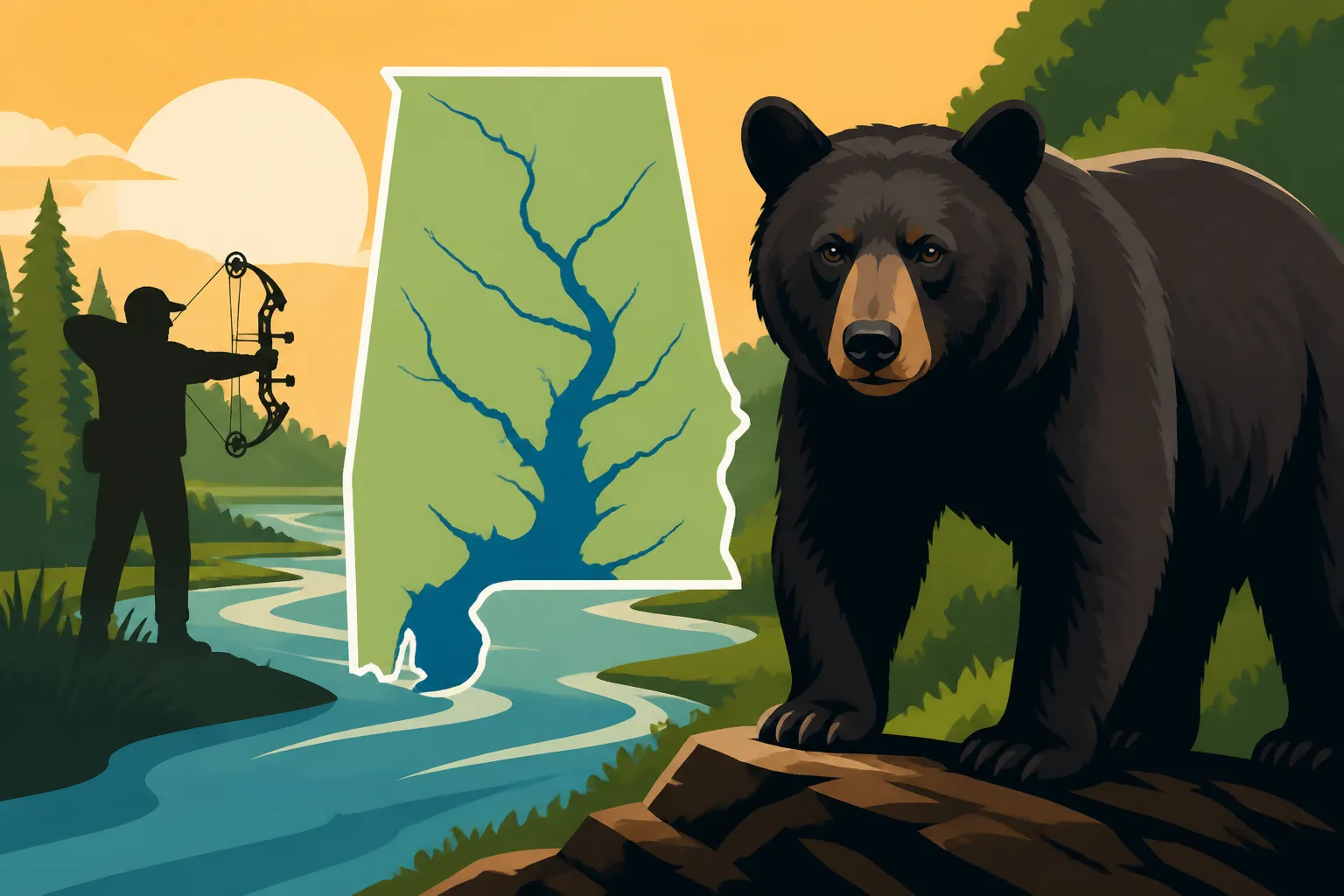
The Mobile River Basin isn't just a place on a map; it's a vast, intricate network of rivers, bayous, swamps, and bottomland hardwoods that offers some of the most remote and undisturbed habitats left in Alabama. This sprawling delta system, one of the largest in North America, provides the perfect refuge for black bears. It's an area defined by water, dense vegetation, and a relative lack of dense human development, making it an ideal, albeit challenging, environment for these reclusive animals.
Habitat and Range Within the Basin
The Mobile River Basin black bear population primarily ranges across parts of Baldwin, Mobile, Washington, Clarke, and Monroe counties, especially in areas contiguous with the Mobile-Tensaw Delta. This habitat is characterized by incredibly rich bottomland hardwood forests, cypress-tupelo swamps, and extensive rivercane thickets. These features offer not just cover and security, but also a diverse and abundant food source for bears throughout the year – everything from acorns and berries to various plant roots and even small animals. The sheer inaccessibility of much of this terrain, often requiring a boat or extensive wading, further protects the bears from human disturbance.
Picture trying to navigate these deep swamps and thick river bottoms, and you'll quickly understand why bears find it such a safe haven. It's a maze of water and dense cover. Using a detailed satellite overlay on a platform like GoHunt can give you a better appreciation for the scale and complexity of this environment, highlighting the vast stretches of unbroken wilderness that are still present. This particular type of habitat provides everything a bear needs: denning sites in hollow trees or thickets, diverse forage that changes with the seasons, and critical travel corridors along river banks and natural levees. It's a truly wild place, essential for the continued recovery of this Alabama's Recovering Black Bear Population.
Challenges to Population Growth
Despite the ideal habitat, the Mobile River Basin bear population faces significant challenges that limit its growth and expansion. Habitat fragmentation is a major concern, as development, timber operations, and agriculture slowly chip away at contiguous forestland. Roads and highways, in particular, pose a direct threat by increasing vehicle collisions and creating barriers to safe movement between foraging and denning areas. There's also the challenge of human perception and potential conflicts. As human populations expand, even on the fringes of the delta, the likelihood of direct encounters, whether accidental or intentional, increases.
The isolation of this population means that any major localized event – a disease outbreak, a significant hurricane, or even sustained poaching – could have a disproportionate impact on their numbers. Unlike areas where populations can be bolstered by immigration from neighboring regions, these bears are largely on their own. Managing these threats requires a delicate balance of protecting habitat, educating the public, and working with landowners to minimize negative interactions. Understanding these pressures is critical, and resources like those found on the Outdoor Alabama app or other mapping programs like GoHunt can help landowners visualize how their property might contribute to or fragment crucial bear corridors. Why Black Bear Is a Species of Highest Concern isn't just a label; it underscores the constant vigilance required to ensure these animals persist.
Conservation Efforts and Monitoring
Conservation efforts for the Mobile River Basin black bear population are multifaceted, focusing on habitat protection, public education, and scientific monitoring. State wildlife agencies and conservation organizations work to acquire and protect critical tracts of land, establish wildlife corridors, and promote responsible land management practices among private landowners. Public awareness campaigns aim to educate residents on bear behavior, how to avoid conflicts, and the importance of reporting sightings. This helps to gather valuable data for population estimates and movement patterns.
Biologists also conduct ongoing research, using methods like hair snares for DNA analysis, trail cameras, and even trapping and collaring individuals to track their movements and understand their reproductive success. This scientific monitoring is vital for assessing the health and trajectory of the population, allowing for adaptive management strategies. Organizations, sometimes in conjunction with data collected by users of hunting technology like GoHunt (though bears aren't hunted, the habitat data is useful), are constantly striving to improve connectivity between remaining forested areas. These efforts ensure that bears have the space and resources they need to thrive, highlighting the long-term commitment required for wildlife recovery. Alabama Wildlife Disease Monitoring is also critical, as any disease could decimate a small, isolated population.
Living with Black Bears in Alabama
Encountering a black bear in the wild is a truly unforgettable experience, a rare privilege for most Alabamians. While these animals are generally shy and reclusive, living in areas where they roam requires awareness and respect for their space. It's about minimizing potential conflicts and promoting a harmonious coexistence.
Encountering a Bear in the Wild
The chance of seeing a black bear in the Mobile River Basin is slim, but it's not impossible, especially if you spend time in deep wilderness areas like the Mobile-Tensaw Delta or Hunting Coastal Alabama River Swamps. If you are fortunate enough to spot one, the most important thing is to remain calm and never approach the animal. Black bears are typically non-aggressive, and most encounters involve a bear quickly retreating. Make noise to let the bear know you're there and give it an escape route. Avoid running, which can trigger a chase instinct, and never get between a sow and her cubs. These general rules apply across the state, whether you're in the delta or up north.
Maintaining situational awareness, especially when hiking or camping in known bear country, is key. This includes properly storing food, packing out all trash, and keeping pets on a leash. While the delta's dense cover can make spotting a bear challenging, being mindful of fresh tracks, scat, or rubbed trees can indicate their presence. For those who use mapping applications, understanding the topographical features and remote areas often shown on platforms like GoHunt can help you identify areas where bears are more likely to seek refuge, guiding you to exercise extra caution. Remember, you're a visitor in their home, and respecting their space is paramount. What to Do If You See an Alabama Black Bear will always prioritize your safety and the bear's well-being.
Reporting Sightings and Conflicts
Reporting bear sightings, especially in new or unusual locations, is incredibly important for wildlife agencies. These reports provide invaluable data that helps biologists track bear movements, understand population distribution, and identify potential conflict zones. If you see a bear, particularly one that seems comfortable around humans or is causing property damage, contact the Alabama Wildlife and Freshwater Fisheries Division. They have protocols in place to assess the situation and intervene if necessary, such as hazing the bear away from human-populated areas or, in rare cases, relocating it.
It's vital to provide as much detail as possible in your report: the exact location, time of day, description of the bear (size, color, any distinguishing marks), and its behavior. Photos or videos, if safely obtained, can also be extremely helpful. Your report contributes directly to the ongoing monitoring efforts for Alabama's Chronic Wasting Disease Management Zone and other wildlife concerns, helping researchers to understand the broader health of our ecosystems. Remember, reporting helps protect both people and bears, ensuring that these animals can continue to thrive without unnecessary human conflict.
Supporting Bear Conservation
Supporting black bear conservation in Alabama doesn't necessarily mean becoming a wildlife biologist; it can be as simple as being a responsible outdoor enthusiast and an informed citizen. Educate yourself and others about Alabama's black bears, their protected status, and the challenges they face. Respect private property, practice Leave No Trace principles when recreating on public lands, and never feed bears, either intentionally or accidentally, as this habituates them to humans and often leads to negative outcomes for the bear. Consider supporting reputable conservation organizations that work to protect habitat in the Mobile River Basin and other critical areas.
Even hunters, while not pursuing bears, can be strong advocates for their conservation. The same principles of habitat preservation that benefit deer and turkey also support bears. Understanding the ecosystem, perhaps by researching land features with tools like GoHunt, and advocating for responsible land use benefits all wildlife. By valuing these rare animals and understanding their ecological role, we contribute to a richer, wilder Alabama. Every small action, from proper trash disposal to simply appreciating their existence from a respectful distance, helps safeguard the future of the Mobile River Basin bear population and Game You Cannot Hunt in Alabama.
Alabama's Mobile River Basin Bear Population: At a Glance
| Feature | Description |
|---|---|
| Primary Range | Mobile-Tensaw Delta and surrounding counties (Mobile, Baldwin, Washington, Clarke, Monroe). |
| Habitat Type | Extensive bottomland hardwood forests, cypress-tupelo swamps, rivercane thickets, dense riverine systems. |
| Population Status | Native, protected, considered a species of highest conservation concern in Alabama. |
| Key Challenges | Habitat fragmentation, human-wildlife conflict potential, vehicle collisions, isolation from other populations. |
| Conservation Focus | Habitat protection/acquisition, public education, scientific monitoring (DNA analysis, camera surveys, tracking), conflict mitigation. |
| Interaction Advice | Remain calm, make noise, give space, never run, avoid cubs, secure food/trash, report sightings to ADCNR. |
| Historical Context | Remnant population that survived significant historical decline, now slowly recovering due to protection and habitat efforts. |
This table offers a snapshot, but it's important to remember that each of these points represents ongoing work and the complex reality of managing a rare, wild animal in an increasingly developed state. The Mobile River Basin is a testament to the resilience of nature and the dedication of people who believe in protecting Alabama's unique wildlife legacy.
Disclaimer
This article is for general informational purposes only and does not constitute professional advice. Laws, prices and regulations vary by location and change over time. Consult a qualified professional for guidance on your specific situation.