Poult-to-Hen Ratios and What They Mean
There’s nothing quite like the sound of a spring gobbler, is there? But when those spring mornings feel a little too quiet, or you're seeing fewer birds than you used to, it’s natural to wonder what’s going on with our wild turkey populations here in Alabama. This guide dives deep into one of the most critical metrics biologists use to gauge the health and future of our turkey flocks: the poult-to-hen ratio. Understanding what these numbers mean can give you a real edge in predicting future seasons and appreciating the conservation efforts underway.
What Exactly is a Poult-to-Hen Ratio?
It sounds a bit scientific, doesn't it? But at its core, the poult-to-hen ratio is simply a way to measure how many young turkeys (poults) are surviving per adult female turkey (hen). It’s a vital piece of the puzzle that helps wildlife biologists understand reproductive success and predict future turkey numbers.
The Basics of Turkey Population Surveys
Think about it: how do biologists actually know how many turkeys are out there? They don't have a giant turkey counter! Instead, they rely on various survey methods, and brood surveys are paramount when it comes to understanding reproduction. These surveys typically take place in the summer months, usually from June to August, when hens are raising their broods. During this time, wildlife agency staff, and often dedicated volunteers or even some savvy hunters, get out into the field to observe and record hen and poult sightings. They're looking for groups of turkeys and noting how many adult hens are present with how many young poults.
These observations aren't just random sightings; they're part of a coordinated effort across different areas of the state. It’s like taking a snapshot of the turkey family units. Imagine driving down a dirt road in July and seeing a hen cross a logging road with a string of eight tiny, fuzzy poults scurrying behind her – that's the kind of information that feeds into these surveys. Each sighting, carefully recorded, contributes to a larger picture of how well the birds are reproducing and surviving their most vulnerable stage. It’s a painstaking process, but absolutely essential for managing our cherished wild turkey resource.
Counting the Young and the Mothers
Let’s break down the terminology. A "poult" is simply a young turkey, typically less than a few months old. They're the little guys that look like miniature versions of their mother, still learning the ropes and depending on her for survival. A "hen" refers to an adult female turkey. When biologists talk about the poult-to-hen ratio, they are literally calculating the average number of poults observed for every hen observed during their brood surveys. So, if they see 10 hens and a total of 25 poults, the ratio would be 2.5 poults per hen.
This ratio is a critical metric because it tells us about the recruitment of new birds into the population. A high ratio means a lot of poults hatched and survived their early weeks, which is fantastic news for the future. A low ratio indicates poor reproductive success or high poult mortality, which can signal potential challenges for the turkey population down the line. It's the ultimate crystal ball for how many two-year-old gobblers might be strutting their stuff a couple of springs from now. For a deeper dive into the overall health of the bird numbers, you might want to read more about Alabama Turkey Population Trends.
Why These Ratios Matter for Alabama Hunters
As hunters, we’re always looking ahead, dreaming of future gobbler encounters. The poult-to-hen ratio gives us a tangible way to connect the dots between what's happening now with turkey reproduction and what we can expect to see in the woods in the coming seasons.
Predicting Future Gobbler Numbers
This is where the rubber meets the road for us hunters. A strong poult-to-hen ratio in a given year directly translates to a healthier population of jakes (first-year gobblers) the following spring, and then prime two-year-old gobblers two springs later. Think about it: a turkey goes from a fuzzy poult to a full-fledged adult gobbler in about two years. So, if biologists report a fantastic hatch and survival rate this summer, you can start mentally preparing for some excellent gobbling action a couple of seasons down the line. It’s a slow burn, but it’s a reliable indicator.
Conversely, a couple of years of consistently low poult-to-hen ratios can mean fewer birds hitting the woods, which might lead to tougher hunting or even adjustments in bag limits or season lengths. This knowledge influences how we approach our hunts, whether we're planning for an aggressive spring pursuit or a more conservative approach to ensure the long-term health of the flock. It helps manage expectations and, frankly, keeps us informed and connected to the wildlife we cherish. For instance, knowing these trends can sometimes help you understand decisions around Alabama Turkey Bag Limit Rules.
Understanding Regional Differences
Just like deer populations, turkey numbers and reproductive success aren't uniform across the entire state. What might be happening in the Black Belt could be vastly different from the Sand Mountain ridges. Poult-to-hen ratios often reflect these regional variations. Habitat quality, predator density, and local weather patterns can all contribute to these differences. For example, areas with diverse habitat, offering good nesting cover and abundant insects for poults, tend to show better ratios. The rich, varied landscape of Alabama means that some areas naturally lend themselves to better turkey production.
For hunters, this means that even if the statewide average looks good, it's worth digging into regional or even county-level data if it's available. If you're hunting in the Black Belt, your focus on local conditions will be different than if you're in the Piedmont. Online tools and resources, sometimes like platforms such as GoHunt, can help visualize or track these trends if they include Alabama-specific data, allowing you to fine-tune your understanding of what's happening in your specific hunting grounds. Factors like Alabama Longleaf Pine and Quail Habitat are also beneficial to turkeys, providing ideal conditions for nesting and poult rearing, which can lead to higher ratios in those areas.
Impact of Weather and Predation
Wild turkeys, especially their young, are incredibly vulnerable to the elements and to predators. A cold, wet spring can be absolutely devastating for poult survival. Young poults are susceptible to hypothermia, and prolonged periods of rain can lead to disease. Insects, a crucial food source for growing poults, can also be impacted by adverse weather. If the hatch coincides with a particularly nasty stretch of cold, rainy days, you can almost guarantee a lower poult-to-hen ratio later that summer.
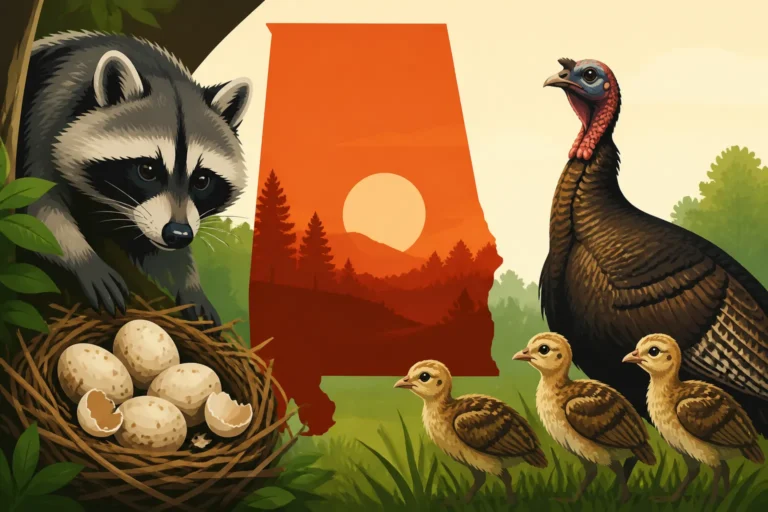
Predation also plays a massive role. Raccoons, opossums, snakes, bobcats, and coyotes are all keen to find a turkey nest or a vulnerable poult. When predator populations are high, or nesting cover is scarce, poult survival rates can plummet. This dynamic is similar to how Alabama Predator Impact on Fawn Recruitment affects deer. Biologists constantly monitor these factors, understanding that nature's delicate balance directly impacts the success of each year's turkey crop. As hunters, we often notice these trends ourselves; if you had a particularly wet spring in your area and then struggle to find poults later that summer, you're observing these impacts firsthand.
Interpreting the Numbers: Good, Bad, and Average
So, you've seen the reports, maybe even crunched a few numbers yourself. But what do those poult-to-hen ratios really mean? How do we know if 2.1 poults per hen is good or bad?
What Constitutes a "Good" Ratio?
Generally speaking, wildlife biologists often consider a poult-to-hen ratio of 2.0 to 3.0 poults per hen to be healthy for maintaining or growing a turkey population. Ratios consistently above 2.5, and especially closer to 3.0 or higher, usually indicate excellent reproductive success and strong recruitment into the population. When you see numbers like that reported for your area, it’s time to start getting excited about the spring seasons two and three years down the road. It means the hens are doing their job, the habitat is supporting the young birds, and conditions have been favorable.
A truly exceptional year might see ratios pushing 3.5 or 4.0 in some localized areas. These are the years that generate a buzz among turkey hunters and biologists alike. They mean that not only did a lot of hens nest successfully, but a high percentage of their poults survived those critical early weeks. It’s a testament to good habitat, good weather, and a balanced ecosystem. Imagine hearing that your hunting zone reported a 3.8 poult/hen ratio – that's the kind of news that gets you through the off-season!
Recognizing a "Poor" Ratio and Its Implications
On the flip side, a poult-to-hen ratio consistently below 1.5 to 2.0 can be a cause for concern. These lower numbers suggest that the turkey population is either barely maintaining itself or, worse, slowly declining. A ratio below 1.0 means the population is likely shrinking, as not enough young birds are surviving to replace the adults that are lost each year. These poor ratios are often directly linked to prolonged adverse weather during the nesting and brooding season, increased predation pressure, or degradation of critical nesting and brood-rearing habitat.
The implications of a poor ratio are significant. Fewer jakes and adult gobblers will be available in subsequent seasons, leading to more challenging hunting experiences. In severe cases, multiple years of low ratios can even prompt wildlife agencies to consider changes to hunting regulations, such as reduced bag limits or shorter seasons, to protect the breeding stock. This is why agencies closely monitor these figures and might adjust things like Alabama spring turkey season rules to ensure the long-term health of the population. Understanding these downturns helps us appreciate the importance of conservation efforts.
How to Find and Use Alabama's Ratio Data
So, where do you find these all-important numbers? The Alabama Department of Conservation and Natural Resources (ADCNR), specifically the Wildlife and Freshwater Fisheries Division, is the primary source for this data. They conduct statewide brood surveys annually. While the raw, real-time data might not always be instantly available at the individual county level to the public, the ADCNR typically publishes summaries and analyses of these surveys in their annual reports, on their website, or in presentations given at public meetings.
Keeping an eye on the Outdoor Alabama website or subscribing to their newsletters is a great way to stay informed. Sometimes, state agencies will share general trends or specific regional highlights. While you might not find a direct GoHunt integration for ADCNR's raw poult data, tools like GoHunt can certainly aid in your overall scouting by showing you habitat features where turkeys are more likely to thrive, or by helping you identify areas that might align with the general trends reported. Use these insights to complement your own scouting efforts on public or private land. Staying informed is a key part of being a responsible hunter.
Beyond the Numbers: Hunter Observations and Conservation
While scientific data is invaluable, the boots-on-the-ground observations of Alabama's dedicated turkey hunters are also incredibly important. We spend countless hours in the woods, and our eyes and ears are powerful tools for understanding what's happening with our wild turkeys.
Your Role as an Observer
As hunters, we are often the first to notice changes in wildlife populations. If you’re regularly in the woods during the summer months, whether for scouting, checking trail cameras, or just enjoying nature, you have a unique opportunity to contribute valuable informal data. Paying attention to how many hens you see, and more importantly, how many poults are with them, provides anecdotal evidence that can either corroborate or challenge official reports. If you're consistently seeing hens without any poults, or very few, year after year, that's a signal.
Keeping a hunting journal where you log your observations – date, location, number of hens, number of poults – can be incredibly insightful over time. It helps you track trends on your specific property or public hunting area. These personal observations, while not scientific surveys, are a valuable part of the overall picture. It’s your chance to be part of the solution, contributing to a collective understanding of our wild turkey populations. This goes hand-in-hand with effective Scouting Alabama Public Land Before Season, where you're not just looking for deer sign, but also for general wildlife health.
Habitat and Management for Healthy Populations
Ultimately, healthy poult-to-hen ratios stem from healthy habitat. Turkeys need a mosaic of different habitat types to thrive: mature timber for roosting, open areas with abundant insects for poults, dense cover for nesting, and soft mast sources for food. Poor nesting cover leaves hens vulnerable to predation, and a lack of insect-rich brooding habitat can lead to poult starvation. This is where active land management truly shines.
Landowners and wildlife agencies engage in practices like prescribed burning, thinning timber, and planting specific food plots to create ideal conditions. Prescribed burns, for example, can stimulate new growth of grasses and forbs, which provide excellent nesting cover and attract insects. Understanding how Nest Predation and Alabama Turkey Hatches can be mitigated through habitat work highlights the critical link between land stewardship and turkey numbers. Supporting these management efforts, whether through your own land or by advocating for responsible public land management, directly contributes to better poult survival and, in turn, more turkeys for everyone to enjoy. It’s an investment in the future of our hunting heritage.
The Future of Alabama's Wild Turkeys
The poult-to-hen ratio isn't just a static number; it's a dynamic indicator of the ongoing health and trajectory of Alabama's wild turkey populations. By understanding these ratios, hunters gain a deeper appreciation for the complexities of wildlife management and the incredible resilience of these birds. The future of Alabama's wild turkeys depends on a combination of sound scientific data, diligent habitat management, and the keen observations of informed hunters.
The ADCNR continues to monitor these populations closely, making informed decisions that aim to sustain our turkey hunting traditions for generations to come. While there can be ups and downs influenced by weather or other environmental factors, the dedicated work behind understanding these ratios helps ensure that the necessary steps are taken. This continuous effort is crucial to ensure that we continue to have robust numbers, potentially even in areas like Where Alabama Turkeys Are Densest. By staying engaged and informed, we all play a part in safeguarding the future of the king of spring in Alabama.
Poult-to-Hen Ratios and What They Indicate
| Poult-to-Hen Ratio | General Population Trend | Implications for Hunters |
|---|---|---|
| Less than 1.0 | Declining | Significant concern, likely fewer birds in 2-3 years, potential regulatory changes. |
| 1.0 – 1.5 | Stagnant/Slow Decline | Population struggling to replace itself, hunting may be more challenging. |
| 1.5 – 2.0 | Stable | Maintaining current population levels, average hunting opportunities. |
| 2.0 – 2.5 | Growing Slowly | Healthy and sustainable growth, good hunting prospects in 2-3 years. |
| 2.5 – 3.0+ | Strong Growth | Excellent reproduction, expect robust numbers and great hunting in coming seasons. |
Disclaimer
This article is for general informational purposes only and does not constitute professional advice. Laws, prices and regulations vary by location and change over time. Consult a qualified professional for guidance on your specific situation.