Why Black Bear Is a Species of Highest Concern
It's a common misconception that because we hear about bears occasionally, Alabama must have a healthy, thriving black bear population. But the reality is far more complex and, frankly, quite concerning. Despite some localized sightings, especially in certain parts of the state, Alabama's black bear population is officially designated as a "species of highest concern," meaning their future here is precarious, and their continued survival requires focused, urgent conservation efforts. This guide will walk you through the reasons behind this critical status, helping you understand the challenges these magnificent animals face in our state and why their protection is paramount.
A Look at Alabama's Black Bear Population Dynamics
Understanding the current state of Alabama's black bears requires a look back at their history and the unique challenges they face today. They’re not as common a sight as deer or even wild hogs, and there are very good reasons for that.
Historical Decline and Current Distribution
Black bears once roamed across the entirety of Alabama, from the mountains of the north to the coastal plains in the south. Imagine a time when these animals were a regular part of the state’s diverse ecosystem, a symbol of its wildness. However, as human settlement expanded, particularly during the 19th and early 20th centuries, their numbers plummeted. Unregulated hunting, coupled with widespread habitat destruction as forests were cleared for agriculture and development, pushed them to the brink. By the mid-20th century, black bears were virtually extirpated from much of the state, hanging on in only a few isolated strongholds.
Today, Alabama is home to two primary, distinct subpopulations of black bears. The most well-known is found within the vast, swampy expanses of the Mobile-Tensaw Delta in southwest Alabama. This incredible labyrinth of rivers, bayous, and bottomland hardwoods provides some of the last remaining large tracts of suitable habitat for bears in the state. The dense, often impenetrable cover, combined with abundant food sources like acorns, berries, and various vegetation, allows a small population to persist, though even here, their existence is challenged. The other notable subpopulation resides in northeast Alabama, primarily around the rugged, steep terrain of the Little River Canyon National Preserve and surrounding areas of the Appalachians. These bears are thought to be part of a larger, connected population that extends into Georgia, making their presence a vital link in regional bear conservation. Beyond these two core areas, individual bears, particularly young males, are occasionally sighted dispersing through other parts of the state, sometimes even venturing into suburban areas near places like Huntsville or Birmingham. These wanderers often cause a stir, reminding us of the bears' tenacity and their potential to recolonize lost territory if given the chance. For those interested in the broader ecology of game animals, a resource like Alabama's Two Bear Subpopulations can illustrate the challenges of managing such fragmented groups.
Low Population Numbers and Fragmentation
The reality is that Alabama’s black bear numbers are still remarkably low when compared to historical levels or to populations in neighboring states. Estimates suggest there are only a few hundred bears across the entire state, a truly fragile number. This scarcity is a primary driver for their "highest concern" status. What makes it even more challenging is the fragmentation of these populations. The Mobile-Tensaw Delta bears are largely cut off from the Little River Canyon bears by hundreds of miles of developed or unsuitable habitat. This isolation means there's very little genetic exchange between the groups, which can lead to inbreeding and reduced genetic diversity over time. A lack of genetic diversity makes a population less resilient to disease, environmental changes, or sudden drops in numbers. Imagine trying to rebuild a community when all new members have to come from within the same small family; that’s the genetic bottleneck bears face.
The scattered sightings of individual bears outside these core areas, while exciting, also highlight this fragmentation. These are often young males venturing out to find new territory and mates, but the vast stretches of human-dominated landscapes they must cross are fraught with dangers, making successful dispersal and breeding incredibly difficult. The struggle of Alabama's Recovering Black Bear Population is a testament to the immense work required to bring them back from the brink.
Slow Reproduction and High Mortality Challenges
Adding to the population struggles is the black bear's natural reproductive biology. Compared to many other game animals, bears are slow to reproduce. Females typically don't reach reproductive maturity until they are three to five years old, and once they do, they usually only have litters of one to three cubs every two to three years. This means population growth is inherently slow, making them highly vulnerable to increased mortality rates. Even a small number of unexpected deaths can have a disproportionately large impact on overall population stability.
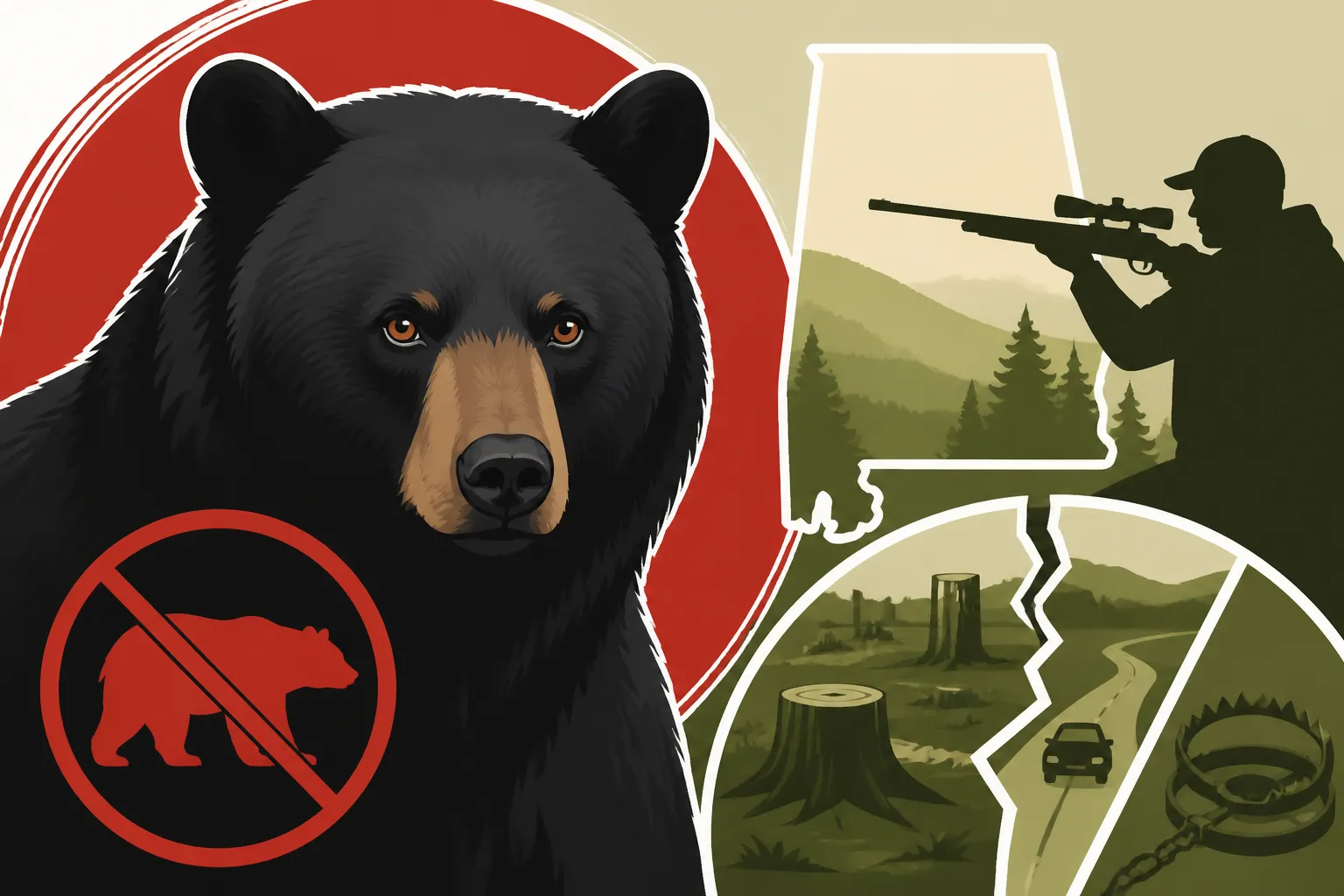
And sadly, mortality challenges are plentiful. One of the leading causes of bear deaths in Alabama is vehicle collisions. As bears attempt to cross busy highways and interstates, particularly during dispersal periods, they are often hit by cars. Poaching, though less common than in the past, still poses a threat. While the state has strict laws protecting bears, some individuals still illegally kill them, whether intentionally or accidentally, and these losses are significant for such a small population. Habitat encroachment also indirectly leads to mortality by forcing bears into less suitable areas where they are more likely to encounter humans or cross dangerous roads. Every lost bear, especially a breeding female, is a setback for the entire population. This is why when the Alabama Department of Conservation and Natural Resources (ADCNR) details Why Black Bear Is a Species of Highest Concern, these reproductive and mortality factors are always at the forefront.
Habitat Challenges and Human-Wildlife Conflict
The battle for black bear survival in Alabama is largely a battle for space and understanding. Their habitat is under constant pressure, and as they venture into human-dominated landscapes, conflicts inevitably arise.
Loss of Critical Habitat
Black bears require large, contiguous tracts of diverse habitat to thrive. They need dense forests for cover, wetlands and swamps for refuge, and areas rich in seasonal food sources like acorns, wild berries, and various vegetation. Unfortunately, these types of landscapes are shrinking in Alabama. Urbanization continues to spread, converting forests and fields into homes and businesses. Agricultural expansion also fragments forests, breaking up the natural corridors bears use to move between areas. Even modern timber practices, while often sustainable, can reduce the quality of bear habitat if they result in large monoculture pine plantations with little understory or diverse food sources, or if they remove crucial old-growth stands.
In the Mobile-Tensaw Delta, development pressures from nearby coastal communities, along with ongoing industrial activities, chip away at the edges of their vital wetland habitat. Around Little River Canyon, while the preserve itself offers protection, the surrounding private lands are subject to development. This constant reduction and fragmentation of suitable habitat means bears have less space to roam, less food to find, and fewer safe places to live and reproduce. It forces them into closer proximity with human activity, increasing the likelihood of negative encounters. Any hunter scouting for deer in these areas, perhaps using a tool like GoHunt to analyze satellite imagery, would quickly see the mosaic of shrinking wild lands amidst growing human footprint. This highlights a fundamental reason Where Alabama Black Bears Are Recovering is such a limited list.
Vehicle Collisions and Road Mortality
As mentioned earlier, vehicle collisions are a major threat, particularly to young, dispersing bears. Imagine a young male bear, driven by instinct to find its own territory, setting out from the Mobile-Tensaw Delta. Its journey might take it across US Highway 43 or I-65, busy arteries of commerce and travel. Similarly, bears dispersing from the Little River Canyon area might encounter US Highway 35 or I-59. These animals, often inexperienced and unfamiliar with the dangers of roads, are extremely vulnerable. The statistics on bear mortality due to vehicle strikes are grim and represent a significant drain on an already fragile population. Every time a bear is hit, it's a loss that the population can ill afford.
These incidents aren't just tragic for the bears; they also pose a safety risk to motorists. A collision with a black bear can cause substantial damage to a vehicle and serious injury to occupants. This shared risk underscores the urgency of understanding bear movements and, where possible, implementing wildlife crossings or other mitigation strategies. The fact that bears are increasingly sighted venturing out into the broader landscape, sometimes even leading to Bears Moving Into North Alabama Suburbs, means these road encounters are only likely to increase without serious intervention and awareness.
Human-Bear Encounters and Mitigation
With habitat shrinking and bear populations, however small, pushing outward, human-bear encounters are becoming more frequent. Bears are naturally shy, but they are also opportunistic eaters. If they discover easily accessible food sources like garbage, pet food left outdoors, or bird feeders, they can quickly become habituated to human presence. This habituation is detrimental to both bears and people. A bear that regularly visits human areas for food is more likely to be involved in a conflict, become a nuisance, or even be inadvertently or intentionally harmed.
For this reason, education on how to coexist with bears is crucial. Simple steps like securing garbage in bear-resistant containers, bringing pet food indoors, and removing bird feeders at night can make a huge difference. If you encounter a bear, staying calm, making noise, and backing away slowly is almost always the best course of action. It's vital to remember that feeding bears, intentionally or unintentionally, is a disservice to them, as it teaches them to associate humans with food, often leading to their demise. The ADCNR frequently puts out guidelines on What to Do If You See an Alabama Black Bear, emphasizing that prevention is always the best strategy for managing these interactions.
Conservation Efforts and the "Highest Concern" Designation
The "highest concern" designation isn't just a label; it's a call to action and a reflection of significant, ongoing conservation efforts to protect Alabama's black bears.
Why They Are Fully Protected by Law
The "species of highest concern" classification means that black bears in Alabama are fully protected under state law. This is Why Alabama Protects Black Bears Statewide is such a critical concept. Unlike deer, turkey, or hogs, there is absolutely no hunting season for black bears, and it is illegal to harvest them. This legal protection is the cornerstone of their conservation strategy, aimed at allowing their small populations every chance to recover without the added pressure of hunting mortality.
The penalties for violating these laws are severe. Shooting or otherwise harming a black bear can result in significant fines, loss of hunting privileges, and even jail time. These stringent measures are in place because every single bear is a valuable asset to the overall population, and the state is committed to their recovery. Hunters, anglers, and outdoor enthusiasts must be acutely aware of this protection. If you're out in the woods, even if you see a bear, it's a magnificent and rare sight to enjoy, but never a target. This commitment is deeply embedded in the state's wildlife regulations, making the protection of this species a top priority. Understanding What Happens If You Shoot an Alabama Bear is crucial for anyone venturing into Alabama's wild places.
Collaborative Conservation Initiatives
The recovery of Alabama's black bear population is a multi-faceted effort involving state agencies, conservation groups, and even federal partners. The Alabama Department of Conservation and Natural Resources (ADCNR), through its Wildlife and Freshwater Fisheries Division, leads many of these initiatives. They conduct ongoing research to monitor bear populations, track their movements, and assess their health. This includes techniques like hair snares for DNA analysis, trail camera surveys, and occasionally even darting and collaring bears for detailed study. This research helps biologists understand population trends, identify critical habitats, and pinpoint areas where conservation efforts are most needed. If you're scouting for deer in areas where bears are present, apps like GoHunt can provide useful habitat overlay maps that highlight areas of dense cover or natural food sources favored by bears.
Beyond research, ADCNR works with partners to acquire and restore critical bear habitat. This might involve purchasing land, working with private landowners on conservation easements, or implementing habitat management practices like prescribed burning to enhance natural food sources and cover. Public education campaigns are also a major part of these initiatives, aimed at informing citizens about bear behavior, reducing human-bear conflicts, and garnering public support for conservation. Efforts like the Alabama Black Bear Recovery Program History are foundational to these ongoing projects.
The Role of Public Awareness and Reporting
For a species on the edge, public awareness and active participation are incredibly valuable. Every sighting reported to ADCNR, especially with details like location and time, helps biologists build a more complete picture of bear distribution and movement. This data is vital for making informed management decisions. It’s not just about seeing them; it’s about understanding them. For instance, if you see a bear that appears sick or injured, reporting it to ADCNR promptly allows wildlife officials to intervene if necessary, which is part of their broader Alabama Wildlife Disease Monitoring efforts.
More broadly, simply understanding that bears are part of Alabama's natural heritage and respecting their space goes a long way. This includes educating children, talking with neighbors, and spreading the word about coexistence. When we know that a species is considered a "highest concern," it instills a greater sense of responsibility in all of us to be good stewards of the land and its wildlife. This collective understanding and cooperation are perhaps the most powerful tools in ensuring that black bears not only survive but eventually thrive once again across Alabama.
| Factor | Description | Impact on Bear Population |
|---|---|---|
| Low Population Numbers | Only a few hundred bears estimated across the entire state. | Highly vulnerable to any increase in mortality. |
| Habitat Fragmentation | Populations in Mobile-Tensaw Delta and Little River Canyon are isolated. | Leads to reduced genetic diversity, less resilience. |
| Slow Reproduction Rate | Females mature late, reproduce every 2-3 years with small litters. | Population growth is inherently slow, slow recovery. |
| High Mortality (Vehicle) | Frequent vehicle collisions, especially for dispersing young bears. | Significant and unsustainable loss of individuals. |
| Habitat Loss & Degradation | Urbanization, agriculture, and some timber practices reduce suitable areas. | Forces bears into smaller, less productive habitats, increasing conflicts. |
| Human-Bear Conflict | Bears habituating to human food sources lead to nuisance behavior. | Often results in lethal removal or displacement of bears. |
| Illegal Take/Poaching | Though rare, any illegal killing has a disproportionate impact. | Direct reduction of a critically small population. |
Disclaimer
Hunting and wildlife regulations can change. Always consult the official Alabama Department of Conservation and Natural Resources (ADCNR) website or their current regulations digest before participating in any hunting or outdoor activity. This content is for informational purposes only and should not be considered legal advice.