Shot Placement on a Feral Hog
Hunting feral hogs in Alabama can be incredibly frustrating. These animals are notoriously tough, smart, and often move in unpredictable ways, making a clean, ethical harvest a real challenge. You want to make sure your shot counts, not just to avoid a long tracking job, but to prevent unnecessary suffering for the animal. This guide will walk you through the most effective shot placements for feral hogs, explaining their unique anatomy and offering practical advice to maximize your success in the field.
Understanding Feral Hog Anatomy and Resilience
Unlike deer, feral hogs are built like tanks, and their anatomy, combined with their incredible resilience, can make shot placement a real puzzle for hunters not familiar with them. Many a hunter has put a bullet "where it should have been" only to watch a hog shrug it off and disappear into the thick Alabama woods.
Unique Feral Hog Anatomy
The most significant difference in a hog's anatomy compared to a deer is the placement of their vitals and the formidable "shield" they develop. A hog's heart and lungs sit lower and further forward in their chest cavity than a deer's. If you aim for the same spot on a hog as you would a whitetail, you're likely to hit too high and too far back, resulting in a gut shot or a muscle wound that rarely brings the animal down quickly. It’s a common mistake, even for seasoned deer hunters, and it’s why understanding the precise location is so crucial.
Their bone structure is also incredibly dense, particularly around the skull and shoulder blades. This dense bone can deflect or stop bullets that might pass through a deer without issue, especially with lesser calibers or poorly constructed bullets. This robustness means you need to be confident not just in your aim, but in your projectile choice as well. You need ammunition that can reliably penetrate thick hide, dense muscle, and bone to reach the vitals.
The "Shield" Phenomenon and What It Means
Older, larger boars, in particular, develop what hunters often refer to as a "shield." This isn't literal plate armor, but rather an extremely thick layer of cartilage, scar tissue, and hardened hide that forms over their shoulders and flanks. It develops over time from fighting other hogs, especially during breeding seasons, as they repeatedly clash and gore each other. This natural armor can be inches thick and is incredibly tough.
The "shield" can significantly reduce bullet penetration, acting almost like a real-world ballistic vest. A bullet that would cleanly pass through the vitals of a deer might get hung up or severely deform within this shield on a mature boar, failing to reach the heart or lungs. This phenomenon is a primary reason why hogs are considered so tough to kill cleanly. Hunters often underestimate its density, leading to frustrating wounded animals. When targeting these formidable animals, particularly larger ones, it's essential to aim for areas outside this shielded region or use high-penetration rounds designed to break through such defenses. This is a crucial consideration for anyone new to Hunting Alabama's Year-Round Feral Hogs.
Ethical and Effective Shot Zones for Feral Hogs
When it comes to dropping a feral hog cleanly and humanely, precision is paramount. You really only have a few primary zones that offer consistent results, and each comes with its own set of advantages and challenges. The goal is always a quick, ethical kill, and knowing exactly where to place your shot will significantly increase your odds.
The Brain Shot: High Risk, High Reward
The brain shot is the ultimate "lights out" option for a hog. When executed perfectly, it results in an instantaneous kill, with the hog dropping in its tracks without a twitch. There's no tracking, no suffering, just immediate cessation of life. The challenge, however, is that the brain is a surprisingly small target, especially considering the overall size of a hog's head and the density of its skull.
To effectively target the brain, you need to aim for a very specific spot. Imagine a line from the base of the ear to the opposite eye, and another line from the other ear to the opposite eye. The intersection of these two lines, usually about an inch or two below and behind the ear opening, is where the brain sits. It’s a small, dinner-plate sized area, and any deviation can result in a jaw shot, a scalp wound, or missing the brain entirely, leading to a wounded and suffering animal that may escape. This shot is best reserved for hogs that are standing still, ideally broadside or slightly quartering away, and at close range where you are absolutely confident in your marksmanship. It requires a steady hand and a calm mind, so don't attempt it if conditions aren't perfect.
The Heart-Lung Shot: The Most Reliable Option
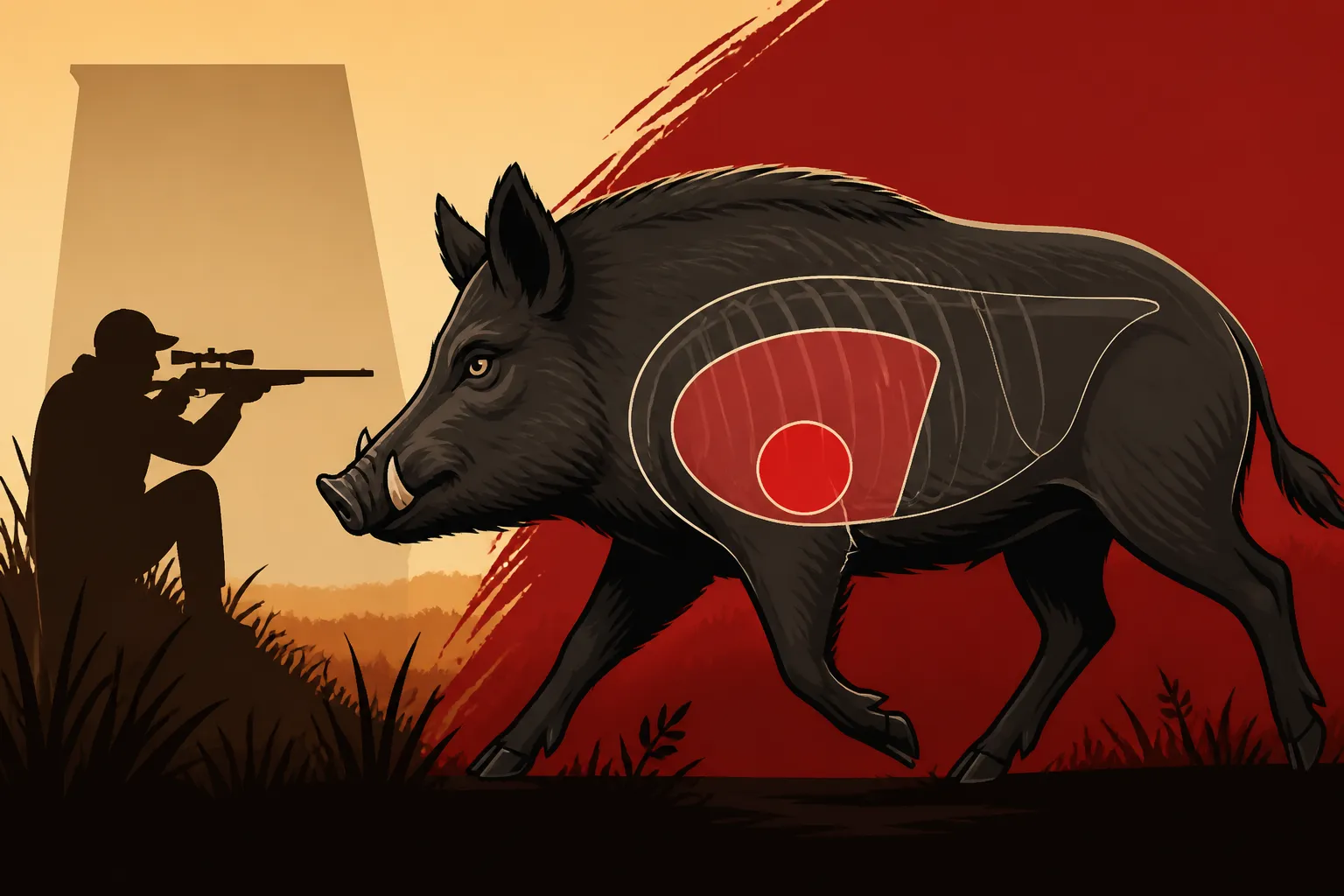
For most hunters, the heart-lung shot is the most reliable and ethical option for feral hogs. While it may not drop them in their tracks every time like a perfect brain shot, it typically ensures a quick death with a good blood trail for recovery. Remember that hog vitals are situated lower and more forward than a deer's. The key is to aim low and slightly forward on the shoulder, usually about one-third of the way up the body from the bottom of the chest, and directly behind the leg.
When the hog is broadside, aim for the crease just behind the front leg. If the hog is quartering away, aim to exit through the opposite front leg pocket. This trajectory ensures you penetrate both lungs and potentially the heart, causing massive internal damage. This shot bypasses the dense shoulder blade of a mature hog and often avoids the thickest part of the "shield" if you aim appropriately low. I've found that using a good rangefinder and taking a steady rest, perhaps using your Treestand Setups in Talladega National Forest or a ground blind, can make all the difference in placing this critical shot accurately. A hunting app like GoHunt can provide detailed diagrams showing these vital zones, which can be a huge help for visualization.
Spine Shot: Another Effective but Challenging Option
A shot to the spine can also drop a hog immediately, effectively paralyzing it. The spine runs along the top of the hog's back, from the base of the skull all the way to the tail. A shot that severs the spinal column will instantly shut down the nervous system, rendering the animal immobile. This can be a very effective shot, especially if you're trying to prevent a hog from escaping into dense cover or if you need to dispatch multiple hogs quickly.
However, hitting the spine precisely can be challenging. The spine itself is relatively thin, and missing it by even a small margin can result in a hit to the muscle above or beside it, causing a painful, non-lethal wound. If the hog drops from a spine shot, it's crucial to follow up quickly with another shot to the brain or heart-lung area to ensure a humane kill. Never assume a spine-shot hog is dead; they can recover some movement over time or still be fully conscious but unable to move. This shot is best considered when you have a clear, elevated view of the hog's back and minimal distance, perhaps when hunting hogs at a bait site you've established by Building and Freshening a Hog Bait Site.
Practical Tips for Improving Your Shot on Hogs
Hitting a moving target, especially one as tough and unpredictable as a feral hog, requires more than just knowing where to aim. It takes practice, preparation, and understanding how to read the situation in the field. Every hunter knows the frustration of a missed opportunity or a shot that just wasn't quite good enough.
Practice, Practice, Practice
This might sound obvious, but consistent range time is absolutely non-negotiable for hog hunting. Unlike deer, where you might get a clean, standing shot, hogs are often skittish and might only offer fleeting opportunities. Practice shooting from various positions – standing, kneeling, off-hand – and under simulated field conditions. Don't just shoot at static targets. Incorporate drills that mimic quick target acquisition and follow-up shots. Some hunters even set up hog-sized targets with vital zone outlines to visualize the shot placement more accurately. Remember, an inch or two can make all the difference, especially with the "shield."
It's also beneficial to practice with the exact ammunition you plan to use for hunting. Different bullet types and weights can perform differently, especially when encountering dense bone or the infamous hog shield. Understanding your rifle's capabilities and your personal accuracy limitations will prevent heartache in the woods. Consider using a hunting app like GoHunt to track your shooting performance and analyze your shot groups, helping you identify areas for improvement.
Choosing the Right Ammunition
The choice of ammunition is just as important as shot placement, especially for an animal as resilient as a feral hog. You need a bullet that offers a good balance of expansion and penetration. Calibers like .308 Winchester, .270 Winchester, 6.5 Creedmoor, and .30-06 Springfield are popular choices and generally effective for hogs, but the bullet construction within those calibers truly matters. Soft-point bullets designed for rapid expansion on thin-skinned game like deer might not penetrate the hog's shield effectively.
Look for bullets specifically designed for tougher game, such as bonded bullets or those with heavier jackets and controlled expansion. These bullets maintain their mass and drive deeper, increasing the likelihood of reaching vital organs even after encountering bone or the shield. For instance, Nosler Partition, Barnes TSX, and Hornady InterBond are examples of bullet designs known for their excellent penetration and controlled expansion. Using the right ammunition dramatically increases your chances of a clean kill, reducing the need for extensive tracking or follow-up shots. This is particularly important when you consider Alabama Feral Hog Regulations often allow night hunting, where visibility can be limited.
Shot Angles and Opportunities
Hogs rarely cooperate by standing perfectly broadside. You'll often encounter them quartering away, quartering towards, or sometimes even facing you directly. Understanding how to adjust your aim for different angles is crucial.
- Broadside: As discussed, this is the ideal shot for the heart-lung area. Aim low and forward, behind the leg.
- Quartering Away: This is also an excellent angle for the heart-lung shot. Aim for the opposite front shoulder. The bullet will travel through the vitals diagonally, ensuring maximum damage. This is a very forgiving shot if executed correctly, often bypassing much of the shield.
- Quartering Towards: This is a more challenging shot. The vitals are somewhat obscured, and the shoulder blade presents a formidable barrier. If the hog is heavily quartering towards you, it might be best to wait for a better shot. If only slightly quartering, you might target the leading edge of the shoulder, aiming to break it and enter the chest cavity. The brain shot can also be an option if the hog's head is angled favorably.
- Facing You: A direct frontal shot is generally discouraged for body shots due to the thick sternum and frontal bone. The most reliable option here is a precise brain shot between the eyes, but again, this is a high-risk, high-reward proposition. If you're not confident, wait.
Being patient and waiting for the best possible shot angle is always more ethical and effective than rushing a questionable shot. Sometimes, that means letting a hog walk, even if it's frustrating. Being mindful of these angles, especially if you're on a public land hunt like Hunting the Alabama Rut by Zone and encounter hogs unexpectedly, will increase your success rate.
Here's a quick comparison of popular hog shot placements:
| Shot Type | Target Area | Pros | Cons | Ideal Scenarios |
|---|---|---|---|---|
| Brain Shot | Small target, behind/below ear, opposite eye line | Instant lights out, no tracking | Very small target, high risk of wounding/missing | Close range, hog perfectly still, high confidence |
| Heart-Lung Shot | Low and forward, behind front leg | Large vital area, good blood trail, ethical kill | Not always instant drop, may require tracking | Broadside or quartering away, moderate range |
| Spine Shot | Along top of back, from neck to rump | Instant paralysis, drops hog in tracks | Small target, can lead to conscious but immobile hog, requires follow-up | Elevated position, short range, quick dispatch |
Knowing these shot placements is a huge step in the right direction for anyone looking to get more consistent results, whether you're new to Alabama's year-round feral hog regulations or just refining your approach. And don't forget to properly manage your harvest once the shot is made, following guidelines for Handling a Hog After the Shot.
Disclaimer
Hunting is a challenging and inherently dangerous activity. This guide provides general information and recommendations for ethical shot placement on feral hogs. Always prioritize safety, follow all local and state hunting regulations, and ensure you are proficient with your chosen firearm or archery equipment. Responsible hunting includes making every effort to recover any animal you shoot. Local conditions, hog behavior, and individual hunter skill can vary, so use your best judgment in the field.