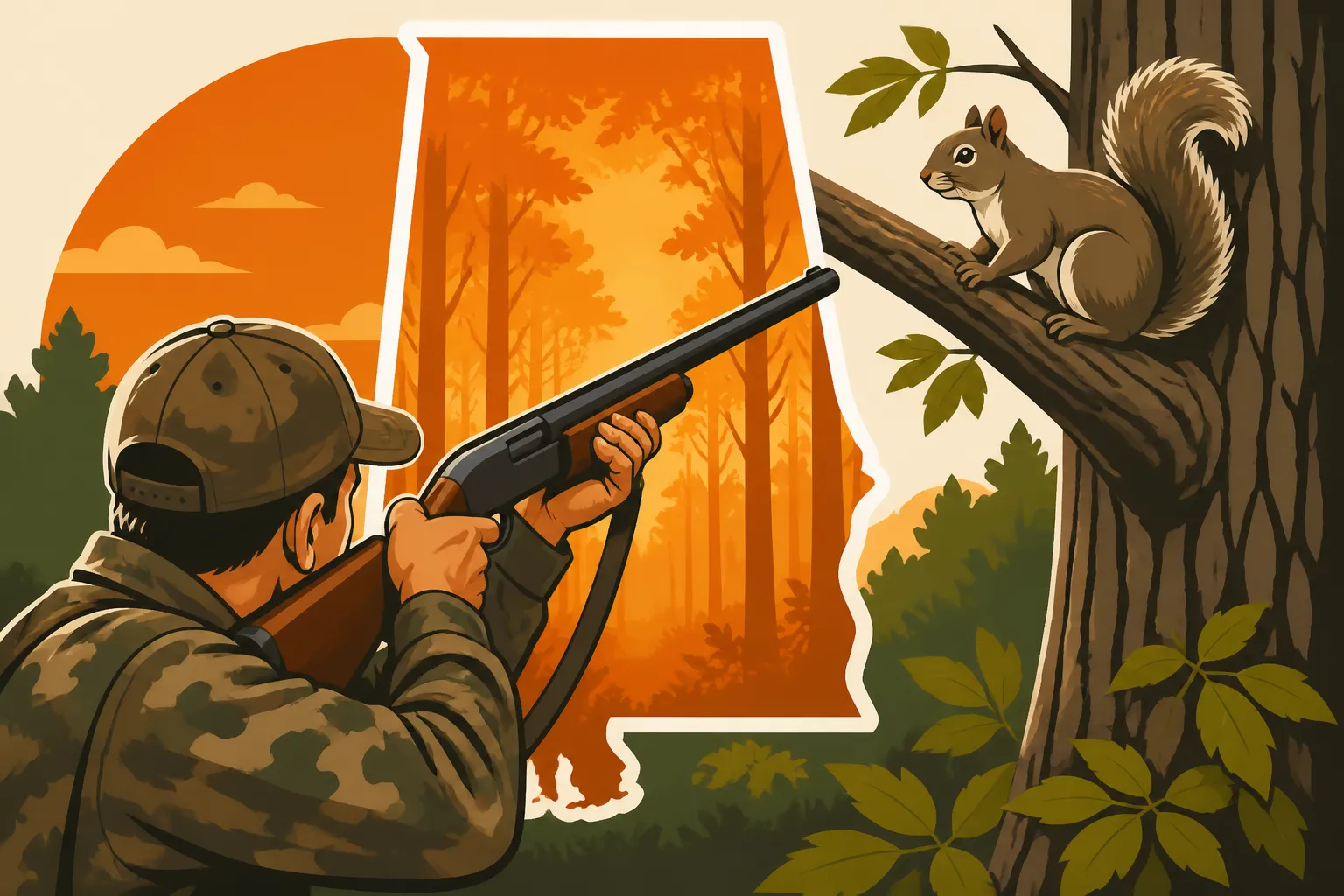
Squirrel Hunting Alabama Bottomland Hardwoods
It's no secret that the sprawling bottomland hardwoods of Alabama can feel like a labyrinth when you're trying to consistently put squirrels in the bag. The thick canopy, meandering sloughs, and ever-changing food sources make finding those elusive bushy-tails a real challenge, even for seasoned hunters. This comprehensive guide is dedicated to dissecting the ins and outs of squirrel hunting in these rich, albeit sometimes frustrating, environments, arming you with the knowledge and tactics to fill your limit more often.
Deciphering Alabama's Bottomland Hardwood Habitat
Before you can even think about calling in a limit of squirrels, you've got to understand their playground. Alabama's bottomland hardwoods are truly unique ecosystems, often defined by their proximity to rivers, creeks, and sloughs. These are not your typical upland pine plantations; they are dynamic, water-influenced forests that offer a smorgasbord of food and cover for squirrels.
Identifying Prime Squirrel Habitat
When you're walking into a new area, or even revisiting a familiar one, you'll want to hone in on the specific features that scream "squirrel central." Think about areas where different types of trees converge, or where water features create natural travel corridors. River bottoms and creek drains often hold incredible squirrel densities because they offer consistent moisture, leading to healthier, more productive mast trees. Look for slight elevations within the bottomland – small ridges or humps that don't flood as often. These spots become vital refuges during high water and often hold the oldest, most productive mast trees. Pay attention to the understory too; while dense briars can be a pain to navigate, they also offer fantastic escape cover from predators like hawks and owls.
Key Tree Species and Food Sources
The heart of any successful squirrel hunt in the hardwoods lies in understanding their diet. Squirrels are food-driven, plain and simple. In Alabama's bottomlands, certain tree species are absolute magnets. Think about your oaks – particularly white oaks and water oaks, which drop acorns earlier and are highly preferred, but don't overlook red oaks either, as their acorns persist longer into the winter. Hickories are another huge draw; those tough-shelled nuts are a favorite and provide a lot of energy. Pecan trees, often found near old homesteads or cultivated areas adjacent to bottomlands, are pure gold. Other food sources include black gum berries, dogwood berries, and even the tender buds of certain trees in the late season. Knowing what’s dropping and when is half the battle. For example, knowing what kind of acorns are falling can give you a significant edge, much like knowing the best tactics for Hunting After a Poor Acorn Year.
Mastering Squirrel Behavior in Hardwoods
Squirrels aren't just random critters scampering around; they operate on a seasonal clock and have predictable patterns, especially in the consistent environment of bottomland hardwoods. Learning to interpret their movements and the subtle signs they leave behind can drastically improve your success rate.
Seasonal Movement and Feeding Patterns
Just like us, squirrels adapt their routine to the changing seasons and food availability. In the early fall, when the season typically opens, they're often gorging themselves on early-dropping white oak acorns or hickory nuts. You'll find them high in the trees, cutting nuts, or on the ground actively burying their winter stash. As winter sets in and prime food sources dwindle, they might shift to red oak acorns, pine cones, or even tree buds. Their activity will often concentrate around remaining food trees or sunny slopes where warmth might bring out dormant insects or thaw ground nuts. Knowing these shifts is crucial. For instance, an early-season hunt might mean focusing on a mature hickory grove, a scenario well-covered in guides like Squirrel Hunting Alabama Hickory Groves. Later in the season, a good strategy might involve scouting out persistent red oaks in a slough bottom.
Reading Squirrel Sign and Activity
Squirrels are messy eaters, and that's good news for us hunters. Learning to read their "sign" is like cracking a secret code. Look for freshly cut nut fragments on logs, stumps, or the forest floor. These tell-tale pieces, especially with fresh chew marks, indicate recent activity. Bark stripped from trees can signify a den tree or a feeding site where they're accessing inner bark or sap. Tracks in soft mud or damp leaves can confirm their presence, particularly near water sources. And of course, listen. The chatter of a squirrel, the rustle of leaves as they scamper, or the distinct "thump" of a falling acorn or nut hitting the ground are all valuable clues. If you hear a series of quick, sharp barks, that squirrel has likely spotted you, so freeze! Understanding how to detect their presence early, as discussed in How Early Season Squirrels Give Themselves Away, is a huge advantage.
Essential Gear for the Hardwood Hunter
Hunting bottomland hardwoods can be physically demanding, requiring specific gear to ensure both comfort and success. You're often dealing with thick undergrowth, potentially muddy conditions, and humid air. Having the right tools for the job makes all the difference.
Firearms and Ammunition Choices
When it comes to firearms for squirrel hunting, a .22 caliber rimfire rifle or a small-gauge shotgun (like a .410 or 20-gauge) are the traditional favorites, and for good reason. A .22 rifle, especially with a good scope, offers precision for headshots, preserving meat and providing a satisfying challenge. Standard velocity or sub-sonic ammunition can be quieter, which can sometimes allow for follow-up shots on nearby squirrels. If you're using a shotgun, consider smaller shot sizes like 6 or 7.5 to maximize pattern density without excessive damage. For closer shots or when squirrels are particularly skittish and constantly moving through dense limbs, a shotgun can be more forgiving. Carrying both, if feasible, gives you ultimate versatility.
Here's a quick comparison of common choices:
| Firearm Type | Pros | Cons | Ideal Use Case |
|---|---|---|---|
| .22 Rimfire Rifle | Precision, quiet, economical ammo, meat preservation | Requires skill, can be slow for multiple targets | Still-hunting, targeting stationary squirrels, open canopy |
| 20 Gauge Shotgun | Forgiving pattern, good range, effective | More noise, potentially more meat damage, heavier ammo | Fast-moving squirrels, dense cover, quick follow-ups |
| .410 Shotgun | Lightweight, low recoil, good for young hunters | Limited range, very tight pattern requires accuracy | Close-range shots, beginners, thick brush |
Clothing, Optics, and Other Essentials
Your gear list extends beyond just your firearm. Comfortable, durable clothing that can withstand briars and moisture is a must. Layers are always a good idea in Alabama, as mornings can be chilly and afternoons surprisingly warm. Consider waterproof boots for navigating damp areas and crossing small sloughs. A good pair of binoculars, even a compact 8×25 or 10×32, can save you a lot of walking by helping you spot squirrels from a distance before they spot you. A small backpack to carry water, snacks, a game bag, and a first-aid kit is prudent. Don't forget bug spray, especially in early season. Many hunters find a comfortable seat cushion invaluable for still-hunting. And since many of these areas are public, make sure you know the rules regarding blaze orange, as specified in guides like How Much Blaze Orange Alabama Requires. Utilizing mapping apps, like the kind available from GoHunt, can also be invaluable for navigating dense bottomlands, marking productive trees, and ensuring you stay within public land boundaries.
Proven Tactics for Bottomland Hardwood Squirrels
Once you're in the woods, knowing how to approach the hunt is critical. Squirrels in bottomlands can be particularly wary due to the often open understory and mature timber, making stealth and smart strategy paramount.
Still-Hunting and Stalking Strategies
Still-hunting is perhaps the most effective method for harvesting squirrels in the bottomland hardwoods, especially if you're going it solo or without dogs. This involves moving incredibly slowly, stopping often to scan the trees and listen. Take five steps, stop for five minutes. Use your binoculars to scrutinize every limb junction, every cluster of leaves. Listen for the subtle sounds of falling nut pieces, the rustle of leaves, or the soft chatter. When you spot a squirrel, evaluate the shot carefully. Often, they'll freeze when they detect movement, offering you a brief window. If they're moving, try to anticipate their next stop. Moving against the wind can help mask your scent and sound, giving you an advantage. Learning to navigate quietly through the leaf litter is an art form; focus on placing your feet softly, avoiding dry twigs.
Using Calls and Decoys
While not as common as in turkey or deer hunting, squirrel calls can absolutely be effective, particularly for drawing out a curious squirrel that's hunkered down. Bark calls, distress calls, and even a simple "kissing" sound made with your mouth can sometimes coax a squirrel to reveal itself. The key is subtlety and realism. Don't overcall. A few barks, then silence, often works best. Decoys are less common but can sometimes be used to distract a squirrel, drawing its attention away from your position for a better shot. A simple foam squirrel attached to a tree branch can occasionally pique their curiosity enough to pause. However, in the thick environment of a bottomland, camouflage and stillness are generally more critical than decoys for squirrel hunting.
Hunting with Dogs
For many Alabama hunters, squirrel hunting with dogs is a cherished tradition and an incredibly effective method, especially in bottomland hardwoods. Feist and Cur breeds are specifically bred for this purpose, with their keen noses and relentless drive. The dogs range out, locate a squirrel, and "tree" it, barking excitedly to alert the hunter. This method allows you to cover more ground, and the dog's barking often keeps the squirrel focused on the dog, allowing you to maneuver for a shot. It's a fantastic way to introduce new hunters, especially kids, to the woods. Before you head out, ensure your dog is properly trained and understand the local regulations regarding hunting with dogs on public land. It's a different rhythm than still-hunting, but equally rewarding, and much like Running Dogs on Alabama Feral Hogs, it's a social and engaging way to hunt.
Navigating the Terrain and Safety Considerations
Alabama's bottomland hardwoods offer incredible hunting opportunities, but they also come with their own set of challenges, from navigating the landscape to ensuring your personal safety. Being prepared for these aspects is crucial for a successful and enjoyable trip.
Dealing with Water and Thick Undergrowth
Bottomlands, by their very nature, are often wet. Expect muddy stretches, standing water in sloughs, and possibly small creeks that require careful crossing. Waterproof boots are non-negotiable. Waders might even be necessary in some areas, especially after heavy rains. Thick briar patches and dense cane thickets are common, making travel slow and noisy. Consider wearing durable briar pants or chaps to protect your legs. A good mapping app, such as one from GoHunt, can help you identify higher ground, avoid impassable water, and plan the most efficient route through the thick stuff. It’s important to understand the lay of the land, as even small elevation changes can make a big difference, much like learning how to set up on Hunting a Funnel Between Two Creek Bottoms.
Safety First: Hunter Orange and Awareness
Safety should always be your top priority. Always know your target and what is beyond it, especially when shooting into trees. Ricochets are a real concern with rimfire rifles. In many Alabama public hunting areas, wearing hunter orange is required during certain seasons, even for small game. Always check the current regulations from the Alabama Department of Conservation and Natural Resources (ADCNR). Even if not required, wearing some blaze orange is a smart move, especially if you’re hunting with a group or in an area with other hunters. Be mindful of your surroundings, scan for other hunters, and communicate clearly if you're in a party. Being aware of your position and others' in dense cover is paramount, especially when facing Hunting Pressure on Alabama Public Land.
Optimizing Your Hunt: Timing and Weather
Even with the best gear and tactics, timing can make or break a squirrel hunt. Understanding when squirrels are most active, and how weather influences their behavior, will give you a significant edge in Alabama's bottomland hardwoods.
Best Time of Day and Season
Squirrels are generally most active during the early morning and late afternoon hours. They'll emerge from their dens shortly after sunrise to feed, often remaining active for a few hours before bedding down during the midday heat. They'll then come out again in the late afternoon for another feeding frenzy before heading back to their dens for the night. This pattern holds true throughout the squirrel season, which typically opens in Alabama in the fall and runs through late winter, as detailed in the Alabama Squirrel Season Opening Day and Alabama Small Game Season Rules. Early season often finds them focused on fresh mast, while late season might see them more concentrated around den trees or persistent food sources.
Impact of Weather on Squirrel Activity
Weather plays a huge role in squirrel behavior. Cool, crisp mornings after a cold front often lead to high activity, as squirrels need to forage vigorously to maintain body temperature. Overcast days without heavy rain can also be excellent, as the subdued light can make squirrels feel more secure and less wary. Conversely, heavy rain will usually send them scurrying to their dens, though they might emerge quickly once a drizzle breaks. High winds can be challenging for hunters and squirrels alike. While high winds might keep them from the treetops, they also mask human noise, which can be an advantage for a stealthy hunter. Extremely hot or humid conditions tend to make squirrels less active, prompting them to seek shade and rest during the hottest parts of the day. Keeping an eye on the forecast and planning your hunts around favorable conditions will significantly boost your chances of getting your Alabama Squirrel Daily Bag Limit.
Understanding these nuances, combined with thorough scouting, can turn a frustrating hunt into a productive one. Always remember to check the latest ADCNR regulations, ensure you have your Alabama Resident All-Game License Cost in order, and focus on ethical hunting practices. Happy hunting, and may your game bag be heavy!
Disclaimer
The information provided in this guide is for educational and informational purposes only. Hunting regulations, seasons, and requirements can change. Always consult the official Alabama Department of Conservation and Natural Resources (ADCNR) regulations and local ordinances before engaging in any hunting activities. It is your responsibility to know and follow all applicable laws.