What License Fees a Guided Hunt Does Not Cover
It’s easy to get swept up in the excitement of booking a guided hunt in Alabama – visions of big bucks, strutting gobblers, or limits of ducks fill your head. But one area where many hunters get a rude awakening, even on an "all-inclusive" trip, is when it comes to license fees. The truth is, while your outfitter might cover lodging, food, and guiding services, your hunting license and permits are almost always your personal responsibility, and they come with their own distinct costs. This guide will walk you through exactly what those fees are and why you need to factor them in.
Understanding the Standard Exclusion: Why Licenses Are Your Lane
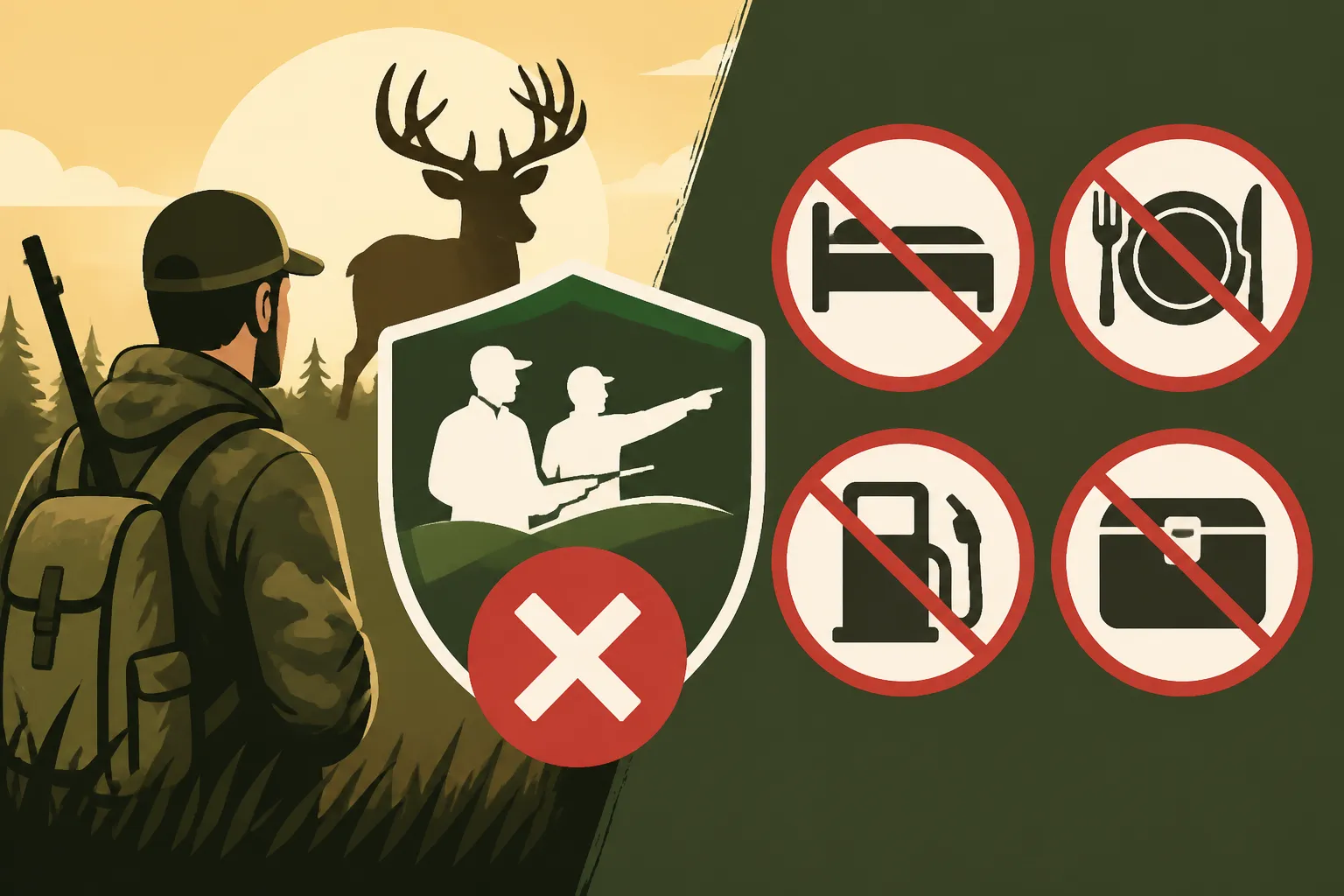
Many hunters assume that when they pay for a guided hunt, especially one advertised as "all-inclusive," everything is handled. They envision showing up, grabbing a gun, and heading to the stand without a second thought about paperwork. While a good outfitter will certainly make sure you have a seamless experience in the field, state hunting licenses and associated permits are almost universally not covered in the price of your guided trip. This isn't because outfitters are trying to nickel-and-dime you or being cagey with their pricing; it's a fundamental aspect of hunting regulations and personal accountability.
Legal and Personal Responsibility
Think about it this way: a hunting license is a legal document tied directly to you, the individual hunter, not to the outfitter or the land you're hunting. It requires your specific personal information, such as your full legal name, date of birth, current address, and often your hunter education certification number. An outfitter simply cannot purchase these on your behalf, nor would it be legal for them to do so in most cases, as it involves an individual attesting to their qualifications and agreeing to state regulations.
You are the one ultimately accountable for possessing a valid license and all necessary stamps or endorsements for the species you intend to pursue. Failing to do so can result in significant legal consequences, including hefty fines, the confiscation of harvested game, and even the suspension or revocation of your hunting privileges. No hunter wants to find themselves in such a predicament, and no reputable outfitter wants to see their clients face these issues. This is why platforms like GoHunt and BookYourHunt, which connect hunters with outfitters, always recommend thoroughly reviewing state regulations before finalizing any booking.
Variable License Costs and Hunter Choices
Another crucial reason licenses aren't typically bundled into a guided hunt package is the sheer variability of costs involved. Are you an Alabama resident or a nonresident? Nonresident licenses are, understandably, significantly more expensive than resident ones, sometimes by several hundred dollars, reflecting the contributions residents make through other taxes and fees towards wildlife management. An outfitter couldn't possibly factor every potential hunter's residency status into a single, flat package price without making it prohibitively expensive for some or unfairly cheap for others.
Beyond residency, the specific species you plan to hunt also dictates the type and cost of your license. If your hunting party is coming from out of state with plans to chase both white-tailed deer and a few ducks, your licensing requirements will be different from a local hunter who is solely focused on the general deer season. Outfitters need the flexibility to price their services based on their operational costs and the quality of their experience, not on the complex and ever-changing permutations of individual hunter permits and endorsements. This flexibility allows them to offer competitive pricing for their core service while clearly communicating what the hunter needs to handle personally.
Beyond the Basic: Specific Permits and Stamps You'll Need
While securing your general hunting license is the primary step, Alabama's hunting regulations include a layered system of permits, stamps, and certifications that can quickly add to your overall cost, particularly if you're targeting specific game species or planning to hunt in certain designated areas. It's critical not to overlook these, as missing even one can render your hunt illegal. Knowing what to expect and which additional fees apply to your specific hunt scenario is key to a smooth and worry-free experience.
Migratory Bird Stamps and HIP Certification
If your guided hunt in Alabama includes pursuing any migratory bird species – whether it’s ducks and geese in a flooded timber bottom or mourning doves over a cut field – you will undoubtedly need more than just a basic hunting license. The first additional requirement is the Alabama state duck stamp, which is mandatory for any hunter aged 16 or older pursuing waterfowl within the state. This state stamp helps fund critical waterfowl habitat conservation and management efforts within Alabama.
In addition to the state stamp, you will also need to purchase a federal duck stamp, a national requirement for anyone 16 years or older hunting migratory waterfowl anywhere in the United States. These federal stamps are vital for conserving wetlands across the country. Beyond these two physical stamps, you'll also need to obtain your Harvest Information Program (HIP) certification. This isn't a traditional stamp you purchase, but rather a brief survey you complete annually that registers you as a migratory bird hunter. It's usually free to complete, but it is absolutely required by federal law for anyone hunting doves, ducks, geese, woodcock, snipe, rails, or gallinules. Your guide cannot acquire these for you, so make sure adding them to your checklist if you plan on participating in activities like Waterfowl Hunting Alabama's River Deltas or Dove Hunting Alabama Opening Weekend.
WMA Permits and Special Hunt Fees
Occasionally, outfitters might operate on or have access to Wildlife Management Area (WMA) lands, especially for certain species, during specific seasons, or to offer diverse hunting opportunities. If any portion of your guided hunt takes place within an Alabama WMA, you will almost certainly need to purchase an additional WMA annual permit on top of your standard state hunting license. These permits are crucial for funding the management, habitat improvements, and infrastructure maintenance of these public hunting grounds, ensuring quality experiences for all hunters.
While it's less common for a full-service outfitter operating on extensive private leases to rely heavily on WMA land, it's a question worth clarifying with your guide before you book. This is particularly relevant if you're looking at a hunt that seems unusually inexpensive or if the outfitter mentions utilizing diverse land types. Furthermore, some WMAs or other public lands host special quota hunts for deer or turkey, which require applying for and being drawn for a permit. While an outfitter might assist with the logistics of such a hunt, the application fees and the quota permit itself would still be the hunter's responsibility. Always ask for specifics if WMA access is part of the package.
Chronic Wasting Disease CWD Zone Requirements
Alabama is actively involved in monitoring and managing Chronic Wasting Disease (CWD), particularly in certain counties in the northwest region of the state. If your guided deer hunt is scheduled to take place within one of the CWD Management Zones (CMZ), there might be additional requirements you need to be aware of and comply with. These regulations can include mandatory CWD testing for harvested deer during specific periods, or strict restrictions on the movement of deer carcasses, or even specific parts of a carcass, out of the zone.
While an experienced outfitter operating in these areas will be intimately familiar with these rules and will guide you through the compliance process, the ultimate legal responsibility to understand and adhere to them falls squarely on the hunter. There might not be an explicit "CWD permit fee" you purchase, but the time and effort involved in carcass sampling, transportation restrictions, and waiting for test results are all part of the overall, often unstated, "cost" of hunting in these areas. It is imperative to be informed if your hunt falls within one of these zones. You can find up-to-date information on Alabama's Chronic Wasting Disease Management Zone on the Outdoor Alabama website to prepare yourself.
Navigating the Costs: Budgeting and Preparation
Preparing for your guided hunt isn't just about packing the right gear and sighting in your rifle; it's equally about making sure all your administrative paperwork and financial obligations for licenses are meticulously in order. A little bit of foresight and proactive planning in this area can save you a significant amount of hassle, unnecessary stress, and potential legal complications during what should be an enjoyable trip.
Researching Alabama's Specific License Requirements
Before you commit to booking your trip or even start packing your camouflage, dedicating some time to visit the official Alabama Department of Conservation and Natural Resources (ADCNR) website, widely known as Outdoor Alabama, is a non-negotiable step. This online portal serves as your definitive and most up-to-date source for all hunting regulations, detailed descriptions of available license types, and their associated costs. It’s important to look specifically for information on Alabama Hunting Licenses and What They Cost to understand the baseline expenses.
If you’re primarily interested in deer hunting, dive into Alabama Deer Season Structure Explained, which will detail the permits needed for various zones and weapon types. For those chasing gobblers, Alabama Spring Turkey Zones and Dates will outline season specifics and licensing. This website will clearly delineate the differences between annual licenses and short-term options, clarify what an all-game license truly covers versus a small-game license, and provide details on any required endorsements. While many reputable outfitters will direct you to this invaluable resource, it remains your personal responsibility to thoroughly review and understand all applicable regulations.
Resident vs. Nonresident: The Price Divide
This particular distinction is often where the most significant cost differences emerge for hunters traveling from out of state. Alabama, much like virtually every other state, levies substantially higher fees for nonresident hunting licenses compared to those for residents. This differential pricing strategy helps to equitably fund the state’s extensive wildlife management and conservation programs, which residents support through various local taxes and fees throughout the year. For example, a nonresident annual all-game hunting license will carry a considerably higher price tag than what an Alabama resident pays for the exact same privilege.
If your guided hunt is a relatively short trip, it is highly advisable to carefully investigate the non-resident 3-day or 10-day license options, if they are available for your chosen game species and season. These shorter-duration licenses can often prove to be a more economical choice for brief visits, offering a cost-effective alternative to a full annual license. Always perform a careful comparison of these options based on the length of your stay and the species you intend to hunt. Most reputable outfitters will transparently explain these differences, but the ultimate decision and purchase responsibility rests with you. For a detailed breakdown of these cost structures, refer to Alabama Nonresident Hunting License Options.
When and Where to Purchase Your Licenses
Fortunately, the process of acquiring most Alabama hunting licenses and permits has been streamlined for convenience. The vast majority can be purchased quickly and easily online directly through the Outdoor Alabama website. This method is often the simplest and most efficient, allowing you to either print a physical copy of your license or save a digital version directly to your smartphone for easy access in the field. Beyond the online portal, some local probate offices and a network of authorized vendors, such as various sporting goods stores across the state, also facilitate license sales.
It is always, without exception, a prudent practice to purchase all your necessary licenses and permits well in advance of your scheduled hunting trip, especially if you are traveling from outside Alabama. Procrastinating until the day before you leave home, or, even worse, the very morning of your scheduled hunt, is a recipe for unnecessary stress. You absolutely do not want to be in a frantic scramble for reliable internet access or a functioning printer in a remote Alabama town when your focus should be entirely on preparing for your time in the woods. Ensure you understand the process outlined in Buying Alabama Permits Online Versus by Phone and how to correctly display Carrying Proof of License on Your Phone.
Avoiding Last-Minute Surprises and Costly Mistakes
Even with meticulous planning and the best intentions, it's remarkably easy to overlook a small yet crucial detail when you're immersed in the excitement of arranging an eagerly anticipated hunting trip. Steering clear of these frequently encountered pitfalls can significantly contribute to making your guided hunt in Alabama a much smoother, more enjoyable, and legally compliant experience from start to finish.
Misinterpreting "All-Inclusive"
The term "all-inclusive" is a powerful and often alluring marketing buzzword, particularly prevalent within the outdoor adventure and hunting industries. While an "all-inclusive" guided hunt usually implies that substantial components like comfortable lodging, delicious meals, professional guide services, and often basic in-field transportation are comprehensively covered, it is a critical misconception to assume that this phrase extends to state hunting licenses and any necessary species-specific stamps. In the vast majority of cases, these legal documents are expressly excluded.
It is absolutely imperative to meticulously read your outfitter's contract, booking agreement, or website's fine print with extreme care. If, after reviewing the documentation, there remains even the slightest degree of ambiguity regarding what is and isn't included, do not hesitate to pick up the phone and directly ask your outfitter this precise question: "Does this quoted price explicitly include my Alabama hunting license, any required state or federal duck stamps, or the mandatory HIP certification?" A highly reputable and transparent outfitter will always provide a clear, unambiguous answer, confirming that these items are separate and additional costs that you, the hunter, are responsible for. Never make assumptions; always seek direct clarification.
Neglecting Species-Specific Requirements
Imagine a scenario: you've meticulously planned and booked a fantastic combo hunt in Alabama, perhaps targeting deer and feral hogs, which are often pursued under a general hunting license. Your outfitter casually mentions that there might be a few ducks buzzing the pond in the mornings or that dove season is open and opportunities could arise. You proudly have your Alabama deer hunting license in hand, but the thought of migratory bird requirements completely escaped your mind. Suddenly, you find yourself unable to legally participate in what could have been a thrilling bonus hunting opportunity because you lack a federal duck stamp, a state duck stamp, or the essential HIP certification.
Similarly, if you're embarking on a Spring Turkey Hunting in Alabama adventure, you might correctly assume it's covered under your annual hunting license. However, you could easily forget to familiarize yourself with Alabama Turkey Bag Limit Rules or the specific opening and closing dates for the turkey zone you'll be hunting in. The key takeaway here is to always account for every single species you might potentially pursue, even if the opportunity arises opportunistically. It is undeniably better to possess the necessary permit and not ultimately need it, than to find yourself needing a permit and, frustratingly, not having it available.
Underestimating Nonresident Costs
For nonresident hunters, the financial implications of securing an Alabama hunting license can often come as a significant surprise, or "sticker shock." What might be a relatively minor and easily absorbed expense for an Alabama resident can escalate into several hundred dollars for an out-of-state hunter, particularly if you opt for a comprehensive annual all-game license. This substantial difference in pricing necessitates that you factor these specific costs into your overall trip budget from the very initial planning stages, rather than treating them as a minor afterthought.
While invaluable online resources and platforms like BookYourHunt and GoHunt are exceptional tools for researching and locating reputable outfitters and comparing package details, it is crucial to remember that these platforms typically do not include state-specific license and permit fees in their listed package prices. Therefore, it is your responsibility to meticulously research and calculate these additional expenses separately. Having a clear and comprehensive understanding of the full financial picture upfront will effectively prevent any unwelcome financial surprises and enable you to allocate your funds appropriately, ensuring a stress-free and enjoyable hunt.
Hunter Education Requirements
For many hunters, especially those who are new to hunting in Alabama or those who obtained their hunter education certification in another state, there is a fundamental requirement to possess valid proof of hunter education completion. While this isn't a direct "fee" you pay to the outfitter, failing to possess this certification can, in certain circumstances, legally prevent you from purchasing an Alabama hunting license. Generally, Alabama's regulations graciously honor hunter education certificates obtained from other states, but it is absolutely crucial to confirm this policy and ensure you have readily accessible proof of your completion.
For younger hunters, Alabama has established Alabama Mentored Youth Hunting Rules which can offer pathways for them to hunt without full hunter education certification, provided they are under the direct supervision of a licensed adult mentor. However, even in these mentored situations, it is paramount to clarify all specific details and requirements with the ADCNR and your outfitter well in advance to ensure compliance and a safe, legal experience for everyone involved.
Summary of Typical Exclusions
To help you quickly grasp the common exclusions from a guided hunt's package price, here's a table outlining what you should almost always expect to pay for yourself:
| Category | Specific Item | Why It's Usually Excluded | Estimated Impact on Budget (Nonresident) |
|---|---|---|---|
| Basic Hunting Licenses | Resident All-Game, Nonresident All-Game, etc. | Personal identification required; highly variable by residency | Moderate to High |
| Species-Specific Tags/Stamps | State Duck Stamp, Federal Duck Stamp | Required for specific game; contributes to conservation | Low to Moderate |
| Migratory Bird Certifications | HIP Certification (Harvest Information Program) | Federal requirement; free but mandatory to register | None (time only) |
| Area-Specific Permits | WMA (Wildlife Management Area) Permit | Required for hunting on public WMA lands | Low |
| Special Hunt Permits | Quota Hunt Permits (if applicable) | Often draw-based; specific to limited access hunts | Varies (application + permit) |
| CWD Compliance | Mandatory testing fees/time (if applicable) | Disease management; personal responsibility for harvest | Low (time/logistics) |
| Hunter Education | Proof of Completion | Foundational safety requirement; pre-requisite for license | None (if already certified) |
Conclusion
Booking a guided hunt in Alabama is an incredible opportunity, offering access to prime hunting grounds, expert knowledge, and the camaraderie of fellow outdoor enthusiasts. However, to ensure your trip goes off without a hitch and you don't face any unexpected costs or legal issues, it is absolutely essential to understand that state hunting licenses, species-specific stamps, and other required permits are almost never included in the outfitter's package price. Take the initiative to thoroughly research Alabama's current hunting regulations on the official Outdoor Alabama website, meticulously budget for these additional, mandatory expenses, and purchase them well in advance of your arrival. By taking personal responsibility for your legal hunting credentials and preparing adequately, you can then truly focus on what truly matters: enjoying the rich hunting traditions, diverse landscapes, and abundant wildlife that the great state of Alabama has to offer.
Disclaimer
This article is for general informational purposes only and does not constitute professional advice. Laws, prices and regulations vary by location and change over time. Consult a qualified professional for guidance on your specific situation.