Monroe County Public Hunting Ground
Monroe County, nestled in the heart of Alabama's southern timberlands and agricultural zones, offers a unique set of challenges and rewards for the public land hunter. Many hunters often feel overwhelmed by the sheer size of the state and struggle to pinpoint accessible, productive public hunting grounds, especially when focusing on a specific region like Monroe County. This guide aims to cut through that confusion, providing a detailed look at where to find public hunting opportunities in and around Monroe County, what game to expect, and how to maximize your success in this distinct corner of the state.
Understanding Monroe County's Unique Hunting Landscape
Monroe County is a fascinating blend of diverse habitats, setting the stage for some incredible hunting experiences. It's an area where the rolling piney woods meet fertile river bottoms, providing a rich tapestry of ecosystems that support a healthy population of game animals. Understanding these landscapes is the first step to successful hunting here.
Geography and Habitat Diversity
Monroe County sits in what's largely considered the Coastal Plain region of Alabama, characterized by its gently rolling hills, vast timberlands, and numerous creeks and rivers that feed into larger systems like the Alabama River. This geological makeup creates a diverse array of habitats:
- Pine Plantations: Commercial timber operations are prevalent here, meaning you'll find plenty of younger pine stands, often in various stages of growth. These areas, particularly the clear-cuts and early-stage regrowth, are absolute magnets for deer and hogs, providing dense cover and abundant browse. The edge where a young pine plantation meets mature hardwoods can be an incredible funnel.
- Bottomland Hardwoods: Along the many creeks and the larger Alabama River, you'll discover mature bottomland hardwood forests. These areas are vital, providing mast crops like acorns, which are crucial food sources for deer, turkeys, and squirrels. During wetter periods, these bottoms can become flooded, concentrating game on higher ground. Working a Creek Bottom for Late-Season Deer is often a productive strategy.
- Agricultural Fields: While not as widespread as the Black Belt, Monroe County still features significant agricultural production, particularly row crops like corn, soybeans, and peanuts. These fields, especially during and after harvest, offer critical food sources for deer and hogs. Hunting the edges of these fields, or understanding how game moves through them, is key. Entry Routes Through Standing Peanuts can reveal hidden trails.
This mosaic of habitats means that a deer or turkey might be feeding in a cut bean field one day, bedding down in a young pine thicket the next, and then moving through mature hardwoods to reach water. Adaptability is crucial.
Primary Game Species in Monroe County
When you think about hunting in Monroe County, a few species immediately come to mind, and for good reason:
- White-tailed Deer: Monroe County holds a robust population of white-tailed deer. The mix of cover and food sources supports healthy deer numbers, though trophy potential often depends on property management. Public land deer can be a challenge, but the opportunities are there. Hunters here often focus on Late-Season Food Sources for Alabama Whitetails as the season progresses.
- Wild Turkeys: While turkey populations can fluctuate, Monroe County typically offers good spring turkey hunting. The combination of hardwoods for roosting and feeding, alongside open areas for strutting, creates ideal habitat. Finding those birds often means putting in the legwork in the diverse terrain. Check out Alabama Spring Turkey Zones and Dates to confirm the season specifics for your area.
- Feral Hogs: Like much of Alabama, feral hogs are abundant in Monroe County. They are destructive to habitat and crops, and hunters can pursue them year-round on private land without a limit, and during deer season on public land. These highly intelligent animals can be found almost anywhere but frequently utilize dense cover in bottoms and younger pine stands. Understanding Alabama Feral Hog Regulations is essential before heading out.
Other small game like squirrels and rabbits are also present and can provide additional hunting opportunities, particularly in the hardwood bottomlands and brushy fencerows.
Navigating Public Hunting Opportunities in Monroe County
While Monroe County itself doesn't host a major National Forest directly within its borders, its proximity to significant public hunting lands means that residents and visitors have excellent options. The key is knowing where to look and how to access these areas.
Wildlife Management Areas (WMAs)
Alabama's Wildlife Management Area system provides critical public hunting access across the state. While there might not be a WMA solely within Monroe County, several are within a reasonable driving distance and should be considered by anyone looking for public ground in the region.
One of the closest and most relevant WMAs that serves hunters in the Monroe County area is the Upper Delta WMA. While it stretches across multiple counties to the west, including Clarke and Baldwin, its vastness and proximity make it a prime target. The Upper Delta is characterized by extensive river swamp, bottomland hardwoods, and smaller patches of pine. This WMA offers diverse opportunities for deer, turkey, hogs, and even waterfowl, especially in its lower, wetter sections. Access can often be challenging, requiring boats for some areas, or extensive walking through thick cover. Hunters should always consult the current regulations for specific WMA dates and rules, as they can differ from statewide seasons. Alabama Wildlife Management Areas provides a broader overview of the state's WMA system.
Another option for Monroe County hunters, although requiring a bit more of a drive to the east, is the Conecuh National Forest. While primarily located in Covington and Escambia counties, it's a significant public land resource easily accessible from Monroe County. This forest offers vast tracts of longleaf pine, mixed with hardwood bottoms, providing excellent habitat for deer, turkey, and hogs. The sheer size allows hunters to get away from pressure, particularly by walking deeper into the woods. Conecuh National Forest Hunting is a great resource for planning a trip there.
River Access and Other Public Lands
Monroe County is bisected by the mighty Alabama River, and this presents unique public hunting opportunities, particularly for those willing to use a boat. Along the river, there are often public access points and strips of land managed for public use, although these can be very narrow and often fall under WMA regulations (such as parts of the Upper Delta WMA).
- Navigating River Bottoms: Hunting river bottoms requires different tactics. During low water, sandbars and exposed banks can show fresh tracks, revealing travel corridors. When water levels are high, deer and hogs will be pushed to higher ground, often concentrating them on small ridges or islands within the flood plain. Remember that Recovering a Deer From a River Bottom can be extremely challenging, so shot placement is paramount.
- Utility Corridors: Keep an eye out for powerline cuts or pipeline easements. While often private, some may cross public lands or offer accessible edges that act as natural travel routes and feeding areas for deer. Always verify land ownership using mapping tools like onX Hunt before setting foot on any utility corridor.
Remember that public land in Alabama, especially smaller parcels, can experience significant hunting pressure, particularly during opening weekends. Opening Weekend Crowds in Zone A details some of the challenges, though Monroe County is in Zone 2 for deer, the principle of early season crowding remains. Finding success often means hiking further, scouting diligently, and hunting during less popular times or in less accessible spots.
Essential Strategies for Success on Monroe County Public Ground
Hunting public land in Monroe County requires a thoughtful approach. You're competing with other hunters, navigating diverse terrain, and relying on your own skills and preparation.
Scouting and E-Scouting Techniques
Effective scouting is the bedrock of public land hunting success. You need to know where the game is and how they're using the landscape before you ever step foot in the woods with a weapon.
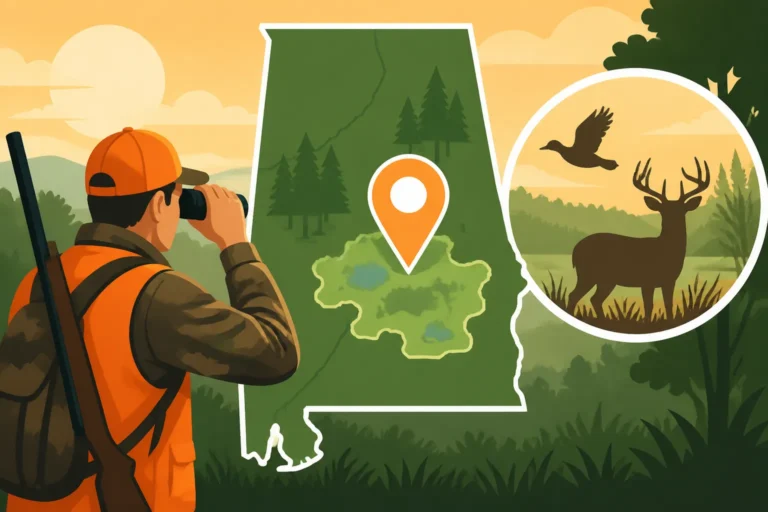
- Pre-Season E-Scouting: Before you burn a drop of gas, spend time with aerial maps. Tools like onX Hunt are invaluable for this. Look for key features:
- Habitat Changes: Identify where pine plantations meet hardwoods, or where a clear-cut transitions into older timber. These edges are natural travel corridors.
- Water Sources: Locate creeks, ponds, and sloughs. Game needs water daily.
- Topography: Look for subtle ridges, saddles, and funnels. Even in relatively flat terrain, a slight elevation change can become a preferred travel route.
- Access Points: Pinpoint public parking areas, boat ramps, and legal entry points.
- Pressure Points: Areas close to roads or easy access often see more pressure. Look for deeper, harder-to-reach spots that other hunters might bypass.
- Using onX Layers for Alabama Land Status will clearly show you public vs. private land, helping you avoid accidental trespass.
- Boots-on-the-Ground Scouting: Once you have potential spots identified from e-scouting, hit the woods. Look for fresh sign: tracks, rubs, scrapes, droppings, and feeding areas. Pay attention to how the wind and thermals typically behave in those areas. Look for specific trees that drop acorns or other forage. Don't just scout during the day; consider how deer might move at night. Reading Alabama Mud for Fresh Deer Movement can tell you a lot about recent activity.
Understanding Local Regulations and Zone Specifics
Alabama's hunting regulations can be complex, especially with different zones and specific WMA rules. Monroe County falls within Deer Zone 2. This means its deer season dates, and often antlerless limits, might differ slightly from other zones. Always double-check the current Outdoor Alabama regulations digest before hunting.
- Deer Bag Limits: Understand the statewide three-buck limit and any antler point restrictions that might apply in a specific zone or WMA. Also, know your antlerless deer limits for Zone 2. Alabama Deer Season Structure Explained provides a great overview.
- Turkey Zones: Monroe County is typically in Zone 2 for spring turkey season. This means its opening and closing dates for turkey hunting will differ from Zone 1. Be sure to know the correct dates for your location.
- Reporting Harvests: Alabama requires all harvested deer and turkeys to be reported via the Game Check system. This is a critical step, so make sure you understand Alabama Deer Reporting Rules and the process.
- WMA-Specific Rules: If you're hunting within a WMA, understand that there may be additional rules regarding weapons, scouting, daily bag limits, and even check-in/check-out procedures. Some WMAs might have mandatory check stations or specific rules about Using a Ground Blind on Alabama Public Land or Treestand Rules on Alabama Public Land.
It's also crucial to distinguish between statewide seasons and specific WMA dates. Always verify both before you go. The GoHunt app can be a great companion in the field, often having regulation summaries integrated into its mapping features, helping you keep track of where you are and what rules apply.
Minimizing Pressure and Finding Secluded Spots
Public land often comes with public pressure. To increase your odds, you need to think differently than the average hunter.
- Go Deeper: Most hunters don't venture far from roads or easy trails. The further you're willing to walk, the better your chances of finding undisturbed game. Look at your onX Hunt map for areas that are a mile or more from any access point – these are often hidden gems.
- Utilize Water Access: If parts of the WMA or public land are accessible by boat, this can be a huge advantage. Many hunters don't have a boat or aren't willing to use one, leaving these areas less pressured.
- Hunt During Off-Peak Times: Weekdays, particularly after the first few weeks of the season, often see significantly less pressure than weekends. Hunting during inclement weather (within safe limits) can also deter other hunters.
- Adaptive Tactics: Be willing to change your tactics based on what you see. If a spot is hammered with pressure, don't stick it out; move to your backup plan. Deer will move to thick cover when pressured, so focus on the densest areas. Hunting Pressure on Alabama Public Land is a real factor you need to account for.
| Game Species | Typical Monroe County Habitat | Best Hunting Strategies on Public Land | Key Considerations |
|---|---|---|---|
| White-tailed Deer | Pine plantations, hardwood bottoms, field edges | Still-hunting, stand hunting, scouting for funnels | High pressure near access, hunt thick cover, food sources |
| Wild Turkey | Hardwood ridges, open timber, field edges | Roosting, calling, run-and-gun, patient setups | Learn gobbler patterns, avoid mid-day lull |
| Feral Hogs | Dense swamps, thickets, river bottoms | Baiting (private), night hunting (private), still-hunting | Year-round opportunity, destructive, intelligent |
| Squirrel/Rabbit | Hardwood bottoms, fencerows, brushy areas | Still-hunting, dog hunting (rabbits) | Good for off-season practice, less pressure |
Planning Your Hunt: Resources and Preparation
A successful hunting trip to Monroe County, especially on public land, involves more than just knowing where to go. It requires proper preparation, from licenses to gear.
Required Licenses and Permits
Before you even load your rifle or bow, ensure all your paperwork is in order. Hunting without the proper licenses is a sure way to ruin a trip and incur hefty fines.
- Alabama Hunting License: All hunters, with few exceptions (like some landowners on their own land, or youth under a certain age), are required to have a valid Alabama hunting license. Non-residents will need a specific non-resident license. You can purchase these online through the Outdoor Alabama website, via phone, or from authorized license agents. Alabama Resident Hunting License Options details the different types available.
- Wildlife Management Area (WMA) License: If you plan to hunt any WMA, you will need a separate WMA license in addition to your regular hunting license. This small fee directly supports the management of these public lands.
- Harvest Information Program (HIP) Certification: If you plan to hunt migratory birds (like doves or ducks), you'll need HIP certification, which is free and can be added when you purchase your license.
- Federal Duck Stamp: If waterfowl hunting, a federal duck stamp is also required.
Always carry proof of your licenses and permits while hunting. Many hunters use the Outdoor Alabama app, which can store digital copies of your licenses on your phone, making compliance easier.
Gear Essentials for South Alabama Hunting
The climate and terrain of South Alabama dictate a specific set of gear you'll want to consider for Monroe County.
- Layered Clothing: Alabama weather can be unpredictable, especially during deer season. Cool mornings can give way to warm afternoons. Layers allow you to adapt. Camouflage patterns suitable for mixed hardwoods and pine are ideal.
- Quality Footwear: Whether you're slogging through river bottoms or hiking through pine plantations, comfortable, waterproof boots are non-negotiable. Break them in before your hunt!
- Mapping & Navigation: A reliable GPS unit or a smartphone with a robust hunting app like onX Hunt or GoHunt is essential. These apps provide offline maps, property lines, and your exact location, which is critical in vast public areas. Always carry a compass and physical map as a backup.
- Water and Snacks: Dehydration can sneak up on you, especially in warmer weather. Carry more water than you think you'll need, along with energy-dense snacks.
- First-Aid Kit: Minor cuts, scrapes, and blisters are common. A basic first-aid kit can address these issues quickly.
- Game Processing Supplies: If you're successful, you'll need a sharp knife, game bags, and possibly a small saw. Be prepared for Field Dressing a Deer in Warm Weather, which is often the case in South Alabama.
- Headlamp/Flashlight: For early morning walks in and late-night walks out.
- Scent Control: Especially for deer, scent control is important. The dense cover often means closer encounters.
By combining thorough e-scouting with onX Hunt, understanding the specific regulations for Zone 2 and any relevant WMAs, and being properly equipped, your hunt for public land game in and around Monroe County can be a truly rewarding experience. The Alabama outdoors are waiting!
Disclaimer
This article is for general informational purposes only and does not constitute professional advice. Laws, prices and regulations vary by location and change over time. Consult a qualified professional for guidance on your specific situation.