Alabama Feral Hog Diet and Rooting Damage
If you've spent any time at all traversing Alabama's rural landscapes, whether it's your own backyard property, a cherished hunting lease, or even a local park, chances are you've witnessed the tell-tale signs of a silent, destructive army. We're talking about feral hogs, and their relentless search for food leaves a wake of ecological and agricultural devastation. This guide is here to shed light on what exactly these intelligent, opportunistic creatures consume and, more importantly, the profound rooting damage they inflict upon our beloved Alabama.
The Insatiable Appetite: What Alabama Feral Hogs Devour
Feral hogs are often called "ecosystem engineers" – but not in a good way. Their diet is incredibly broad, allowing them to thrive in almost any habitat and outcompete many native species. Understanding what drives their hunger helps us grasp the extent of their impact.
Opportunistic Omnivores: A Menu of Anything and Everything
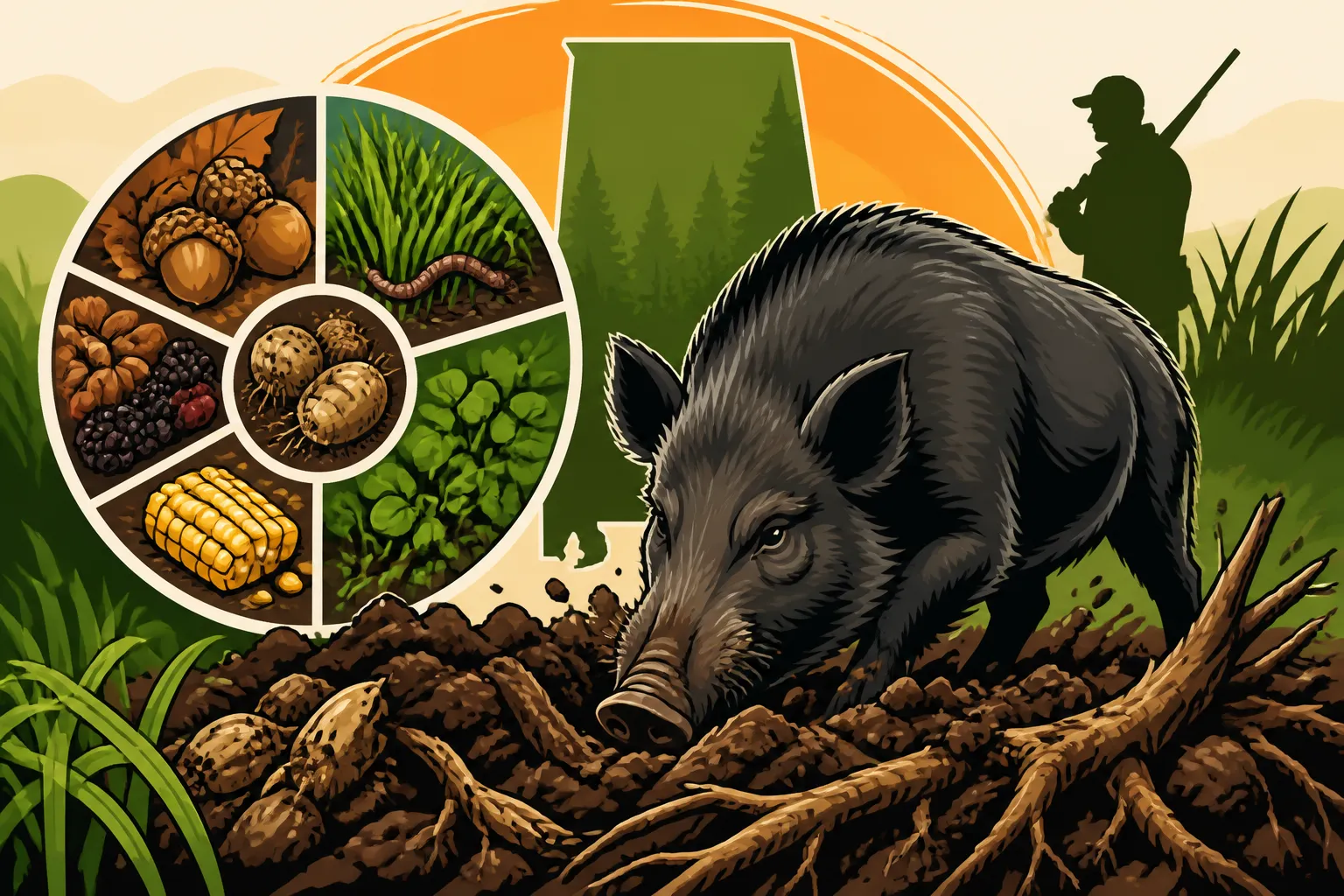
These aren't picky eaters; feral hogs are true omnivores, meaning they'll consume both plant and animal matter. This flexibility is a huge part of why they've been so successful at establishing widespread populations across Alabama. If it contains calories, they'll likely eat it. This isn't just a minor inconvenience; it's a critical factor in their unchecked proliferation, as they can adapt their diet to whatever is most abundant, regardless of the season or local conditions. From the tender shoots of spring to the fallen nuts of autumn, their feeding habits are dictated by what's available and easiest to access. This wide palate means they directly compete with native wildlife for crucial food sources.
Think about a deer or a turkey: they have specific dietary needs that often limit where and when they can feed effectively. Not so for the feral hog. They'll munch on acorns right alongside deer, but then switch to a farmer's newly planted cornfield, or even dig up subterranean fungi and tubers that other animals might miss. This incredible adaptability means they are rarely short on food, even in lean times, giving them a significant edge in the struggle for survival and reproduction. It's a key reason why states like Alabama face such a monumental task in managing Feral Hogs Across Alabama.
Seasonal Preferences: From Acorns to Agriculture
While hogs will eat anything, their diet often shifts with the seasons, reflecting the availability of different food sources. In fall and winter, hard mast like acorns, hickory nuts, and pecans become a primary draw. This puts them in direct competition with deer, turkeys, squirrels, and other wildlife that rely on these critical food sources for energy reserves during colder months. Imagine a stand of mature oaks, normally a bounty for deer, being aggressively stripped clean by a sounder of hogs before deer even get a chance.
As spring arrives, the hogs turn their attention to tender green vegetation, roots, and especially agricultural crops. Young corn, soybeans, peanuts, and even winter wheat become irresistible buffets. Farmers in counties like Baldwin and Mobile often wake to find large sections of their fields utterly devastated overnight. Then, throughout the warmer months, they continue to forage on roots, tubers, fungi, and invertebrates. They also aren't shy about consuming animal matter – everything from insects, snakes, and frogs to ground-nesting bird eggs, fawns, and even carrion. This makes them a significant predator of native wildlife, particularly the vulnerable young of deer and turkeys.
Water Sources: More Than Just a Drink
While not a direct food item, access to water is absolutely vital for feral hogs, and it profoundly influences their diet and activity. Hogs need water for drinking, of course, but also for wallowing. Wallowing is crucial for regulating their body temperature, especially in Alabama's hot, humid climate, as they don't have sweat glands. They also use muddy wallows to help shed parasites.
Areas with abundant water – creek bottoms, river swamps, beaver ponds, and even leaky irrigation systems – become prime hog habitat. These wet environments also tend to have softer soil, making rooting easier, and often host a rich supply of grubs, worms, and succulent roots. This connection between water and food availability creates a self-reinforcing cycle: the more water, the more comfortable and well-fed the hogs, leading to more activity and more rooting damage in these areas. Landowners seeking to understand hog movement patterns on their property might use tools like GoHunt's mapping features to identify key water sources and potential bedding areas around them, helping to strategize where to focus their efforts.
The Destructive Power of a Snout: How Hogs Cause Rooting Damage
The most visible and frustrating sign of feral hog presence is their rooting damage. It’s not just casual nibbling; it’s a wholesale excavation of the landscape. Their powerful snouts are perfectly adapted for tearing up the ground in their relentless search for food.
Their "Plow-Like" Snouts: A Natural Tiller
A feral hog's snout is far from just a nose; it's a highly specialized and incredibly powerful tool. Reinforced with cartilage and muscle, it acts like a natural plow or tiller, designed for digging and pushing through soil. They use their snouts, which can exert immense pressure, to lift and overturn significant patches of earth. When you see a field that looks like it's been rototilled, that's precisely what's happened, but with a living, breathing machine.
This isn't a gentle process. Hogs will push their snouts into the ground and then leverage their strong neck muscles to lift and flip over sod, exposing the soil beneath. This action is repeated over and over, sometimes for hours, as a sounder moves through an area. The sheer physical force involved means that even compacted soils can be disturbed, creating widespread disruption. Anyone who's watched a video of them at work can appreciate the sheer power and efficiency of this "natural tillage."
Searching for Subterranean Delights: Grubs, Tubers, and Fungi
So, why do they root with such fervor? It's largely driven by their desire for subterranean food sources. Underneath the surface, especially in moist soils, lies a bounty of protein-rich grubs, insect larvae, worms, and plant tubers (like wild onions or nut grass rhizomes). They also seek out fungi, including certain types of mushrooms and truffles, which can be highly nutritious.
Their keen sense of smell, far superior to a deer's, allows them to detect these hidden delicacies even several inches below the surface. Once they pinpoint a target, their snouts go to work, methodically digging and churning the soil. This constant disturbance not only exposes food for the hogs but also destroys the root systems of native plants and creates a highly visible, often muddy, mess. For a hunter using GoHunt to scout public land, fresh rooting is a clear indicator of recent hog activity, helping to pinpoint their travel routes and feeding areas.
Depth and Extent of Damage: A Landscape Transformed
The depth and extent of rooting damage can be astonishing. Hogs typically root a few inches deep, but they can go much deeper if the soil is soft and a particularly appealing food source is present. They don't just root in one small spot; a sounder (a group of hogs) can methodically work its way across acres of land in a single night.
Imagine a pristine, well-maintained lawn or a lush food plot. After a sounder of hogs moves through, it can be transformed into a war zone of overturned sod, bare patches of dirt, and muddy craters. This damage isn't just unsightly; it fundamentally alters the soil structure, impacts water infiltration, and makes the area inhospitable for other wildlife and impossible for agriculture. From a hunter’s perspective, this can mean a perfectly planted food plot intended for deer now resembles a plowed field, and the deer simply won't use it.
The Broader Ramifications: Impact on Alabama's Landscape and Wildlife
The damage caused by feral hog rooting extends far beyond cosmetic issues. It has profound ecological and economic consequences, impacting everything from native plant communities to the livelihoods of Alabama's farmers and the health of our deer herds.
Habitat Destruction and Ecosystem Disruption
When hogs root, they don't just dig for food; they tear apart the delicate structure of various habitats. In forest lands, they destroy the understory vegetation, including seedlings of valuable timber trees like longleaf pine, and the native plants that provide food and cover for deer, turkeys, and other ground-dwelling species. Their rooting loosens the soil, making it more susceptible to erosion, especially on slopes or near water bodies, leading to increased sediment runoff into Alabama's rivers and streams.
In wetlands and riparian areas, their activities can be even more damaging. Wallowing and rooting churn up sediments, destroy aquatic vegetation, and can foul water sources. This impacts fish, amphibians, and waterfowl, destroying nesting sites and reducing water quality. The unique ecosystems found in Alabama's river bottoms and coastal swamps are particularly vulnerable to this relentless assault. The disruption is so significant that it can fundamentally alter the species composition of an area, favoring invasive weeds that thrive in disturbed soil over native plants.
Impact on Native Species: Competition and Predation
Feral hogs are not just destructive land clearers; they are also formidable competitors and predators of native Alabama wildlife. We've already touched on their dietary overlap with deer and turkeys, especially concerning mast crops. By consuming acorns and other nuts, they directly reduce the food available for species that have evolved to rely on these seasonal bounties. This competition can stress native populations, especially in years with poor mast crops.
Beyond competition, hogs are direct predators. They are notorious for preying on the fawns of white-tailed deer, the eggs and poults of ground-nesting birds like wild turkeys and bobwhite quail, and even small mammals and reptiles. This predation can have a severe impact on the reproductive success and survival rates of these species, adding another layer of pressure to already struggling populations in some areas. Their presence fundamentally shifts the ecological balance, often to the detriment of the very game animals we cherish. Understanding this interplay is crucial when looking at Alabama Deer Population Estimate and Alabama Turkey Population Trends.
Agricultural Losses: Devastation to Livelihoods
Perhaps the most immediately tangible impact of feral hog rooting is the devastating financial toll it takes on Alabama's agricultural sector. Farmers invest significant time, money, and effort into preparing fields, planting crops, and nurturing them to harvest. A sounder of hogs can obliterate acres of corn, soybeans, peanuts, wheat, or even specialty crops like watermelons and sweet potatoes in a single night. This isn't just a loss of yield; it's a loss of income, sometimes representing the entire year's profit.
Beyond the crops themselves, hogs can damage irrigation systems, fences, and farm equipment. The cost of repairing fences, replanting fields, and implementing control measures like trapping or shooting adds up quickly, placing immense financial strain on farmers. In some of Alabama's rich farming counties, the struggle against feral hogs is a year-round battle, leading to significant Crop Damage Costs From Alabama Hogs. It's a frustrating reality for many, where their efforts to put food on our tables are directly undermined by an uncontrolled invasive species.
Estimating and Mitigating Rooting Damage
Dealing with feral hog rooting damage is a multi-faceted challenge that requires a combination of assessment, preventative measures, and direct population control. It's a continuous effort that often feels like an uphill battle.
Assessing the Damage: Quantifying the Loss
Before any effective mitigation strategy can be implemented, it's crucial to accurately assess the extent and cost of the rooting damage. For agricultural operations, this means calculating lost yield, replanting costs, and equipment repair. Landowners and land managers, whether private or public, need to quantify the impact on timber regeneration, native plant communities, and wildlife habitat. Tools like GPS mapping can be invaluable here, allowing for precise measurement of damaged areas.
Aerial surveys, trail cameras, and consistent ground scouting are all vital for monitoring hog activity and evaluating the success of control efforts. For instance, after setting up a new trapping program, a landowner might use GoHunt's satellite imagery to visually track the reduction in rooting patterns across their property over time. This data-driven approach helps prioritize efforts and allocate resources to the most heavily impacted areas. Without understanding the scope of the problem, any attempted solution might just be a shot in the dark.
Mitigation Strategies: From Fencing to Trapping
Mitigating rooting damage effectively usually involves a combination of methods. Exclusion fencing, particularly heavy-duty woven wire or electric fencing, can protect specific high-value areas like food plots, gardens, or small agricultural fields. However, fencing an entire large property is often cost-prohibitive for most landowners.
Direct population control is almost always necessary. Trapping is widely considered the most effective method for reducing hog numbers on a sustained basis, especially when using large, corral-style traps that can capture an entire sounder at once. This requires patience, strategic baiting, and knowledge of hog behavior. Alabama Feral Hog Trapping Rules and Trapping Alabama Feral Hogs provide essential guidance. Hunting, while popular, is often more effective at scattering hogs than truly reducing large populations, but it remains a crucial component of management, especially for individual animals or smaller sounders. Hunting Alabama's Year-Round Feral Hogs offers tactics for this.
| Damage Type | Description | Primary Cause | Impact on Landscape/Wildlife |
|---|---|---|---|
| Rooting | Soil disturbed, overturned, or churned up, resembling a plowed field. Varies from shallow scrapes to deep excavations. | Searching for roots, tubers, grubs, fungi, and other subterranean food. | Destroys native vegetation, damages crops, increases soil erosion, degrades water quality, exposes roots of trees. |
| Wallowing | Depressions filled with mud and water, often with visible hog tracks and hair rubbed on nearby trees. | Cooling body temperature, shedding parasites, marking territory. | Degrades wetlands, contaminates water sources, destroys sensitive aquatic habitats, creates breeding grounds for mosquitoes. |
| Rubbing | Bark worn off trees, sometimes with mud or hair residue, indicating hogs rubbing themselves against the trunk. | Relieving itching, marking territory. | Damages trees, can girdle young trees leading to death. |
| Crop Depredation | Crops eaten, trampled, or pulled up from the ground. Can affect large areas of agricultural fields overnight. | Direct consumption of readily available food sources. | Significant economic losses for farmers, reduced food availability for native species (e.g., deer in food plots). |
| Nest Predation | Disturbed ground-nests, broken eggshells, or missing young of ground-nesting birds (turkeys, quail) or fawns. | Opportunistic predation on vulnerable young and eggs. | Reduces recruitment and populations of native game species and other wildlife. |
| Trail Creation | Well-worn paths through dense vegetation, often leading to water sources or bedding areas. | Consistent movement patterns by sounders. | Creates pathways for invasive species, can facilitate quicker movement for hogs across a property. |
Long-Term Land Management: Restoring and Protecting
Simply removing hogs isn't enough; the land often needs time and active management to recover. This might involve planting native grasses and forbs to stabilize eroded areas, protecting young trees with guards, or actively re-establishing desirable plant communities. For properties with significant damage, a land management plan focused on habitat restoration may be necessary.
This long-term perspective is crucial. Even after successful control efforts, ongoing vigilance is required because hogs are highly mobile and can quickly reinvade an area. Continuous monitoring with trail cameras and regular scouting using mapping apps like GoHunt can help landowners stay one step ahead, identifying new incursions before they lead to widespread rooting damage again. The goal isn't just to remove them, but to create a resilient landscape that can better withstand future pressures.
Disclaimer
This article is for general informational purposes only and does not constitute professional advice. Laws, prices and regulations vary by location and change over time. Consult a qualified professional for guidance on your specific situation.