Duck Migration Timing Through Alabama
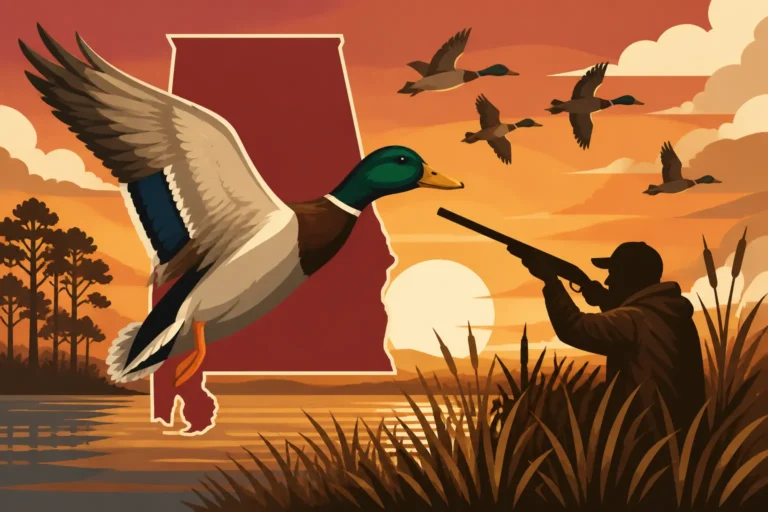
For any duck hunter in Alabama, one of the biggest frustrations is knowing when the birds are actually going to show up. You can scout all you want, have your decoys polished and your calls tuned, but if the ducks aren't flying south, you're just staring at empty skies. This guide is all about helping you understand the complex dance of duck migration through Alabama, giving you a better sense of when to expect different species and what factors drive their arrival.
Understanding Alabama's Place in the Flyway
Alabama, sitting pretty in the Deep South, might seem like an unlikely hotspot for migratory waterfowl, but don't let our warm winters fool you. We're a crucial stopover and wintering ground for millions of ducks and geese traveling down one of the continent's major aerial highways. Knowing how we fit into that bigger picture is key to understanding duck migration timing.
The Mississippi Flyway and Alabama's Role
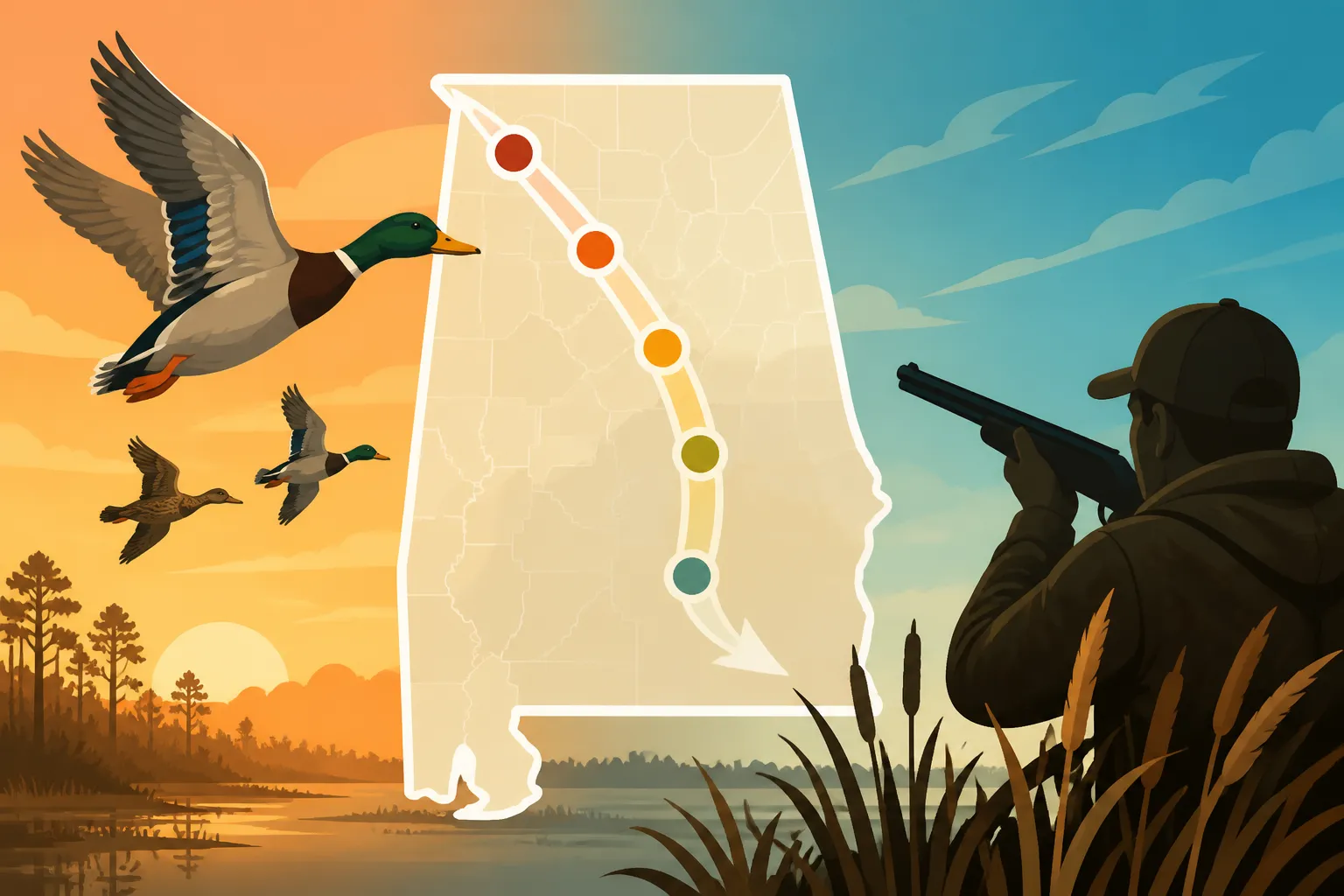
Our state is firmly planted in the mighty Mississippi Flyway, a massive migratory corridor that stretches from the Arctic tundra all the way down to the Gulf of Mexico. This flyway funnels birds from vast breeding grounds in Canada and the northern U.S. southwards each fall. Alabama acts as a significant wintering ground, especially in our major river systems and coastal deltas. Think of places like the Tennessee River Valley in North Alabama or the Mobile-Tensaw Delta on the coast – these are critical areas. Birds pushed out of colder northern states by ice and snow find refuge here, often pausing to rest and refuel before continuing further south, or settling in for the entire winter if conditions remain favorable. It’s why places like the Tennessee River can hold so many mallards, and our delta swamps are rich with wood ducks. Waterfowl Hunting Alabama's River Deltas is a classic example of how vital these areas are.
Factors Influencing Migration Timing
Duck migration isn't like clockwork. It's a fluid, dynamic process heavily influenced by several key factors, primarily weather, food availability, and water levels further north. A mild fall up in the Midwest means ducks might linger longer, delaying their push into Alabama. Conversely, an early, severe cold snap or widespread freeze that locks up marshes and lakes can send a flood of birds south seemingly overnight. We're talking about conditions like sustained sub-freezing temperatures, heavy snow, or even early ice-ups on major water bodies. If those ducks can't find open water and food up north, they have to move. That's why keeping an eye on weather patterns, especially major cold fronts pushing south, is critical. Platforms like GoHunt often provide excellent predictive tools and weather overlays that can give you an edge in understanding when new birds might be heading our way. Food sources, like harvested cornfields or natural mast crops, also play a huge role. If there's plenty of easily accessible food in Ohio or Illinois, ducks might take their time getting to us.
Early Season Ducks: Teal and Wood Ducks
When the leaves are just starting to show a hint of color, and the air still feels heavy with summer humidity, that's when our earliest feathered visitors begin to make their appearance. These early arrivals are often a good indicator that the migration is officially underway, even if the main event is still weeks off.
September Teal Season: A Quick Sprint
For many Alabama duck hunters, the first taste of waterfowl action comes with the special September teal season. This is almost exclusively about blue-winged teal, with a smattering of green-winged teal mixed in. Blue-wings are notorious for being some of the earliest migrants, often leaving their breeding grounds as early as late August. By the time our season opens in early September, some of these birds are already here, or passing through.
They're on a mission, fueled by instinct, and often don't stick around long, especially if we're still experiencing hot, summer-like conditions. A strong cold front pushing through the plains states can dump a fresh wave of blue-wings into our shallow wetlands and flooded timber, but they’ll quickly push on if they don't find consistent cool weather and abundant food. It's a short, fast-paced season that requires hunters to be ready at a moment's notice to capitalize on these quick-moving birds. Knowing what to look for can mean the difference between a busy morning and an empty blind.
Resident Wood Ducks and Early Migrants
Even before the blue-wings arrive, we've got a healthy population of resident wood ducks. These gorgeous birds nest and raise their young right here in Alabama's timbered swamps, beaver ponds, and river bottoms. So, technically, you can find wood ducks in Alabama year-round. However, as fall progresses, our resident wood duck numbers swell with new arrivals from further north.
These migratory wood ducks start filtering in typically by late September and into October, often accompanying the first waves of other migratory ducks. They're drawn to the same types of habitat as our resident birds – flooded hardwoods, cypress sloughs, and creek bottoms where acorns and other mast are falling. Distinguishing a resident wood duck from a migratory one isn't really the point; what matters is that the overall population increases, offering more opportunities. Wood Ducks in Alabama River Swamps are a common sight during this period, and understanding their habits can lead to some exciting hunts. Jump-shooting is often effective in these early months. Jump-Shooting Alabama Beaver Ponds for Wood Ducks is a common tactic for these wily birds.
Peak Migration: Mallards, Gadwall, Wigeon, and More
This is what most duck hunters dream about: the heart of the migration, when a variety of species flood into Alabama, filling our marshes and timber holes. It's when the real push of wintering birds begins to settle in.
The Arrival of Mainstay Ducks (Late October – December)
The big show really kicks off in late October and November, extending well into December. This is when we start seeing the bulk of our "mainstay" ducks: the venerable mallards, along with gadwall, wigeon, shovelers, ring-necked ducks, and often a decent contingent of divers like buffleheads and scaup, especially on larger bodies of water. Their arrival is directly tied to those sustained, colder temperatures and widespread ice formation further north.
When ice starts locking up potholes and marshes in states like Arkansas, Missouri, and even Tennessee, those birds have no choice but to move south, and Alabama becomes a crucial destination. We're talking about consistent cold fronts that drop temperatures into the freezing range for days at a time, making it harder for ducks to find open water and food. The Tennessee River Delta, for instance, becomes a major hub for mallards during this period. Mallards on the Tennessee River find plenty of habitat there. This is also when hunters really get to put their skills to the test with more complex decoy spreads and calling sequences. For those who hunt the Mobile-Tensaw Delta, Reading a Delta Slough for a Morning Flight becomes critical.
Decoy Strategies and Calling During Peak Migration
The timing of peak migration directly impacts your decoy strategies and calling during a hunt. Early in the peak, when new birds are still pushing through, they might be more responsive to aggressive calling and larger spreads, as they're actively looking for places to rest and feed. As the season progresses and birds become "settled" in an area, they tend to get warier. You might need to scale back your calling, become more subtle, and refine your decoy spreads to look more natural and less aggressive.
Different species also respond to decoys and calls in varying ways. Mallards love flooded timber with acorns, responding to a lively call spread, while gadwall and wigeon often prefer open water or sheet water fields, where a more subtle approach might work. Hunters might focus on Hunting Flooded Timber for Mallards or use Layout Blind Hunting Delta Farm Fields for puddle ducks feeding in agricultural areas. Understanding the specific needs and behaviors of these different species as they arrive and settle is key to consistently bringing birds into the block. Don't just guess; use every resource available to you. Modern scouting tools and weather forecasting services, such as those found on GoHunt, are your allies in anticipating these movements.
Late Season Ducks: Holding Birds and New Arrivals
Just when you think the migration might be winding down, Alabama often gets a second wind in the duck woods and marshes. The late season, particularly January and into February, can be incredibly productive, thanks to our ability to hold birds and, sometimes, receive unexpected new arrivals.
January and February: Holding Power
Unlike states further north that are completely frozen solid by January, Alabama often provides relatively mild conditions, even during winter. This means we have tremendous "holding power" for ducks that have migrated here. If there's plenty of food available – whether it's acorns in flooded timber, waste grain in agricultural fields, or aquatic vegetation in our vast river systems – and open water, ducks will stay. They don't have to keep pushing south if they're comfortable and well-fed here.
These late-season birds can be incredibly smart and wary, having dodged hunters for months. However, a significant cold front that brings ice and snow to regions just north of us can trigger a new influx of desperate birds, often called "fresh birds." These newcomers haven't seen as much hunting pressure and can sometimes be more responsive to calling and decoys, making for some truly memorable late-season hunts. Keep an eye on those arctic blasts; they’re often our best hope for a late-season push. Alabama Waterfowl Zones and Seasons delineate when you can hunt, so make sure you’re aware of the specific dates.
Adapting to Late Season Conditions
Hunting late-season ducks in Alabama requires a shift in tactics. Food preferences might change as natural forage dwindles or fields are picked clean. Ducks might concentrate on specific, unfrozen water bodies or find refuge in dense cover that wasn't as attractive earlier in the season. You'll often find them utilizing smaller, out-of-the-way potholes or even just small pockets of open water in a sea of ice during extreme cold snaps.
Pressure also plays a huge role. Birds have been hunted hard for months, so they’re more sensitive to calls that are too loud or spreads that look unnatural. Smaller, more realistic spreads, subtle calling, and meticulously brushed blinds become crucial. For those later season pushes, checking long-range forecasts and even utilizing scouting tools with weather layers, like what GoHunt offers, can be invaluable for predicting where new birds might go or where existing birds might concentrate when conditions change drastically. And remember, paying attention to Alabama Duck Daily Bag Limit and Alabama Duck Stamp Requirement is just as important in the late season as it is on opening day.
General Duck Migration Timing in Alabama
Here's a general overview of when different duck species typically make their presence known in Alabama, keeping in mind that these are averages and actual timing can vary significantly year to year due to weather:
| Species | First Arrivals (Early Birds) | Peak Migration (Main Numbers) | Late Season Presence (Wintering/Final Push) |
|---|---|---|---|
| Blue-Winged Teal | Early September | Mid-September (short peak) | Gone by late October/early November |
| Green-Winged Teal | Late September/Early October | November – December | January |
| Wood Duck | Year-round (residents) | Late September – November | January – February (large wintering population) |
| Gadwall | Late October | November – January | February |
| Wigeon | Late October | November – December | January |
| Shoveler | Late October | November – December | January |
| Ring-Necked Duck | Early November | November – January | February |
| Mallard | Early November | Late November – January | February (strong wintering population) |
| Pintail | Early November | December | January – Early February |
| Canvasback | Mid-November | December – January | Early February |
| Redhead | Mid-November | December – January | Early February |
| Scaup (Bluebill) | Mid-November | December – January | February |
| Bufflehead | Mid-November | December – January | February |
| Goldeneye | Mid-November | December – January | February |
This chart is a helpful guide, but remember, ducks have wings and a mind of their own! Always scout, watch the weather, and be ready to adapt. Don't forget your Alabama Migratory Bird Certification before heading out.
Disclaimer
This article is for general informational purposes only and does not constitute professional advice. Laws, prices and regulations vary by location and change over time. Consult a qualified professional for guidance on your specific situation.