Best Alabama Counties for Big Bucks
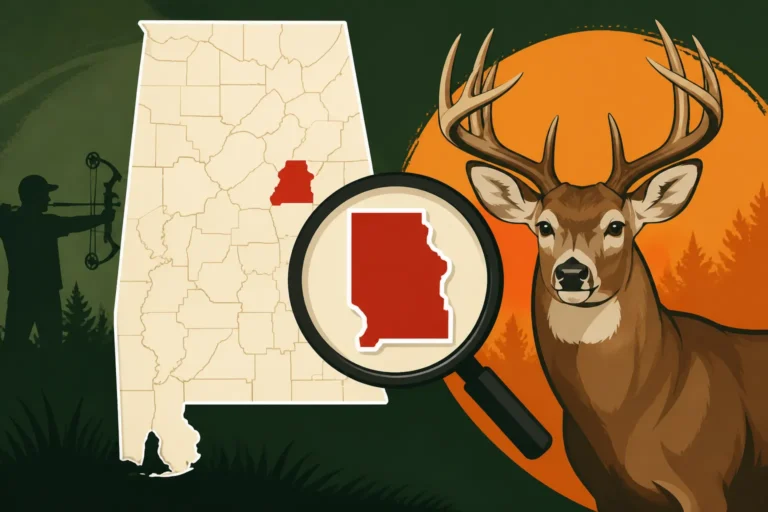
The dream of harvesting a truly impressive white-tailed deer is what drives so many of us into the Alabama woods each fall. But if you’ve spent any time chasing whitetails, you know that not all counties are created equal when it comes to producing those brag-worthy bucks. It's frustrating to pour hours into a spot only to realize the genetic potential just isn't there. This guide is here to help you understand the factors that truly contribute to growing big bucks in Alabama and to pinpoint the regions and counties where your chances of encountering a trophy are highest.
The Recipe for a Monster Buck: What Factors Really Matter?
It's easy to dream of a giant set of antlers, but what truly goes into growing a trophy deer in Alabama? It's more than just luck; it's a perfect storm of elements working together, and understanding these factors is your first step toward success. If you can identify areas where these ingredients are present, you're already ahead of the game.
Nutrition is King: Rich Soil and Abundant Food Sources
Let's be honest, you can't build a mansion on a weak foundation, and a buck can't grow massive antlers without incredible nutrition. Alabama's diverse landscape means a lot of different diets for deer, but the best antlers almost always come from areas with the richest soils. These soils produce vegetation that is packed with essential minerals, particularly calcium and phosphorus, which are absolutely crucial for bone growth.
Think about it: a deer's antlers are essentially bone, and they grow rapidly each year. Without a consistent intake of high-quality forage, that growth simply can't reach its maximum potential. This is why agricultural areas often stand out. Crop fields, whether they're planted with soybeans, corn, peanuts, or winter wheat, offer a high-protein, energy-rich buffet that is simply unmatched by native browse alone. These concentrated food sources allow bucks to put on weight and allocate more energy toward antler development. Beyond agriculture, strong mast crops like acorns (especially white oak acorns) and persimmons in mature hardwood bottoms also provide critical seasonal boosts of nutrition. A great example of this connection between habitat and body size can be seen when comparing Black Belt Versus Piedmont Deer, where the rich soils make a noticeable difference.
Age Structure: Giving Them Time to Grow
You can have the best food in the world, but if a buck gets harvested as a 1.5 or 2.5-year-old, he'll never reach his genetic potential. It’s a simple truth that a buck needs time to mature, both in body size and antler development. Most bucks don't hit their prime antler growth until they are 4.5, 5.5, or even 6.5 years old. Harvesting young bucks too early is the single biggest impediment to growing big deer, regardless of genetics or nutrition.
This is where Quality Deer Management (QDM) comes into play. QDM is less about "trophy hunting" and more about balancing the herd and allowing bucks to reach older age classes. Many private landowners and hunting clubs in Alabama have adopted QDM principles, voluntarily passing up younger bucks and focusing harvest efforts on antlerless deer to manage population density. This creates a balanced buck-to-doe ratio and ensures that a good number of bucks survive to older age. The collective ethics and management decisions of hunters in a given area play an enormous role in determining the average Alabama Deer Age Structure. When everyone agrees to let those younger deer walk, the rewards are often spectacular.
Genetics: A Little Bit of Luck
While you can't exactly control the genetics of wild deer populations, certain regions in Alabama seem to consistently produce larger-bodied and larger-antlered deer. Over generations, specific populations can develop a genetic predisposition for larger racks. This isn't to say that a monster buck can't pop up anywhere, but some areas just have a higher probability due to this genetic heritage.
However, it's crucial to emphasize that genetics are often the least controllable and, arguably, the least important factor for the average hunter. Good nutrition and allowing bucks to reach older age classes will almost always trump pure genetic potential. A buck with "good genes" in a poor habitat with high harvest pressure won't hold a candle to a buck with "average genes" in prime habitat with strict QDM. Focus on the factors you can influence – finding areas with excellent nutrition and healthy age structures.
The Legendary Black Belt: Alabama's Crown Jewel for Trophy Deer
When you talk about big bucks in Alabama, the conversation invariably turns to the Black Belt. This region is famous, and for good reason; it’s widely considered the state's most consistent producer of Boone and Crockett-class animals. This isn’t some marketing ploy; it’s a geological and ecological reality that has shaped deer hunting in Alabama for generations.
Why the Black Belt Stands Apart
The "Black Belt" isn't just a catchy name; it refers to a crescent-shaped band of dark, fertile soil that stretches across central Alabama, extending into Mississippi. This unique soil type is the remnant of an ancient ocean bed, composed primarily of highly calcareous (limestone-rich) clays and marls. The alkalinity and nutrient density of this soil are exceptional, and this is the fundamental reason Why the Black Belt Grows Big Bucks.
This incredibly rich soil impacts the entire ecosystem, leading to lush, highly nutritious vegetation. Plants grown in Black Belt soil are naturally higher in essential minerals that are vital for antler development and overall deer health. Combine this with extensive agricultural fields – soybeans, corn, cotton, and peanuts – that thrive in these soils, and you have a deer paradise. The landscape is often a mosaic of these rich agricultural lands, dense hardwood bottoms along creek and river systems, and interspersed pine plantations providing thermal and security cover. This diverse habitat, coupled with private land ownership and a long-standing tradition of Quality Deer Management, creates the perfect environment for bucks to grow old and truly express their genetic potential.
Key Counties Within the Black Belt
While the entire Black Belt region is renowned, several counties consistently rank high for producing impressive deer. These are the counties you hear whispered about at deer camp, the ones that show up regularly in the Alabama Deer Harvest Records for top-end bucks.
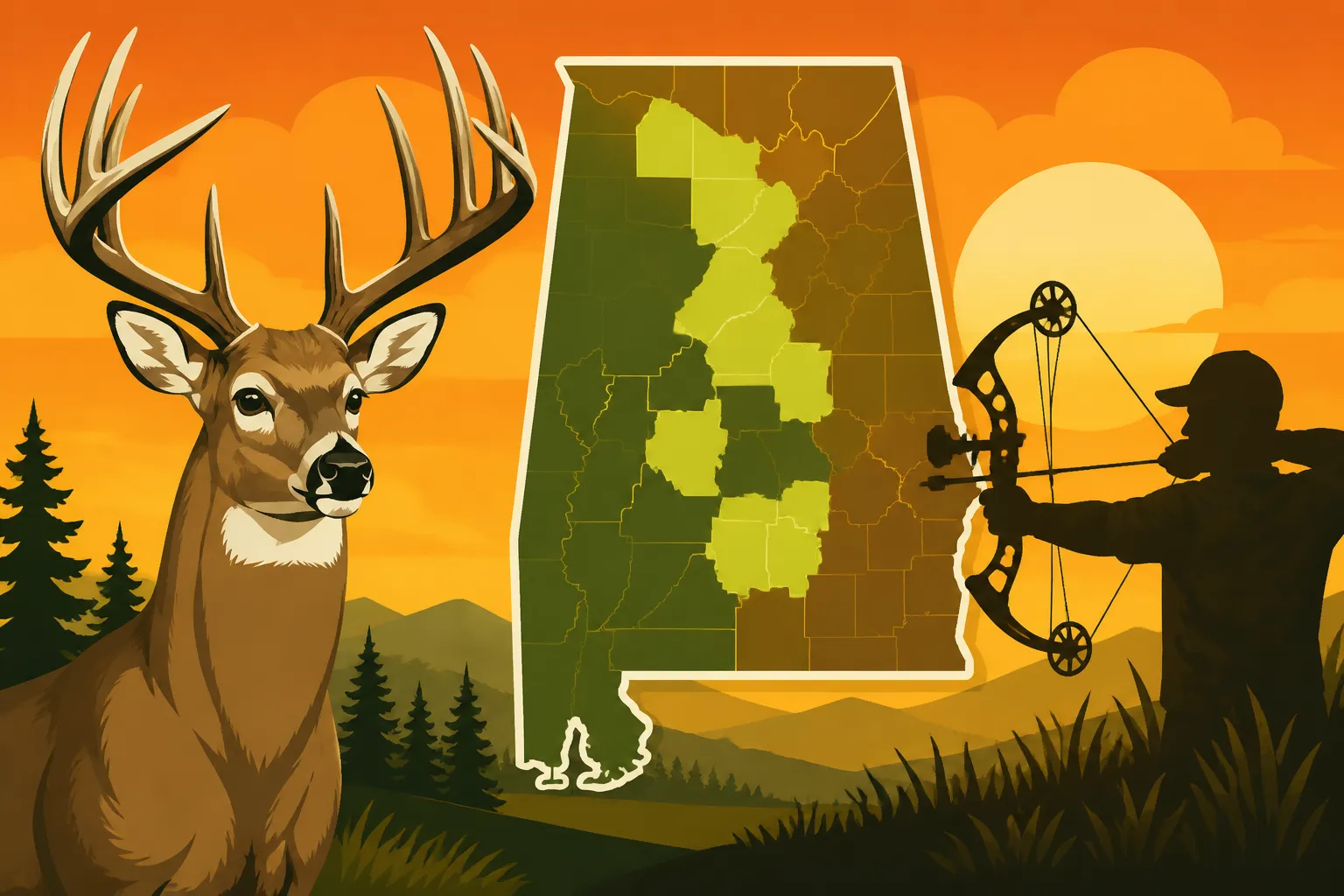
Counties like Dallas, Lowndes, Marengo, Wilcox, Sumter, Greene, Perry, and Hale are often cited as the heart of the Black Belt’s trophy buck production. These counties share common characteristics: vast tracts of privately owned land, often managed by dedicated hunting clubs or landowners who have practiced QDM for decades. The presence of major river systems like the Alabama, Tombigbee, and Black Warrior rivers provides extensive bottomland hardwood habitat, critical for both food and cover. While access to these highly prized private lands can be challenging for the average hunter, understanding why these areas produce big deer gives you insights into what to look for elsewhere. If you're looking for that truly exceptional deer, the Black Belt is where much of the Alabama Boone and Crockett Whitetails have been taken.
| County | Primary Region | Key Habitat Characteristics | General Antler Potential | Notes |
|---|---|---|---|---|
| Dallas | Black Belt | Fertile soils, agriculture, large timber blocks, river bottoms | High | Historically strong, dedicated management |
| Marengo | Black Belt | Rich soil, diverse agriculture, river swamps, mature hardwoods | High | Known for both mass and spread, less pressure on smaller tracts |
| Sumter | Black Belt | Prairie land, extensive agriculture, river systems, dense cover | High | Western Black Belt, consistent trophy producer |
| Lowndes | Black Belt | Fertile fields, dense cover, long tradition of QDM | High | Excellent potential, often near larger tracts |
| Greene | Black Belt | River bottoms, private plantations, strong QDM focus | High | Robust genetics, high percentage of older bucks |
| Limestone | Tennessee Valley | Fertile river soils, crop fields, diverse habitat | Medium-High | Good nutrition, but can see higher pressure |
| Lauderdale | CWD Management Z | Fertile soils, river systems, emerging QDM areas | Medium-High | CWD zone considerations, but still quality deer |
| Barbour | Wiregrass | Mixed pine/hardwood, agriculture, excellent QDM history | High | Outside Black Belt but known for management & big deer |
Beyond the Black Belt: Other Alabama Regions to Consider
While the Black Belt often grabs the headlines, it’s far from the only place in Alabama where you can find a trophy buck. Other parts of the state certainly hold their own, especially if securing private land access in the Black Belt proves difficult or if you prefer a different type of terrain. Don't overlook these regions; with the right approach, they can be incredibly rewarding.
The Tennessee River Valley and Northern Alabama
The Tennessee River Valley, particularly in the northwestern and northern parts of the state, offers a distinct and compelling landscape for deer hunters. This region boasts incredibly fertile river bottom soils, which rival some areas of the Black Belt in terms of agricultural productivity. Counties such as Limestone, Madison, Lauderdale, Colbert, and Franklin are characterized by extensive agricultural operations – primarily corn and soybeans – that provide a rich, consistent food source for deer.
The influence of the Tennessee River itself is immense, creating sprawling river bottoms, sloughs, and hardwood hammocks that provide excellent cover and travel corridors. While hunter numbers can be higher near population centers, and public land like Wheeler National Wildlife Refuge may have specific rules, savvy hunters can still find pockets of unpressured deer. Deer in this region benefit from robust diets, and with proper management, can grow impressive antlers. Focus on areas away from immediate road access or deeper within timber blocks adjoining crop fields. When Hunting the Rut in the Northern Zones, understanding how deer use these river systems can be critical.
The Piedmont and Appalachian Foothills
Moving into the central and northeastern parts of the state, you'll encounter the Piedmont and Appalachian Foothills. This region presents a hillier, more rugged, and heavily forested terrain compared to the flat agricultural expanses of the Black Belt. Counties like Cleburne, Clay, Cherokee, Randolph, Talladega, and Coosa are characterized by mixed pine and hardwood forests, steeper slopes, and rocky outcrops. Deer here often have to work harder for their food, relying more on native browse and acorns.
Despite the tougher terrain and often less fertile soils, quality bucks absolutely exist in these areas. Trophy deer are frequently harvested on well-managed private tracts, where landowners focus on habitat improvement and QDM. On public lands like the Talladega National Forest or various Wildlife Management Areas, finding big bucks requires more effort. You'll need to scout extensively, often hiking into less-accessible areas, and pay close attention to terrain features like saddles, creek bottoms, and ridge lines. Understanding how to Reading Aerial Photos for Piedmont Deer can give you a significant advantage in these more challenging landscapes, revealing hidden pockets where mature deer feel secure.
South Alabama: Wiregrass and Coastal Plain
Venturing into the southern reaches of Alabama, the habitat shifts yet again. The Wiregrass region and the broader Coastal Plain encompass counties like Barbour, Pike, Covington, Escambia, and Monroe. This area is characterized by vast pine plantations, interspersed with agricultural fields (often peanuts and cotton), and cypress-tupelo swamps along river systems.
Barbour County stands out in this region. Despite not being in the Black Belt, it has a long-standing reputation for excellent deer management and trophy production, often due to private land initiatives. The blend of agriculture and dense piney woods provides both abundant food and security cover, allowing bucks to mature. Other counties in this southern belt also hold significant potential, especially those with good mixtures of hardwoods, agriculture, and limited hunting pressure. If you're interested in the nuances of Hunting South Alabama's Wiregrass Region, you'll find that patience and understanding the unique habitat are key. The deer here might not be as consistently large-bodied as in the Black Belt, but impressive racks are certainly a possibility for dedicated hunters.
Maximizing Your Chances: Beyond Just Location
Even in the "best" counties, success isn't guaranteed. Your individual approach, knowledge, and sheer effort play a massive role in whether you encounter that buck of a lifetime. Location is crucial, but it's only one piece of the puzzle.
The Power of Quality Deer Management (QDM)
We touched on this earlier, but it bears repeating: whether you hunt private land or participate in Quality Deer Management efforts on public land, letting young bucks walk is paramount. QDM principles directly contribute to older age classes and better antler development. This isn't just about growing bigger deer; it's about fostering a healthier, more balanced deer herd. Many hunting clubs and landowners implement specific guidelines, sometimes even stricter than statewide regulations, to achieve these goals.
These guidelines might involve voluntary antler point restrictions (APRs) or focusing harvest efforts on does to keep the population in check relative to the available food sources. For example, some clubs might only allow bucks over a certain age or antler score to be harvested. Understanding and adhering to these principles, whether mandated or voluntary, is a direct pathway to improving the quality of deer in your hunting area. If you want to dive deeper into the science, researching Alabama Deer Age Structure will show you just how significant management choices are.
Scouting and Understanding Deer Movement
Knowing where the big bucks should be in a county is one thing; knowing where they actually are is another. Successful trophy hunters spend significant time scouting, not just during the season, but year-round. This involves extensive pre-season scouting, utilizing trail cameras to monitor activity, and deeply understanding local food sources as they change throughout the year.
Learning to read sign – fresh scrapes, prominent rub lines, and distinct track patterns – is like piecing together a deer's diary. You're looking for patterns, travel routes, and feeding habits that reveal where mature bucks are moving. Modern tools are invaluable here. Mapping applications, like those found on GoHunt, can be incredibly helpful. Their satellite imagery, topographic maps, and public/private land boundary layers allow you to meticulously pore over terrain features. You can identify potential bedding areas, secure travel corridors between food and cover, or hidden funnels that might escape the notice of less diligent hunters. Utilizing GoHunt can also assist in navigating vast public lands or scouting adjacent private properties for potential "pinch points" where deer might funnel. For a comprehensive guide on getting started, check out Scouting Alabama Public Land Before Season.
Access: Private Land vs. Public Land
The reality of hunting in Alabama is that a significant portion of the best big buck ground is private. Private land often means less hunting pressure, more consistent management practices, and better control over habitat and herd health. Securing permission to hunt private land, or joining a reputable hunting club, can dramatically increase your odds of encountering an older, larger buck. This often involves building relationships with landowners or being willing to pay for leases or club memberships. Learning about Getting Private Land Permission in Alabama is a valuable skill.
However, don't despair if private land isn't an option. Big bucks are taken on public land in Alabama every year. The key on public land is to work harder and smarter than the average hunter. This means being willing to walk further, penetrate deeper into less-accessible areas, and find those overlooked pockets of habitat where mature deer feel secure from pressure. Using a sophisticated mapping app like GoHunt can be critical for identifying remote public land access points and navigating vast tracts of WMA ground, or even understanding the layout of an area by seeing adjacent landowners. While public land requires more grit, the reward of a hard-earned public land trophy is immense. Alabama actually boasts How Many Acres of Public Land Alabama Has, offering many opportunities.
Patience, Persistence, and Adapting to Conditions
Hunting big bucks is rarely easy, even in the best counties. It takes dedication, resilience, and a willingness to adapt. Understanding the nuances of the season, particularly When the Alabama Rut Peaks by Zone, is absolutely critical. The rut is often the best window to catch a mature buck off guard, as they become more active and less cautious in their search for does.
Beyond the rut, factors like weather patterns, recent cold fronts, or changes in food availability (e.g., a poor acorn crop) will dramatically influence deer behavior. A truly successful big buck hunter constantly observes, learns, and adjusts their tactics based on these ever-changing conditions. It’s a marathon, not a sprint, and every hour in the stand, every scouting trip, and every piece of information you gather builds towards that moment when a heavy-racked monarch steps into your shooting lane.
Disclaimer
This article is for general informational purposes only and does not constitute professional advice. Laws, prices and regulations vary by location and change over time. Consult a qualified professional for guidance on your specific situation.