Alabama Crossbow Equipment Requirements
Trying to make sense of all the hunting regulations in Alabama can sometimes feel like trying to untangle a reel of fishing line that's been sitting in your tackle box for a year – it's a mess, and you're not always sure where to start. Many hunters, especially those new to crossbows or coming from other states, often wonder about the specific equipment requirements. This guide is here to clear up the confusion, walking you through everything you need to know about legally outfitting and using your crossbow for hunting in Alabama, ensuring you stay compliant and confident in the field.
Understanding Alabama's Crossbow Regulations for Hunters
It's easy to feel a little overwhelmed when you first dive into Alabama's hunting regulations, especially with the nuances between different types of archery equipment. Crossbows, while sometimes viewed differently than traditional bows, are fully recognized and legal for hunting various game species during specific seasons in the Yellowhammer State. This isn't about finding a loophole; it's about understanding a legitimate and effective hunting tool.
Legal Status and General Usage Rules
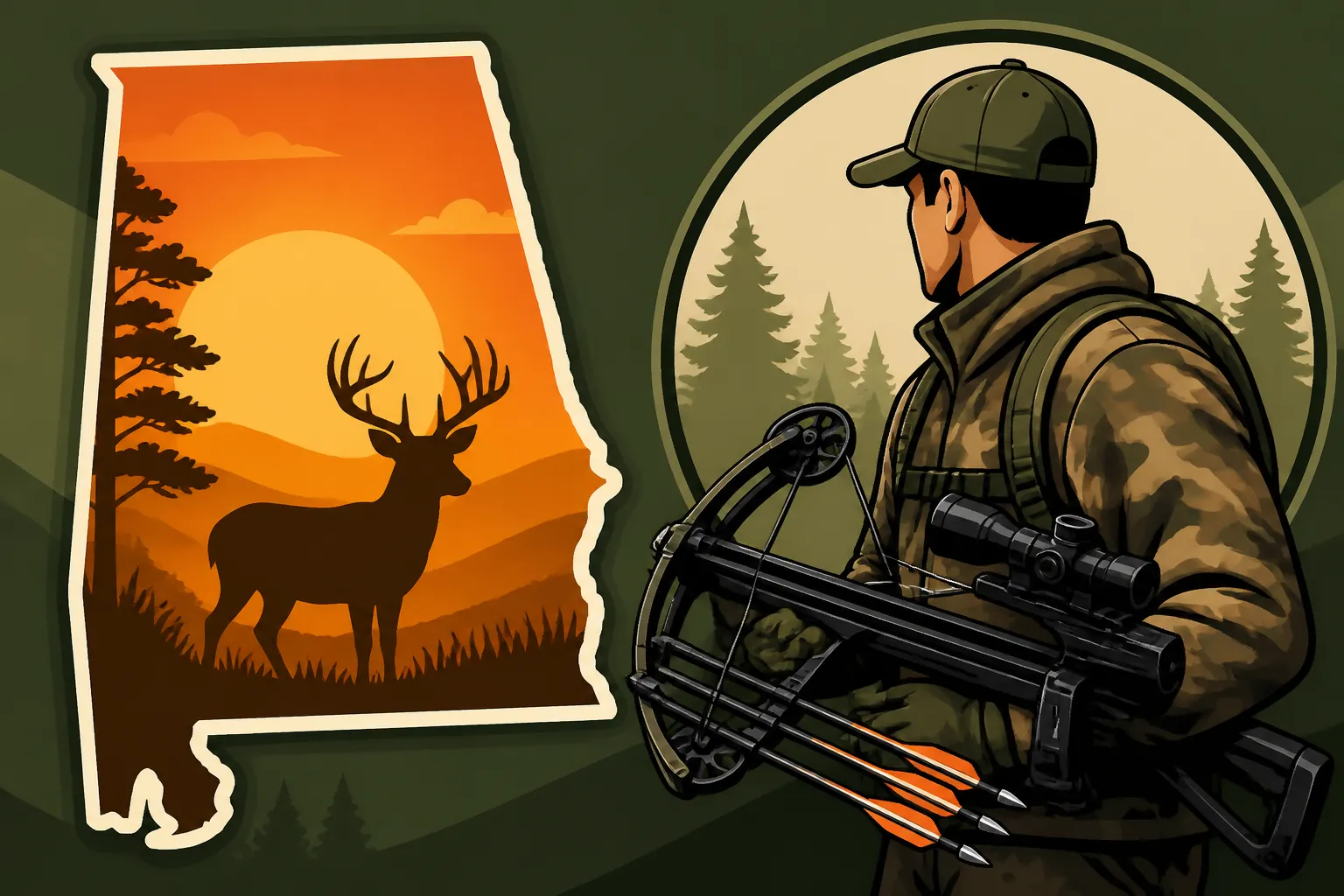
First and foremost, let's put any rumors to rest: crossbows are absolutely legal for hunting in Alabama. They fall under the general "archery equipment" designation, meaning that in most cases, if a compound bow or recurve bow is permitted, so is a crossbow. This is a huge benefit for many hunters, offering an extended archery season for deer and other game, which often opens well before gun season. If you're wondering When Alabama's Archery Season Opens, you'll find that crossbows are welcome right from the start. This allows for early season opportunities when bucks are still on a relatively predictable summer pattern, providing a fantastic window for success before the woods get crowded with gun hunters.
However, "legal" doesn't mean "anything goes." There are specific times and places where crossbows can be used, largely mirroring the rules for other archery equipment. For instance, crossbows are legal statewide for hunting deer, turkey, and feral hogs during their respective open seasons. This general acceptance across species and seasons simplifies things greatly, but the devil, as they say, is in the details when it comes to the equipment itself.
Specific Equipment Requirements for Crossbows
Now, let's get down to the nitty-gritty of what makes a crossbow legal in Alabama. The Alabama Department of Conservation and Natural Resources (ADCNR) has clear guidelines to ensure ethical and humane harvesting of game. You can't just pick up any crossbow off the shelf and head to the woods; it needs to meet certain specifications.
Here’s a breakdown of the critical requirements:
- Minimum Draw Weight: Your crossbow must have a minimum draw weight of 85 pounds. This isn't just an arbitrary number; it's designed to ensure sufficient kinetic energy for a clean, ethical kill on larger game like deer. If your crossbow is below this threshold, it's simply not legal for hunting in Alabama.
- Working Safety: This is a non-negotiable safety feature. Every legal hunting crossbow must be equipped with a working safety mechanism. This is paramount for preventing accidental discharges and ensuring safe handling in the field, whether you're climbing into a treestand or still-hunting through thick brush.
- Minimum Bolt Length: The bolts (often called arrows) used with your crossbow must be at least 14 inches in length. This standard ensures proper fletching, weight distribution, and stability during flight, contributing to accuracy and penetration.
- Broadhead Requirements: This is where many new crossbow hunters can get tripped up. The broadhead attached to your bolt must have at least two sharpened edges and a minimum cutting diameter of 7/8 inch. This applies to both fixed-blade and mechanical (expandable) broadheads. The intent here is to maximize the cutting surface and ensure a quick, humane harvest. Using broadheads that don't meet this minimum cutting diameter, even if they're razor-sharp, is a violation.
It's crucial to measure your broadheads if you're unsure, especially with mechanical designs that might not open to the required diameter. This attention to detail is part of responsible hunting, and it ensures that when you're out there chasing whitetails during Bowhunting Alabama's Long Archery Season, you're doing so with legal, effective equipment.
To help visualize these requirements, here's a quick summary:
| Requirement | Specification | Notes |
|---|---|---|
| Minimum Draw Weight | 85 pounds | Ensures sufficient kinetic energy for ethical harvest. |
| Safety Mechanism | Working Safety | Mandatory for safe handling and preventing accidents. |
| Minimum Bolt Length | 14 inches | Critical for flight stability and penetration. |
| Broadhead Type | At least 2 sharpened edges | Applies to both fixed and mechanical designs. |
| Broadhead Min. Cut Dia. | 7/8 inch (0.875 inches) | Ensures adequate cutting for humane kills. |
Navigating Crossbow Rules by Game Species
While the core equipment requirements remain consistent, how and when you can deploy your crossbow can vary slightly depending on what you're hunting. Alabama offers a wealth of hunting opportunities, and your crossbow can be a versatile tool across many of them, from deer to turkey to those ever-present feral hogs.
Crossbows for Deer Hunting in Alabama
For white-tailed deer, crossbows are completely legal throughout Alabama's extensive archery season. This means that if you have your valid hunting license and the necessary deer tags, you can pursue deer with a crossbow from the season opener right through the late archery periods. This flexibility is a huge advantage, allowing hunters to capitalize on early season patterns, the peak rut, and late-season food sources.
The long archery season also provides unique opportunities, such as overlapping with the youth gun season dates in certain zones. While this particular window primarily targets youth hunters using firearms, if you're accompanying a mentored youth hunter and want to carry your crossbow for your own tag, you'd still be operating under the general archery season rules. This is a great time to introduce new hunters to the woods, whether they're using a .22 or a youth model crossbow. For detailed information on specific season structures, it's always wise to consult the full guide on Alabama Deer Season Structure Explained.
Keep in mind that all bag limits and reporting requirements for deer still apply, regardless of whether you harvest with a crossbow, compound, or firearm. You'll still need to use the Game Check system to report your harvest promptly.
Crossbows for Turkey Hunting and Other Game
When it comes to Alabama's wild turkeys, crossbows are also a legal means of harvest during the spring turkey season. Just like with deer, you must adhere to the specific season dates for your turkey zone and respect the daily and seasonal bag limits. Turkey hunting with a crossbow demands extreme patience and precise shot placement, much like traditional archery. You’ll often be calling gobblers into tight quarters, making a crossbow a very effective tool for those close-range encounters. For more in-depth tactics, you might find our guide on Spring Turkey Hunting in Alabama helpful.
Beyond deer and turkey, crossbows are also legal for hunting feral hogs year-round on private land during daylight hours. This is fantastic news for anyone looking to control these destructive animals or just enjoy some off-season hunting action. The "year-round" aspect for hogs makes your crossbow an invaluable tool for continuous population management. Many hunters find that the increased power and accuracy of a crossbow, combined with a good broadhead, make it an excellent choice for dropping hogs quickly and humanely. For those serious about hog management, check out Hunting Alabama's Year-Round Feral Hogs for more insights.
For small game like squirrels and rabbits, while technically legal to use a crossbow, it's not the most practical choice for many hunters due to the nature of small, fast-moving targets. However, for those seeking a unique challenge, the regulations generally allow it provided you meet the minimum equipment requirements.
Crossbow Accessories and Ethical Hunting Practices
Choosing the right crossbow is only part of the equation. To be truly effective and ethical in the field, you'll want to equip it properly and understand the principles of clean harvesting. The right accessories can significantly enhance your accuracy and overall hunting experience.
Sighting Systems and Scopes
One of the significant advantages of crossbows is the ability to use scopes, which often provide better accuracy potential compared to open sights or pin sights on traditional bows. In Alabama, you are permitted to use optical sights (scopes) on your crossbow. This includes illuminated reticles, which can be a huge help in low-light conditions at dawn or dusk. The regulations do not specify a maximum magnification for crossbow scopes, giving you plenty of freedom to choose what works best for your hunting style and typical shot distances.
However, always ensure your scope is properly sighted in and that you're practicing regularly. A crossbow is only as accurate as the shooter and the sighting system allows it to be. When using a tool like the GoHunt app for scouting new areas, understanding the terrain and potential shot distances will help you choose the right scope magnification and prepare your setup. For instance, if you're setting up a stand in a dense bottomland, a lower magnification scope might be more suitable than a high-power one designed for open fields.
Bolt and Broadhead Selection for Clean Kills
Beyond the legal requirements, selecting the right bolts and broadheads is paramount for ethical hunting. A well-placed shot with a properly constructed broadhead ensures a quick and humane harvest, minimizing animal suffering.
- Bolts: While the minimum length is 14 inches, consider the overall weight and FOC (Front of Center) balance of your bolts. Heavier bolts generally carry more kinetic energy and momentum, leading to better penetration, especially on larger game. Most crossbow manufacturers provide recommended bolt weights, and it's wise to stick to those for optimal performance and safety. Experiment with different fletching types and materials to find what flies best out of your specific crossbow model.
- Broadheads: We've already covered the minimum 7/8-inch cutting diameter and two sharpened edges. Now let's talk about fixed versus mechanical broadheads.
- Fixed-blade broadheads are known for their reliability and robust construction. They maintain their cutting profile throughout penetration and are less prone to mechanical failure. Many traditional archers and crossbow hunters swear by their consistency.
- Mechanical (expandable) broadheads typically fly with the aerodynamics of a field point, offering superior accuracy at longer distances. Upon impact, blades deploy to create a larger cutting diameter. While highly effective, it's crucial to choose reputable brands and models that have a proven track record of reliable deployment and penetration. Ensure the deployed diameter meets or exceeds the 7/8-inch minimum.
Regardless of your choice, make sure your broadheads are razor-sharp. Dull broadheads tear tissue rather than cutting cleanly, leading to poor blood trails and increased suffering. Regular sharpening or replacement of blades is a must. Understanding proper Shot Placement on a Feral Hog or a deer is crucial, as even the best equipment can't compensate for a poorly aimed shot. Practice aiming for the vitals, and know your effective range to ensure every shot you take is an ethical one.
Staying Compliant and Avoiding Costly Mistakes
Alabama's hunting regulations are designed to protect wildlife populations and ensure a fair chase for all hunters. Staying informed is your best defense against inadvertently breaking the rules, which can lead to hefty fines, license revocation, and the loss of hunting privileges.
The Importance of the Current Regulation Digest
This cannot be stressed enough: always consult the current year's Alabama Hunting & Fishing Digest. Regulations can and do change from year to year. What was legal last season might have a new caveat this season. Relying on outdated information or hearsay from a buddy is a recipe for trouble.
The ADCNR makes the digest readily available online through the Outdoor Alabama website, and often as a free printed booklet at license vendors and sporting goods stores. It's also integrated into the Outdoor Alabama mobile app, which is an indispensable tool for every Alabama hunter. Having the regulations at your fingertips, even when you're out of cell service, can literally save your hunt. Make sure you're using the Scouting With the Outdoor Alabama App to not just find public land boundaries, but to quickly reference regulations while afield.
Pay close attention to sections on legal archery equipment, season dates by zone, bag limits, and any specific public land rules (like Wildlife Management Areas) that might have additional restrictions on equipment or hunting methods. For instance, while crossbows are generally allowed during the archery season, some specific WMA quota hunts might have unique rules, so always double-check.
Tips for Non-Residents and First-Time Crossbow Hunters
If you're a non-resident planning an Alabama hunt, the learning curve can be a bit steeper. Not only do you need to understand Alabama's specific crossbow requirements, but you also need to navigate license structures and potential reciprocity rules. Non-residents must purchase an Alabama hunting license, and the options can vary based on the duration of your trip and the species you intend to hunt. Our guide on Alabama Resident Hunting License Options gives a good overview of the state's licensing structure, though non-resident costs will differ. Always plan to purchase your license well in advance of your trip.
For any first-time crossbow hunter, whether resident or non-resident, consider these additional tips:
- Hunter Education: If you were born on or after August 1, 1977, you must complete an approved hunter education course to hunt in Alabama. This is a foundational step, regardless of your weapon choice, and it covers crucial safety and ethical principles. Learn more about Alabama Hunter Education Requirements.
- Practice, Practice, Practice: A crossbow might seem simpler than a compound bow, but it still requires significant practice to achieve consistent accuracy. Practice shooting from various positions you'd encounter in the field (standing, sitting, from a treestand, from a ground blind) and at different ranges. Know your maximum effective range – the distance at which you can consistently place bolts into a grapefruit-sized target.
- Maintenance: Keep your crossbow in top condition. Regularly inspect the strings, cables, limbs, and rail for any signs of wear or damage. Proper lubrication of the rail and periodic waxing of the strings are crucial for performance and longevity.
- Scouting is Key: Your crossbow is a short-range weapon compared to a rifle. Effective scouting, whether through mapping tools like GoHunt or boots-on-the-ground exploration, is vital to identifying bedding areas, food sources, and travel corridors that will bring game within your ethical shooting range.
By staying informed, practicing diligently, and respecting the regulations, your crossbow can be a fantastic and rewarding tool for hunting in Alabama's diverse landscapes.
Disclaimer
The information provided in this guide is for general informational purposes only and does not constitute legal advice. Hunting regulations are subject to change, and it is the individual hunter's responsibility to consult the most current Alabama Department of Conservation and Natural Resources (ADCNR) Hunting & Fishing Digest or contact the ADCNR directly to confirm all applicable laws, rules, and regulations before engaging in any hunting activities.