Alabama’s Under-16 and Senior License Exemption
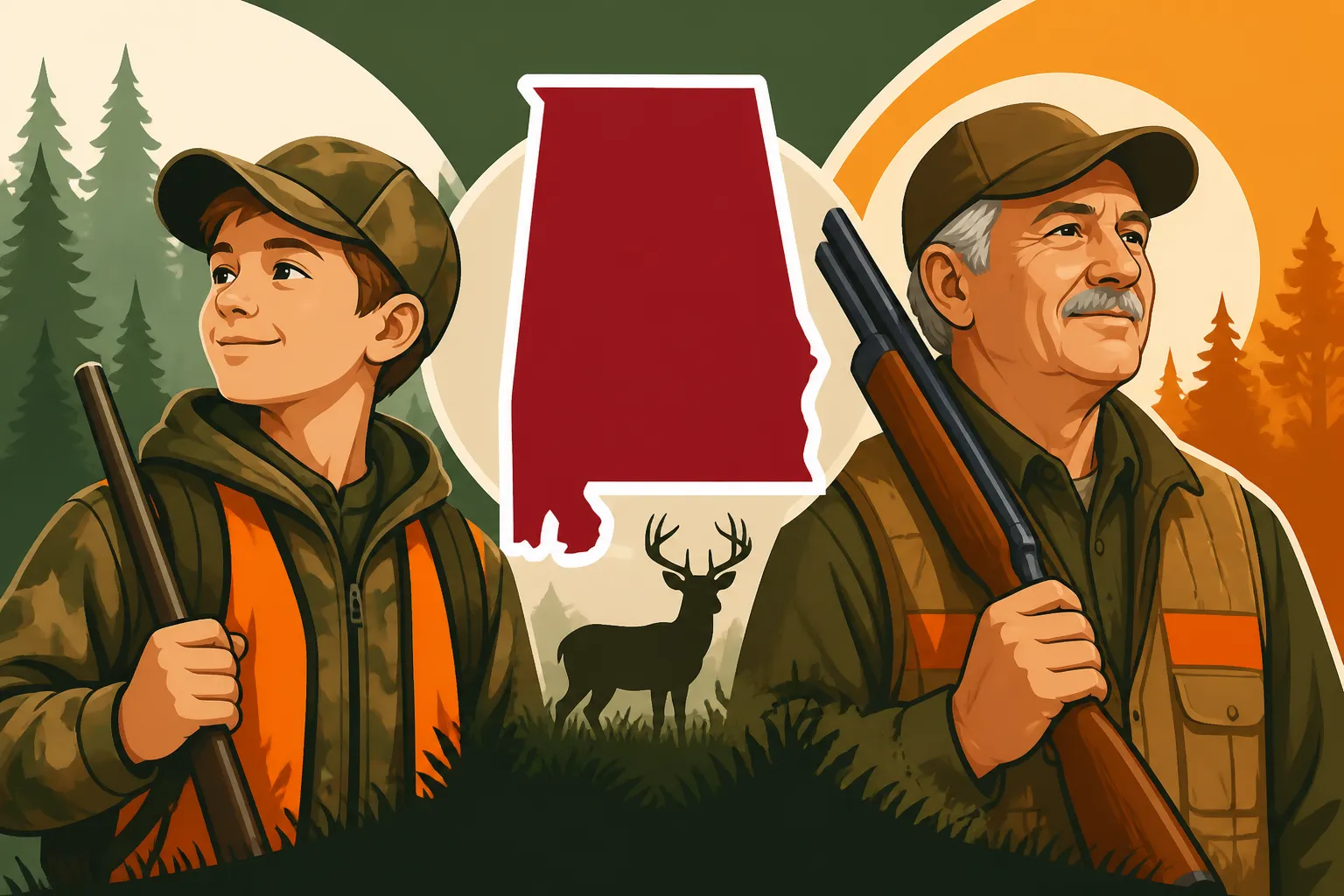
It’s easy to get lost in the labyrinth of hunting regulations, especially when you’re trying to figure out who needs what license in Alabama. For many, the idea of introducing a grandchild to the woods or continuing a cherished tradition into retirement is exciting, but the permit process can feel like a stumbling block. This guide is here to shed light on Alabama's specific hunting license exemptions for hunters under 16 and those 65 and older, cutting through the confusion so you can focus on making memories in the field.
Understanding Alabama's Youth Hunting Exemption
Bringing a youngster into the world of hunting is one of the most rewarding experiences imaginable. You want them to have every opportunity to learn and grow, but the paperwork side of things can be a bit daunting. Thankfully, Alabama has some excellent provisions to encourage this, specifically for our younger hunters.
Age Brackets and What It Means
In Alabama, any resident hunter under the age of 16 is generally exempt from needing a state hunting license. This is a fantastic benefit designed to remove barriers for new, enthusiastic hunters. Imagine the relief of not having to worry about purchasing an annual state license for your aspiring deer hunter or future turkey slayer. This exemption applies whether they're pursuing white-tailed deer, wild turkeys, squirrels, rabbits, or even feral hogs on private land. It's a broad exemption that covers the vast majority of traditional hunting opportunities within the state's borders.
However, it's crucial to understand that "under 16" means just that: up until their 16th birthday. The moment they turn sixteen, they are officially considered an adult hunter in the eyes of the law and will need to purchase the appropriate licenses, just like everyone else. This transition period is something to plan for, especially if they're getting close to that milestone birthday. It’s also important to remember that while the state hunting license is waived, other federal requirements or special permits might still apply, which we’ll delve into later. For specific rules as they approach that age, it's wise to look into Alabama Junior Hunting License Rules.
Mentored Youth Hunting Program
Even before a young hunter reaches an age where they can go afield independently, Alabama offers the Mentored Youth Hunting Program. This program allows youth under 16 to hunt without having first completed a hunter education course, provided they are under the direct supervision of a licensed adult mentor. This is a true game-changer for parents or guardians eager to introduce very young children to hunting in a safe, controlled environment.
The beauty of this program is that it prioritizes hands-on experience under the watchful eye of an experienced hunter. It’s not just about compliance; it’s about safety, ethics, and teaching the traditions of the hunt directly in the field. The mentor acts as the primary responsible party, ensuring all safety protocols are followed and that the youth understands proper firearm handling and game identification. This program significantly lowers the initial hurdle for participation, fostering a love for the outdoors from an early age. If you’re considering this path, you’ll definitely want to familiarize yourself with Alabama Mentored Youth Hunting Rules to ensure you meet all the requirements for supervision and compliance.
The Senior Hunter's Break: Age 65 and Beyond
For those who have dedicated a lifetime to the outdoors, or perhaps are just rediscovering the joys of hunting in their golden years, Alabama extends a well-deserved courtesy in its licensing structure. This recognition of senior citizens’ contributions and continued passion for hunting is a welcome relief from annual expenses.
Who Qualifies for Alabama's License Exemption
Alabama residents who are 65 years of age or older are generally exempt from needing a traditional state hunting license. This exemption kicks in the moment you hit that 65th birthday, offering a significant financial and administrative break. The core requirement here is clear: you must be a bona fide resident of Alabama. This means your primary domicile is in Alabama, and you meet the state’s criteria for residency, which typically involves things like voter registration, driver's license, and tax filings in Alabama.
This exemption is a small way the state says "thank you" for years of enjoying and contributing to the conservation efforts, whether through past license purchases or simply being an active participant in outdoor recreation. It ensures that age doesn't become a barrier to continuing a beloved pastime. For a broader understanding of what different licenses typically entail, you might want to review Alabama Resident Hunting License Options, which further highlights the value of this exemption.
The Specifics of the Senior Exemption
While the senior exemption covers the general state hunting license, it’s vital to understand its scope. It exempts you from the base hunting license, which is a fantastic savings. This means you don't need to purchase the annual "All Game" or "Small Game" licenses that other adult hunters are required to have. However, just like with youth exemptions, there can be additional federal or special state permits that might still apply depending on what and where you plan to hunt.
For instance, if you’re planning on hunting migratory birds like doves, ducks, or geese, you will still need a Harvest Information Program (HIP) certification and a federal duck stamp, regardless of your age. These are federal requirements, not state, and are universal across the country for migratory bird hunters. Similarly, if you intend to hunt on certain Wildlife Management Areas (WMAs) in Alabama, you may still need a WMA license, even if your general state hunting license is exempt. This is a common point of confusion, so it's always best to check the specific regulations for the particular WMA you plan to visit. It’s not designed to be tricky; it’s simply that WMAs often have their own funding and management requirements that necessitate a separate permit.
What These Exemptions Cover and What They Don't
It's tempting to think of an exemption as a free pass for everything, but that's rarely the case in the nuanced world of hunting regulations. Understanding the boundaries of these exemptions is crucial to staying legal and making sure your time in the woods is enjoyable and worry-free.
State Licenses Versus Federal and Special Permits
The primary benefit of both the under-16 and 65+ exemptions is relief from the state's general hunting license requirement. This is a huge deal, as it covers the vast majority of deer, turkey, small game, and feral hog hunting opportunities in Alabama. When someone typically asks "do I need a hunting license?", this is the one they're usually referring to. For instance, if you're a senior hunter pursuing deer in Zone A during gun season, your state hunting license is waived. The same goes for a 14-year-old bowhunting during Bowhunting Alabama's Long Archery Season.
However, the exemptions do not automatically waive federal requirements or special state permits. Let's break this down:
- Federal Duck Stamp: If you're hunting ducks, geese, or brant, anyone 16 years or older needs a federal duck stamp. This applies to senior hunters as well. Youth under 16 are exempt from the federal duck stamp.
- Harvest Information Program (HIP) Certification: This is a federal requirement for anyone hunting migratory birds (doves, ducks, geese, woodcock, snipe, rails, etc.), regardless of age, including youth under 16 and seniors 65+. It’s free and typically just involves answering a few questions about your previous year's harvest. You can usually get this online through the Outdoor Alabama portal.
- Wildlife Management Area (WMA) Permits: Alabama's excellent WMA system often requires a separate WMA license or permit to hunt on those lands. This applies to both exempt youth and senior hunters. These permits help fund the management and conservation efforts on these specific public lands. So, even if you don't need a state hunting license, you'll still need that WMA permit if you're hunting within a WMA boundary, such as on the Skyline Wildlife Management Area.
- Specific Species Tags: While the general license is exempt, regulations sometimes require specific tags for certain species, even for exempt hunters. For deer and turkey, all successful hunters, including youth and seniors, are required to report their harvest through the Game Check system. This isn't a "tag" in the traditional sense, but a mandatory reporting mechanism critical for wildlife management.
- Alligator Harvest Tags: Alligator hunting is a special permit hunt in Alabama, and even if generally exempt, you would need to apply for and draw a specific alligator tag.
- Federal Youth Licenses: While not common, it's worth noting some national wildlife refuges might have their own specific youth permit requirements, so always check local regulations for those federal areas like Wheeler National Wildlife Refuge or Eufaula National Wildlife Refuge.
This distinction between state and federal/special permits is probably the most common point of confusion. Many assume "no license needed" means no paperwork at all, but that's not quite right, especially if migratory birds or WMAs are in the plans. For a deeper dive into the overall structure of seasons, regardless of your license status, check out Alabama Deer Season Structure Explained or Alabama Zone 1 Turkey Season Rules. If waterfowl is your game, understanding Alabama Waterfowl Zones and Seasons is also critical.
Residency Requirements for Exemptions
Both the under-16 and 65+ hunting license exemptions are strictly for Alabama residents. This is a non-negotiable aspect of the law. You cannot be a non-resident and take advantage of these exemptions. For instance, if you're visiting from Georgia with your 12-year-old nephew who lives there, he would still need a non-resident youth hunting license, and you'd need the appropriate non-resident adult license. Similarly, a grandmother from Florida who is 70 years old would need a non-resident senior license, not the Alabama resident senior exemption.
Proving residency usually means having an Alabama driver's license or state ID card. For youth, it typically means their parent or legal guardian is an Alabama resident. These rules are in place to ensure that the benefits of the state's conservation and wildlife management programs, which are often funded by resident license sales, primarily serve the residents who support them. It prevents out-of-state hunters from bypassing license fees intended to support Alabama's wildlife.
Here's a quick comparison of the main exemptions:
| Feature | Under-16 Resident Hunters | 65+ Resident Hunters |
|---|---|---|
| State Hunting License | Exempt | Exempt |
| Federal Duck Stamp | Exempt | REQUIRED if 16+ |
| HIP Certification | REQUIRED | REQUIRED |
| WMA License/Permit | REQUIRED | REQUIRED |
| Hunter Education | Exempt (with mentor) | Not required by age |
| Game Check Reporting | REQUIRED | REQUIRED |
| Residency | Alabama Resident | Alabama Resident |
The Importance of Supervision and Safety
While exemptions make access easier, they don't lessen the responsibility of safety and ethical hunting practices. In fact, when youth are involved, these aspects become even more paramount. The goal is not just to get them into the woods, but to instill a lifelong appreciation and respect for the tradition and the animals.
Mandatory Hunter Education and Mentorship
For young hunters in Alabama, the path to hunting independently usually involves hunter education. While the Mentored Youth Hunting Program allows them to hunt without a hunter education certification under direct supervision, this is a temporary measure. Eventually, if they wish to hunt alone once they turn 16 or hunt unsupervised before that age (though this is rare before 16), they will need to complete an approved hunter education course.
This course teaches vital lessons on firearm safety, wildlife identification, ethics, conservation principles, and regulations. It’s not just a hoop to jump through; it's a foundational experience that prepares them for safe and responsible hunting. Many parents find it beneficial for their children to take the course well before they hit 16, so they can apply those lessons during their mentored hunts. For all the details on how and when to get this done, refer to Alabama Hunter Education Requirements. It's a key step in developing a confident and capable young hunter.
Legal Supervision for Young Hunters
Even with an exemption, young hunters typically require supervision, and Alabama's laws are clear on what "supervision" means, especially for younger participants. When a youth under 16 is hunting under the Mentored Youth Hunting Program, the supervising adult must remain "within normal voice contact" of the youth at all times. This isn't just a suggestion; it’s a legal requirement designed to ensure immediate intervention in case of a safety concern or ethical dilemma.
This means you can't drop a 12-year-old off at a stand and expect to pick them up later, even if they have an exemption. The adult mentor is responsible for ensuring the youth adheres to all hunting laws, including bag limits, season dates, and firearm safety. This close supervision also creates an invaluable teaching opportunity, allowing mentors to share their knowledge and experience directly in the field. It’s about more than just staying legal; it’s about nurturing a responsible hunter. You can find more specific guidance on the proximity required in How Close an Alabama Mentor Must Stay.
Navigating the System Even Without a Traditional License
Just because you don't need to purchase an annual license doesn't mean you're completely disconnected from the state's wildlife management system. There are still critical responsibilities that exempt hunters share with their licensed counterparts, primarily centered around harvest reporting and staying informed.
Game Check Requirements for All Hunters
One of the most crucial responsibilities for all deer and turkey hunters in Alabama, regardless of their license status, is to report their harvest through the Game Check system. This includes hunters under 16 and those 65 and older. Game Check is a vital tool for wildlife biologists to collect data on harvest numbers, deer and turkey populations, and overall herd health. It helps them make informed decisions about future seasons and bag limits.
Failing to report a harvested deer or turkey is a violation of state law. The process is straightforward: after a successful hunt, you must report the animal within 48 hours via the Outdoor Alabama app, the website, or by phone. You'll need information like the county of harvest, the date, and the type of animal. Even though you don't have a license number, the system accommodates exempt hunters by using their date of birth and last four digits of their social security number, or other identifying information. It's a small task that makes a big difference for conservation. To understand the full scope of this requirement, check out Reporting a Deer Through Game Check.
Staying Informed with Regulations and Digital Tools
Wildlife regulations are dynamic; they can change from year to year, and sometimes even within a season. Even if you're exempt from buying a license, it's your responsibility to stay current on all hunting laws, season dates, bag limits, and any special zone restrictions. This is especially true with evolving situations like Chronic Wasting Disease (CWD) management zones, which can introduce new rules for carcass movement or mandatory testing.
Thankfully, staying informed has never been easier. The Alabama Department of Conservation and Natural Resources (ADCNR) provides comprehensive regulation handbooks online and through their Outdoor Alabama app. This app is an invaluable resource for all hunters, offering quick access to regulations, season dates by zone, and even mapping tools to identify public lands and boundaries. You can use platforms like GoHunt to research potential hunting areas, view topographical maps, and plan your trips with up-to-date information, even if you’re not tracking license points. Websites and apps are your best friends in avoiding accidental violations. For navigating public lands and checking rules, Scouting With the Outdoor Alabama App is a must-have tool on your phone.
Benefits and Broader Impacts of These Exemptions
These license exemptions aren't just bureaucratic loopholes; they are carefully considered policies with significant benefits for both individual hunters and the broader hunting community and conservation efforts in Alabama.
Encouraging New Generations and Lifelong Participation
The exemption for hunters under 16 is perhaps the most direct investment in the future of hunting. By removing the initial financial barrier of a license, the state actively encourages parents, grandparents, and mentors to introduce youth to the outdoors. This is critical for hunter recruitment, which has been a long-standing challenge across the country. When it's easier and more affordable to take a child hunting, more people are likely to do it.
These early experiences are often foundational, sparking a lifelong passion for hunting, conservation, and wildlife. A child who learns to hunt safely and ethically today is more likely to become an adult hunter who buys licenses, participates in conservation efforts, and advocates for wildlife management tomorrow. It ensures that the rich traditions of Alabama hunting continue for generations to come, creating those indelible memories of crisp fall mornings or exciting spring gobblers.
Financial Savings and Accessibility
For senior hunters, the license exemption offers tangible financial relief. In an era where many seniors live on fixed incomes, eliminating the annual cost of a hunting license can make a real difference in their ability to continue pursuing their passion. This isn't just about saving a few dollars; it's about maintaining access to an activity that provides physical exercise, mental stimulation, and a deep connection to nature, all of which are incredibly important for well-being in later life.
For both youth and seniors, these exemptions increase overall accessibility. By reducing costs and administrative hurdles, more people can experience the joys of hunting. This broader participation not only enriches individual lives but also helps foster a larger community of engaged citizens who care about Alabama's natural resources and support conservation. It’s a win-win situation, making hunting more inclusive and sustainable for everyone involved.
Disclaimer
Please remember that hunting regulations can change, and it is always your responsibility to consult the most current Alabama Department of Conservation and Natural Resources (ADCNR) regulations before hunting. This guide provides general information and should not be considered a substitute for official legal documentation.