Reading a Delta Slough for a Morning Flight
There’s nothing quite like the anticipation of a morning duck hunt in the Alabama delta, but it can be incredibly frustrating to sit in the blind, hearing birds whistle overhead, yet never seeing them commit to your spread. All too often, hunters struggle to pinpoint exactly where ducks want to be in the maze of interconnected sloughs. This guide is all about helping you decode the subtle language of a delta slough, understand how ducks use these unique waterways, and arm you with the knowledge to scout effectively and set up strategically for a successful morning flight.
Understanding Delta Dynamics and Waterfowl Habits
Hunting waterfowl in a vast delta system like Alabama's Mobile-Tensaw is a completely different ballgame than setting up on a private farm pond. The sheer scale, the intricate network of waterways, and the constant flux of water levels create a dynamic environment where ducks are always on the move, seeking out the best combination of food, shelter, and security. To consistently intercept them, you first need to understand the heartbeat of the delta itself and the specific behaviors of the birds that call it home, or at least a temporary stop along their migration.
The Interconnectedness of Delta Waterways
Imagine the Mobile-Tensaw Delta as a giant, sprawling hand, with the main rivers being the wrist and fingers, and the sloughs, cuts, and oxbows as the intricate lines and creases in your palm. These seemingly isolated sloughs are rarely truly cut off; they’re living, breathing extensions of the main river systems, constantly influenced by water levels. Rainfall upstream can send surges of fresh water down, while strong tides pushing in from Mobile Bay can back up flows, creating drastic changes in depth and current within just a few hours. This constant ebb and flow dictates everything from where submerged vegetation can grow to where invertebrates thrive, and consequently, where ducks will choose to feed and rest.
The dynamics of current are also critical. While main river channels might have strong, consistent flows, sloughs often offer calmer, more protected waters. However, even within a slough, you’ll find subtle currents, eddies behind structure, and areas where water barely moves. These differences influence where ducks expend energy, where they can easily dabble for food, and where they feel safe from being swept away or exposed. Understanding these micro-currents is a huge step in "reading" a slough. A good mapping tool, like the ones offered by GoHunt, can help you visualize these connections and potential pinch points before you ever step foot in the marsh.
Why Ducks Use Sloughs for Morning Flights
Ducks, especially species like wood ducks and mallards, are drawn to sloughs for a combination of reasons, making them prime targets for a morning flight hunt. First and foremost, sloughs provide shelter. They’re often bordered by dense cypress, tupelo, or cane thickets, offering protection from strong winds and harsh weather that might whip across open water. This cover also provides a vital sense of security from aerial predators like eagles and ground-based threats. After spending the night roosting in a secure, often larger, body of water, ducks will typically make a morning flight to feeding areas. Sloughs, with their calmer waters and abundant aquatic vegetation, submerged seeds, and insect life, often serve as these breakfast buffets or ideal loafing areas where they can digest before settling in for the day.
Wood ducks, in particular, are notorious for navigating these tight, winding waterways. They thrive in forested swamps and often utilize smaller, more secluded sloughs and creeks, especially those with flooded timber edges where acorns might drop. Mallards, while also comfortable in sloughs, often prefer slightly larger, more open areas within these systems where they can dabble. Teal, being small and fast, will zip through almost any available water, but also appreciate the concentrated food sources often found in calmer slough sections. Recognizing these species-specific preferences helps you narrow down which sloughs to focus on for different times of the season. If you're focusing on these smaller birds, you might want to read more about Jump-Shooting Alabama Beaver Ponds for Wood Ducks for additional insights into their habits.
Key Environmental Factors Influencing Movement
Ducks are creatures of habit, but their habits are incredibly sensitive to environmental cues. Weather is, without a doubt, the most significant driver. A sudden cold front pushing through Alabama will concentrate birds and make them more eager to feed, sending them scurrying into protected sloughs. High winds, especially from an unexpected direction, can completely alter flight patterns, forcing ducks to seek refuge in sheltered pockets. Conversely, calm, clear days can make birds warier and less likely to commit. Always check the forecast and understand how it might impact the birds you’re pursuing.
Water levels are another critical factor in delta slough hunting, arguably even more so than in other waterfowl environments. During periods of high water, ducks might spread out into newly flooded timber and shallow areas that were previously dry, making them harder to pinpoint. Conversely, during low water, ducks are often concentrated into the remaining deeper sloughs, pools, and channels. This can be a boon for hunters if you've done your homework. Regularly checking local river gauges and understanding the influence of lunar tides (if you’re close to Mobile Bay) is paramount. Beyond water, food availability is the ultimate draw. Whether it’s acorns falling into flooded bottoms, the presence of specific submerged aquatic vegetation, or even agricultural fields adjacent to the delta that have recently been harvested, understanding the current menu for ducks will lead you to the right slough. If you are specifically targeting mallards in these types of food-rich environments, our guide on Hunting Flooded Timber for Mallards offers more specific advice.
Pre-Hunt Scouting: Maps, Boots on the Ground, and Observing
You wouldn't head out on a deer hunt without scouting, and duck hunting a delta slough is no different. In fact, due to the dynamic nature of these waterways and the transient habits of waterfowl, effective scouting is even more critical. It’s a multi-layered approach, combining modern technology with good old-fashioned legwork and careful observation. Don't fall into the trap of just showing up hoping for the best; the delta will humble you quickly if you do.
Digital Scouting with Mapping Tools
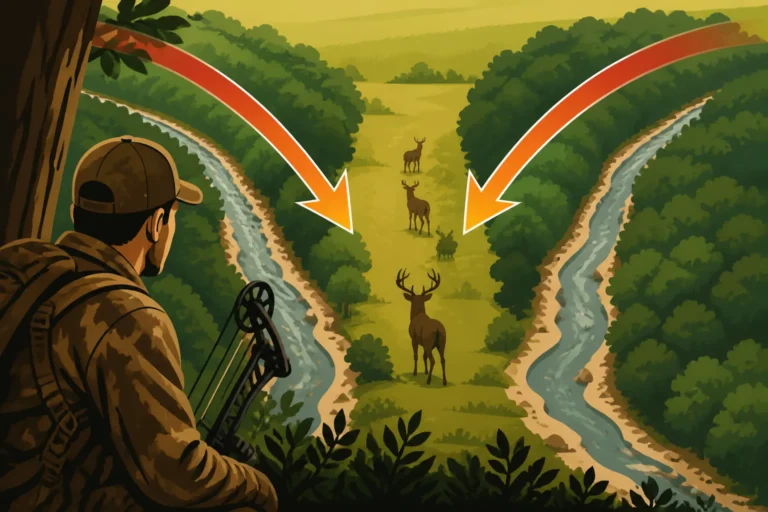
Before you even launch a boat, your best friend is a good mapping application. Tools like Google Maps, or specialized hunting apps such as those provided by GoHunt, are invaluable. Start by identifying the larger river systems and then zoom in to find the intricate network of sloughs, bayous, and oxbows. Look for geographical features that could act as natural funnels or pinch points, forcing ducks to fly over specific areas. Sharp bends in a slough, intersections with smaller creeks, dead-end pockets, or breaks in dense vegetation are all potential hotspots. Pay close attention to areas of flooded timber adjacent to deeper water—these are prime wood duck and mallard haunts.
You'll also want to toggle between satellite views from different times of the year if available to see how water levels change the landscape. What looks like dry ground in summer might be prime flooded timber in winter. Identifying public land boundaries, especially within sprawling areas like the Mobile-Tensaw Delta Public Hunting Ground, is also crucial for legal and ethical hunting. Use your mapping app to mark potential access points, boat ramps, and areas where you’ve identified promising habitat. This digital reconnaissance saves you countless hours of aimless searching on the water. For more general advice on preparing for your season, check out Scouting Alabama Public Land Before Season.
On-the-Water and On-Foot Reconnaissance
Digital scouting is a great start, but nothing beats seeing the slough with your own eyes, preferably on a non-hunting day. This “boots on the ground” approach (or perhaps "waders in the water") allows you to verify what you saw on the map and discover subtle nuances that satellite imagery can’t reveal. Look for fresh duck sign: droppings on logs or mudflats, scattered feathers, disturbed mud from dabbling, or actual feed beds. You might even find tracks in soft mud, giving you clues as to what species are frequenting the area.
Beyond sign, observe the environment itself. How does the wind affect the water within the slough? Are there natural hiding spots that would work for a blind? Are there specific trees where wood ducks might roost or feed on acorns? Pay attention to prevailing flight paths. Do ducks consistently fly over a certain tree line or low point in the canopy? The goal is not just to find ducks, but to understand why they are there and how they are using the slough. Don't be afraid to pull your boat ashore and walk along the banks (where permissible) to get a different perspective. Even something as simple as Reading Alabama Mud for Fresh Deer Movement can give you insight into how animals move through an area, a principle that applies to ducks too.
Tracking Local Conditions and Waterfowl Reports
The delta is a living system, and its conditions are constantly changing. A slough that was red-hot last week might be barren this week due to a drop in water levels or a shift in the migration. Stay updated on local river gauge readings, especially for the Alabama River, Tombigbee River, and Mobile River. This data will tell you if water is rising or falling, which directly impacts duck accessibility to different feeding grounds. Look for any local hunting reports or forums (some GoHunt communities might offer this) where hunters share general information (without giving away their secret spots, of course!).
Furthermore, keep tabs on the broader Alabama Waterfowl Migration Timing. Are the main waves of mallards and gadwall moving through, or is it mostly local wood ducks and resident geese? This information helps you set realistic expectations and adjust your target species. While every hunt is unique, understanding the general patterns and current conditions dramatically increases your odds of finding a morning flight in a delta slough. Don't forget to also familiarize yourself with the overall Alabama Waterfowl Zones and Seasons to ensure you're hunting legally and ethically.
Setting Up for Success: Decoys, Hides, and Wind Considerations
So you've scouted, you've found a promising slough, and you know the general flight path. Now comes the crucial part: setting up your spread and hide to entice those ducks to commit. This isn't just about throwing out some blocks; it's about creating a believable scenario that ducks feel safe dropping into, all while keeping yourself concealed and ready for the shot. Delta sloughs often require a more nuanced approach than wide-open fields or big lakes.
Decoy Spreads Tailored for Sloughs
When hunting sloughs, less is often more. You're not trying to attract ducks from miles away; you're trying to convince birds already in the vicinity to drop in for a landing. A smaller, more realistic spread of a dozen to two dozen decoys often works better than a massive rig. Focus on quality over quantity. Use a mix of mallard and wood duck decoys, as these are common inhabitants of Alabama's river swamps. If teal are abundant, a few teal blocks can be a nice addition.
The placement of your decoys is paramount. Instead of a wide-open landing zone, think about creating a natural-looking "landing strip" within the slough. A popular and effective strategy is the "J" hook or "fishhook" spread, where the bulk of your decoys form the curve of the 'J' with a small open pocket at the hook's bend. This open pocket is your kill hole, where you want ducks to land. Always place your decoys so that ducks will approach into the wind, naturally cupping their wings and slowing down right in front of your blind. Consider adding a jerk string or a small spinning-wing decoy (where legal) to add life and motion to your spread. If you're looking for more basic decoy setup principles, our guide on Setting Decoys on a Farm Pond can offer some foundational knowledge.
Concealment and Blind Placement
Ducks have incredible eyesight, and in the tight quarters of a slough, they'll pick up on anything that looks out of place. Natural concealment is your best friend. Look for fallen trees, dense cane thickets, or clumps of cypress knees to set up against. Your goal is to break up your human outline completely. If natural cover isn't sufficient, a small, portable blind brushed in with local vegetation can be highly effective. The key is to blend in seamlessly.
When positioning your blind, consider the sun's position at first light. You generally want the sun at your back or quartering, so you're not silhouetted against the morning sky and the incoming birds aren't staring directly into the glare. This also gives you better visibility for spotting approaching ducks. Furthermore, ensure your blind offers clear shooting lanes. There's nothing worse than having birds decoy perfectly only to be obstructed by a stray branch. Remember, movement is your enemy. Stay still, keep your calls quiet until birds are close, and only rise to shoot when the ducks are fully committed and in range. While sloughs differ from open fields, some principles of concealment discussed in Layout Blind Hunting Delta Farm Fields can still apply.
Reading the Wind and Sun for Optimal Position
The wind is not just a suggestion for duck hunters; it's a fundamental force. Ducks always, and I mean always, land into the wind. This critical piece of information dictates your entire setup. Your blind should be positioned so that the prevailing wind is at your back or quartering slightly, encouraging ducks to land directly in your kill hole, facing away from you or broadside. If the wind shifts mid-hunt (which can happen frequently in the delta), you might need to adjust your decoy spread or even relocate your blind if possible.
The sun's path is also important. For a morning flight, you want the sun at your back as much as possible. This puts you in shadow relative to the approaching birds and prevents them from being blinded by the rising sun, making them less likely to flare. A morning hunt generally means the sun will be rising in the east. Therefore, positioning yourself on the west side of a slough, facing east or northeast, is often ideal. Always observe the sun's angle and adjust accordingly, prioritizing concealment and shot opportunity. The best duck hunters are constantly aware of these natural elements and adapt their strategy in real-time.
Adapting to Conditions and Post-Hunt Analysis
Delta duck hunting is a continuous learning process. No two hunts are exactly alike, and conditions can change in an instant. The hunters who consistently fill their straps are those who are flexible, observant, and willing to learn from every single experience, good or bad. Don't get stuck in a rut doing the same thing every time if it's not working.
Adjusting Tactics Mid-Hunt and Mid-Season
One of the biggest mistakes hunters make is sticking rigidly to their original plan when birds aren't responding. If ducks are flaring consistently at 60 yards, they’re telling you something is wrong. Maybe your hide isn’t good enough, your decoys are too far out, or your calling is off. Don't be afraid to make adjustments. This could mean pulling your decoys closer, adding more natural brush to your blind, or even moving 50 yards down the slough to a more protected bend or a tighter choke point. Sometimes, just changing the orientation of your spread by a few degrees can make all the difference.
As the season progresses, ducks become warier. Early season birds might decoy easily, but by mid-January, they've seen every trick in the book. Late-season ducks require more finesse, impeccable concealment, and often a smaller, more subtle decoy spread. Water levels can also fluctuate dramatically mid-season, opening up new areas or making old ones inaccessible. A good hunter is constantly re-evaluating the situation, asking themselves: "What are the ducks telling me?" and "How can I make this setup more appealing and safe for them?" Keeping detailed notes on your hunts, perhaps using a journaling feature in a mapping app like GoHunt, can help you recognize these patterns and adapt quicker next time.
Calling Strategies for Close-Quarters Slough Hunting
Calling ducks in a slough is generally different from calling them on a large body of water. In the tight confines, loud, aggressive high-balls can often spook birds rather than attract them. Think subtle, natural, and inviting. For mallards, soft greeting calls, contented feeding chuckles, and short comeback calls are often more effective. Mimic the sounds of happy, relaxed ducks already on the water.
Wood ducks require a different approach. Their distinctive "woo-eek" call is essential, often followed by quiet quacks. A wood duck whistle is a very effective tool in these environments. Focus on short, sharp bursts. Patience is key; don't overcall. Let the ducks see your spread, let them work it, and then offer just enough enticing sound to seal the deal when they start to drift or appear hesitant. Remember that Wood Ducks in Alabama River Swamps are incredibly adept at navigating dense cover, so subtle sounds help guide them in.
Learning from Every Hunt
Every hunt, whether successful or not, is a learning opportunity. After the decoys are picked up and you're heading home, take a few minutes to debrief. What worked well? Did the ducks approach from an unexpected direction? Did they flare at a specific point? Was your calling effective, or did it seem to hinder? Even noting something as simple as the exact water level or the precise wind direction can be invaluable for future hunts in that same slough.
Keep a mental (or physical) log of your experiences. Over time, you'll start to build a deep understanding of how specific sloughs function under different conditions, which areas hold birds, and which are duds. This accumulated knowledge is what truly makes a delta waterfowl hunter successful in the long run. By analyzing your hunts, you refine your strategies, become more adaptable, and ultimately, become a better duck hunter. And of course, always be aware of the Alabama Duck Daily Bag Limit and other regulations to ensure you're hunting responsibly.
| Slough Feature | Duck Species Preference | Ideal Water Level | Setup Notes |
|---|---|---|---|
| Protected Bend | Wood Ducks, Mallards, Teal | Moderate to High | Good for hiding, birds follow bend. Place decoys in inner curve. |
| Pinch Point | All species | Any, concentrates movement | Prime ambush spot. Hide well, ducks fly directly over. |
| Flooded Timber Edge | Wood Ducks, Mallards | High, water in trees | Excellent food source. Place decoys near timberline, facing open slough. |
| Dead-End Pocket | Wood Ducks, Teal, Loafing | Moderate to Low, calm | Very secluded. Small, realistic spread. Ideal for jump-shooting. |
| Cane Break Opening | Wood Ducks, Teal | Any, offers dense cover | Birds feel secure. Hide deep in cane, minimal spread. |
| Creek Confluence | All species | Any, natural funnel | High traffic area. Use spread to guide birds into clear lane. |
Disclaimer
Hunting is an inherently dangerous activity. Always prioritize safety, adhere to all Alabama hunting regulations, and obtain proper licenses. This guide provides general information and should not replace professional instruction or local wildlife agency guidelines. Be aware of your surroundings, respect private property, and practice ethical hunting.