Calling an Alabama Gobbler Off the Roost
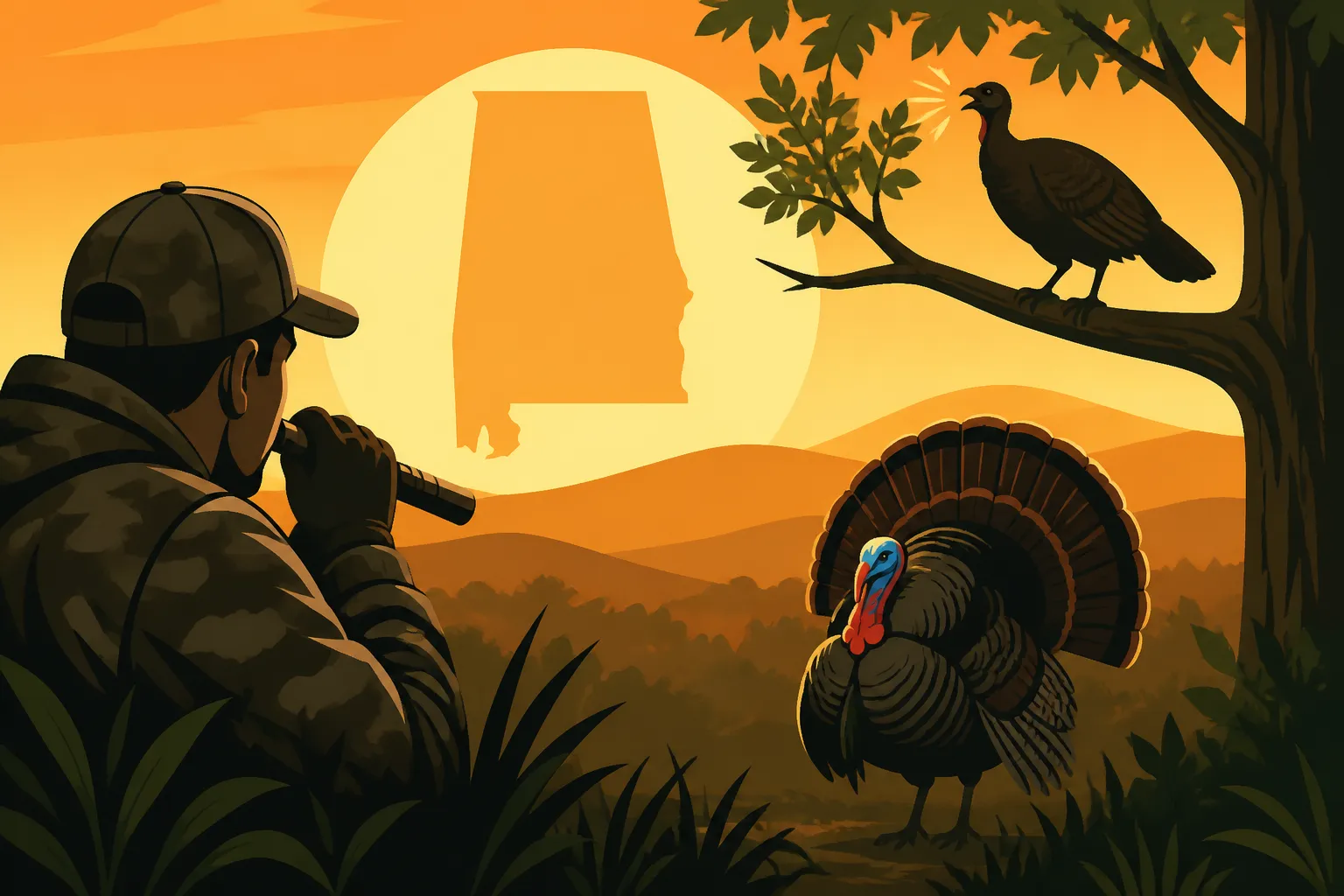
There's nothing quite like the electric anticipation of a spring morning in Alabama, especially when you know a big tom is gobbling his head off just a few hundred yards away. But let's be real, that excitement can quickly turn to pure frustration when that bird, despite all your sweet yelps and purrs, refuses to fly down into your setup. He just sits there, strutting and gobbling on the limb, making you question every call you've ever made. This guide is all about tackling that exact problem, giving you the strategies to coax even the most stubborn Alabama gobbler off his roost and into your kill zone.
Understanding the Roosting Gobbler's Mindset
Before you even think about throwing a call at a gobbler still on the limb, you've got to step into his spurs for a moment. Understanding why he's up there and what his priorities are as dawn breaks is half the battle. It's not just some random act; there's a whole lot of instinct and strategy behind his chosen perch.
Why Gobblers Roost Where They Do
Think about it from a turkey's perspective: safety is paramount. When darkness falls, those birds are vulnerable to predators like coyotes, bobcats, and even great horned owls. Roosting high in a tree, especially over water or in an open area, gives them a distinct advantage. They're looking for tall trees, often mature pines, sycamores, or oaks, that provide a clear flight path up and down. A lot of times, you'll find them perched along creek bottoms, river bends, or on prominent ridge lines that offer a wide view of their surroundings as the sun comes up. These spots also tend to have good thermals, which are those rising currents of warm air that birds use for easy ascent and descent. I've spent countless mornings listening to gobblers sound off from the towering pines right on the edge of the Alabama River, a perfect example of both safety and good visibility.
Their roosting spot is also about routine and dominance. A mature gobbler often has a preferred tree or group of trees he returns to night after night, especially if it's a prime location for calling in hens come morning. It's his fortress, his stage. He wants to be seen and heard, and he's sizing up the morning's prospects. If he's got hens already with him on the limb, or he believes he can gather them once he hits the ground, he's far less likely to abandon that spot just because some hen sounds off from the woods below. This is where the challenge really begins for us hunters.
The Challenge of the Roost
The biggest challenge with a roosted gobbler is his reluctance to commit. He's safe, he's high, and he's usually got a great vantage point. Why would he fly directly to your calls, which might be coming from an unknown danger? His instinct is to fly down to a safe, open area, maybe a field edge or a logging road, and then begin his strutting and gobbling display, letting the hens come to him. If you're set up directly underneath him, or too close to his fly-down zone, you're disrupting his natural morning ritual. It's enough to make you pull your hair out when he just gobbles his head off from the limb, seemingly mocking your efforts!
Moreover, he might already have real hens roosted near him. If that's the case, your best calls will often be ignored because he's waiting for his real ladies to hit the ground. He knows where they are, and he's content to wait for them. This is why a gobbler that's "henned up" on the roost is notoriously difficult to pull. Your job, then, becomes trying to convince him that your calls represent the most eager, most available hen, or even a rival gobbler he needs to confront. It’s a delicate dance of deception and timing, and it requires a well-thought-out plan.
Essential Scouting for Roosted Birds
You can't call a gobbler off the roost if you don't know where he is roosted. Effective scouting, sometimes days or even weeks before the season, is absolutely critical. This isn't just about finding turkeys; it's about pinpointing their nightly bedding grounds and understanding their morning patterns.
Listening for Roost Locations
The most effective way to locate roosting gobblers is by listening. This means getting out to your hunting area well before legal shooting hours, often 45 minutes to an hour before sunrise. Position yourself in a strategic listening post – a high point, a quiet field edge, or a logging road that offers good sound travel. Owl hoots and crow calls are your best friends during this time. Throw out a few sharp owl hoots or loud crow calls and listen intently for a shock gobble. Turkeys are territorial, and they often can't resist gobbling back at these sounds, giving away their exact location. I've had incredible success just sitting quietly in a truck on a dirt road, listening to the woods come alive around me as the sun hints at rising.
Pay close attention not just to the direction of the gobble, but its intensity and how it carries. A loud, clear gobble often means a bird is relatively close and on the limb. If you hear multiple gobblers, you've hit the jackpot. Record these locations, maybe marking them on a map or using a GPS device. Remember, these birds often favor specific terrain features for their roosts, like the prominent ridge lines you might scout when Reading a Ridge for North Alabama Deer. Keep a log over several mornings if possible, as birds can sometimes shift roosts, especially if disturbed.
Reconnaissance During the Day
Once you've identified potential roosting areas, it's time for some boots-on-the-ground reconnaissance, ideally during the middle of the day when turkeys are less likely to be in their roost trees. Your goal is to confirm those roosts and understand the surrounding terrain. Look for physical evidence: fresh droppings, shed feathers, and "roost trees" that are visibly larger or taller than others, often with broken limbs from years of turkeys landing and taking off. Sometimes you'll even see strut marks or fresh tracks in the soft earth beneath preferred roosting areas.
Using detailed topo maps and aerial imagery, perhaps through an app like GoHunt, is invaluable here. Look for those distinct terrain features: creek bends, steep bluffs, old clear-cuts, or large stands of mature timber. Identifying potential fly-down zones – open areas like fields, food plots, or logging roads adjacent to the roost – is crucial. Also, scout potential access routes to get into position silently before dawn without spooking the birds. Pay attention to any natural barriers, like deep creeks or thick briar patches, that might impede a gobbler's direct path to your calls. Understanding the lay of the land will dictate your setup and calling strategy come game day.
Strategic Setup for the Roost Fly-Down
Once you've pinpointed a gobbler's roost and understood his preferred fly-down routine, the next step is a flawless setup. This is where many hunts are won or lost, long before the first call is ever made. Your position, concealment, and the placement of any decoys are all critical pieces of the puzzle.
Positioning Yourself for Success
The golden rule for roost hunting is to get into position before daylight, with absolute stealth. This means parking a good distance away and walking in quietly in the dark. Silence is paramount; any snapped twig or rustling leaves could send your gobbler into a silent fly-down in the opposite direction. You want to be close enough to hear him, and for him to hear your subtle calls, but not so close that you risk bumping him. A good general guideline is 100 to 150 yards from the actual roost tree, placing you in his anticipated fly-down path or in an open area he'd naturally want to strut into.
Find good cover that allows you to remain still and unseen. A big oak with a wide trunk or a thick cedar bush is ideal. Remember to account for the sun's rise – you don't want to be silhouetted against the morning sky, or worse, have the sun directly in your eyes when it's time to make a shot. Think about your backdrop: a solid tree or brush line behind you will help break up your outline. As we discuss in Setting Up Against a Big Oak, a good tree offers both concealment and a solid rest for your gun. Always be mindful of other hunters, especially on public land. It's smart to wear a patch of blaze orange on your walk in, removing it once you're set up, to ensure safety.
Decoy Placement Considerations
Decoys can be a game-changer for a roosted gobbler, but they can also work against you if misused. For a bird on the roost, the goal is to present a visual that reinforces your calls and gives him a reason to fly down in your direction. A single hen decoy, or a pair of hens, often works best. You want them visible from the roost tree, positioned in an open area that mimics a natural gathering spot. Face them slightly away from you, towards the roost, as if they're feeding or casually strolling.
Consider positioning your decoys within your comfortable shooting range – generally 20-30 yards. If you're using a jake or strutter decoy in addition to hens, place it strategically to challenge a dominant gobbler. However, be cautious with jake/strutter decoys early in the morning for a roosted bird, as they can sometimes make an already wary gobbler hang up or divert his path if he doesn't feel safe approaching. Remember Alabama's specific regulations, especially the ten-day restriction on using decoys within the first ten days of the season in certain zones. Once that restriction lifts, as covered in Decoy Placement Once the Ten-Day Rule Lifts, you have more flexibility. The key is realism and presenting an irresistible scene that pulls that gobbler off the limb.
Calling Tactics to Entice a Fly-Down
Once you're set up and daylight starts to paint the eastern sky, it's time to communicate. The art of calling a roosted gobbler involves a delicate balance of subtle invitation and, at times, more aggressive persuasion. The goal is to make him believe there's a hen (or hens) just begging for his attention, right where you want him to be.
Subtle Pre-Dawn Calls
The very first calls you make should be soft, subtle, and infrequent. Imagine a hen just waking up on the roost, stretching her wings, maybe letting out a sleepy cluck or a quiet tree yelp. This isn't the time for loud, aggressive cutting. Use soft tree yelps, gentle clucks, and purrs to simulate a hen on the roost, just stirring. The idea is to pique his interest, let him know there's a potential mate nearby, without sounding threatening or overly eager. Think of it as a soft "good morning."
The timing is critical. Don't start calling too early, or he might just gobble and fall silent. Wait until the sky begins to lighten, just before he would naturally start gobbling on his own. Make a few soft calls, then listen. If he gobbles back, acknowledge it with another soft cluck or a few quiet yelps, then go silent. Let him wonder, let him anticipate. You're building an expectation, drawing him in mentally before he even leaves the limb. It’s a slow build-up to the main event.
Aggressive Calls After Fly-Down
Now, if that gobbler hits the ground and starts moving away from you, or worse, just stands there strutting and gobbling from a distance without committing, it's time to switch gears. This is when you can introduce more aggressive calls to either pull him back or challenge his dominance. Cutting and cackling, which are sharp, excited yelps and broken yelps, can simulate a "hot" hen that's ready to breed, or a hen that's being pressured by other birds. This often works to make him think he's missing out or that another gobbler is trying to steal his hens.
Vary your calls. If he responds to a slate call, try a box call next, then a mouth call. Different sounds can sometimes trigger a different response. Don't be afraid to add some gobbler sounds if you're confident in your ability to mimic one – a confident gobbler might come looking for a fight. However, always prioritize realism over volume. A few perfectly executed yelps are far more effective than a string of sloppy, loud calls. Remember that sometimes after a fly-down, if he's not coming in, you might need to adapt to more mobile tactics, perhaps similar to Run-and-Gun Turkey Tactics on Public Land, if he starts moving off into the timber.
| Call Type | Sound Profile | When to Use | Effect on Roosted Gobbler |
|---|---|---|---|
| Tree Yelps | Soft, muffled yelps, like a hen on the limb. | First light, before fly-down. | Piques curiosity, lets him know a hen is nearby. |
| Clucks/Purrs | Soft, contented sounds. | Pre-dawn, occasionally after fly-down if he's close. | Reassures, indicates calm hens feeding. |
| Cackles | Excited, rapid yelps, often with a break. | After fly-down if he's hung up or moving away. | Simulates an excited hen, creates urgency, can pull him back. |
| Cutting | Short, sharp, loud yelps. | Similar to cackles, used to challenge or indicate a hot hen. | Demands attention, can challenge a dominant bird. |
| Plain Yelps | Standard yelps, varied cadence. | Throughout the morning, adapting to his response. | Basic communication, general invitation. |
| Gobbles | Deep, resonant gobbler sound. | Sparingly, to challenge a dominant bird or provoke a response from a silent one. | Can draw an aggressive gobbler, but risky if overused. |
Troubleshooting Stubborn Gobblers and Adapting
Let's face it, turkeys are unpredictable creatures, and even with the best scouting and calling, some gobblers will just refuse to play by the rules. It's those moments of frustration that define a true turkey hunter, and knowing how to adapt is key to punching that tag.
The Gobbler That Hangs Up
This is perhaps the most infuriating scenario: you've done everything right, he's gobbling his head off, he's flown down, and he's close. But he's just out of range, strutting back and forth, maybe behind a slight rise or across a creek, staring intently at your decoys but refusing to take those last few steps. This is the classic "hung up" gobbler. He's interested, but he feels exposed or has a natural barrier in his way.
In this situation, aggressive calling often backfires. If he's already seen your decoys and heard your calls but won't commit, more volume won't help. Sometimes, the best strategy is to go completely silent. Let him stew. Let him wonder where that hen went. The silence can sometimes make him nervous enough to break ranks and come looking. Another tactic, if the terrain allows, is a subtle "phantom move." If you can safely and silently back away 20-30 yards, mimicking a hen walking off, it can sometimes pull him forward to investigate. This is tricky and requires immense patience and silence. Before the hunt, always scout for any potential obstacles between the roost and your setup. Knowing if a deep creek or a thick fence line exists can help you choose a better setup location initially, as you'd learn when you're doing your general Scouting Alabama Public Land Before Season.
When Plan A Fails
What happens if the bird flies down, gobbles a couple of times, and then slips off silently with a group of real hens? Or maybe he just flew down in the opposite direction and is long gone. Don't pack up and go home just yet! Turkey hunting is all about adapting. If your roost setup didn't pan out, it's time to transition to other tactics. This might mean going into full Run-and-Gun Turkey Tactics on Public Land mode, covering ground and listening for new gobblers to strike.
Sometimes, after a failed roost attempt, that gobbler will circle back later in the morning once his hens have left him. So, don't write off the area completely. Consider moving a few hundred yards to a different setup, perhaps along a travel corridor or a field edge, and try a more general calling sequence. Listen for distant gobblers, or even subtle hen yelps that might indicate other birds. Alabama's turkeys, like those discussed in Alabama Turkey Population Trends, are resilient, and just because one plan failed doesn't mean the whole morning is lost. Persistence and an open mind to changing strategies are your greatest assets in the turkey woods. And remember, understanding Where Alabama Gobblers Roost generally can still guide your mid-morning movements.
Disclaimer
Hunting is an inherently dangerous activity. This content is for informational purposes only and does not endorse unsafe practices. Always prioritize safety, follow all local, state, and federal hunting regulations, and respect wildlife. Ensure you have the proper licenses and permits before engaging in any hunting activity in Alabama. It is your responsibility to know and understand all applicable laws and to hunt ethically and responsibly.