Deer Drives With Three or Four Hunters
It’s a tale as old as time for Alabama hunters: you’ve scouted, hung stands, and sat patiently, only to have deer seem to vanish into thin air, especially on those smaller, harder-to-hunt tracts or pressured public lands. When solo hunting or relying solely on still-hunting tactics feels like drawing a blank, especially if you're targeting elusive whitetails that are holding tight, bringing in a few trusted friends for a strategic deer drive can be a game-changer. This guide is all about how to effectively organize and execute successful deer drives with just three or four hunters, maximizing your chances without needing a huge army.
The Strategy Behind Small-Group Deer Drives
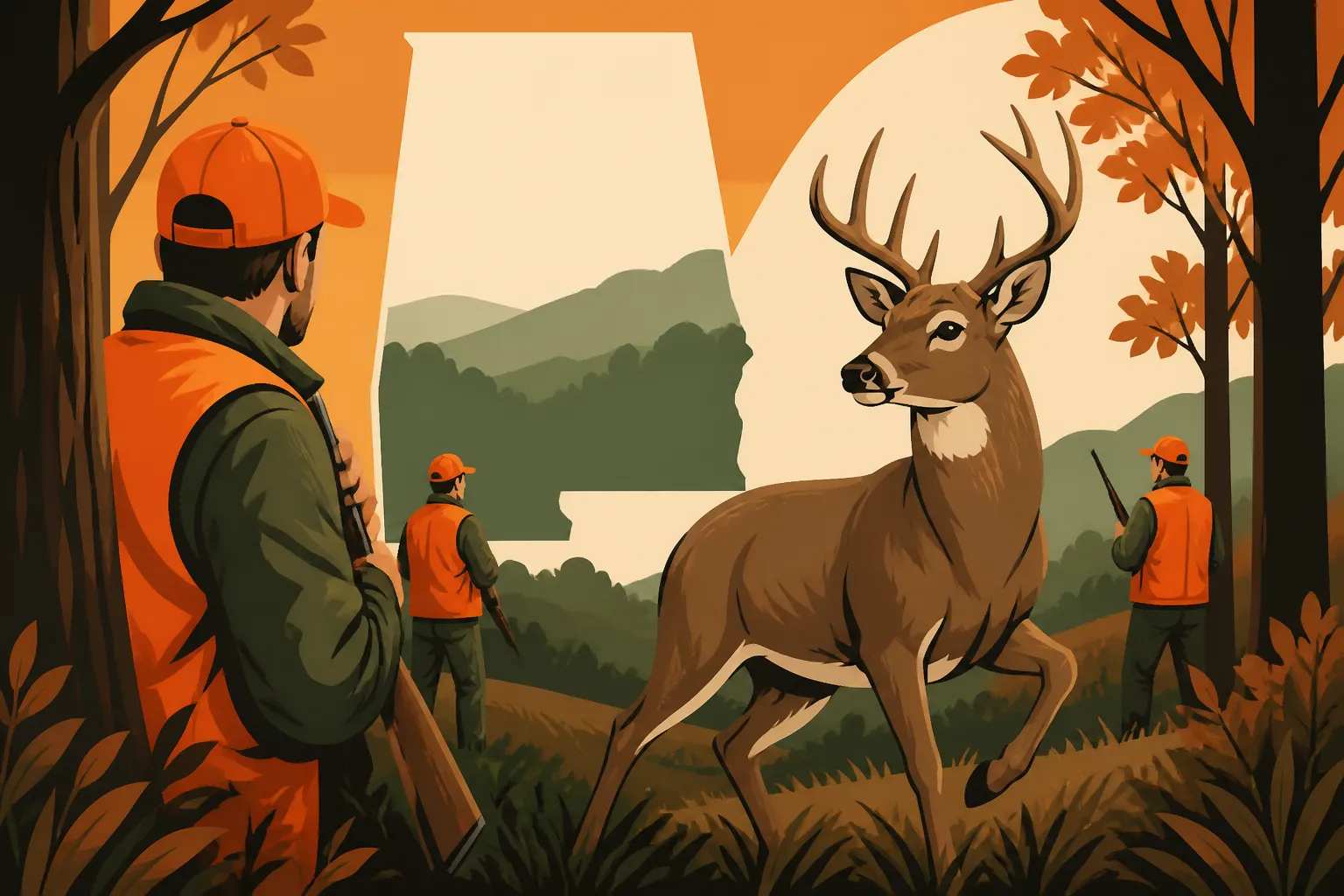
Many hunters think deer drives require a massive crew, a whole deer camp full of folks stomping through the woods. But honestly, for many situations in Alabama, especially on smaller woodlots, thick creek bottoms, or tricky public land pockets, three or four well-coordinated hunters can be incredibly effective. It's not about overwhelming the deer with noise, but subtly nudging them into predictable escape routes.
Why Drives Work with Few Hunters
The beauty of a small-group drive lies in its precision and subtlety. Instead of a chaotic stomp, you're orchestrating a deliberate push. Deer are masters of evasion; they’ll often let you walk right past their bedding area if they feel secure. A small group can capitalize on this by strategically covering escape routes and applying just enough pressure to make deer move. This isn't a "run and gun" approach; it's a calculated chess match. You're not trying to push deer off the property entirely, but rather to get them up and moving, hopefully within shooting range of waiting standers. It's particularly effective when deer are holding tight in thick cover, refusing to budge from their daytime beds. When you're dealing with pockets of cover that are too small for a full-scale still-hunt but too dense to ignore, a small, controlled drive is often the best answer.
Safety is paramount, of course. With fewer people, communication is generally easier, and it’s simpler to keep track of everyone’s position. This allows for a tighter, more controlled push where each person understands their zone of fire and the locations of their hunting partners. We're talking about controlled movements, not a free-for-all. Every member of the team needs to be on the same page about shot angles and safe zones, which is often easier to achieve with a smaller, more intimate group.
Ideal Scenarios for Three or Four Hunters
Alabama’s diverse landscape offers plenty of opportunities for small-group drives. Think about those overlooked spots that might seem too small or too dense for a larger group to manage effectively.
- Creek Bottoms and River Drainages: These are natural highways for deer and often hold incredibly thick cover. A small crew can push a bend in a creek or a long, narrow bottomland effectively. Imagine a situation where two drivers slowly work down either side of a creek, while two standers are positioned at the pinch point further down where the creek makes a hard turn, or where the habitat narrows. This is a classic setup for Posting a Drive Around a Creek Bottom.
- Thick Pine Plantations or Clear-Cuts: Young pine thickets, particularly those 5-10 years old, provide incredible bedding and sanctuary for deer. A small group can methodically work through these, pushing deer out to edges where standers wait. The key here is patience; don't rush through the thick stuff. Similarly, a clear-cut that's grown up with briars and saplings is a perfect spot. Two drivers can cut through, making subtle noise, while standers cover the surrounding mature timber or the edges of an old logging road.
- Small Woodlots and Brush Piles: On private land, you might have isolated patches of woods surrounded by fields. A group of three or four can easily encompass one of these. One or two drivers enter from one side, while the others set up on the opposite edge, especially where deer are likely to exit into a larger block of woods or a corn field. This is often the case when Hunting Small Private Tracts in Alabama.
- Natural Funnels and Bottlenecks: Look for strips of timber connecting larger blocks, narrow saddles between ridges, or even a fencerow that deer habitually travel. These natural funnels are perfect for standers, as deer are often reluctant to cross open ground if they can stick to cover. You can have a couple of drivers walk a wider area, knowing that the deer will eventually be pushed towards these constricted areas. This is also where Hunting a Funnel Between Two Creek Bottoms becomes a highly effective strategy.
Setting Up Your Drive: Roles and Communication
The success of any small-group deer drive hinges entirely on clear roles, precise planning, and constant communication. Everyone needs to understand their job, their location relative to others, and the intended outcome.
Assigning Roles: Drivers, Standers, and Blockers
With three or four hunters, you're usually looking at a split of one or two drivers and two or three standers/blockers. The exact numbers depend on the size and shape of the cover you're targeting.
- Drivers (1-2 people): These are the individuals who walk through the cover, pushing the deer. Their goal isn't to run deer at full speed but to move them naturally. Drivers should walk slowly, deliberately, making just enough noise to encourage movement – think stomping, snapping twigs, maybe a quiet whistle or grunt every now and then. They need to pay close attention to the wind, always trying to push deer into or crosswind of the standers.
- Movement: Drivers should walk in a line, maintaining visual or vocal contact if possible. They need to understand the boundaries of the drive and communicate if they encounter an unexpected obstacle or if deer try to break out prematurely. They’re also responsible for reading the sign – fresh tracks, scrapes, rubs – to predict where deer might be bedding.
- Safety: Drivers must be acutely aware of where the standers are and never shoot in their direction. Their primary focus is moving game, not necessarily being the primary shooters, though opportunities can arise.
- Standers/Blockers (2-3 people): These are the shooters, strategically positioned on the downwind side or along known escape routes. Their job is to be absolutely silent and still, blending into the environment, and prepared for a shot.
- Placement: Standers should pick positions that offer good visibility, a solid rest, and a clear lane of fire, preferably elevated in a treestand if available. They need to cover the most likely escape routes, whether that's an open field edge, a narrow pinch point, or a slight rise in topography. Consider areas where deer might naturally pause before breaking cover. This might involve a Treestand Setups in Talladega National Forest or Using a Ground Blind on Alabama Public Land to get the best vantage point.
- Patience: Once in position, standers should not move or make noise. Deer often slip out quietly or pause just inside cover, trying to figure out what's happening. Patience is key.
- Safety: Standers must know the drivers' planned route and never shoot back into the drive. Their zone of fire is typically away from the drive, towards the escape routes. Always wear blaze orange, even in states where it might not be legally mandated for still-hunting, as it drastically improves visibility and safety during a drive.
Crucial Communication and Pre-Drive Planning
Before anyone steps foot into the woods, a thorough planning session is non-negotiable. This is where you iron out every detail and ensure everyone is on the same page.
- Map Out the Drive: Using aerial maps (like those found on the GoHunt app or other mapping software), identify the specific patch of cover you want to push. Determine the entry and exit points for drivers and the precise locations for standers. Look for natural barriers like roads, creeks, or open fields that can help funnel deer.
- Wind Direction is King: Always factor in the wind. Drivers should move into the wind or crosswind if possible, pushing deer downwind towards the standers. Deer rely heavily on their nose, so using the wind to your advantage is crucial. A deer that smells the stander will often circle back into the drive or bust out prematurely. Understanding Wind and Thermals on a Piedmont Ridge can make or break your drive.
- Establish Boundaries: Clearly define the start and end points for the drive, and the boundaries on the flanks. Everyone needs to know where the "no-go" zones are. This prevents deer from simply slipping around the edges and keeps everyone safe.
- Communication Protocol: Discuss how you'll communicate during the drive. Two-way radios are ideal, but if not available, establish hand signals or specific vocal cues. Keep radio chatter minimal to avoid alerting deer. Before the drive starts, have everyone confirm their position and acknowledge the plan. "Standers set, drivers starting" is a good opening.
- Safety First, Last, and Always: Reinforce safe shooting lanes. Emphasize target identification and background awareness. Agree on a signal to end the drive and when it's safe for standers to leave their positions. No one moves until a clear "all clear" signal is given. It's often safer to wear blaze orange on any organized hunt, even if it's not strictly required by law for bow season, just for the added visual safety.
Executing the Drive Safely and Effectively
Once the planning is done and roles are assigned, the execution needs to be smooth, coordinated, and above all, safe.
The Art of the Slow Push
Drivers should move through the cover slowly and deliberately. This isn't a race. A slow, steady push is more likely to make deer move naturally, rather than bolting in a full-blown panic. When deer panic, they become unpredictable and are more likely to blow out of the sides, or even circle back through the drivers, rather than moving towards the standers.
- Pace: Think 100-200 yards per hour, maybe even slower depending on the density of the cover. Each driver should maintain their position in the line, ensuring even coverage across the width of the drive.
- Noise Level: Drivers should make a consistent, moderate amount of noise. This could be simply walking naturally, snapping twigs, or occasionally shuffling leaves. The goal is to make the deer feel uneasy, not terrified. An occasional light grunt or bleat can sometimes help nudge a buck that's trying to hide, especially during the rut when Rattling and Grunting in Alabama can be highly effective.
- Reading Sign: As drivers move, they should be constantly looking for fresh deer sign. If you suddenly hit an area with a lot of fresh tracks or rubs, slow down even more. That means deer are likely bedded nearby. Note where they're running, if possible. Reading Alabama Mud for Fresh Deer Movement can give you critical real-time information.
- Adjusting Mid-Drive: If a deer busts out the side, drivers should communicate its direction to the standers, if possible, and adjust their angle slightly to try and keep other deer moving forward. This is where good communication really shines.
Standers' Placement and Patience
The standers are the linchpin of the drive. Their ability to remain undetected and make a clean shot is critical.
- Strategic Positioning: As discussed, standers should be positioned on the downwind side or along known escape routes. Consider both elevated positions (treestands, ground blinds) and ground positions, always ensuring a clear shooting lane and a safe backdrop. Look for natural cover that breaks up your silhouette. For a successful hunt, especially in late season, finding Late-Season Food Sources for Alabama Whitetails is crucial, and standers might set up near these.
- Remain Undetected: Once in position, become a statue. No fidgeting, no checking your phone, no unnecessary movement. Deer have incredible eyesight and can pick out the smallest movement. If you're on the ground, utilize natural cover to Brushing In a Blind on a Field Edge.
- Shot Opportunity: Be ready. Have your firearm or bow in a ready position, safety off (if applicable for your weapon type), and know your shooting lanes. Don't rush the shot. Wait for a clear, ethical shot opportunity. Remember, during a drive, deer might be moving faster than usual, so practice quick target acquisition.
- Listen: Standers should be listening intently. You might hear the drivers approaching, or more importantly, the subtle sounds of deer moving through the underbrush before you see them. Listen for snapping twigs, shuffling leaves, or the soft thud of hooves.
Post-Drive Protocol and Tracking
After the drive, the work isn't over. Safety and ethical retrieval are paramount.
- All Clear Signal: Once drivers have reached their predetermined end point, or if the drive is concluded for any other reason, a clear "all clear" signal must be given to all members. Only after this signal is received should anyone move from their post.
- Safety First: Before moving to check for game or to track, unload your firearm and engage the safety. Treat every firearm as if it's loaded.
- Checking for Game: Standers should mark the exact spot where they shot and where the deer was last seen. If you don't immediately see the deer, give it some time (15-30 minutes for a suspected good hit, longer for a marginal hit) before starting to track. This allows a wounded deer to bed down and expire.
- Tracking as a Team: Even if one person shot, the entire group should assist in tracking. Fresh eyes are always helpful. Follow blood trails, overturned leaves, and broken twigs. Remember the importance of Tracking a Deer Through Alabama Pine Straw – it's often more challenging than it looks. Using the GoHunt app on a smartphone can help mark the initial shot location and any subsequent blood sign you find, making it easier to stay on track. If the trail is sparse, spread out and walk parallel lines, looking for any new clues.
- Recovery: Once the deer is found, tag it immediately according to Alabama regulations. Ensure a safe and efficient field dressing process. If you're on public land, consider how you'll get the deer out. This might involve splitting the deer into sections, or a deer cart if the terrain allows.
Choosing the Right Terrain for Small-Group Drives
The success of your small-group drive heavily depends on selecting the right piece of land. Not all cover is created equal, and some areas naturally lend themselves to being driven by a handful of hunters.
Targeting Thickets and Bedding Areas
Deer love thick cover, especially during daylight hours when they want to feel safe and unseen. If you've been scouting and noticed areas with dense undergrowth, briar patches, downed timber, or young clear-cuts that are just too thick to still-hunt effectively, those are prime candidates for a drive.
- Identifying Sanctuaries: These are often small, overlooked pockets, maybe a dense thicket at the edge of a field, or a super-dense section of a creek bottom that other hunters avoid. Deer know these places are safe. Use tools like the GoHunt mapping layers to identify areas with high vegetation density, recent timber cuts, or areas with restricted access that create natural sanctuaries.
- Approaching Dense Cover: When planning, imagine yourself as a deer. Where would you hide? Where would you try to sneak out if disturbed? Drivers should enter from the side that offers the least escape opportunity, or the side that allows the wind to push deer towards standers most effectively. The idea is to make the deer feel secure enough to hold until the pressure is just right, then encourage them to move along a predictable path.
- Small, Manageable Patches: Focus on areas that your three or four hunters can realistically cover. A hundred-acre impenetrable swamp might be too much, but a 10-20 acre pine thicket or a 300-yard long stretch of river cane is perfect. Remember, you're not trying to push an entire herd; you're trying to move the few deer that are bedding down in a specific spot. Knowing Where Bankhead Forest Bucks Bed can help you pinpoint these kinds of locations on public land.
Utilizing Natural Funnels and Bottlenecks
Deer, like most wildlife, prefer to take the path of least resistance. They will use natural corridors to move from bedding to feeding areas, or when escaping perceived danger. These are called funnels or bottlenecks, and they are goldmines for standers.
- Identifying Funnels: Look for narrow strips of timber connecting larger woods, saddles between ridges, fence lines, power line cuts, creek bends, or even subtle changes in topography that constrict movement. For instance, deer might prefer to walk a narrow strip of hardwoods between two clear-cuts rather than crossing open ground. Hunting a Clear-Cut Regrowth Edge often involves these kinds of natural funnels.
- Strategic Stander Placement: Your standers should be positioned at the narrowest points of these funnels, or where deer are most likely to pause or slow down before entering a more open area. This gives the stander a better chance for a shot. For example, if you're driving a small woodlot adjacent to a standing peanut field, you'd want standers covering the obvious trails deer use for Entry Routes Through Standing Peanuts. The GoHunt app's topo and satellite imagery features are invaluable for identifying these subtle but critical terrain features.
- Covering Multiple Exits: While funnels are great, deer can sometimes surprise you. Have standers positioned to cover not just the most obvious exit but also secondary escape routes. This ensures that if a deer slips past one stander, another might get a shot. In some cases, a stander might act more like a "blocker," simply being present to nudge deer towards another stander if they try to escape in an undesired direction. For example, if you're trying to Hunting Standing Cover Left After Harvest, deer might try to double back to the security of the unharvested crop.
| Role | Number of Hunters | Primary Objective | Key Actions | Safety Considerations |
|---|---|---|---|---|
| Driver | 1-2 | Slowly push deer out of dense cover towards standers | Walk slowly, make moderate noise, read sign, maintain line. | Know stander positions, never shoot back into the drive, wear blaze orange. |
| Stander | 2-3 | Remain still and silent, intercept moving deer | Position at escape routes/funnels, maintain cover, be ready for a shot. | Know driver routes, shoot away from drive, identify target clearly. |
| Blocker | (Often combined with Stander) | Prevent deer from escaping out the sides or doubling back | Post in subtle positions to nudge deer back into the main push corridor. | Same as Stander; awareness of all hunters' locations is crucial. |
Remember, the success of these small-group drives isn't about brute force, but about smart planning, precise execution, and a deep understanding of deer behavior. It's a method that can turn an otherwise frustrating hunt into a productive one, allowing you to harvest deer from those tough, thick spots that often get overlooked.
Disclaimer
Hunting is an inherently dangerous activity. Always prioritize safety, follow all local, state, and federal hunting regulations, and ensure you have proper landowner permission before hunting on private land. Always be aware of your surroundings, know your target and what is beyond it, and never consume alcohol or drugs before or during a hunt. This guide is for informational purposes only and does not replace professional hunting instruction or local wildlife agency guidelines.