Night Hunting Hogs With Lights on Private Land
Feral hogs are a scourge on Alabama's landscape, tearing up fields, destroying crops, and decimating native wildlife habitat with their relentless rooting and rapid reproduction. If you're a landowner grappling with this problem, you know the frustration of waking up to another ravaged patch of land. While daytime efforts can help, many of these intelligent animals have become primarily nocturnal to avoid human pressure. This guide is dedicated to equipping you with the knowledge and tactics needed to effectively combat this menace by night hunting hogs with lights on your private land, a highly effective and legal method in our state.
Understanding Alabama's Regulations for Night Hunting Hogs
Before you even think about stepping out after dark, it’s absolutely critical to understand the legal framework governing night hunting for hogs on private land in Alabama. The rules here are quite different from hunting deer or turkey, and for good reason. Feral hogs are classified as a nuisance species, which affords landowners significant leeway in their management. However, this freedom comes with responsibilities, especially concerning safety and respecting property boundaries.
Legal Hours and Equipment for Private Land
Alabama takes a very practical approach to feral hog management, recognizing the extensive damage these animals cause. Unlike game species, there are no closed seasons or bag limits for feral hogs, and perhaps most importantly for night hunters, there are no restrictions on hunting hours on private land. This means if you own the land, or have explicit permission from the landowner, you can hunt hogs 24 hours a day, seven days a week.
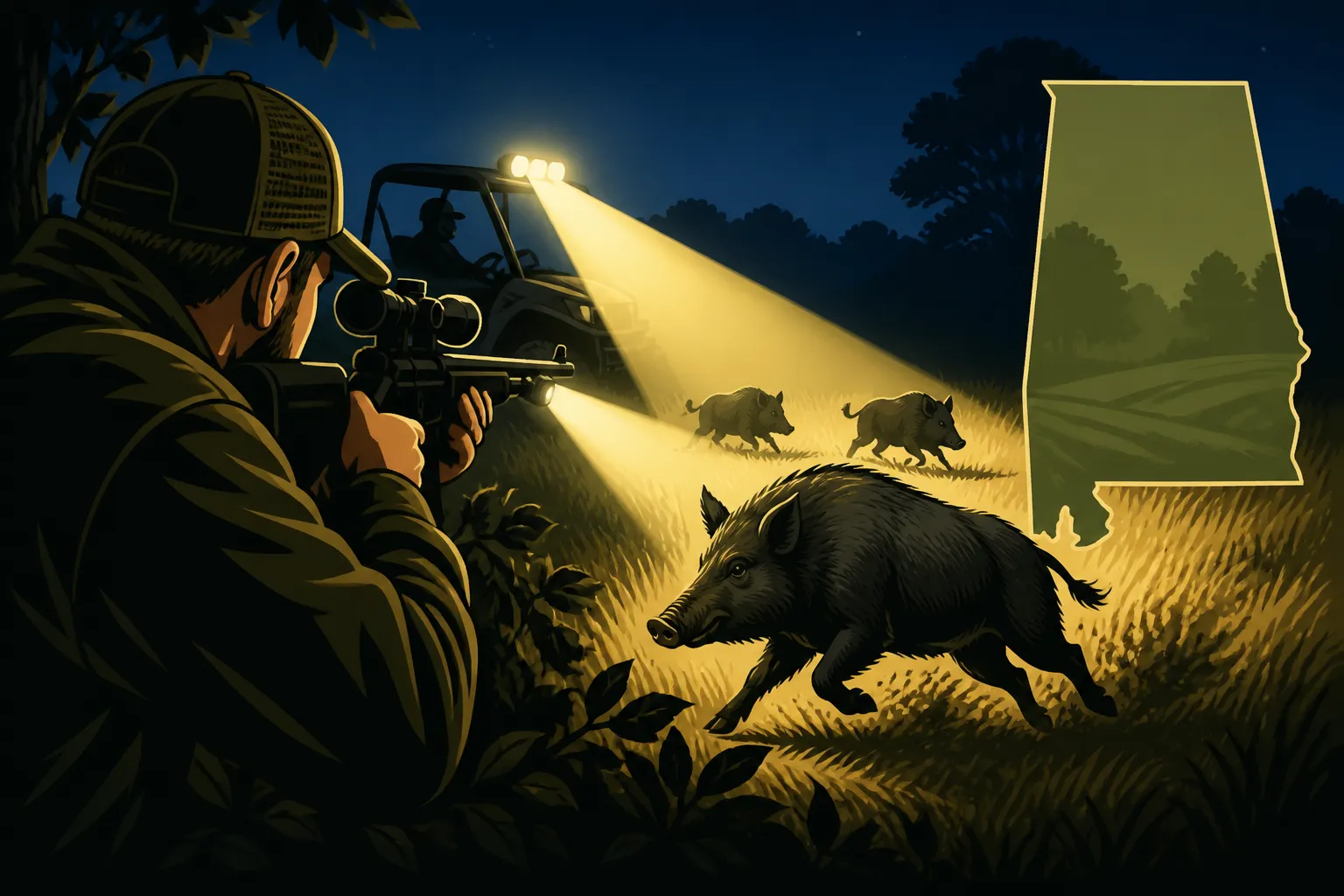
Furthermore, Alabama law allows the use of artificial lights, including spotlights, night vision devices, and thermal imaging equipment, for hunting feral hogs on private land. This is a game-changer for night hunting, as it allows hunters to effectively locate, identify, and dispatch hogs when they are most active. You're not limited to just visible light; thermal and night vision are powerful tools that give you a huge advantage against these nocturnal destroyers. Many hunters find that combining a powerful red or green light with a good rifle-mounted optic is incredibly effective for target acquisition. Remember, this applies specifically to private land. The rules for public land are often much stricter, typically prohibiting artificial lights for hunting. For a comprehensive overview of the broad rules, check out our guide on Alabama Feral Hog Regulations.
Permitting and Reporting Requirements
One of the great reliefs for landowners dealing with feral hogs is the minimal bureaucracy involved. In Alabama, you do not need a special permit to hunt feral hogs on your private land, nor do you need specific permission from the state to use lights at night for this purpose. The standard hunting license, if required for other species you might be targeting, is generally sufficient. However, for nuisance species like hogs, even a hunting license isn't always strictly required if you are the landowner, a family member, or someone with written permission acting as an agent of the landowner, and you are hunting on that private land. It’s always best practice to carry proof of land ownership or written permission.
There are also no mandatory reporting requirements for harvesting feral hogs on private land. This contrasts sharply with deer and turkey, which require immediate reporting through the Game Check system. This lack of reporting underscores the state's intent to encourage landowners to remove as many hogs as possible to mitigate their impact. While not required, some landowners keep their own records to track population trends and the effectiveness of their control efforts. Understanding Alabama's Year-Round Hog Rule on Private Land will give you even more confidence in your efforts.
Safe Distances and Property Lines
Even on your own private land, safety must always be paramount, especially when hunting at night. One of the most critical aspects of this is knowing and respecting your property boundaries. It's incredibly easy to misjudge distances and directions in the dark, and accidentally shooting onto a neighbor's property is a serious offense that can lead to legal trouble and strained relationships. Before you even think about night hunting, take the time during daylight hours to clearly mark your property lines, especially those bordering neighboring residences or high-traffic areas. Utilizing GPS apps like GoHunt or similar mapping tools can be invaluable for identifying property lines accurately, even in the darkest hours.
Additionally, be acutely aware of any structures, roads, or residences both on your property and adjacent ones. Alabama law dictates specific setback distances for discharging firearms near occupied dwellings or public roads. Even if you believe you have a clear shot at a hog, always confirm that your bullet will impact a safe backstop and will not travel beyond your property or toward any unsafe area. Communicate your hunting activities with neighbors if possible, especially if they are close by. A quick text or call can prevent misunderstandings and unnecessary alarm when they hear shots after dark.
Essential Gear for Successful Night Hog Hunting
Night hunting feral hogs is a specialized endeavor that requires specific gear to be both effective and safe. You can't just head out with your regular deer rifle and a flashlight; you need equipment designed to give you an edge in the dark. Investing in the right tools will not only increase your success rate but also significantly enhance your safety and enjoyment of the hunt.
Lighting Solutions: From Headlamps to Thermal
When it comes to seeing in the dark, you've got a spectrum of options, each with its own advantages.
- Visible Light (Spotlights & Weapon-Mounted Lights): These are the most common and often the most affordable. Many hunters prefer red or green lights, as hogs are believed to be less reactive to these colors than to white light. A powerful handheld spotlight is great for scanning and locating hogs, while a weapon-mounted light ensures your beam follows your aiming point. Lights from brands like GoHunt often get good reviews for their durability and long battery life in the field. Look for lights with adjustable brightness and beam patterns. A wide flood for scanning and a tight beam for target identification are ideal. The key here is to practice with your light setup to understand its throw, spill, and how it interacts with your optics.
- Night Vision Devices (NVDs): These amplify existing ambient light (starlight, moonlight) to create an image. They can be monoculars, binoculars, or rifle scopes. NVDs are excellent for observation and can be paired with an infrared (IR) illuminator to enhance visibility in very dark conditions. They allow you to see clearly without giving away your position with a visible light, which can be crucial for stalking wary hogs.
- Thermal Imaging Devices: These are perhaps the most revolutionary tools for night hunting. Thermal scopes and handheld units detect heat signatures, making hogs (and any other warm-blooded creature) stand out starkly against a cooler background, regardless of how dark it is or how much cover they are in. They are particularly effective for locating hogs in thick brush or open fields where traditional night vision might struggle. While often the most expensive option, thermal can drastically increase your success rate and greatly reduce the time spent trying to locate animals. The clarity and distance you can achieve with a good thermal unit are unparalleled. Our guide on Night Hog Hunting Light Rules in Alabama delves deeper into the specifics of what's allowed and popular.
Firearms and Ammunition Choices for Night Operations
Choosing the right firearm and ammunition for night hog hunting is critical for humane kills and effective management. Hogs are tough animals, and a clean, ethical shot is paramount.
- Rifles: Semi-automatic rifles are very popular for hog hunting due to their capacity for quick follow-up shots on multiple animals. AR-style platforms chambered in calibers like .223/5.56, .300 Blackout, 6.5 Grendel, or 7.62×39 are excellent choices. For larger hogs or if you prefer a bolt-action, calibers such as .308, 6.5 Creedmoor, or .270 are highly effective. The key is to use a caliber powerful enough to humanely dispatch a hog, often weighing well over 150-200 pounds, with a single shot.
- Shotguns: While not as common for precision shots at distance, shotguns loaded with slugs can be devastatingly effective at closer ranges, especially in dense cover. A 12-gauge slug offers tremendous knockdown power.
- Ammunition: Choose expanding bullets designed for hunting. Soft points, ballistic tips, or bonded bullets that hold together and transfer energy efficiently are ideal. Avoid full metal jacket (FMJ) ammunition, which is designed for target practice and may not expand, leading to poor energy transfer and potentially wounded animals. The goal is maximum terminal performance to ensure a quick, humane kill. Always ensure your chosen ammunition is sighted in with your rifle and night optic setup during daylight hours, then re-verify after dark.
Optics and Ancillary Equipment
Beyond the primary light source, several other pieces of equipment will make your night hunts safer and more productive.
- Weapon-Mounted Optics: Whether it's a traditional scope with illuminated reticle, a dedicated night vision scope, or a thermal scope, having an optic that performs well in low light is crucial. Consider optics with large objective lenses for better light gathering or those specifically designed for digital night vision. An illuminated reticle is nearly a must-have, as a black crosshair can disappear against a dark background.
- Binoculars/Monoculars: Handheld night vision or thermal monoculars are invaluable for scanning the landscape without constantly raising your rifle. This reduces fatigue and allows for wider, quicker sweeps of an area, helping you locate hogs before they locate you. Many hunters use a handheld thermal scanner to find the hogs, then switch to a rifle-mounted night vision or illuminated scope for the shot.
- Support Gear: A good quality bipod or shooting sticks will provide a stable shooting platform, which is especially important for precise shots in the dark. A comfortable sling for your rifle, sturdy boots for navigating uneven terrain, and a quality headlamp with a red or green light option for navigating and blood trailing are also essential. Remember extra batteries for all your electronic devices – night hunting chews through power quickly!
| Equipment Type | Primary Use | Key Features for Night Hunting | Typical Price Range (Estimated) |
|---|---|---|---|
| Visible Light | Locating, targeting | Red/Green options, adjustable beam, weapon-mountable, durable | $50 – $300 |
| Night Vision (NVD) | Observation, target acquisition | Light amplification, IR illuminator compatibility, monocular/scope | $300 – $3,000+ |
| Thermal Imaging | Locating, target acquisition | Heat signature detection, all-dark performance, monocular/scope | $1,000 – $10,000+ |
| Rifle Scope | Precision shooting | Illuminated reticle, clear glass, adequate magnification | $150 – $1,500+ |
| Firearms (Rifle) | Ethical harvest | Appropriate caliber (.223, .308, etc.), reliability, capacity | $400 – $2,000+ |
| Ammunition | Ethical harvest | Expanding bullet type (soft point, ballistic tip), reliable performance | $20 – $50 per box |
| Bipods/Shooting Stk. | Stable shooting platform | Lightweight, adjustable height, quick deployment | $50 – $200 |
| Headlamp | Navigation, blood trailing | Red/green light option, multiple brightness settings, comfortable | $20 – $100 |
Strategies for Locating and Approaching Hogs at Night
Locating feral hogs at night can be a challenge, but with the right strategies and persistent effort, you can significantly increase your chances of success. Hogs are masters of concealment and possess incredible senses, making a thoughtful approach crucial.
Scouting for Nocturnal Hog Activity
Just because hogs are nocturnal doesn't mean your scouting stops when the sun goes down. In fact, understanding their nighttime movements is perhaps even more critical than their daytime patterns. During daylight, look for fresh rooting, wallows, rubs on trees, and tracks. Pay close attention to trails leading from dense cover to food sources, especially agricultural fields, oak groves, or creek bottoms. Hogs are creatures of habit, and if you find fresh sign, they'll likely be back.
Once you identify potential hot spots, use trail cameras that feature infrared or "no-glow" flash to monitor activity after dark. This will tell you when the hogs are moving and which trails they are using. Note the size of the sounder (a group of hogs), their direction of travel, and how consistently they visit specific areas. Thermal scouting during the day, even with a handheld unit, can help identify dense bedding areas where hogs might be resting, giving you a better idea of where they'll emerge at night. Apps like GoHunt can help you mark these locations with precision, allowing you to build a detailed map of hog activity on your property. This detailed scouting is key to effectively combating How Many Feral Hogs Alabama Has and how they move through specific areas like Which Alabama Counties Have the Most Hogs.
Setting Up for Ambushes and Stalking Techniques
Once you know where and when hogs are moving, you can formulate your hunting strategy.
- Ambushes: This involves setting up in a fixed position near a known travel corridor, food source, or bait site. Ground blinds or elevated stands can work well, but remember that hogs have an incredible sense of smell. Always approach your setup from downwind. Position yourself to have a clear shooting lane and a safe backstop. For night hunting, it's often better to be slightly elevated to help with visibility over small obstructions and to allow for a safer downward shot angle. If using a ground blind, ensure it's brushed in thoroughly and set up well in advance so hogs become accustomed to its presence.
- Stalking: This is a more active approach but requires extreme stealth and favorable conditions. Stalking is best done on calm nights with a slight breeze in your face, allowing you to move silently through the terrain. Use thermal optics to scan ahead, identifying hogs from a distance. Once located, plan your approach carefully, using terrain features and vegetation for cover. Move slowly, deliberately, and avoid breaking twigs or rustling leaves. The goal is to get within an effective shooting range without being detected. This method can be incredibly effective when hogs are scattered or moving unpredictably across large areas. It's often harder to do than it sounds, especially given Alabama's dense underbrush.
Using Bait Sites Effectively
Baiting is a highly effective tactic for concentrating hogs and making them predictable. In Alabama, baiting feral hogs on private land is perfectly legal.
- Choosing a Site: Select a bait site away from residential areas and property lines, in a relatively open area that still offers some cover for your approach. Consider accessibility for replenishing bait.
- Bait Material: Corn is the most common and effective bait, but you can also use soured grain, commercial hog attractants, or even discarded fruit and vegetables. A popular tactic is to use a gravity feeder or a "hog pipe" (a PVC pipe with holes drilled in it) that slowly dispenses corn. This keeps the hogs coming back and minimizes the amount of bait you need to put out at once.
- Establishing the Site: Start by scattering a good amount of bait to get hogs interested. Once they begin visiting regularly, you can switch to a more controlled feeding method. Be patient; it might take several days or even a week for hogs to find and consistently visit a new bait site. Once established, try to keep the bait fresh. We have a detailed guide on Building and Freshening a Hog Bait Site that can provide even more specialized advice. Remember, you might also have to deal with other animals like raccoons or deer, but the hogs will typically dominate a food source once they find it.
Ethical Considerations and Safety Protocols
Night hunting, while effective, introduces unique ethical and safety considerations that require extra diligence. The low visibility and high excitement can lead to mistakes if proper protocols aren't strictly followed.
Positive Identification and Shot Placement
This is perhaps the most critical ethical and safety point in night hunting. In the dark, it can be incredibly difficult to positively identify your target. Always, always ensure you have a clear, unmistakable identification of a feral hog before taking a shot. Never shoot at a "sound," a "movement," or an "unidentified shape." Thermal and night vision help immensely here, but even with advanced optics, take your time. Ensure no other animals (especially deer, which are protected game species) or even people are in your shooting lane or background.
Once you've positively identified your target as a hog, aim for a humane kill. The preferred shot placement for hogs is typically the ear-to-eye region (brain shot) or a shot directly behind the ear into the neck. These shots often result in an instantaneous kill, preventing the animal from suffering or escaping wounded into the darkness. While a shoulder shot can also be lethal, the brain or spine shot is often more reliable for anchoring a hog quickly. This is especially important for night hunting when tracking a wounded animal can be particularly challenging. Our guide on Shot Placement on a Feral Hog offers more detailed anatomical insights.
Handling Post-Shot Scenarios in the Dark
The moment after the shot is often when things get tricky at night. If the hog drops immediately, great! But often, they will run a short distance, or even appear to run off, only to collapse silently.
- Wait and Listen: If the hog doesn't drop immediately, stay put for a few minutes and listen. Pay attention to any sounds of crashing, squealing, or heavy breathing. Mark the spot where the hog was standing when you shot and its last known direction of travel.
- Tracking with Caution: Once you decide to track, proceed slowly and cautiously. Use a powerful white light headlamp for tracking, looking for blood, disturbed earth, or broken vegetation. A red or green light for actual hunting, but white light is usually superior for blood trailing. Hogs are notoriously tough and can be dangerous when wounded, so approach any downed animal with extreme care. Always assume it's still alive until you've confirmed otherwise. Use a stick or your rifle muzzle to poke the animal from a distance before approaching closely. For detailed information, check out our resource on Handling a Hog After the Shot.
- The Importance of a Follow-Up Shot: If the hog is still alive, be prepared to deliver a quick, humane follow-up shot. Never assume a hog is dead just because it's lying still.
Communicating with Hunting Partners
If you're hunting with a group, clear and consistent communication is non-negotiable. Establish clear rules and protocols before you ever head out.
- Designated Roles: Assign roles: who will be scanning, who will be shooting, who will be backing up.
- Verbal Cues: Use clear verbal commands or hand signals (if visible) to communicate sightings, shot opportunities, and status updates. For example, "Hogs at 100 yards, moving left," or "Clear to shoot."
- Safe Lanes: Discuss safe zones of fire and shooting lanes for each hunter. Never swing your muzzle across another hunter.
- Pre-Planned Rendezvous: Have a pre-determined rendezvous point in case you get separated or need to regroup. Ensure everyone has a reliable two-way radio or cell phone (if service is available). Consider using walkie-talkies with headsets for discreet communication.
- Emergency Plan: Always have an emergency plan, including contact information for local authorities and medical services, and know how to describe your location accurately (GPS coordinates are best).
Maximizing Your Efforts: Advanced Tactics and Ongoing Management
Night hunting is a powerful tool, but it's most effective when integrated into a broader management strategy. Think of it as one piece of a larger puzzle to gain control over the destructive feral hog populations on your property.
Integrating Night Hunting with Trapping Programs
One of the most effective strategies for long-term hog control is to combine night hunting with trapping. Night hunting can quickly remove individual hogs or small sounders, especially the wary ones that avoid traps. However, trapping is unparalleled for removing entire sounders, including the breeding sows and piglets, which is crucial for making a real dent in the population.
- Complementary Approach: Use night hunting to target hogs that are trap-shy or to quickly address new incursions. Use trapping for sustained, high-volume removal. You might use night hunting pressure to push hogs towards areas where you have traps set.
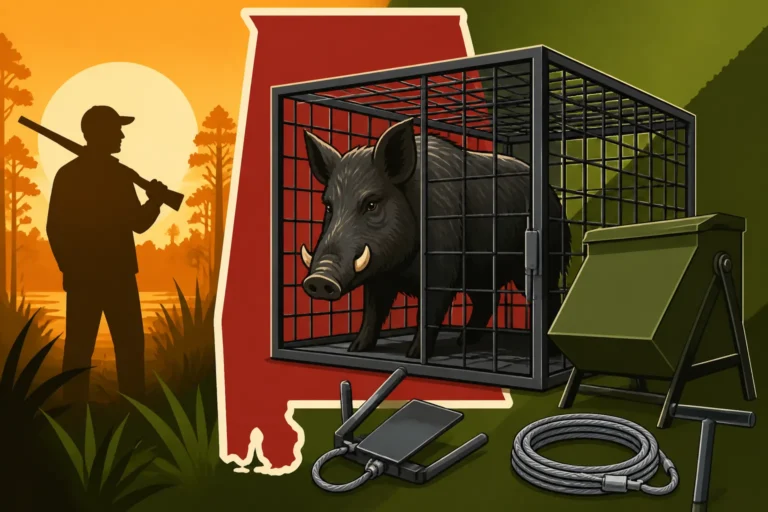
- Trapping Systems: Modern corral traps with remote triggering systems (often activated via cell phone) are highly efficient. Bait your traps with corn, just as you would for hunting. Pre-baiting for several days or even a week before setting the trap to catch the entire sounder at once is a proven method.
- Benefits of Integration: This combined approach provides a multi-pronged attack. If hogs become wary of traps in one area, you can hit them with night hunting in another. Conversely, if hunting pressure makes them more nocturnal and difficult to approach, trapping can still be effective. This integrated strategy gives you the flexibility to adapt to changing hog behavior. Our detailed guide on Trapping Alabama Feral Hogs offers a deep dive into trap selection and techniques.
Utilizing Technology for Better Reconnaissance
Modern technology offers an incredible advantage in the ongoing battle against feral hogs. Beyond trail cameras and GPS, there's even more you can leverage.
- Mapping Applications: Tools like GoHunt or OnX Hunt are indispensable. They allow you to accurately map out property lines, known hog trails, bait sites, bedding areas, and ambush points. You can also track your movements, mark locations of downed hogs, and analyze patterns over time. This data is invaluable for refining your strategies.
- Drones with Thermal Cameras: While using drones for direct hunting is generally illegal, they can be incredibly useful for scouting. Flying a drone with a thermal camera over large agricultural fields or dense timber can quickly pinpoint areas of hog activity before you even step foot on the ground. This saves time and effort, allowing you to focus your hunting efforts more precisely. Always check local and federal drone regulations before deployment.
- Acoustic Locators: Some hunters are experimenting with acoustic listening devices or specialized microphones to detect hog vocalizations (grunts, squeals) from a distance. While not as common as thermal, these can be another layer of detection in very dense cover where visual contact is difficult.
Dealing with Harvested Hogs
Harvesting feral hogs is just one part of the equation; properly handling the animal after the shot is equally important.
- Field Dressing: Unless you plan to take the hog directly to a processor, field dressing (removing the entrails) as quickly as possible is crucial, especially in Alabama's warm climate. This helps cool the carcass and prevents spoilage. Carry disposable gloves, a sharp knife, and game bags.
- Processing: Feral hog meat is excellent table fare, but it's important to process it correctly. If you're butchering it yourself, ensure you have the necessary tools and knowledge. Many local processors will handle hogs for a fee. Be aware of the potential for parasites like Trichinella (though rare in the South). Always cook feral hog meat thoroughly to a safe internal temperature of 160°F (71°C).
- Disposal: If you don't plan to keep the meat, proper disposal is essential. Burying the carcass or taking it to an approved disposal site are common options. Never leave carcasses in open areas where they can attract other nuisance animals or create public health concerns. When hunting multiple hogs, having a plan for transportation, such as a sturdy game cart or an ATV with a trailer, becomes very important.
Common Challenges and Troubleshooting
Even with the best gear and strategies, night hunting feral hogs isn't always straightforward. Hogs are smart, adaptable, and the darkness itself presents unique challenges. Being prepared for these difficulties can mean the difference between a successful hunt and a frustrating night.
Dealing with Wary or Educated Hogs
As hunting pressure increases, hogs become more wary and educated. They learn to avoid lights, human scent, and areas where they've encountered traps or hunters before.
- Change Up Your Tactics: If hogs stop coming to bait, remove the bait for a while and try still-hunting or stalking. If they're avoiding certain areas, find their new patterns by intense scouting. Sometimes, just changing your approach route or the type of bait can make a difference.
- Reduce Human Scent: Hogs have an incredible sense of smell. Always approach your hunting areas from downwind. Use scent-eliminating sprays on your clothing and gear. Store your hunting clothes separately from everyday clothes. Even a slight human odor can alert a sounder from a considerable distance.
- Minimal Pressure: Try to exert minimal pressure during your initial scouting or setup phases. The less you disturb an area, the more likely hogs are to feel safe returning. This also includes quiet entry and exit from your hunting spots. Using thermal for initial scans means you don't have to shine a visible light, giving you a stealthier approach.
- Patience is Key: Sometimes the best strategy is simply patience. Let the area rest for a few days or a week, and the hogs might resume their previous patterns once they feel the pressure has lifted.
Weather Impacts on Night Hunting
Alabama weather can be fickle, and it significantly impacts night hunting success and safety.
- Rain and Fog: Rain can be a mixed blessing. A light drizzle can muffle your sounds, aiding a stalk. However, heavy rain significantly reduces visibility, even with night vision or thermal, and can wash away tracks. Fog is generally detrimental, obscuring targets and making identification nearly impossible. Avoid hunting in dense fog.
- Wind: A steady wind is your best friend for scent control but can also make it difficult to hear approaching hogs. High winds can also make it harder to shoot accurately and create too much ambient noise. Always hunt with the wind in your favor, blowing your scent away from where you expect hogs to be.
- Temperature: Cooler temperatures generally mean more active hogs, as they don't have to contend with intense heat. In warm weather, hogs might move even more in the deepest hours of the night, or spend more time wallowing. Be prepared for any temperature with appropriate clothing to stay comfortable and focused. Remember, warm weather also means you need to field dress and cool your harvested hogs even faster to preserve the meat.
Equipment Failures and Preparedness
Relying heavily on electronics in the dark means you need to be prepared for equipment to fail.
- Batteries, Batteries, Batteries: This cannot be stressed enough. Carry multiple sets of spare batteries for every electronic device: your rifle light, thermal scanner, night vision scope, rangefinder, and headlamp. Cold weather can reduce battery life, so factor that in.
- Backup Systems: Have a backup plan for your primary light and optic. If your thermal scope goes down, can you still hunt with a powerful visible light and a good illuminated reticle? Carry a backup headlamp.
- Tool Kit: A small tool kit with screwdrivers (for optics adjustments or battery changes), electrical tape, and zip ties can be a lifesaver for minor field repairs.
- Practice with All Gear: Practice using all your equipment in various conditions, including total darkness. Understand how to quickly change batteries, adjust settings, and transition between different devices. The last thing you want is to be fumbling with unfamiliar gear when a sounder of hogs suddenly appears. Being proficient with your gear is part of being prepared to safely and effectively participate in Night Hunting Hogs With Lights on Private Land.
Disclaimer
Please note: Hunting regulations can change. It is the responsibility of every hunter to check the most current Alabama Department of Conservation and Natural Resources (ADCNR) regulations before heading afield. This guide is for informational purposes only and should not be considered legal advice.