Hunting the Zone 1 Turkey Opener
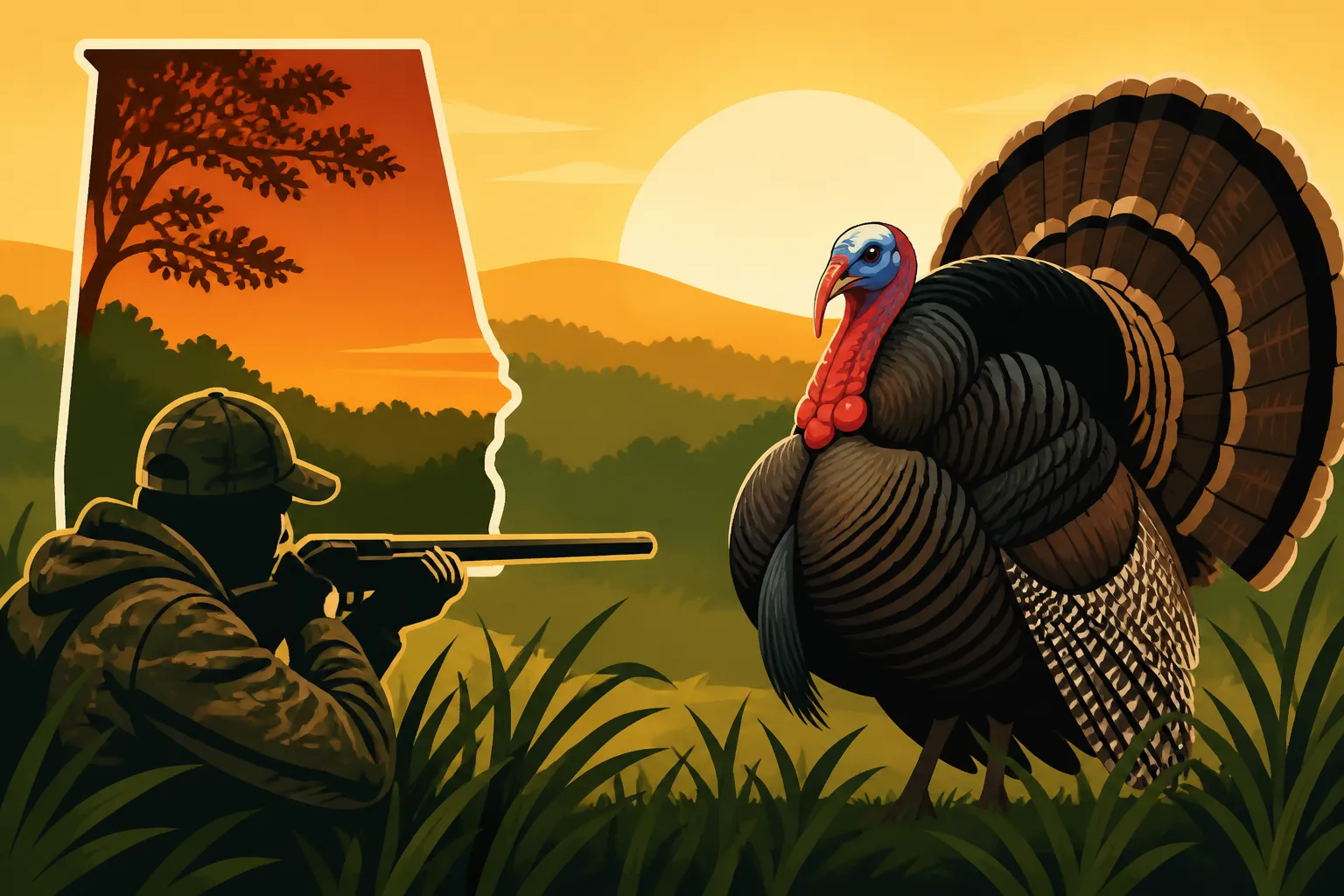
The pre-dawn chill of an Alabama spring morning, the woods slowly waking up, and that first booming gobble echoing through the timber—there’s nothing quite like the excitement, and sometimes the pure frustration, of the Zone 1 turkey opener. For many of us, it feels like an eternity waiting for that first legal day, only to find the gobblers can be as unpredictable as a late-season cold front. This guide is all about helping you understand the unique challenges and opportunities that come with hunting Alabama's earliest turkey season, giving you the insights and tactics you need to punch your tag when those wary longbeards hit the ground.
Understanding Alabama's Zone 1 Turkey Opener Dynamics
Alabama's spring turkey season is a highly anticipated event, and for those in Zone 1, it kicks off earlier than anywhere else in the state. This early start brings with it a specific set of circumstances, from weather patterns to the birds' biological rhythms, that every hunter needs to grasp to be successful. Ignoring these dynamics is like trying to hunt ducks in July—you're just setting yourself up for disappointment.
Specific Dates and Geographic Areas
Zone 1, often referred to as the "North Zone," typically opens in mid-March, sometimes even the second Saturday of the month, making it the earliest start for spring turkey hunting across Alabama. This zone encompasses the majority of the northern half of the state. Think of counties north of Interstate 20 or Highway 278, stretching all the way up to the Tennessee line. Specifically, this includes counties like Lauderdale, Colbert, Limestone, Madison, Jackson, Franklin, Lawrence, Morgan, Marshall, DeKalb, Winston, Cullman, Blount, Etowah, Cherokee, Marion, Lamar, Fayette, Walker, Jefferson, St. Clair, Calhoun, Cleburne, Pickens, Tuscaloosa, Bibb, Shelby, Talladega, Clay, Randolph, Greene, Hale, Perry, Sumter, and Marengo.
It's absolutely critical to confirm the exact dates each year, as they can shift slightly. You can always find the official dates on the Alabama Department of Conservation and Natural Resources (ADCNR) website, or by consulting the latest hunting regulations booklet. Knowing these specific boundaries is more than just academic; it dictates when you can actually be in the woods, gun in hand, calling a gobbler. Misinterpreting the zone lines can lead to legal issues, so make sure your hunting grounds fall squarely within the designated Zone 1 boundaries. This early opening means that hunters in Zone 1 get a jump on the rest of the state, but it also means dealing with birds that are just beginning to feel the full effects of spring fever. For a detailed breakdown of the state's zones, check out Alabama Spring Turkey Zones and Dates.
The Unique Early Season Mindset of Gobblers
Unlike the later parts of the season when gobblers might be more spread out or "henned up," the Zone 1 opener often catches birds right at the cusp of peak breeding activity. This can be a double-edged sword. On one hand, gobblers are full of vigor, eager to establish dominance and find hens. Their gobbling activity can be intense, especially right off the roost. On the other hand, those hens are often still very receptive to breeding, which means gobblers frequently have real hens with them from the moment they fly down.
This "henned up" phenomenon is a significant challenge for opening day hunters. A gobbler might answer your calls enthusiastically from the roost, even fly down into your general area, but if he's got two or three real hens clucking and purring around him, your synthetic calls often stand little chance. He's got the real deal right there! Your strategy needs to pivot from trying to pull him away from hens to trying to lure the hens past you, hoping the gobbler follows. Sometimes, they just flat-out ignore you as they parade around with their real girlfriends. The weather also plays a huge role; early season can still see frosty mornings or even late-winter cold snaps, which can dampen gobbling activity and keep birds a bit more scattered or focused on food sources.
Navigating Regulation Nuances for Zone 1
Alabama's turkey regulations are generally consistent statewide, but there are a few nuances that are particularly important for the Zone 1 opener. The most critical one, and often a surprise to new hunters, is the no-decoy rule for the first ten days of the season. Yes, that's right – for the entirety of Zone 1's opening weekend and then some, you cannot legally use artificial decoys. This rule is designed to reduce the risk of mistaken identity, especially during the early season when birds might be less wary.
This means your setup strategy must be entirely different than if you were hunting later in the season. You'll rely solely on your calling, camouflage, and understanding of the terrain. Furthermore, always be mindful of the bag limits. Alabama generally allows one gobbler or bearded hen per day, and a total of four during the combined fall and spring seasons, with a maximum of two for the spring season. However, always check the current year's regulations for any changes or specific WMA rules. Don't forget the mandatory harvest reporting through the Game Check system; it's a critical part of our state's wildlife management. Understanding these rules, especially the decoy prohibition, is paramount for a safe and legal hunt. For more details on statewide limits, consult Alabama Turkey Bag Limit Rules.
Strategic Pre-Season Scouting for Opening Day Advantage
You wouldn't show up for a final exam without studying, right? The same goes for turkey hunting the Zone 1 opener. Pre-season scouting isn't just a suggestion; it's practically mandatory if you want to increase your odds of success. Early season gobblers are creatures of habit, but they're also wary, and knowing their patterns before they're bombarded by hunting pressure is your biggest ace in the hole.
Identifying Prime Roosting Locations
The absolute cornerstone of early season turkey hunting is knowing where the birds roost. Gobblers are predictable when it comes to bedding down for the night, often favoring tall pines or mature hardwoods on ridges overlooking creek bottoms, or sometimes even isolated stands of timber in open fields. Your goal during scouting is to locate these specific trees or clusters of trees. This isn't about hearing a bird gobble in December; it's about seeing where they actually spend the night.
How do you do this without disturbing them too much? Early morning or late evening trips to likely areas a week or two before the opener are ideal. Listen for fly-up cackles at dusk and gobbling from the limb at first light. More importantly, look for physical evidence. Droppings, primarily the large, J-shaped droppings of gobblers, accumulation of feathers, and even disturbed pine needles directly under a particular tree can tell you a lot. A good pair of binoculars can help you spot birds silhouetted against the sky at last light. Once you've identified a likely roost, mark it on your map or GPS. Knowing where a bird is likely to spend the night allows you to set up well before dawn, giving you the best chance to intercept him as he flies down. Finding a reliable roost site is key to Roost Hunting Alabama Gobblers.
Locating Core Areas and Daily Travel Routes
Beyond the roost, understanding where gobblers spend their daytime hours and how they move between different areas is critical. Early season turkeys are often still in larger winter flocks, or just beginning to break up into smaller groups of gobblers and hens. Look for areas with good cover, proximity to water, and importantly, food sources. Fresh green-ups, clover plots, or areas with remaining acorns from the previous fall can all draw birds.
Focus on terrain features that naturally funnel movement: creek bottoms, logging roads, old clear-cut edges, and saddles between ridges. Turkeys, like most wildlife, prefer the path of least resistance. Look for tracks in soft dirt or mud, dusting bowls where they've preened their feathers, and fresh scratch marks in the leaves. These signs indicate not just that turkeys are present, but that they are actively using these areas. Pay attention to how gobblers might move from a roost site to an open field to strut, or how they traverse a ridge line to meet hens. These are your potential ambush points once the bird hits the ground.
Utilizing Technology for Scouting (GoHunt mention)
In today's world, technology has become an invaluable tool for pre-season scouting, especially for those of us trying to maximize limited time off work. Mapping apps like GoHunt can be a game-changer. With GoHunt, you can overlay property lines, topo maps, and satellite imagery, allowing you to identify potential roost sites, travel corridors, and strutting zones right from your couch. You can mark waypoints for everything from fresh tracks to potential setup spots, measure distances, and even identify subtle changes in elevation that could create natural funnels.
Using GoHunt's satellite view, I often look for stands of mature timber that are slightly higher than the surrounding area, indicating good roosting potential. Then, I cross-reference that with topo lines to see if there's an easy path for birds to get down to a nearby field or open hardwood flat. It helps you prioritize your boots-on-the-ground scouting, focusing on the most promising areas rather than just wandering aimlessly. Additionally, many of these apps allow you to download maps for offline use, which is a lifesaver when you're deep in the woods where cell service is non-existent. For deeper public land insights, GoHunt also has layers that show public land boundaries, which is essential for Scouting Alabama Public Land Before Season.
Opening Morning Playbook: From Roost to Shot
The alarm goes off, the coffee's brewing, and the truck is packed. Opening morning is here, and your preparation is about to be put to the ultimate test. How you approach those critical pre-dawn hours and the first moments of legal light can make or break your hunt.
The Art of the Pre-Dawn Set-Up
Getting to your spot well before first light is non-negotiable for the Zone 1 opener. Aim to be in position at least an hour, preferably an hour and a half, before official sunrise. This gives you ample time to navigate in the dark, find your chosen setup, and settle in without making a ruckus. If you've scouted a roost, you want to be within easy hearing distance of that gobbler but not so close that you might bump him off the limb. Often, 100-200 yards from the actual roost tree is a good starting point, depending on the terrain.
Your setup location needs to offer three things: good visibility, a clear shooting lane in the direction you expect the bird to come from, and a solid backrest. A big oak, a thick pine, or a fallen log can all provide the necessary cover and comfort. Remember, you're going to be still for a long time. Clear any leaves or twigs from under your feet to avoid making noise if you shift position. Since decoys are out, your camouflage, stillness, and patience are your best friends. Visualize the gobbler flying down and walking toward you, and set yourself up to intersect his most likely path. For prime public land spots, think about Setting Up Against a Big Oak near a known roost.
Calling Gobblers Off the Roost Effectively
The first calls you make as light begins to break are some of the most crucial of the entire hunt. You don't want to overdo it, but you also want to let that gobbler know a lonely hen is in the area. Start with soft, sleepy tree yelps and clucks. Mimic a hen waking up on the limb, not aggressively demanding attention. Wait for the gobbler to respond. If he gobbles, wait a few minutes before calling again, letting him get frustrated and eager to find you.
The goal isn't necessarily to call him off the roost directly to you, especially if he's with hens. It's more about confirming his location and keeping him engaged. Once he flies down, often with hens, your calling strategy will need to adapt. If he's alone, you can be a bit more aggressive. If he's got hens, your calls should be very soft, almost coaxing. You want to make those hens jealous, not alert the gobbler to danger. A critical skill is being able to gauge how "hot" the bird is and adjusting your calling tempo and volume accordingly. Don't be afraid to go quiet for a long stretch; sometimes silence is the best call of all. This is where mastering Calling an Alabama Gobbler Off the Roost really pays off.
Decoy Setups and Timing in Early Season
Here’s the critical reminder: for the Zone 1 opener, decoys are strictly prohibited for the first ten days of the season. This is a non-negotiable regulation that all Alabama turkey hunters must adhere to. Using decoys during this period can result in fines and loss of hunting privileges.
So, how do you manage without them? You lean even harder into your scouting, calling, and concealment. Your setup becomes even more crucial. You need to be in a spot where the gobbler can’t see you setting up, and where you have a clear shot when he finally commits. Good camo, a comfortable backrest, and absolutely minimal movement are paramount. You’ll rely on your calls to paint a picture in his mind – the sound of a lonely hen, the urgency of a ready hen, or the soft contentment of a hen feeding. Your goal is to make him believe a real hen is just out of sight, and his curiosity (or desire) will draw him closer. While you won't be setting them up, understanding Decoy Placement Once the Ten-Day Rule Lifts can help you visualize how birds might react to a hen presence, even a purely vocal one.
Adaptive Calling Strategies for Finicky Opener Gobblers
Early season gobblers can be notoriously "call shy" one moment and incredibly responsive the next. The trick isn't just knowing how to make turkey sounds, but when to make them, and more importantly, what kind of sound to make. It’s a constant dance, and the gobbler often leads.
Reading the Bird: Matching Call Volume and Aggression
A gobbler's response, or lack thereof, tells you everything. Is he gobbling hard and close, cutting off your calls? Or is he distant, only responding occasionally with a half-hearted gobble? This dictates your next move. If a gobbler is hammering every time you cluck, he's hot, but you might not need to call aggressively. Sometimes, the less you call, the more impatient he becomes. A few soft yelps, then silence, can often seal the deal. If he's gobbling consistently from the same spot, he might be "hung up," waiting for the hen to come to him. This is when you might try a slight change in position, or even go completely quiet for 15-20 minutes to make him wonder where that hen went.
Conversely, if a gobbler is distant and only responding with long pauses, he might need more convincing. A series of louder, more excited yelps and cuts, perhaps even simulating a fly-down cackle (even if you're on the ground), can sometimes pique his interest and encourage him to investigate. It's about finding that sweet spot between enticing him and overwhelming him. Think of it like a conversation; you don't want to monopolize it, but you also don't want to bore your partner.
The Power of Subtle Clucks and Purrs
While loud yelps and cuts get a lot of attention, the soft, subtle sounds are often what ultimately brings a wary gobbler those last critical yards, especially on opening day. A soft cluck can sound like a contented hen, signaling to a gobbler that the coast is clear and there's a relaxed female nearby. Purrs, almost imperceptible to the human ear at a distance, are sounds of ultimate contentment and can often be the final push that closes the distance.
These calls are particularly effective when a gobbler is hung up at 80-100 yards, just outside of gun range, maybe strutting and looking for you. He knows you're there, but he's cautious. A few soft clucks or a quiet purr can convince him to take those last few steps. It tells him, "I'm still here, I'm happy, and I'm not moving." This can be incredibly frustrating to employ because it requires immense patience and discipline to resist the urge to hammer him with louder calls. But time and again, a soft cluck can seal the deal where aggressive yelping just spooks the bird.
When to Go Silent and Let Them Work
This is arguably the hardest, yet most effective, calling strategy for early season gobblers. We're wired to call, to make noise, to communicate. But sometimes, a gobbler just needs to be left alone to make his own decision. If a bird is gobbling hard and heading your way, or if he's hung up at a distance, sometimes the best thing you can do is shut up.
Why does this work? It plays on their natural instinct. Gobblers expect hens to come to them. If you call, and then go silent, the gobbler might think the hen is moving away, or that she's just a little shy. This can ignite his curiosity or his drive to find that "lost" hen. Often, after a period of silence, a gobbler will start gobbling again, maybe even closer, hoping to elicit a response. That's your cue to make one or two very soft calls, then go silent again. It’s a chess match, and patience is your most powerful piece. This strategy is especially useful when hunting areas with Hunting Pressure on Alabama Public Land, where birds might be more wary of constant calling.
Overcoming Opening Day Challenges on Public and Private Land
Whether you're hunting vast national forest lands or a small private tract, the Zone 1 opener brings its own set of challenges beyond just the birds themselves. Other hunters, difficult terrain, and the sheer unpredictability of wildlife all factor into your success.
Mitigating Hunter Pressure on Public Lands
Let's be real: opening day on Alabama's public lands can feel like a turkey hunting convention. Everyone has waited all year, and everyone wants that first bird. This means increased competition, more vehicles on forest roads, and potentially more birds getting spooked. The key to mitigating this pressure is to do what others won't.
First, walk further. Most hunters won't venture more than a quarter to half-mile from their vehicle. If you're willing to put in the legwork and push a mile or two back into a wilderness area or WMA, you dramatically increase your chances of finding unpressured birds. Use topo maps and satellite imagery to identify deep creek drainages, remote ridge systems, or dense thickets that act as natural barriers, discouraging casual hunters. GoHunt can be invaluable here for identifying these overlooked pockets. Second, hunt midday. While everyone focuses on the early morning fly-down, many hunters pack it up by 9 or 10 AM. Often, after being pressured in the morning, gobblers will regroup and become more active later in the day, especially if they haven't found any hens. A savvy hunter can sometimes sneak in and call a midday bird that has settled down. Finally, don't be afraid to leave and re-scout. If your initial spot is bust due to pressure or quiet birds, pack up and move to a completely different area. Sitting in a dead spot won't put a bird in your vest. Consider how Run-and-Gun Turkey Tactics on Public Land can be adapted to deal with opening day crowds.
Dealing with Multiple Toms and Hens
Sometimes, you get lucky and find multiple gobblers, or a gobbler with a whole harem of hens. While exciting, this scenario presents its own tactical difficulties. If there are multiple gobblers, they might compete with each other, but they're also less likely to commit if they feel safe in numbers. They might gobble and strut for each other, waiting for the "hen" (you) to come to them.
The challenge of "henned up" gobblers is arguably the toughest. When a gobbler has live hens around him, your artificial calls often sound inferior. Your best bet is to become the "boss hen" or the "new hen on the block." Use soft, seductive clucks and purrs to try and draw the real hens past you. If you can get the hens curious enough to come investigate, the gobbler will almost always follow. This requires extreme patience. You're not calling to the gobbler as much as you're calling to the hens. Alternatively, if the terrain allows, you might try a tactic of leaving and circling far around the flock, trying to get ahead of their likely travel route and set up an ambush where the gobbler might eventually pass without his hens.
Post-Shot Tracking and Ethical Recovery
You've made the perfect call, executed a flawless setup, and finally, that longbeard steps into range. The shot rings out. Now what? Your job isn't over until that bird is recovered. If the bird drops immediately and is flopping, approach cautiously, reload, and secure the bird. However, if the bird runs or flies off, mark the spot where you last saw it. This is critical. Pick a tree, a rock, anything distinctive.
Then, wait. Give the bird at least 15-20 minutes, sometimes longer, especially if you're unsure of the shot placement. This allows the bird to expire and stiffen up, making it easier to find. Begin your search at the spot you marked, looking for feathers, blood, or any disturbance in the leaves. Turkeys can be surprisingly tough and can cover significant distance even with a fatal wound. Follow any sign meticulously. If you lose the trail, expand your search in concentric circles. Look for natural escape routes like thick cover or creek bottoms. It's an ethical imperative to recover any animal you shoot, and giving it time is often the best recovery strategy. This process is very similar to Tracking a Deer Through Alabama Pine Straw, just on a smaller scale.
| Zone 1 Turkey Opener Key Regulations | Detail | Notes |
|---|---|---|
| Opening Date | Mid-March (confirm annually via ADCNR regulations) | Earliest turkey season opener in Alabama. |
| Geographic Area | Generally the northern half of Alabama, north of I-20/Hwy 278. Consult official maps for county-specific boundaries. | Know your county's zone to ensure legal hunting. |
| Decoy Usage | PROHIBITED for the first 10 days of the season. | Critical regulation! Rely on calling, camo, and concealment. |
| Daily Bag Limit | One gobbler or bearded hen per day. | Standard statewide daily limit. |
| Season Bag Limit | Two gobblers or bearded hens for the spring season, not to exceed four combined fall and spring. | Ensure you track your harvests. |
| Legal Hunting Hours | 30 minutes before sunrise until sunset. | Don't start calling too early, or stay too late. |
| Mandatory Reporting | All harvested turkeys must be reported via Game Check within 48 hours. | Essential for wildlife management data. |
| Youth Season | Typically one week prior to the regular Zone 1 opener for licensed youth hunters (under 16). Dates vary. | A great opportunity for younger hunters. See Hunting the Zone 1 Youth Turkey Weekend. |
Disclaimer
This guide is intended for informational purposes only and does not supersede official Alabama Department of Conservation and Natural Resources (ADCNR) hunting regulations. Hunters are responsible for knowing and adhering to all current state and federal laws. Always consult the latest ADCNR hunting regulations before heading afield.