Greene County Public Hunting Ground
Trying to find prime public hunting land, especially in a region as legendary as Alabama's Black Belt, can feel like searching for a needle in a haystack—or, more accurately, like trying to find an unpressured buck in a crowded pine thicket. Many hunters dream of the Black Belt's rich soil and the deer it produces, but the reality of access can be daunting. This guide will help you understand the public hunting opportunities available in Greene County, Alabama, a storied part of the Black Belt, and equip you with the strategies to make your public land hunts here a success.
Understanding Greene County's Hunting Landscape
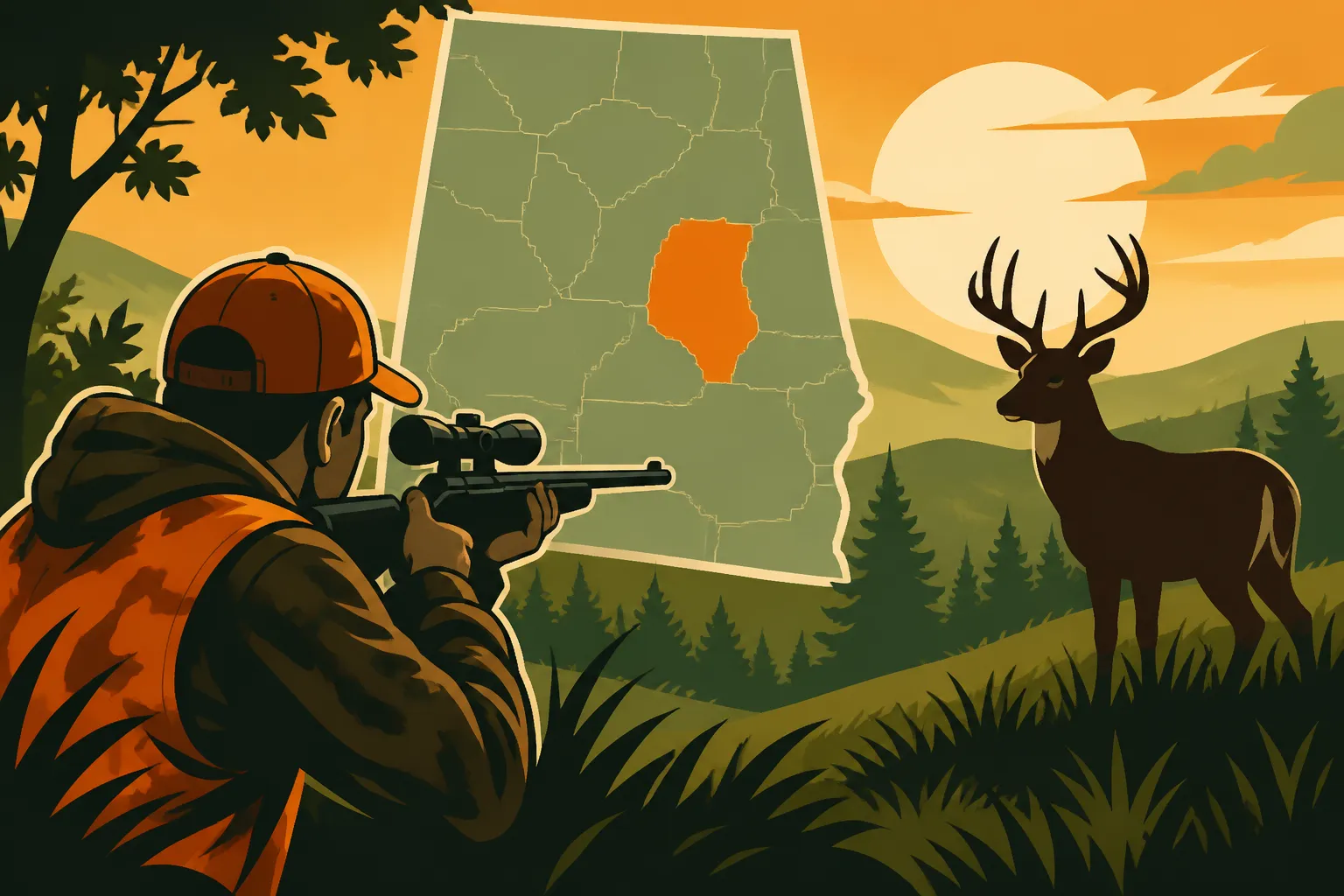
Greene County, nestled deep within Alabama's famed Black Belt, holds a special place in the hearts of many hunters. The "Black Belt" refers to a crescent-shaped band of fertile, dark soil that stretches across central Alabama, historically known for its agricultural richness. This very fertility is what creates some of the most sought-after deer habitat in the state, leading to a reputation for producing larger, healthier deer with impressive antlers. However, with that reputation comes the challenge of access, as much of this prime land is privately owned and tightly controlled by hunting clubs or leases.
The Allure of the Black Belt and Greene County's Place in It
When hunters talk about the Black Belt, they're often conjuring images of lush fields, mature hardwood bottoms, and abundant mast crops that fuel robust deer populations. The deep, dark soil of this region supports highly nutritious forage, which directly translates to bigger deer. It's a biological fact: better nutrition equals better body weights and antler development. For decades, hunters have flocked to this region, either through expensive leases or by forging relationships with landowners.
Greene County embodies much of this Black Belt allure. It's a place where the landscape still boasts those critical ingredients: fertile soils, diverse timber stands, and agricultural fields that provide year-round sustenance for wildlife. While much of it is indeed private, there are crucial parcels of public land that offer a chance to experience this unique hunting environment without the hefty price tag of a private lease. It's a different kind of challenge, certainly, but one that can be incredibly rewarding. You might not have exclusive access, but the opportunity to chase a Black Belt buck or gobbler on public dirt is certainly there if you're willing to work for it. Understanding the difference between Black Belt Versus Piedmont Deer can help set your expectations and strategies.
Public Hunting Opportunities in Greene County
While Greene County might not boast vast national forests like Bankhead or Talladega, it does offer significant public hunting opportunities primarily through its Wildlife Management Areas (WMAs). These areas are managed by the Alabama Department of Conservation and Natural Resources (ADCNR) to provide public access for hunting, fishing, and other outdoor recreation. It's vital to remember that WMAs operate under their own specific sets of rules and regulations, which can often differ from statewide regulations. Always, always check the WMA's specific hunt brochure before you even set foot on the property.
For Greene County, the main public land opportunities usually revolve around areas like the Sumter County WMA and Black Warrior WMA, which, despite their names, often have sections or adjacent lands that can be accessed from or near Greene County, depending on the specific boundaries and agreements. You'll need to study the WMA maps carefully to understand exactly where the public hunting lines are. These WMAs are typically a mix of hardwoods, pines, and some open areas, managed to support deer, turkey, and small game populations. They can be challenging, often experiencing considerable pressure, especially on opening weekends. But for the hunter who puts in the time to scout, hike, and learn the terrain, they can absolutely produce quality hunting experiences. Don't forget, Alabama Hunting Licenses and What They Cost is the first step before any hunt.
Navigating Greene County's Public Lands Effectively
Hunting public land successfully, especially in a high-demand area like the Black Belt, requires more than just showing up with your gear. It demands careful preparation, smart navigation, and a deep understanding of the local rules. Many hunters get frustrated because they treat public land like private property, expecting easy access and undisturbed game. The truth is, you need a different mindset and a robust toolkit to thrive.
Essential Tools for Scouting and Navigation
Gone are the days when a paper map and a compass were your only allies (though you should still carry them as backups!). Modern technology has revolutionized how we scout and navigate public land. GPS-enabled mapping apps are no longer a luxury; they're an essential part of a public land hunter's arsenal. Brands like onX Hunt and GoHunt provide invaluable satellite imagery, property line overlays, and public/private land distinctions that are crucial for staying legal and efficient.
Imagine sitting at home, virtually scouting miles of WMA land in Greene County. You can identify pinch points, potential bedding areas, subtle ridge lines, and distant food sources without burning a drop of gas. You can mark potential stand sites, plan your entry and exit routes, and even identify areas that might be overlooked by other hunters due to difficult terrain or long walks. When you're finally in the woods, these apps act as a live GPS, showing your exact location relative to property boundaries, trails, and your saved waypoints. This precision is absolutely critical when hunting boundaries near private property. Remember, Scouting With the Outdoor Alabama App can also provide some useful WMA-specific information directly from the state.
| Feature | Description | Benefit for Greene County Hunting |
|---|---|---|
| Satellite Imagery | High-resolution aerial views of the landscape. | Identify timber types, clear-cuts, creek bottoms, and potential food plots. |
| Property Line Overlays | Clearly displays public and private land boundaries. | Ensures you stay legal, prevents trespassing, and helps find overlooked public pockets. |
| GPS Tracking | Shows your live location on the map. | Navigate confidently in unfamiliar terrain, find your stand in the dark, and track your path. |
| Waypoint Marking | Ability to drop pins for stand locations, rub lines, scrapes, and other sign. | Build a detailed map of deer activity over time, track scouting efforts, and plan future hunts. |
| Topographic Maps | Shows elevation changes, contours, and terrain features. | Locate funnels, saddles, and bedding areas that deer use, especially crucial in varied terrain. |
Understanding Regulations and Seasonal Considerations
Greene County falls under specific statewide regulations for deer, turkey, and other game, but as mentioned, WMA rules can layer on top of those. It’s absolutely paramount to read the latest Alabama hunting regulations and any specific WMA brochures before you hunt. This isn't just a suggestion; it's a legal requirement. These brochures will outline everything from season dates (which might differ from the broader Alabama Deer Season Structure Explained or Alabama Spring Turkey Zones and Dates), bag limits, legal weapons, hunting hours, and specific rules regarding things like ATV use, stand placement, and even whether you can use decoys or electronic calls.
For example, a WMA might have an antlered-only season for a portion of its deer season, or a different harvest reporting requirement. Some WMAs require hunters to check in and out daily, or to use specific parking areas. Ignoring these rules, even unintentionally, can lead to fines, loss of hunting privileges, or worse. The hunting community in Alabama is close-knit, and respecting the rules and the land is part of our shared tradition. Always assume that game wardens are present and vigilant, and conduct yourself accordingly.
Strategies for Success on Greene County Public Ground
Hunting public land in the Black Belt can be incredibly rewarding, but it's rarely easy. It requires a different kind of effort than hunting on a well-managed private lease. You're competing with other hunters, navigating diverse terrain, and relying purely on your woodsmanship and scouting skills. However, with the right approach, you can absolutely punch tags and create lasting memories.
Identifying Key Habitat and Deer Movement Patterns
Deer in Greene County, whether on private or public land, are looking for the same things: food, water, and cover. Your job is to find the best combinations of these elements on public ground, often in areas that are harder to reach or less obvious to the casual hunter.
- Food Sources: In the Black Belt, acorns are king during the fall. Look for stands of mature oak, especially white oaks, which deer prefer. Creek bottoms and river edges often hold concentrations of oaks. Beyond acorns, consider browse—young shoots and leaves that deer feed on. Clear-cuts or areas that have recently undergone prescribed burns can offer a flush of new growth. Farmers' fields, if bordering public land, can also be major draws, especially corn or soybean fields after harvest. Don't discount subtle food sources like muscadine vines or wild persimmons.
- Water Sources: Creeks, small ponds, sloughs, and even drainage ditches can be critical water sources, especially during dry spells. Deer will often travel along these water features, using them as natural travel corridors.
- Cover: This is where deer feel safe. Think thickets, dense pine plantations, briar patches, clear-cuts with dense regrowth, or deep river bottoms with heavy undergrowth. Bucks, especially mature ones, will often bed in the thickest, nastiest cover they can find, particularly if it offers good visibility and scent control from prevailing winds. Learning to read how deer use Hunting a Clear-Cut Regrowth Edge can be a game-changer.
- Travel Corridors and Funnels: Look for natural funnels like saddles between ridges, narrow strips of timber between open fields, or creek crossings. Deer use these predictable paths to move between bedding and feeding areas. Overgrown logging roads or old fence lines can also act as subtle travel routes.
Take your time scouting before the season, or even during the off-season. Look for rubs, scrapes, tracks, and droppings. Use your mapping app to identify potential bedding and feeding areas, then scout them on foot, paying attention to wind direction and how you can approach without spooking game.
Dealing with Hunting Pressure and Finding Secluded Spots
It's a fact: public land, especially in a desirable area like Greene County, is going to see hunting pressure. Many hunters shy away from public land for this very reason, but with a strategic approach, you can turn that pressure into an advantage.
The biggest mistake most public land hunters make is stopping too close to the road or parking area. Most people aren't willing to walk more than a half-mile or so. This means that if you're willing to go deeper, to put in the effort that others won't, you'll likely find less pressured game. Look at your topo maps and satellite imagery for areas that are difficult to access: river crossings, steep ravines, dense swamps, or simply areas that require a long, arduous walk. These are your golden tickets.
Consider hunting during the week rather than on weekends, if your schedule allows. Early season, when many hunters are still dialing in their gear, or late season, when fair-weather hunters have packed it in, can also offer quieter experiences. When Hunting Pressure on Alabama Public Land becomes an issue, think about how deer react. They don't disappear; they adapt. They might become more nocturnal, or they might shift to denser cover. By understanding these behaviors, you can adjust your tactics. Perhaps you need to hunt closer to bedding areas, or focus on midday movements when other hunters have left the woods for lunch. Don't be afraid to utilize a Using a Ground Blind on Alabama Public Land in thick cover for those heavily pressured deer.
Beyond Deer: Other Game Opportunities
While deer hunting often takes center stage, Greene County's public lands offer a diverse array of hunting opportunities that shouldn't be overlooked. Expanding your horizons beyond just whitetails can keep you engaged throughout the year and provide additional challenges and rewards.
Turkey and Small Game Hunting in Greene County
Springtime in Greene County can be absolutely magical, with the woods coming alive to the sound of gobbling turkeys. The same rich habitat that supports healthy deer also provides excellent conditions for wild turkeys. Wild Turkeys in Alabama are a challenging game animal, and public land gobblers are often highly educated, making a successful hunt even more satisfying. You'll need to be stealthy, patient, and proficient with your calls. Again, check those specific WMA regulations for spring turkey season dates and bag limits, as they can vary. Roosting birds the evening before a hunt, and then setting up well before daylight, can be a crucial tactic.
For those who enjoy a more relaxed pace, or want to introduce new hunters to the sport, small game hunting offers a fantastic experience. Squirrels are abundant in the hardwood bottoms, providing exciting action with a .22 rifle or a shotgun. Rabbit hunting, often done with beagles, is another popular pursuit, particularly in brushy areas, fencerows, and thickets. These hunts are a great way to enjoy the outdoors, hone your hunting skills, and put some delicious meat on the table.
Feral Hogs: A Year-Round Opportunity
One of the most unique and increasingly popular hunting opportunities in Greene County and across Alabama is for feral hogs. Unlike deer and turkey, Feral Hogs Across Alabama have no closed season on private land, and on most public lands, they can be hunted year-round during daylight hours during any open hunting season for other species, or under specific hog hunting regulations. This makes them an excellent target for off-season fun or for adding excitement to a deer or turkey hunt.
Feral hogs are destructive to habitat and agricultural crops, so agencies often encourage their harvest. They reproduce rapidly and can quickly devastate a food plot or forest floor. Hunting them can be incredibly challenging and thrilling. They are intelligent, wary, and possess an excellent sense of smell. You can hunt them by still-hunting, ambushing them near food sources (like acorn flats or agricultural fields), or even calling them. Some WMAs may have specific rules regarding hog hunting, such as restrictions on night hunting or the use of certain trapping methods, so always verify the regulations for your specific public hunting area in Greene County.
Hunting Greene County's public land requires effort, strategy, and respect for the regulations. But for those willing to embrace the challenge, it offers a genuine taste of the Black Belt's rich hunting tradition.
Disclaimer
This article is for general informational purposes only and does not constitute professional advice. Laws, prices and regulations vary by location and change over time. Consult a qualified professional for guidance on your specific situation.