How Far to Walk From a Forest Road
We've all been there: that moment you pull up to your favorite public land access point, scan the roadside, and see a dozen other trucks already parked. It's enough to make you sigh and wonder if there's any unpressured game left within a reasonable walk. This guide is all about helping you figure out just how far to stretch your legs to get away from the crowds and into areas where deer, turkey, and other game feel a little more at ease and move more naturally.
Understanding Hunting Pressure and Its Impact
The challenge of public land hunting, especially in Alabama, often boils down to one simple factor: pressure. When hunters converge on easily accessible areas, it fundamentally changes how game animals behave. Understanding this impact is the first step to figuring out how far you need to walk to find success.
The "Road Hunter" Mentality and Its Effects
Let's be honest, not everyone is built for deep-woods bushwhacking, and that's perfectly okay. Many hunters, for a variety of reasons—whether it's physical limitations, lack of time, or simply a preference for convenience—tend to stick pretty close to the main roads and trails. They'll often venture a few hundred yards, maybe a quarter-mile, and then set up shop. This isn't a judgment, it's just a reality of public land hunting.
The consequence of this natural human tendency is that game animals learn very quickly where the danger zones are. The areas within a short walk of roads become heavily impacted. Deer might still use these areas, especially under the cover of darkness, but during daylight hours, they're often on high alert or have simply moved on to quieter pastures. For turkeys, this means they might fly down silently and head straight for thicker cover, or completely avoid areas with frequent human disturbance.
How Game Animals React to Human Activity
Deer, turkeys, and even feral hogs are incredibly sensitive to human presence. They possess acute senses of smell, hearing, and sight, honed over generations to detect predators, and that includes us. When a deer smells human scent, hears a truck door slam, or catches a glimpse of blaze orange, its instinct is to either freeze and assess or, more often, to quietly slip away.
This leads to what biologists call "flight zones" and "core areas." A flight zone is the distance at which an animal will flee from perceived danger. On heavily pressured land, this zone shrinks for animals that are constantly bombarded by human activity, making them skittish and hard to approach. Core areas are where animals feel safest, where they spend the majority of their time, and these are almost always in the most remote, least disturbed sections of their range. Your goal as a public land hunter is to penetrate these core areas, or at least the quiet pathways leading to them.
The "How Far" Equation: Factors to Consider
Deciding how far to walk isn't a one-size-fits-all answer. It's a dynamic equation influenced by several key factors. Thinking through these before you even leave your truck will dramatically improve your chances of finding unpressured game.
Terrain, Cover, and Habitat
The landscape itself plays a huge role. If you're hunting flat, open pine plantations, a quarter-mile walk might still put you in a heavily pressured area because sightlines are long and game can hear you coming from a distance. However, if that quarter-mile leads into a tangled river bottom, a steep hollow, or a dense block of planted pines, you might find untouched pockets much closer than you'd expect. These natural barriers often act as filters, deterring the casual hunter.
In Alabama, we have incredible diversity. A walk into a deep, steep-sided hollow in the Talladega National Forest will feel very different from an equal distance across a flat agricultural field in the Black Belt. Consider those thick, impenetrable cedar thickets or nasty briar patches that most people avoid. Game often seeks refuge in such places. Learning to read the topography and cover density using tools like onX Hunt can help you identify these overlooked havens, even if they're not miles from the road. Finding Sign in Big Talladega Timber or Hunting Coastal Alabama River Swamps highlights how specific terrain influences game movement and hunter access.
Time of Season and Day
The calendar and the clock are powerful determinants of hunting pressure. Opening day of gun season in Zone A, especially on a public WMA, can be a circus. You'll have hunters walking in every direction, setting up closer to roads, and generally making a lot of noise. On a day like that, you might need to walk significantly further to find a deer that hasn't already been bumped. Opening Weekend Crowds in Zone A details this phenomenon.
Contrast that with a dreary Tuesday afternoon in late January, deep into How Alabama's Archery Season Runs Into February. Most folks are back at work, the initial rush has worn off, and the woods are quieter. On such a day, you might not need to walk quite as far to find deer moving more naturally. Similarly, the first hour of daylight and the last hour before dark typically see the most game movement, but also the most human movement, especially closer to roads. Consider hunting mid-day in areas that others have passed by.
Your Physical Fitness and Equipment
Let's be realistic: not everyone can hike three miles in and three miles out with a deer on their back. Knowing your physical limits is crucial. Pushing yourself too far can lead to exhaustion, unsafe conditions, and a poor hunting experience. However, even a modest increase in distance can make a huge difference. If most hunters walk a quarter-mile, can you manage a half-mile? If they walk a half-mile, can you push for three-quarters of a mile? Every little bit helps.
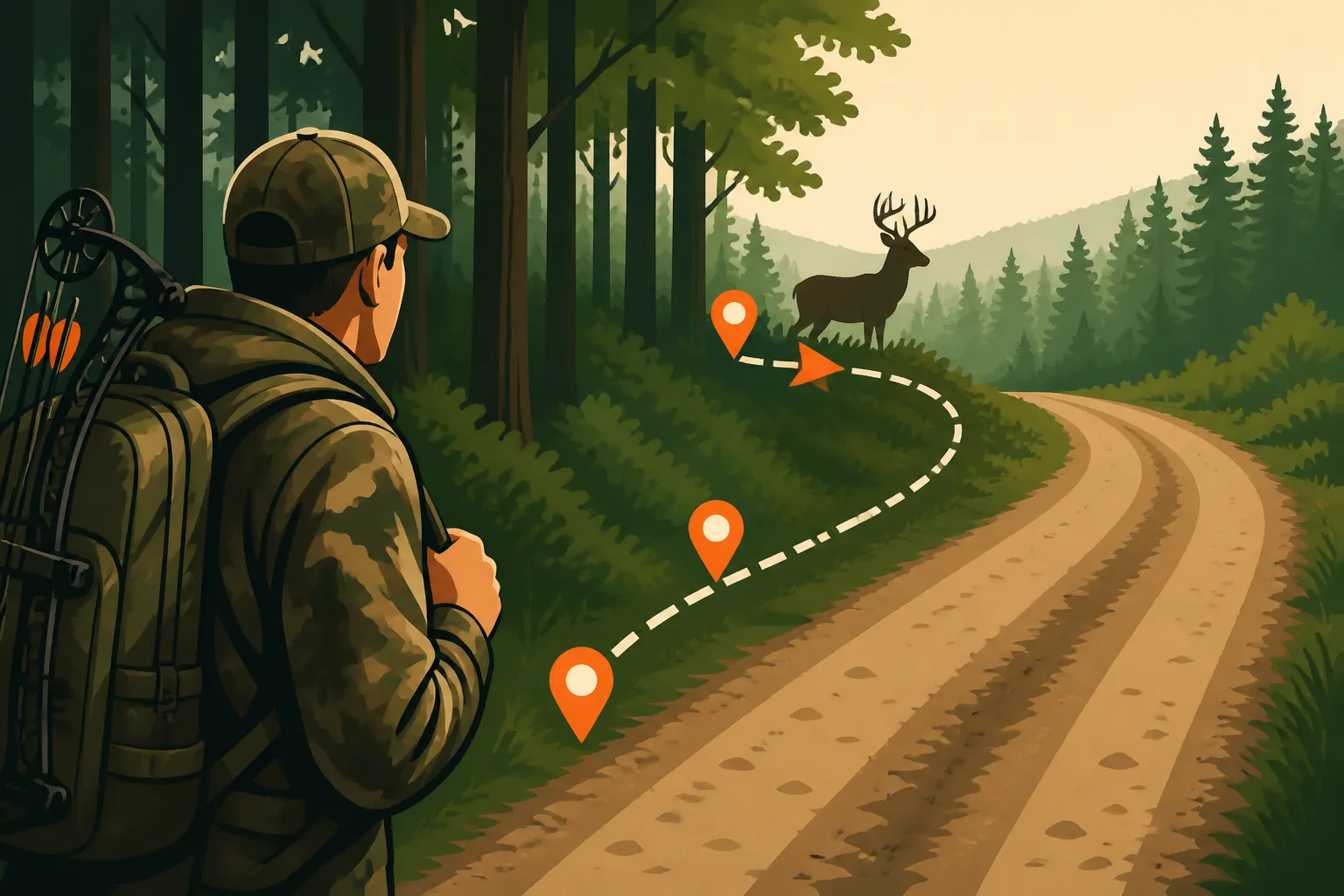
Your equipment plays a big part too. Good, broken-in boots are non-negotiable. A comfortable pack that distributes weight well, a reliable headlamp for dark walks, and sufficient water and snacks are essential. Digital mapping apps like onX Hunt or GoHunt become absolutely indispensable the deeper you go. They allow you to confidently navigate, mark your stand locations, and plan your entry and exit routes without getting lost. Don't forget a way to communicate, even if it's just a fully charged phone with downloaded maps, especially in remote areas. Scouting With the Outdoor Alabama App can also give you a leg up on locating key features before you ever step foot in the woods.
Strategies for Finding Unpressured Ground Beyond the Road
Escaping the road hunter isn't just about hoofing it further; it's about smart strategy and utilizing the tools at your disposal. You want to be deliberate about how you move through the landscape to find those hidden pockets.
Utilizing Digital Scouting Tools
Before you ever lace up your boots, fire up your digital mapping app like onX Hunt or GoHunt. These tools are revolutionary for public land hunters. Zoom in on your chosen WMA or National Forest. Look for several key features:
- Contour Lines: Identify steep ridges, deep hollows, and saddles. Animals, especially deer, will often follow the path of least resistance or utilize these features for bedding and travel. A subtle bench on a steep hillside might be a perfect bedding area that's a pain for most hunters to reach. Reading Aerial Photos for Piedmont Deer is a great resource for understanding this.
- Thick Cover: Look for areas marked as dense timber, clear-cuts with heavy regrowth, or swampy areas. These are often game sanctuaries. If you see a patch of nasty-looking cover a half-mile in that looks tough to traverse, that's often where the deer are hiding.
- Property Lines: On WMAs that border private land, pay close attention to the boundaries. Sometimes, deer will funnel onto public land in a narrow strip that's difficult for hunters to access, or they'll cross back and forth. You might find a quiet corner of public land adjacent to a large private timber block. Finding Alabama Property Lines is crucial for this.
- Water Features: Rivers, large creeks, and swamps can act as natural barriers, funneling animal movement and deterring human access. Look for pinch points created by water. Hunting a Funnel Between Two Creek Bottoms could be a goldmine.
By digitally scouting, you can identify potential "honey holes" or travel corridors that are just beyond the reach of the casual hunter, allowing you to plan a precise, efficient approach rather than just aimlessly walking.
The "Just One More Ridge" Mentality
This is where grit meets strategy. Many hunters stop when they hit the first good-looking ridge or creek bottom a quarter-mile or so in. Their mindset is "this looks like deer country." Your mindset needs to be, "this looks like other hunter country, where do the deer go from here?" The key is to push past that first logical hunting spot that everyone else sees.
Often, you'll find that game, especially mature bucks and wise old gobblers, will move just over the next ridge, or into the next drain, from where most human activity stops. This requires a quiet entry, often in the dark, and a commitment to walking further than feels comfortable. It’s about being willing to endure a little more effort for a potentially much greater reward. Finding Ground Others Walk Past is a principle that applies perfectly here. When you believe others stopped, you keep going.
Leveraging Water Barriers and Undesirable Cover
Think about what hunters generally avoid. Nobody likes busting through dense, head-high briars, wading through knee-deep swamp muck, or climbing over multiple downed trees. But guess what? Game animals absolutely love these places precisely because hunters don't. These "undesirable" areas act as natural pressure relief valves.
Look for creek bottoms that wind and create oxbows, making them difficult to navigate. Seek out those dense, almost impenetrable thickets of young pine or cedar. Consider swamps and sloughs. If you're willing to put on some gaiters, waterproof boots, and push through some discomfort, you will often find areas that rarely see human boots. Deer will bed in these spots, feeling secure, and will emerge to feed or travel, often providing excellent ambush opportunities. This is especially true when Hunting Black Belt Prairie Farmland Deer where thickets provide refuge near open fields.
Practical Distances and Real-World Scenarios
So, what's a realistic distance? While there's no magic number, we can look at common thresholds and what you can generally expect to find.
The 1/2 Mile to 1 Mile Sweet Spot
For most hunters looking to escape the immediate road pressure, the sweet spot often starts around a half-mile (about 800 meters) and extends to a full mile (1.6 kilometers) from the nearest easy access point. This distance tends to filter out a significant portion of casual hunters.
Within this range, especially if you've chosen terrain that offers some natural barriers (like a good elevation change, a winding creek, or a thick block of timber), you can expect to start encountering deer and turkeys that are acting more naturally during daylight hours. They might still be wary, but they're less likely to be sprinting through the woods at the first hint of human presence. You're likely to find more consistent sign, such as fresh rubs, scrapes, and feeding areas, indicating regular use. Scrape Lines Along a Logging Road are a good indicator of this type of regular movement further in.
Beyond a Mile: The "Deep Woods" Advantage
If you're willing and able to push beyond a mile, sometimes even two or three, you enter what I call the "deep woods" advantage. These are the truly remote pockets that very few hunters bother with. Here, you stand the best chance of encountering older, less pressured animals – mature bucks, dominant gobblers that haven't been called to relentlessly, and even groups of feral hogs that haven't learned to associate humans with danger.
The rewards can be significant, but so are the challenges. Every step in means another step out, and if you're fortunate enough to harvest an animal, the drag back to the truck can be brutal. This is where planning your extraction route becomes paramount. Consider pack-out frames or having a hunting buddy with you to share the load. Dragging a Deer Out of a River Bottom is a challenge that many deep-woods hunters face.
Exceptions to the Rule: When Closer is Better
While the general rule is "walk further," there are absolutely times when game can be found surprisingly close to roads. These are usually situational and depend on unique circumstances:
- Dense Cover Right Off the Road: Sometimes, a particularly thick, overlooked patch of cover – maybe a briar patch, a cedar thicket, or a small swamp – will sit directly adjacent to a road. Most hunters walk past it, assuming it's too close to the road or simply too nasty to hunt. But game can feel incredibly secure in these spots.
- Specific Food Sources: A secluded persimmon tree dropping fruit, a forgotten white oak raining acorns, or a small, isolated green field planted for deer can hold animals surprisingly close to access, especially during the last hour of daylight. Hunting a Green Field Planted for Deer or Hunting a Standing Soybean Field are classic examples.
- Unique Topography: A deep ditch or a steep cut that creates a visual barrier right off the road can sometimes act as a hidden travel corridor or bedding area that goes unnoticed by casual observers. It's all about reading the landscape for those subtle features.
These exceptions highlight the importance of scouting, even close to the road. Don't assume an area is devoid of game just because it's easily accessible; look for the reasons why game might be there and why other hunters might be overlooking it.
| Distance from Road | Expected Pressure Level | Game Behavior | Typical Effort Required |
|---|---|---|---|
| < 1/4 Mile | Very High | Skittish, Nocturnal | Minimal |
| 1/4 to 1/2 Mile | High | Wary, quick to flee | Low to Moderate |
| 1/2 to 1 Mile | Moderate | More natural movement, but alert | Moderate |
| 1 to 2 Miles | Low | Less pressured, more daylight activity | High |
| 2+ Miles | Very Low | Potential for undisturbed, older animals | Very High |
Ultimately, how far you walk from a forest road depends on your goals, your physical capabilities, and your willingness to invest the effort. But consistently pushing just a little further than the average hunter is often the difference between seeing a few tails flagging and finding truly unpressured game.
Disclaimer
This article is for general informational purposes only and does not constitute professional advice. Laws, prices and regulations vary by location and change over time. Consult a qualified professional for guidance on your specific situation.