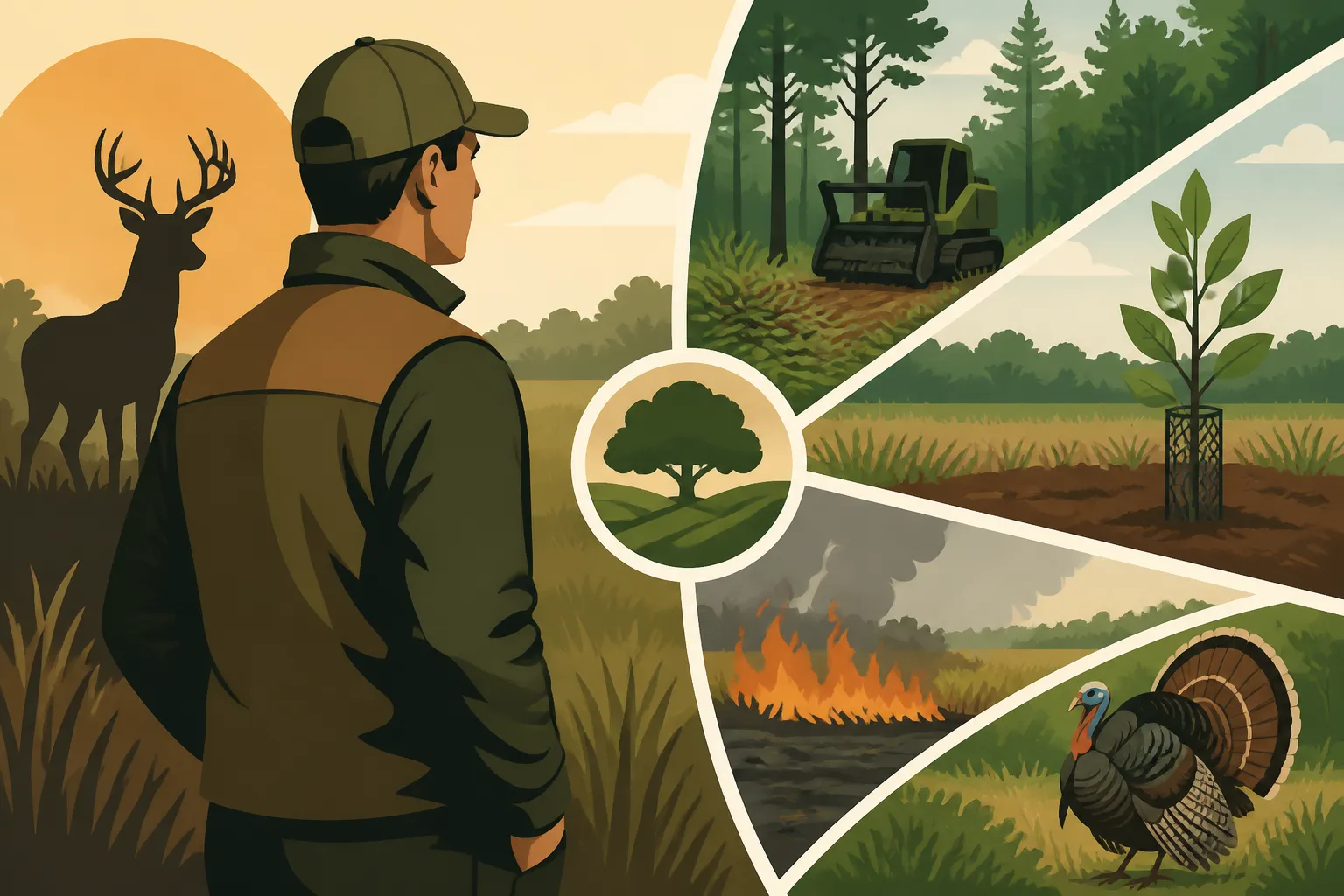
Land Management Services Beyond the Hunt
For many Alabama landowners, the dream of a thriving wildlife haven on their property often bumps up against the reality of time, knowledge, and sheer effort. You want to see healthier deer, more gobbling turkeys, and robust quail populations, but figuring out how to achieve that goes far beyond just tossing out a bag of rye seed. This guide will explore how many Alabama outfitters and hunting guides offer comprehensive land management services that extend far beyond simply booking a hunt, helping you cultivate your land for long-term wildlife success.
The Holistic Approach to Wildlife Management
It's easy to think of "land management" as just planting a food plot or two. While food plots are certainly a piece of the puzzle, a truly effective land management strategy for improving your Alabama hunting involves a much broader, more integrated approach. Wildlife, especially game species like deer and turkey, need a diverse habitat that provides food, water, cover, and ample space to breed and raise their young. Without a thoughtful, holistic plan, you might be improving one aspect while inadvertently neglecting another, limiting your property's full potential.
Beyond the Basic Food Plot
Anyone can broadcast a bag of annual ryegrass, and for quick deer attraction, it certainly has its place. But real habitat enhancement goes deeper. Are you planting the right forage for year-round nutrition? Is your soil even capable of supporting what you're planting? Are you thinking about native browse, soft mast, and hard mast trees? Many landowners focus solely on cool-season plots for hunting season, forgetting that deer and turkeys need quality nutrition throughout the spring, summer, and early fall too. A professional can help you design a food plot program that complements the natural forage on your property, ensuring a consistent food source from fawning season through the late winter. This might mean strategically planting perennials like clover or chicory, or introducing warm-season annuals like cowpeas and sunflowers to bridge the gap when natural forage is scarce.
Understanding Your Property's Potential
Every parcel of land, whether it's 10 acres or 1,000, has unique characteristics that influence its wildlife potential. What type of soil do you have? What's the timber composition? Are there natural water sources, or do you need to create them? A seasoned outfitter or land management consultant will often start with a detailed property assessment, looking at everything from topography and existing vegetation to soil samples and historical land use. They'll use their experience with Reading Aerial Photos for Piedmont Deer or Scouting Alabama Public Land Before Season to identify hidden gems and overlooked opportunities on your private ground. This initial assessment is crucial because it forms the baseline for any recommendations, ensuring that the management plan is tailored specifically to your land and your wildlife goals. It's about optimizing what you have to achieve what you want, rather than just guessing.
Common Land Management Services Offered by Outfitters
The beauty of working with outfitters for land management is that they often bring a hunter's perspective to the table, understanding not just wildlife biology, but also how habitat influences game movement and hunting success. Many hunters discover these services when initially searching for guided hunts on platforms like BookYourHunt, only to realize the outfitter offers much more.
Habitat Improvement and Restoration
This is often the core of what outfitters offer. It encompasses a wide array of activities designed to make your land more appealing and productive for game.
Timber Stand Improvement (TSI)
Alabama's landscape is rich with timber, from pine plantations to mixed hardwoods. Simply letting trees grow might produce timber, but it doesn't always create ideal wildlife habitat. TSI often involves selective thinning of trees to promote the growth of more desirable species, open up the canopy for sunlight to reach the forest floor, and create diverse understory vegetation crucial for browse and cover. It might also include hinge-cutting, where trees are partially cut to fall over but remain alive, creating immediate low-level cover for deer and bedding areas. This not only benefits deer but also provides crucial escape and nesting cover for turkeys and quail. Knowing when and where to thin, or what species to favor, requires an understanding of both forestry and wildlife needs, which many experienced outfitters possess.
Prescribed Fire and Native Grass Restoration
Fire, when used correctly, is a powerful tool for habitat management, especially in Alabama's pine forests and old fields. Why Alabama Foresters Burn Longleaf Pine outlines many of the benefits. Prescribed burns reduce woody encroachment, stimulate new growth of native grasses and forbs (wildflowers), and control invasive species. For quail and turkey, this creates open understories for foraging and insect production, alongside dense clumps of cover. For deer, the fresh, nutritious browse that emerges after a burn is a massive draw. Many outfitters have the training and equipment to safely implement prescribed fire plans, navigating the complexities of permits, weather conditions, and fire breaks. Coupled with fire, the reintroduction of native warm-season grasses can transform open areas into prime nesting and brooding habitat for turkeys and quail, and excellent cover for fawns and rabbits.
Water Source Development
While Alabama is generally blessed with rainfall, consistent and accessible water sources are critical, especially during dry spells. Outfitters can help identify optimal locations for small ponds, guzzlers, or even seasonal watering holes. This not only provides a drinking source but also attracts insects, which are vital protein for poults and fawns. Ensuring water is available year-round can keep game on your property, reducing their need to wander to neighboring lands.
Wildlife Population Management
Beyond just improving the physical habitat, outfitters often provide guidance on managing the game animals themselves. This can be a sensitive topic, but it's vital for a healthy ecosystem and sustainable hunting.
Deer Herd Health and Nutrition
A healthy deer herd isn't just about big antlers; it's about balanced age structures, appropriate buck-to-doe ratios, and animals that are thriving on the available forage. Outfitters can help you analyze your deer herd through trail camera surveys, harvest data, and observation. They might recommend specific antlerless harvest strategies to control population numbers and ensure the remaining deer have ample food, especially in areas with high deer density. This often involves discussions around Filling Two Unantlered Tags in Zone A or understanding the specific antler regulations in your zone. They can also advise on mineral supplements and targeted plantings that enhance overall herd health.
Turkey Population Enhancement
Wild turkeys are iconic Alabama game, but their populations can fluctuate due to habitat changes and predation. Outfitters can assess your property for critical turkey habitat elements like roosting sites, nesting cover, and brood-rearing areas. They might recommend specific plantings that provide vital insects for poults, or conduct habitat work to create more open understories. Guidance on predator control, though often controversial, is another service some outfitters provide to help protect turkey nests and young from opportunistic predators like coyotes and raccoons. Understanding the Alabama Turkey Population Estimate and local trends is key to developing a successful management plan.
Infrastructure and Access Improvements
Sometimes, the best land management involves making the land more accessible and manageable for you, the landowner, which in turn helps with wildlife.
Road and Trail System Design
Well-planned road and trail networks aren't just for getting your ATV around; they're essential for executing prescribed burns, accessing food plots, retrieving harvested game, and conducting habitat work. Outfitters can help design a system that minimizes disturbance to prime bedding areas, provides strategic access for hunting stands, and facilitates efficient property management. They can advise on proper drainage to prevent erosion and suggest materials for all-weather access. This can make the difference between a frustrating mud-bogged experience and a smooth day of property maintenance.
Stand Site Selection and Installation
A big part of deer hunting success comes down to stand placement. An outfitter can use their extensive knowledge of deer movement, wind patterns, and access routes to help you choose optimal locations for permanent stands, ground blinds, or even mobile setups. They can advise on Treestand Setups in Talladega National Forest or Using a Ground Blind on Alabama Public Land, tailoring the advice to your specific property. Beyond placement, some outfitters offer services for safely installing stands, clearing shooting lanes, and maintaining access routes to ensure your hunting setups are effective and secure year after year.
Here’s a look at some common land management services:
| Service Category | Common Offerings | Benefits for Landowners |
|---|---|---|
| Habitat Improvement | Timber Stand Improvement (TSI) | Enhanced browse, bedding cover, timber value |
| Prescribed Burning | Controls invasives, stimulates new forage, improves visibility | |
| Native Grass & Forb Restoration | Critical nesting/brooding cover, insect production | |
| Food Plot Design & Installation | Year-round nutrition, draws game, improves hunting | |
| Water Source Creation/Enhancement | Drought resilience, attracts diverse wildlife | |
| Wildlife Population Mgmt. | Deer Herd Assessment & Management | Balanced age structure, healthy deer, trophy potential |
| Turkey Habitat & Population Strategies | Increased nesting success, higher turkey numbers | |
| Predator Control Consultation | Protection for fawns, poults, and ground-nesting birds | |
| Infrastructure & Access | Road & Trail Planning | Efficient access, fire control, reduced erosion |
| Stand Site Selection & Setup | Optimized hunting locations, improved safety | |
| Boundary Marking & Fence Repair | Clear property lines, reduces trespass issues |
Finding and Vetting Land Management Professionals
It's one thing to want these services, but quite another to find the right people to provide them. When exploring different outfitters, platforms such as BookYourHunt often highlight their additional services, sometimes even mentioning land management consultation. However, a deep dive is always recommended.
Questions to Ask Potential Providers
Before hiring an outfitter or consultant for land management, treat it like any other significant investment in your property. Ask plenty of questions:
- Experience: How long have they been providing land management services? Do they have specific experience with properties similar to yours in Alabama? Look for someone who understands the nuances of Alabama's Five Deer Zones and how habitat varies across the state.
- Credentials: Do they have degrees in forestry, wildlife biology, or related fields? Are they certified in prescribed fire management? While practical experience is invaluable, formal training often indicates a deeper scientific understanding.
- References: Ask for references from other landowners they've worked with for land management, not just hunting clients. Speak to these references about the long-term impact of the work, professionalism, and communication.
- Scope of Services: Be clear about what you need. Do they offer a full turn-key solution, or just consultation? Do they have their own equipment, or will you need to source contractors for heavy machinery work like disking or tree thinning?
- Reporting and Communication: How will they keep you informed of progress? What kind of reporting will you receive on surveys, plantings, or other activities?
- Cost Structure: Get a clear understanding of their fees. Is it a flat fee for a management plan, an hourly rate, or project-based pricing? Don't be afraid to compare quotes.
Utilizing Online Resources and Local Networks
Online platforms are a great starting point, but don't stop there. While you might use a resource like GoHunt to understand local game populations and habitat trends, which can inform your discussions with a land management consultant, it's also critical to tap into local knowledge.
- Local Forestry and Wildlife Agencies: The Alabama Department of Conservation and Natural Resources (ADCNR) often has foresters and wildlife biologists who can provide initial advice and point you toward reputable private consultants. They might not offer hands-on service, but they can be a great resource for identifying local issues or opportunities.
- Conservation Organizations: Groups like the National Wild Turkey Federation, Quality Deer Management Association, and Quail Forever often have field staff or volunteers with extensive knowledge of habitat management. They might host workshops or connect you with local experts.
- Hunting Clubs and Landowner Associations: Talk to other landowners in your area. Word-of-mouth recommendations are powerful, especially for services that require trust and local expertise. A good relationship with your neighbors is key, whether you're working on Deer Drives With Three or Four Hunters or coordinating prescribed burns across property lines.
The Long-Term Benefits of Professional Land Management
Investing in professional land management is a long game, but the payoff can be substantial, both for your hunting success and the value of your property. For landowners who are serious about long-term habitat improvement, understanding an outfitter's track record, perhaps by checking references found through services like GoHunt, is paramount.
Enhanced Hunting Opportunities and Success Rates
The most immediate and tangible benefit for many landowners is improved hunting. When your property offers superior food, cover, and water, you naturally attract and hold more game. This means better deer sightings, more active gobbling from turkeys, and potentially even more Bobwhite Quail in Alabama's Black Belt. A well-managed property can become a magnet for local wildlife, offering consistent and rewarding hunting experiences year after year. It can also lead to healthier, larger animals, as they have access to better nutrition and less stress.
Increased Property Value and Appeal
Beyond hunting, a property that is actively managed for wildlife often sees an increase in its overall value. Land with established food plots, well-maintained timber stands, and robust wildlife populations is highly sought after. If you ever decide to sell, a detailed land management plan and evidence of habitat work can be a significant selling point, appealing to other hunters and conservation-minded buyers. It demonstrates a commitment to the land and its resources, often translating into a higher market price.
Ecological Health and Sustainability
Finally, professional land management contributes to the broader ecological health of your area. By restoring native habitats, controlling invasive species, and promoting biodiversity, you're not just helping game animals; you're supporting a wide array of non-game species, pollinators, and the overall ecosystem. This sustainable approach ensures that your land remains a vibrant, productive natural resource for generations to come, leaving a lasting legacy.
Disclaimer
This article is for general informational purposes only and does not constitute professional advice. Laws, prices and regulations vary by location and change over time. Consult a qualified professional for guidance on your specific situation.