Alabama Whitetail Color Phase Rarities
Many Alabama hunters share the thrilling experience of spotting a deer, but imagine the sheer surprise and awe of encountering a whitetail that looks completely different – not just a bigger rack, but a coat color that defies all expectations. These incredibly rare color phase whitetails, ranging from ghostly white to jet black, are the stuff of legend and local lore. While most of us are familiar with the classic brown and tan, finding one of these genetic marvels sparks curiosity and raises questions about their survival and significance. This guide will pull back the curtain on Alabama's whitetail color phase rarities, exploring the unique genetic conditions that cause them, what makes them so unusual, and what you should know if you’re ever lucky enough to see one in our Alabama woods.
Understanding Normal Whitetail Color and the Basics of Genetic Variation
When you picture a whitetail deer in Alabama, you likely envision that familiar coat of rich reddish-brown in the summer, fading to a more muted grayish-brown as cooler weather sets in. This is the standard, the camouflage perfected over millennia to help deer blend into the varied landscapes of our state, from the dense pine thickets of the Wiregrass to the sprawling hardwoods of the Black Belt. This typical coloration is incredibly effective, allowing deer to disappear into shadows, stand motionless in brush, and evade predators and hunters alike. The scientific term for this normal coloring is "agouti," a pattern where individual hairs have bands of different colors, usually black, yellow, and brown, creating that blended, grizzled appearance that works so well.
However, the animal kingdom, including our beloved whitetails, is full of genetic surprises. Every now and then, a deer is born with a genetic mutation that affects the production of melanin, the pigment responsible for hair, skin, and eye color. These mutations can either reduce or eliminate pigment, or sometimes, they can even cause an overproduction. It’s like a biological glitch in the system, and while it's extremely uncommon, it leads to the striking color variations we're discussing. Think of it as a roll of the genetic dice; most of the time, the deer get the standard brown, but a tiny fraction get a truly wild card. These genetic variations are often recessive, meaning both parents must carry the gene for it to express itself in their offspring, making such occurrences even rarer in the general White-Tailed Deer Across Alabama population.
The sheer rarity of these genetic anomalies means that even in a healthy deer population, you might go a lifetime without seeing one. For instance, out of the hundreds of thousands of deer that populate our state, from the mountains to the coast, only a handful will ever display these dramatic color shifts. If you're using tools like GoHunt to scout specific areas, you might pore over satellite imagery and topo maps looking for prime bedding areas or food plots, but those maps won't ever show you where a truly unique deer might pop up. It’s a pure chance encounter, a testament to the incredible diversity hidden within nature's blueprint. The likelihood of seeing a truly anomalous deer is directly tied to the overall Alabama Deer Population Estimate, as a larger population could statistically produce more of these rare individuals, but they remain a statistical anomaly at best.
The Spectrum of White: Albinism and Leucism in Alabama Whitetails
When people talk about "white deer," they're usually referring to one of two distinct genetic conditions: true albinism or leucism. While both result in a lack of color, the underlying biology and the deer's physical characteristics are quite different. Understanding these differences is key to appreciating the specific rarity you might be witnessing.
True Albinism: The Ghostly Whitetail
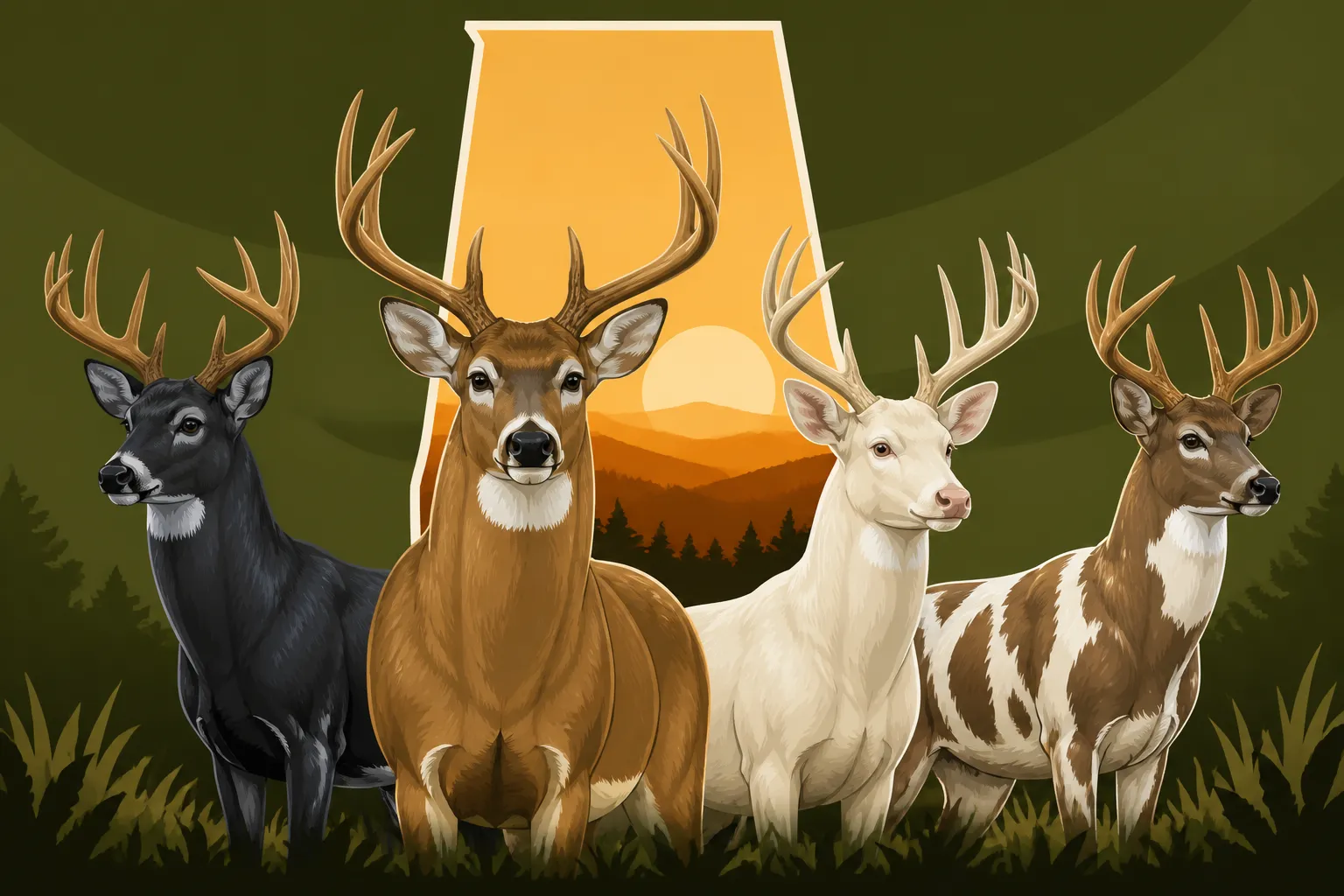
A true albino whitetail is perhaps the most iconic and unmistakable of all color rarities. What truly sets an albino apart isn't just its stark white hair, but its tell-tale pink eyes and pink nose. This is due to a complete absence of melanin pigment in all tissues. The pink color you see in the eyes isn't pigment; it's the blood vessels showing through the unpigmented iris. This condition is caused by a recessive gene that prevents the production of tyrosinase, an enzyme essential for melanin synthesis. If a deer inherits this gene from both parents, it will be a true albino.
While beautiful and captivating, albinism often comes with significant challenges for a deer in the wild. The lack of pigment in their eyes can lead to poor vision, especially in bright sunlight, making them more vulnerable to predators and less efficient at navigating their habitat. Imagine trying to find Late-Season Food Sources for Alabama Whitetails or avoid a hunter's gaze when you're constantly squinting and struggling to focus. Their bright white coat, while stunning to behold, is also a massive disadvantage in terms of camouflage. Instead of blending seamlessly into the dappled light of an Alabama pine forest or a hardwood bottom, an albino deer stands out like a beacon, making them an easy target for coyotes, domestic dogs, or even less ethical hunters. Because of these survival disadvantages, true albino deer are exceedingly rare and often don't live as long as their normally pigmented counterparts.
In Alabama, the hunting of albino deer is generally prohibited. This is an important distinction, reflecting a desire to protect these rare and vulnerable animals. It's not just about their uniqueness, but also acknowledging their inherent survival disadvantages. If you encounter an albino deer while hunting, it's crucial to identify it correctly and abide by state regulations, which often mean letting it walk, even if it's a magnificent buck you’ve spent months scouting. This respect for such rare animals is a hallmark of ethical hunting practices. When you're Scouting Alabama Public Land Before Season with your binoculars, keep an eye out, but understand that this particular trophy is one for the camera, not the cooler.
Leucism: The More Common White Deer
More often than not, when hunters report seeing a "white deer" in Alabama, they're actually encountering a leucistic animal. Unlike albinism, leucism is a partial loss of pigmentation, meaning some pigment cells are present but either don't develop properly or are absent in certain areas. The key differentiator for leucistic deer is that they typically have normally colored eyes (brown or blue) and often a normally colored nose, unlike the pink eyes and nose of an albino. Their coat can range from pure white to a mottled or "piebald" pattern, where patches of white are mixed with patches of normal brown or black hair.
Piebald deer are the most frequently observed form of leucism. These deer have varying amounts of white patches on their bodies, often concentrated on the legs, belly, neck, or face. Some might have just a white blaze on their face and white socks, while others might be almost entirely white with a few patches of brown. The expression of leucism can be incredibly diverse, creating a wide array of unique-looking deer. A piebald deer's eyes and nose will retain their normal dark color because the genes responsible for leucism don't affect pigment production in these areas in the same way albinism does.
Leucistic deer, especially piebalds, might face some of the same camouflage challenges as albinos, but their vision is usually normal, giving them a significant survival advantage. A piebald deer might stand out more than a fully brown deer, but if it has enough brown patterning, it can still blend into shadows and cover more effectively than a pure white albino. Their survival rates are generally better, though they are still more susceptible to predation compared to a cryptically colored normal deer. While there aren't specific prohibitions against hunting leucistic or piebald deer in Alabama, hunters often make personal ethical choices about harvesting such unique animals. Ultimately, it comes down to individual preference and respect for the rarity. You won't find specific data on leucistic deer in Alabama Deer Harvest Records, but anecdotal reports are much more common than those for true albinos.
| Color Phase | Key Characteristics | Eyes | Nose | Survival Impact (Compared to Normal) | Legal Status (Alabama) |
|---|---|---|---|---|---|
| Normal | Brown/tan/gray agouti coat | Brown/Dark | Dark/Black | Optimal camouflage | Huntable |
| Albino | Pure white hair, complete lack of melanin | Pink/Red | Pink | Poor vision, extreme visibility | Generally NOT huntable |
| Leucistic | White hair, but normal eye/nose color, partial melanin loss | Brown/Dark | Dark/Black | Variable visibility, normal vision | Generally huntable |
| Piebald | White and normal brown patches (form of leucism) | Brown/Dark | Dark/Black | Variable visibility, normal vision | Generally huntable |
| Melanistic | Dark to jet black hair, excess melanin | Brown/Dark | Dark/Black | Variable, depends on habitat | Generally huntable |
| Erythristic | Reddish/blonde/cream coat, reduced dark pigments | Brown/Dark | Dark/Black | Minimal, can still blend | Generally huntable |
Beyond White: Melanism and Other Uncommon Color Phases
While white deer often grab the headlines, the spectrum of whitetail color rarities extends far beyond just a lack of pigment. In extremely rare instances, a deer might exhibit an excess of melanin, leading to a striking and elusive dark coloration known as melanism. Other subtle genetic variations can also produce "blonde" or reddish-phase deer, each a testament to nature's diverse palette.
Melanism: The Elusive Black Whitetail
Imagine stalking through a dense Alabama swamp or a shadowed creek bottom and suddenly seeing a deer that appears almost entirely black. That's a melanistic whitetail, and they are incredibly rare, even more so than true albinos in many regions. Melanism is the opposite of albinism, resulting from an overproduction of melanin, leading to a coat that can range from very dark brown to jet black. Like leucistic deer, melanistic deer typically have normally colored dark eyes and noses.
The occurrence of melanistic deer in Alabama is anecdotal, with only very few verified sightings over the years. Some speculate that melanism might offer a camouflage advantage in certain low-light or dense, shadowed habitats, such as those found in deep river bottom swamps or thick evergreen stands. However, in most typical Alabama whitetail habitats, a black coat would likely make a deer stand out significantly against the browns, greens, and grays of the natural environment, especially during daylight hours. This potentially reduced camouflage, combined with the extreme rarity of the genetic trait itself, means a truly black whitetail is a once-in-a-lifetime sighting for most hunters. If you're mapping out potential hunting areas with GoHunt's satellite imagery, you might identify dark, shadowed areas, but the chances of predicting a melanistic deer's presence are virtually nil.
Other Subtle Color Variations
Beyond the dramatic shifts of albinism, leucism, and melanism, there are other, more subtle genetic variations that can produce whitetails with unusual coats. These are often less striking than pure white or black but are still distinct from the typical brown.
One such variation is often referred to as a "blonde" or "cream" phase deer. These animals have a lighter, often yellowish or creamy white coat that isn't a true lack of pigment like leucism, but rather a different expression of existing pigments. Their eyes and nose are typically normal, and their lighter color might not pose as significant a camouflage disadvantage as a stark white coat. These deer can often blend reasonably well into sun-drenched fields or lighter undergrowth, making them less obvious than a piebald.
Another interesting, though also rare, variation is erythrism, sometimes called a "red" phase. Erythristic deer exhibit an unusually reddish or reddish-brown coat, often more vibrant than the typical reddish-brown summer coat of a whitetail. This condition is caused by an overabundance of reddish pigments (pheomelanin) and a reduction in dark pigments (eumelanin). While still within the brown spectrum, these deer have a distinctly rich, sometimes almost mahogany, hue that sets them apart from their peers. Like the "blonde" phase, erythristic deer typically have normal eyes and noses and generally face no significant survival challenges due to their color. These unique individuals are another reminder of the genetic lottery at play in nature.
Encountering and Managing Rare Color Phase Deer in Alabama
Spotting a rare color phase whitetail in Alabama is an experience many hunters only dream of. It’s truly something special, a moment that connects you deeply with the mysteries of the wild. But beyond the initial awe, there are practical considerations and ethical responsibilities to keep in mind, especially for hunters.
Observation and Documentation
If you're lucky enough to encounter an albino, piebald, melanistic, or other unusual color phase deer, your first instinct might be to reach for your phone or camera. And you absolutely should! Documenting these sightings, whether through clear photographs or video, is invaluable. Not only does it create a lasting memory for you, but it also provides anecdotal evidence that contributes to the broader understanding of these rare animals in Alabama. Note the date, time, and location (without revealing specific honey holes if you're on private land, of course). Observe its behavior: does it seem visually impaired? Is it alone or part of a group? This information can be incredibly useful to wildlife biologists. Think of it as citizen science; your observations, especially if you're using a scouting app like GoHunt to drop pins and track deer movement, can help piece together a picture of these rare occurrences.
Ethical Hunting Considerations
The decision to harvest a rare color phase deer, particularly a leucistic or piebald animal (since albinos are generally protected), is a deeply personal one. While legally permitted to harvest most leucistic or piebald deer in Alabama, many hunters choose to let them walk. There's a certain reverence for these unique creatures, a desire to see them thrive and potentially pass on their genes, even if those genes carry a "flaw."
Consider the context: Is it a mature animal that has already had years to breed? Is it struggling due to its coloration? While the desire for a truly unique mount might be strong, many hunters find greater satisfaction in knowing they preserved a living rarity. For ethical hunters, the thrill is often in the encounter, not necessarily the harvest. Always remember to check current Alabama Deer Season Structure Explained and specific regulations, as rules can occasionally change or special provisions might apply to certain types of deer. Adhering to Alabama Hunter Education Requirements also reinforces the importance of ethical decision-making in the field.
Reporting Sightings to Wildlife Officials
While documenting your sighting for personal records and sharing with fellow enthusiasts is great, consider taking the extra step of reporting it to the Alabama Department of Conservation and Natural Resources (ADCNR). Wildlife biologists are keenly interested in these rare occurrences, as they can provide insight into local deer genetics and population health. You don't need to give exact GPS coordinates, but a general area (e.g., "near Grove Hill in Clarke County" or "in the southern division of Talladega National Forest Hunting") along with your photos can be very helpful. This kind of data contributes to the collective knowledge of Alabama's wildlife and helps professionals monitor unusual trends. Should you ever see signs of illegal activity, such as someone attempting to harvest a protected albino deer, reporting to Reporting a Poacher in Alabama is paramount to upholding wildlife laws. Remember, these rare deer are a part of Alabama's natural heritage, and responsible stewardship ensures they remain a wonder for future generations.
Disclaimer
This article is for general informational purposes only and does not constitute professional advice. Laws, prices and regulations vary by location and change over time. Consult a qualified professional for guidance on your specific situation.