Mange in Alabama Coyotes and Foxes
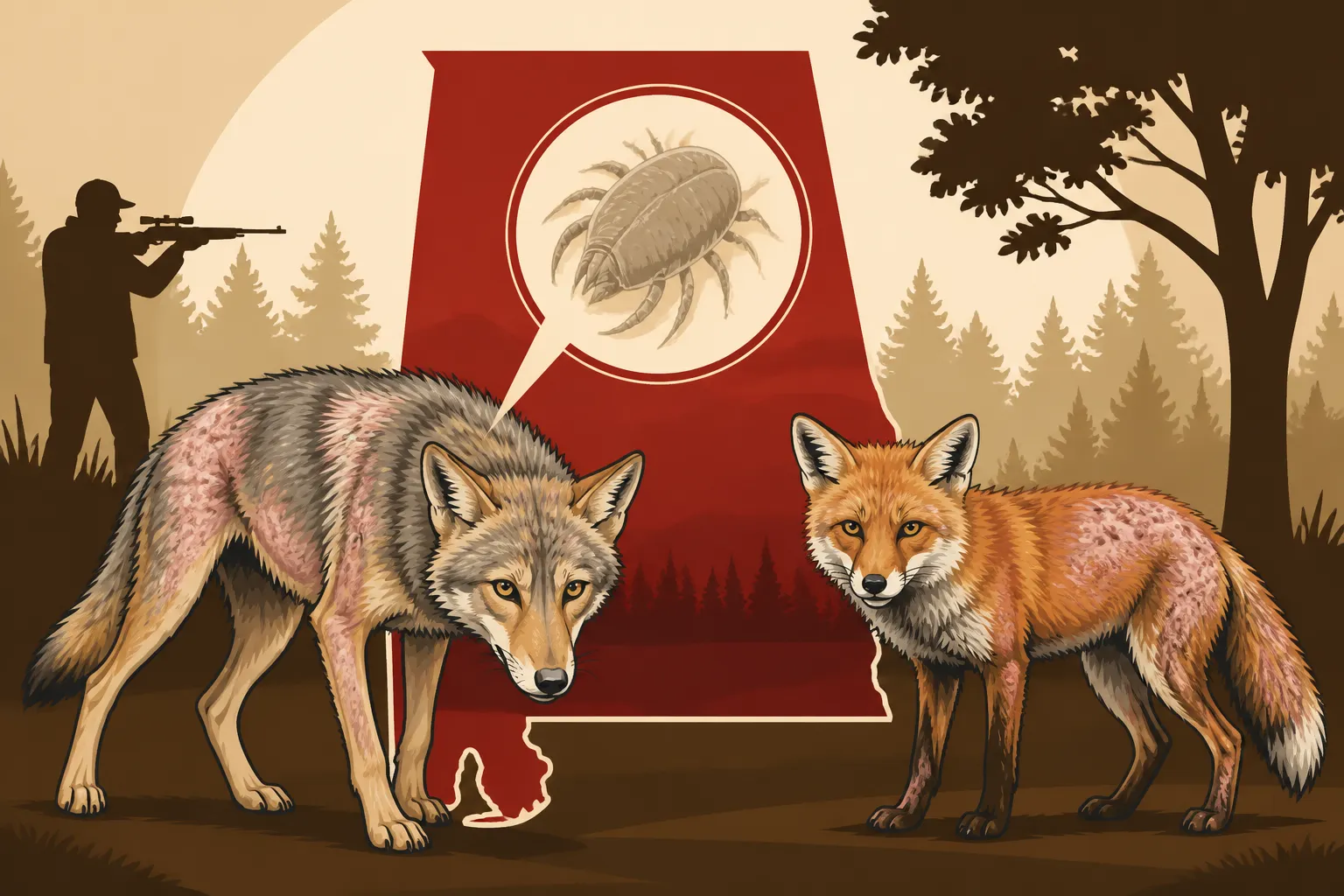
It's always a bit of a shock, isn't it? You're out in the Alabama woods, maybe checking a trail camera or still-hunting a ridge line, and you see a coyote or a fox that just doesn't look right. Instead of a sleek, healthy coat, its fur is patchy, it's scratching incessantly, and it looks a little too thin. Chances are, you've just seen an animal suffering from mange. This isn't just a sad sight; it's a real concern for hunters and wildlife enthusiasts who care about the health of our local ecosystems. This guide is here to shed some light on what mange is, how it's affecting our wild canids in Alabama, and what you, as a hunter or concerned landowner, need to know.
What Exactly is Mange and How Does it Spread?
When we talk about mange in animals, we're really talking about a skin condition caused by microscopic mites. These tiny invaders can cause a whole host of problems, from irritating itching to severe hair loss, and in some cases, can even lead to the animal's demise. It’s a tough reality of the wild, and while it might not be as dramatic as a full-blown disease outbreak, it's something that impacts individual animals and can certainly be disheartening to witness.
The Microscopic Culprits: Sarcoptic and Demodectic Mange
There are primarily two types of mange we see affecting coyotes and foxes here in Alabama, each caused by a different type of mite, and each presenting with slightly different characteristics.
First up is sarcoptic mange, often referred to as scabies. This is perhaps the most well-known and visually impactful form. It's caused by the Sarcoptes scabiei mite, which burrows into the animal's skin. Imagine tiny, invisible bugs digging tunnels just under your skin – sounds awful, right? For a coyote or fox, it's exactly that. The burrowing activity of these mites, along with their waste products, triggers an incredibly intense allergic reaction in the host animal. This leads to relentless itching, severe hair loss, and the formation of crusty, thickened skin, often with open sores from constant scratching. This particular mite is highly contagious, making it a significant concern when it gets into a wild population.
Then there's demodectic mange. This type is caused by Demodex mites, which are usually a natural part of an animal's skin flora, living in the hair follicles. In healthy animals with strong immune systems, these mites cause no problems at all. However, if an animal is stressed, malnourished, or has a compromised immune system, the Demodex mites can multiply out of control, leading to localized hair loss and skin irritation. Demodectic mange is generally less severe than sarcoptic mange, and often presents as small, bald patches rather than the widespread, raw skin you see with sarcoptic mange. It's also less contagious between animals, usually only becoming an issue when the animal's own defenses are down. So, when you see a truly sickly-looking, hairless canid, it's almost always sarcoptic mange at play.
How Mange Spreads Among Wild Canids
The way mange spreads is a critical factor in understanding its impact. For sarcoptic mange, which is our primary concern for visual health in Alabama's wild canids, transmission is primarily through direct contact. Think about it: coyotes and foxes are social animals to varying degrees, especially when raising pups. They share dens, they rub up against trees and rocks, they interact during mating season, and sometimes they even fight. All these scenarios provide ample opportunity for mites to jump from one host to another.
Consider a shared den site or a communal bedding area under a thick pine canopy. A mangy fox might bed down there, leaving behind mites that can then infest another fox seeking shelter. Or perhaps a group of coyotes, like those you might find during Coyote Calling in Alabama Farm Country, are traveling together, and one happens to be infected. As they brush past each other or even briefly make contact, those mites can transfer. It doesn't take much. This high transmissibility means that once sarcoptic mange takes hold in a localized population, it can spread rapidly, leading to multiple individuals showing signs of the disease. While the mites don't live long off a host, a fresh environment can pose a risk.
Demodectic mange, as mentioned, is different. It's not typically spread through casual contact between animals because the mites are already present on most healthy canids. Instead, it flares up when an individual's immune system is weakened, making it more of an indicator of underlying health issues rather than a contagious threat to the wider population.
Recognizing Mange in Alabama's Coyotes and Foxes
Spotting a mangy animal in the wild isn't always easy, especially if it's a fleeting glimpse. But once you know what to look for, the signs are quite distinctive. As a hunter or someone who spends a lot of time outdoors in Alabama, being able to identify these visual and behavioral cues can help you understand the health of the wildlife in your area.
Visual Signs and Behavioral Clues
The most obvious visual sign of mange, particularly sarcoptic mange, is hair loss. This isn't just a little shedding; it's often extensive and patchy, starting around the face, ears, legs, and tail, and then spreading over the entire body. The animal might have large areas of bare skin, giving it a gaunt, almost alien appearance. The skin itself will often look raw, red, inflamed, and thickened, especially in areas of chronic scratching. You might see scabs, crusts, and even open wounds from where the animal has torn its skin trying to relieve the intense itch. It's a truly miserable condition.
Beyond the visible skin and hair issues, look for behavioral changes. The primary one is excessive scratching, biting, and rubbing. An infected animal might scratch itself almost constantly, even in your presence, often using its hind legs to scratch its head and neck, or biting at its flanks and tail. They might rub themselves aggressively against trees, rocks, or fence posts, trying to find some relief. This persistent irritation can lead to significant stress.
You might also notice a general lethargy or weakness. Mangy animals are often malnourished because the constant itching and skin irritation divert energy and prevent them from hunting or foraging effectively. They can become noticeably emaciated, with their ribs and hip bones clearly visible. Sometimes, their movements might seem a bit off, perhaps a stiff gait or a lack of coordination, especially if secondary infections have set in. In some severe cases, they might appear less wary of humans, not because they're truly tame, but because their suffering has made them desperate or simply too weak to flee.
Differentiating Mange from Other Wildlife Ailments
It's important to remember that mange isn't the only thing that can make a coyote or fox look sick. Other diseases can present with symptoms that might, at first glance, seem similar, but there are key differences.
One common concern is rabies. Rabies is a viral disease that affects the nervous system. While a rabid animal might also look disoriented or act unusually, its primary symptoms are neurological: aggression, paralysis, drooling, or a complete loss of fear. It won't typically exhibit the severe, widespread hair loss and skin crusting that is so characteristic of sarcoptic mange. A mangy animal is in pain and suffering from skin issues, whereas a rabid animal's behavior is driven by brain damage.
Another disease often confused with mange is distemper. Canine distemper is a viral disease that can affect multiple body systems, including respiratory, gastrointestinal, and neurological systems. Animals with distemper might have nasal and eye discharge, coughing, vomiting, diarrhea, and later, neurological symptoms like seizures or tremors. They can also appear sickly and have a poor coat, sometimes with some hair loss, but it's usually not the extreme, raw, crusty skin you see with sarcoptic mange. A key differentiator is the multi-system involvement in distemper, versus the skin-centric issues of mange.
Finally, general nutritional deficiencies or environmental stressors can cause a poor coat condition, but rarely the widespread, irritated skin that defines mange. An animal simply not getting enough to eat might be thin and have a dull coat, but it typically won't have the intense scratching and raw skin patches characteristic of a mite infestation.
The key takeaway is that if you see an Alabama coyote or fox with severe, patchy hair loss, scabby and thickened skin, and an unrelenting urge to scratch, you're almost certainly looking at an animal suffering from mange.
Impact on Alabama's Coyote and Fox Populations
It's natural to feel concern when you see an animal suffering, and to wonder what impact mange has on the overall health of our wild canid populations. While it's a terrible condition for individual animals, its broader ecological effects in Alabama can vary depending on the species and the severity of the outbreak.
Population Dynamics and Individual Suffering
For the individual coyote or fox, mange is a truly grim sentence. The intense itching, constant scratching, and secondary bacterial infections mean a life of misery. This constant irritation and inflammation takes a massive toll on the animal's energy reserves, making it difficult to hunt, find food, and evade predators. Often, mangy animals become severely emaciated and weakened, eventually succumbing to exposure, starvation, or becoming easy prey for other predators. The suffering is undeniable, and the survival rate for severely infected individuals in the wild is sadly very low.
When we consider coyotes, the impact on the overall population in Alabama is generally not as dramatic as it is on individuals. Coyotes are incredibly adaptable, resilient, and reproduce quite rapidly. Even with mange present, their populations tend to remain robust. While local pockets might see temporary dips due to severe outbreaks, the species as a whole often bounces back quickly. The sheer number of How Many Coyotes Alabama Has and their ability to thrive in diverse habitats helps them weather such challenges.
Foxes, on the other hand, being smaller and often more susceptible to environmental stressors and other diseases, can be more significantly impacted by mange at a local level. A severe sarcoptic mange outbreak can decimate a local fox population, sometimes leading to areas where foxes become quite scarce for a period. This is because their lower body mass means they lose heat more quickly with hair loss, and their generally lower reproductive rates make recovery slower. Alabama's Recovering Bobcat Population, while not directly affected by the same mites, is an example of how a species can be sensitive to disease and environmental factors.
It's also worth remembering that mange rarely acts alone. A mangy animal is often already stressed by poor nutrition or other health issues. The mange then pushes them past their breaking point.
Ecological Role and Disease Transmission
Coyotes and foxes play vital roles in Alabama's ecosystems as apex predators in many areas. They help keep populations of small game, rodents, and even deer fawns in check. A population of canids severely weakened by mange means fewer effective predators. This could, in theory, lead to temporary increases in some prey species, but the complex nature of ecosystems means direct correlations are hard to draw.
An important point for hunters and landowners is that while mange is highly transmissible between canids, it is generally species-specific for its severity. This means that while the mites can sometimes temporarily infest other animals (or even humans, causing a transient rash), they typically do not establish a long-term, severe infestation in species like deer, wild turkeys, or other primary game animals. So, you don't need to worry about mange jumping from a coyote to a deer and causing widespread problems in the deer herd. The mite simply isn't adapted to thrive on those hosts.
However, a healthy ecosystem relies on healthy components. Monitoring diseases like mange is part of broader Alabama Wildlife Disease Monitoring efforts, providing valuable data to wildlife biologists. The presence of mange is a natural part of wildlife disease cycles, albeit a painful one for the animals involved. It serves as a reminder of the harsh realities of natural selection and disease pressure in the wild.
What Alabama Hunters and Landowners Can Do
When you encounter a mangy coyote or fox, your first instinct might be to help, or perhaps to worry about your own pets or local wildlife. While direct intervention in the wild is usually not feasible or recommended, there are responsible steps you can take as an Alabama hunter or landowner.
Reporting Sightings and Wildlife Management
One of the most valuable things you can do is to report sightings of visibly sick or mangy animals to the Alabama Department of Conservation and Natural Resources (ADCNR). Wildlife agencies like ADCNR constantly monitor the health of Alabama's wildlife populations. Your reports contribute to their understanding of disease prevalence, geographical spread, and potential impacts. This information is crucial for biologists tracking trends in diseases like mange. You can typically find a contact number for your local wildlife office or report through the main ADCNR website. Reporting a Sick Animal in Alabama is a key step in helping wildlife managers.
It's important to understand why direct intervention by private citizens, such as attempting to capture and treat a wild animal, is generally not advised and often illegal without proper permits. Wild animals, especially sick ones, can be unpredictable and dangerous. Furthermore, treating individual wild animals for widespread conditions like mange is simply not practical on a population scale. Wildlife management efforts focus on monitoring and understanding the disease's impact, rather than individual animal treatment. Sometimes, Mother Nature has to take its course, however difficult that may be to watch.
Safety Precautions and Ethical Considerations
When you're out hunting or just spending time in areas where you've seen mangy animals, it's wise to take some basic precautions.
Firstly, avoid direct contact with any visibly sick or dead wild animal. While sarcoptic mange mites are typically species-specific in their ability to establish a severe, long-term infestation, they can cause a temporary, itchy rash on humans (sometimes called "canine scabies" or "nongovernmental scabies"). It's uncomfortable, but usually resolves once away from the infected animal. Still, it's best to avoid it altogether.
If you harvest a coyote or fox that appears to have mange, exercise caution and good hygiene. While the meat of a mangy animal isn't typically consumed (they are usually emaciated and in poor condition), the primary concern is skin contact during handling. Wear gloves when field dressing any animal, and wash your hands thoroughly with soap and water afterward. Clean your tools and equipment, including knives and boots, to prevent any potential spread of mites to your pets or other areas. If the animal is extremely emaciated and visibly suffering from severe mange, consider whether harvesting it for meat is truly ethical or practical. Sometimes, putting an end to an animal's suffering is the most humane act. When handling any wild game, proper Field Dressing a Deer in Warm Weather techniques, focusing on hygiene, should always be followed, and the same principle applies here.
Mapping tools can be a real asset here. If you're using a mapping application, perhaps one from GoHunt, you might use it to mark the locations where you've observed mangy animals. This isn't just about avoiding those areas; it can help you build your own understanding of potential disease hotspots on your hunting grounds or even public lands where you hunt. Over time, you might see patterns that correlate with certain habitat types or population densities. This kind of data can be invaluable for your personal scouting and hunting strategy, for example, if you're planning Predator Calling Alabama Pine Plantations and want to avoid areas with a higher incidence of sick animals.
Finally, when it comes to carcass disposal, if you find a dead mangy animal, deep burial is generally recommended to prevent further transmission of mites to other wildlife or domestic animals. If you have concerns about disposal, contact your local ADCNR office for guidance.
By being informed, cautious, and reporting your observations, you're playing a responsible role in monitoring and maintaining the health of Alabama's incredible wildlife.
| Mange Type | Primary Mite | Key Symptoms | Contagiousness (Wild Canids) | Impact on Individual | Impact on Population |
|---|---|---|---|---|---|
| Sarcoptic Mange | Sarcoptes scabiei | Intense itching, widespread hair loss, raw/crusty skin, scabs, emaciation. | High, direct/indirect contact | Severe, often fatal | Localized impact on foxes; less on coyotes. |
| Demodectic Mange | Demodex species | Localized hair loss, mild irritation, less severe overall. | Low, usually only with weakened immune system | Mild to moderate, rarely fatal without other issues | Negligible |
Disclaimer
This article is for general informational purposes only and does not constitute professional advice. Laws, prices and regulations vary by location and change over time. Consult a qualified professional for guidance on your specific situation.