Alabama Cottontail Population Trend
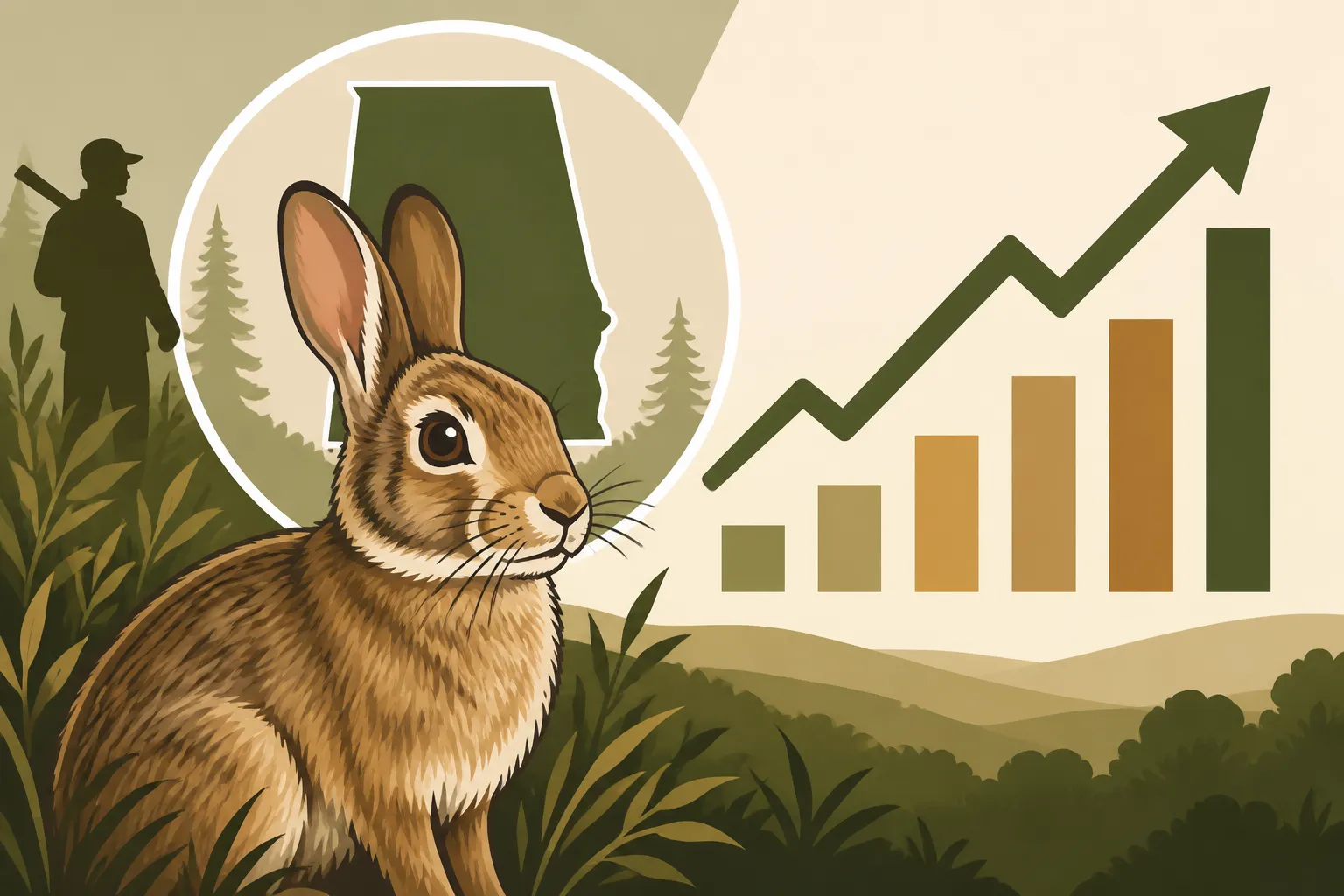
It can feel disheartening when you remember a time when cottontails seemed to be everywhere, flushing from every brush pile and field edge, and now it seems like they're a rare sight. This decline makes planning a successful rabbit hunt a real challenge, leaving many hunters scratching their heads. This guide will dive deep into the factors influencing Alabama's cottontail population, highlight where these resilient little animals still thrive, and help you understand the trends to significantly improve your hunting success.
Understanding the Historical Decline and Current Status of Cottontails
For many of us who grew up hunting in Alabama, the sheer abundance of cottontails was a given. You could walk almost any old farm field, fencerow, or briar patch and expect to jump a rabbit or two. Those days, for better or worse, have largely faded across much of the state. It's not that cottontails have vanished entirely, but their widespread distribution and robust numbers have definitely taken a hit. Understanding this historical context is crucial for knowing where to focus your efforts today.
Habitat Loss and Fragmentation
The primary driver behind the observed decline in cottontail populations in Alabama, much like in other parts of the Southeast, is the extensive loss and fragmentation of their preferred habitat. Cottontails thrive in what we often call "edge habitat"—places where different types of cover meet, offering food, shelter, and escape routes. Think overgrown fields, thick fencerows, briar patches, brushy creek bottoms, and young pine plantations. These areas provide the dense cover necessary to evade predators and protection from the elements.
Over the last several decades, Alabama's landscape has changed dramatically. Vast tracts of small, diversified farms with their mosaic of row crops, pastures, and unkempt borders have given way to larger, more monoculture-focused agricultural operations. This often means clean farming practices, where fencerows are routinely cleared, field edges are mowed right up to the crop, and brushy cover is eliminated. Such changes remove the very corridors and shelter rabbits depend on. Even urban and suburban sprawl eats away at these crucial edge habitats, pushing rabbits into smaller, isolated pockets where they struggle to thrive. These isolated populations are far more vulnerable to local extinction from disease or increased predation.
The breaking up of larger, continuous habitat into smaller, disconnected pieces, known as fragmentation, severely impacts cottontails. Imagine a rabbit living in a small briar patch surrounded by neatly mowed lawns or large, open fields. It might have enough food and cover within that patch, but to find a mate, establish new territory, or escape intense predation pressure, it needs to move. If those movements expose it to long stretches of open, unprotected ground, the risks become incredibly high. This often leads to genetic isolation and limits the ability of populations to recover from setbacks.
Predation Pressures and Disease
While habitat loss is the biggest piece of the puzzle, increased predation and the prevalence of certain diseases also play a significant role in the challenges faced by Alabama's cottontail population. Rabbits are, quite naturally, a primary food source for a wide array of predators. This includes everything from coyotes and bobcats to foxes, hawks, owls, and even domestic cats and dogs, especially in areas bordering human development.
When habitat is degraded or fragmented, rabbits are often forced into more exposed situations or concentrated into smaller areas. This makes them easier targets for predators. A fencerow that's been thinned out, or a brush pile isolated in a large field, offers less protection than a sprawling, interconnected network of dense cover. Coyotes, in particular, have expanded their range and density across Alabama, contributing to higher overall predation pressure on small game species. You can learn more about this by reading Coyotes and Predators in Alabama.
Furthermore, diseases like tularemia (often called "rabbit fever") and viral hemorrhagic disease can decimate local rabbit populations, sometimes very quickly. While these outbreaks are often cyclical and natural, fragmented populations with reduced genetic diversity can be more susceptible to their impact, struggling to rebound afterward. It's a complex interplay where environmental factors weaken populations, making them more vulnerable to the natural challenges of predation and disease, rather than just isolated incidents.
Current Population Density and Distribution
Despite the overall decline, cottontails are far from gone in Alabama. They still persist, and in some localized areas, even thrive. The key is understanding that their distribution is now much more patchy and concentrated in specific types of habitat that still offer adequate cover and food. You won't find them everywhere you once did, but if you know where to look, you can still find good numbers.
Broadly speaking, you'll find higher densities in areas with diverse agricultural landscapes, especially those with hedgerows, uncultivated borders, and patches of timber. The Black Belt region, with its mix of pastures, hayfields, and fragmented forests, can still hold decent rabbit numbers, particularly where landowners practice less "clean" farming. Areas near river bottoms and creek drainages, with their naturally dense, thorny vegetation and thick undergrowth, often serve as rabbit strongholds. These areas offer consistent food sources and cover, making them attractive to rabbits.
Conversely, large tracts of dense, mature pine plantations that lack understory growth, or vast, intensively farmed monoculture fields with no edge habitat, will generally have very few rabbits. The same goes for heavily urbanized areas, though even there, you might find isolated pockets in overgrown vacant lots or neglected green spaces. When you use mapping tools, like those found on GoHunt, pay close attention to the visual cues of dense cover adjacent to open areas – that's often where the magic happens.
Key Factors Influencing Cottontail Numbers in Alabama
While we've touched on habitat and predation, let's really dig into the specific dynamics that shape cottontail populations in our state. It’s not just one big thing; it’s a mosaic of influences that contribute to whether you’re seeing rabbits bounding through the brush or just empty fields. Understanding these nuances can give you a better edge when planning your hunts or even just observing wildlife.
Agricultural Practices and Land Use Changes
The way we manage our land, particularly agricultural land, has an enormous impact on cottontail rabbit numbers. In the past, small family farms were common, characterized by a patchwork of different crops, pastures for livestock, and often, less intensive land management. This meant fencerows grew thick with briars and saplings, old equipment might sit rusting in a corner, creating natural hideouts, and small woodlots were interspersed with fields. This diversity created abundant edge habitat that rabbits absolutely loved, offering a constant buffet of forage and immediate escape cover.
Today, the trend is towards larger, more mechanized farms that prioritize efficiency and maximize acreage for a single crop. This often involves removing hedgerows, clearing brush from field edges, draining wet spots, and converting idle lands into productive ground. While economically sensible for farmers, it effectively sterilizes the landscape for rabbits. They lose those crucial linear strips of cover, the small pockets of sanctuary, and the diverse forage that thrives in neglected areas. Without these features, even a rabbit-friendly diet of clover or young sprouts becomes a death trap if there’s no immediate cover to dash into when a hawk or coyote appears. The scale of these changes across broad regions of Alabama has fundamentally altered the carrying capacity of the land for cottontails.
Moreover, the shift from traditional row crops to vast hayfields or pastures, while providing some food, often lacks the dense, brushy escape cover that rabbits require to survive. Frequent mowing of these fields further reduces cover and can directly impact young rabbits. The ideal rabbit habitat isn't just about food; it's about food within reach of impenetrable cover. When you're scouting, especially with tools like GoHunt or similar mapping applications, you're looking for those property lines where a farmer has not "cleaned up" every last bit of brush. These are gold mines for rabbits.
Weather Patterns and Reproduction Success
Cottontails are prolific breeders, a key adaptation to being a primary prey species. A single female can have multiple litters in a year, with several young per litter, under ideal conditions. This high reproductive rate is what allows their populations to bounce back relatively quickly from environmental pressures, provided the conditions are right. However, weather patterns can significantly influence how successful this reproduction actually is and, consequently, the overall population trend.
Mild winters and ample, but not excessive, rainfall during the spring and summer breeding seasons generally lead to higher fawn survival and more successful litters. Mild winters mean less energy expenditure for adults, leading to healthier breeders going into spring. Spring and summer rains ensure a flush of green vegetation for forage, which is essential for lactating does and growing young. But there's a flip side: prolonged periods of heavy rain can lead to nest flooding, particularly in low-lying areas, resulting in high mortality for vulnerable young rabbits. Just think about a sustained downpour washing through a shallow nest built in a grass depression – it's devastating.
Conversely, severe droughts can also be detrimental. A lack of rain leads to sparse vegetation, reducing both food availability and the quality of cover. Rabbits become stressed, more susceptible to disease, and their reproductive output can decline. Extremes in temperature, both very hot summers and unusually cold winters, can also impact survival, especially for young rabbits that are less able to regulate their body temperature. These weather-driven boom-and-bust cycles can make local cottontail populations fluctuate quite a bit year to year, independent of habitat changes. Understanding the local weather trends in a given year can offer clues to current rabbit numbers.
Conservation Efforts and Habitat Management
While large-scale agricultural shifts are a major factor, there are conservation efforts and habitat management practices that can significantly benefit cottontail populations in Alabama. Many private landowners and some public land managers are recognizing the value of small game habitat. The good news is that what benefits rabbits often benefits other small game like quail and many non-game songbirds.
One key management practice is creating and maintaining early successional habitat. This means periodically disturbing the land through prescribed burns, disking, or selective timber harvesting to promote the growth of young, brushy vegetation, briar patches, and dense grasses rather than letting it grow into mature forest. Programs designed to restore longleaf pine ecosystems, for example, often involve frequent burning that opens up the understory and promotes the very types of cover and forage cottontails need. You can find more information about these kinds of efforts in articles like Alabama Small Game and Furbearers and Alabama Squirrel and Rabbit Season Rules.
For private landowners, even small-scale efforts can make a big difference. Leaving fencerows untrimmed, allowing field borders to grow up in natural vegetation, creating brush piles from downed trees, or planting specific cover crops like clover or native grasses can provide critical habitat. Some organizations offer cost-share programs or technical advice for landowners interested in enhancing wildlife habitat on their property. On public lands, particularly Wildlife Management Areas (WMAs), habitat diversity is often a goal, and these areas can sometimes hold better rabbit numbers due to active management. Be sure to check Alabama WMA Permit Requirement before planning a trip to a WMA.
Reading the Landscape for Alabama Cottontails Today
So, with all these population trends and habitat changes in mind, how does a modern Alabama hunter actually find cottontails? It's all about learning to "read" the landscape with a discerning eye, looking for those specific habitat features that stack the odds in your favor. It’s definitely not like it was 50 years ago, but success is still very achievable if you adjust your approach.
Identifying Prime Habitat Patches
Hunting rabbits in today's Alabama means becoming a habitat detective. Forget about vast stretches of open woods or manicured fields. You're looking for areas of dense, thorny, low-lying cover that often seem impenetrable to a human, but are a rabbit's fortress. These include briar thickets, honeysuckle tangles, cutovers (especially those a few years old with thick regrowth), brush piles, and overgrown creek bottoms. Remember that concept of "edge habitat" we talked about? It’s king.
Think about places where agricultural fields meet neglected woodlines, or where a clear-cut is bordering a mature timber stand. The transition zone where different types of cover converge is usually highly productive. Specifically, look for areas with a mix of food sources (young green sprouts, clover, tender shoots) immediately adjacent to very thick cover. A field of winter wheat or clover bordering a dense fencerow or a swampy thicket is a prime example. The rabbits can quickly dart into safety when a predator approaches. This kind of scouting is much easier if you're using detailed mapping apps, where you can zoom in and identify these habitat transitions from satellite imagery before you even set foot on the ground.
A great place to start looking is often around old homesteads, abandoned farm equipment, or even overgrown suburban lots where property lines haven't been meticulously maintained. These forgotten corners often revert to thickets of multiflora rose, privet, and briars, offering fantastic rabbit cover. When you're driving through rural areas, keep an eye out for these unkempt patches—they're visual indicators of potential rabbit hot spots. You can gain further insight into specific tactics for certain areas by exploring Rabbit Hunting Alabama Fencerows.
Scouting for Sign and Activity
Once you've identified potential habitat, the next step is to get boots on the ground and scout for actual rabbit sign. Rabbits aren't always visible, but they leave plenty of clues. Droppings are a dead giveaway – small, round, pea-sized pellets usually found in concentrated areas where rabbits feed or rest. These are often easy to spot on bare ground, under bushes, or along game trails. Fresh droppings indicate recent activity.
Look for runways, which are small, flattened paths through dense vegetation that rabbits use to move between feeding areas and cover. These can be faint, but in thick briars, they'll be noticeable, often leading from an open feeding area directly into the heart of a thicket. You might also find clipped vegetation, where rabbits have nibbled on tender shoots, or even bark gnawed on small saplings during lean times. In the winter, tracks in light snow or mud can tell you a lot about rabbit movement, especially around food sources. Reading Alabama Mud for Fresh Deer Movement can provide some crossover tips for spotting game signs in various terrains.
The best time to scout is often early morning or late evening, as rabbits are most active during these crepuscular hours. Sit quietly near a likely thicket and simply observe. You might see a rabbit emerge to feed or hear them rustling in the dense cover. This kind of patient observation can confirm your suspicions about a prime spot before you even consider bringing a dog or shotgun into the picture.
Hunting Strategies for Declining Populations
Given the localized and often dense nature of current Alabama cottontail populations, your hunting strategy needs to adapt. Gone are the days of just wandering aimlessly through open woods hoping to stumble upon a rabbit. Today, it’s about focused effort on known habitat and often, leveraging the power of a good dog. Many hunters, myself included, find that running dogs on rabbits is one of the most enjoyable and effective ways to hunt them. Beagles, in particular, are perfectly suited for this, with their keen noses and persistent baying. You can explore this further in Running Beagles on Alabama Cottontails.
If you're hunting without dogs, your approach needs to be slower and more methodical. Focus on pushing through the densest cover you can safely navigate, knowing that rabbits will hold tight until the very last second. Work thickets in a grid pattern if possible, to ensure you're covering every square foot. Often, a "stop-and-go" method works best: take a few steps, then pause for a moment. Rabbits holding tight will sometimes bolt when you stop, thinking they've been spotted. This also gives you a chance to spot a rabbit that might have flushed quietly.
Consider hunting with a partner or two. One person can push the cover while others post at likely escape routes, such as where a fencerow narrows or where a thicket meets a more open field edge. This strategy is particularly effective on smaller, isolated patches of cover. Remember that Alabama Rabbit Season Opening Day brings out plenty of hunters, so scouting thoroughly beforehand will give you an advantage over those just hoping for luck.
Here’s a quick overview of key habitat indicators:
| Habitat Type | Typical Location | Rabbit Appeal (Food/Cover) | Hunter Strategy |
|---|---|---|---|
| Briar Thickets | Overgrown fields, clear-cuts, old logging roads | Excellent escape cover, some forage | Push hard, use dogs, post blockers |
| Fencerows | Field edges, property lines | Travel corridors, good cover, diverse forage | Walk slowly, check both sides |
| Creek Bottoms/Swamps | Along waterways, low-lying areas | Dense year-round cover, reliable water/food | Often requires waders, dogs invaluable |
| Old Growth Cutovers | 2-5 year old timber harvest areas | Incredible escape cover, browse | Very dense; slow, methodical pushes or dogs |
| Brush Piles | Field edges, abandoned sites | Immediate shelter, warmth, predator evasion | Kick/prod, stand ready |
| Edge Habitat | Field-to-woods transition | Mix of food from field, cover from woods | Walk the transition, watch for flushes |
Remember to always consult the official regulations for Alabama Small Game Season Rules and ensure you have all the necessary licenses and permits for your hunt. The joy of rabbit hunting is in the challenge and the camaraderie, and by understanding the current trends and adapting your tactics, you can still find plenty of success in the Alabama woods and fields.
Disclaimer
This article is for general informational purposes only and does not constitute professional advice. Laws, prices and regulations vary by location and change over time. Consult a qualified professional for guidance on your specific situation.