When Alabama Coyotes First Arrived
It’s a common story in Alabama: you’re out scouting, checking trail cameras, or maybe just driving down a back road, and there it is – a coyote. For many old-timers and even newer hunters, their presence feels relatively recent, almost as if they just showed up overnight. This can be a real head-scratcher, especially if you grew up hearing tales of a time when these wily canids were unheard of in the Deep South. This guide is going to take a deep dive into the fascinating, albeit sometimes frustrating, history of when coyotes first arrived in Alabama, helping you understand their journey and how they’ve become such an integral, if often unwelcomed, part of our landscape.
The Unwelcome Guests: Early Sightings and Gradual Spread
For generations, the only wild canids most Alabamians knew were red and gray foxes, maybe a stray dog or two. The idea of a coyote, a creature so often associated with the wide-open plains and deserts of the American West, roaming our pine forests, swamps, and farmlands seemed almost impossible. Yet, the evidence is clear: coyotes have made themselves right at home, but it certainly wasn't an instantaneous arrival. Their spread across the Southeast, and specifically into Alabama, was a slow, creeping expansion that took decades, often going unnoticed by many until their populations had firmly established themselves.
When you talk to folks who’ve been hunting these woods for 50 or 60 years, they’ll tell you pretty consistently that coyotes weren't a common sight in their youth. The first scattered reports started popping up in the westernmost parts of the state, particularly in counties bordering Mississippi, likely in the late 1960s and early 1970s. These were often isolated incidents, perhaps a lone scout pushing new territory, or an animal accidentally transported. It wasn't until the 1980s and into the 1990s that their presence became undeniable, moving eastward and southward, colonizing new areas with surprising speed once they got a foothold.
Tracing the Western Migration
The primary route for coyotes into Alabama was a natural extension of their range from the western United States. As human development expanded and large predators like wolves were largely extirpated from many areas, coyotes, being incredibly adaptable and opportunistic, saw an open niche. They began expanding eastward through Texas, Oklahoma, Arkansas, and Louisiana, steadily pushing their boundaries. This wasn't a concerted effort by a few animals; it was a population-level phenomenon, with individual coyotes and small groups slowly extending their territories, generation by generation.
Think of it like a ripple effect. Each year, pups would disperse a little further from their birth territory, exploring new habitats. Over decades, these small, incremental movements added up to a significant geographical expansion. The Mississippi River, for instance, wasn't the impenetrable barrier some might have imagined. Coyotes are strong swimmers and could easily cross it. Bottomland hardwood forests along major river systems often acted as natural corridors, providing cover and food as they moved across states. By the time they reached Alabama's western counties, they were already seasoned travelers, well-versed in surviving alongside humans and adapting to diverse environments.
Dispelling the "Stocked" Myth
One of the most persistent myths surrounding the arrival of coyotes in Alabama is the idea that they were deliberately "stocked" or introduced by state wildlife agencies, hunting clubs, or even individuals for various reasons—like deer population control or to provide a chase animal for dog hunters. This is a claim you’ll hear often around deer camp fires or at the local diner. However, wildlife biologists have consistently refuted this. There is no evidence of widespread, deliberate stocking of coyotes by any official agency in Alabama, or in fact, most southeastern states.
The truth is, coyotes didn't need human intervention to get here; they’re simply incredible at adapting and colonizing. Their natural dispersal was so effective that they quickly filled ecological voids. While it's certainly possible that a handful of individuals might have been illegally transported or released by private citizens at some point – perhaps someone thinking they were "improving" hunting or getting rid of nuisance animals elsewhere – this would have been isolated and wouldn't account for the massive, statewide population increase we've witnessed. The vast majority arrived on their own four paws, driven by their natural instincts and the available habitat. This natural expansion is a testament to their incredible resilience and ability to thrive in modified landscapes, a topic explored further in Alabama Coyote Range and Density.
Why They Came: Habitat Changes and Opportunity
The arrival of coyotes wasn't just about their eastward migration; it was also about the conditions they found once they got here. Alabama, like much of the Southeast, had undergone significant ecological changes over the previous century that made it a welcoming, albeit unintentional, new home for these adaptable predators. The landscape offered a buffet of food sources and a relative lack of competition, creating a perfect storm for coyote colonization.
Consider the shift in agricultural practices. Less traditional small-scale farming and more large-scale timber operations and row crops meant vast stretches of edge habitat – the transition zones between different types of cover – that coyotes absolutely love. These areas provide excellent hunting grounds for small rodents, rabbits, and birds, along with cover for denning and travel.
Habitat Changes Paved the Way
Alabama's landscape, particularly in the latter half of the 20th century, became increasingly fragmented by human development, timber clear-cuts, and a patchwork of agricultural fields interspersed with regenerated forests. This mosaic of habitats, while perhaps not resembling the open plains, mimicked the kind of diverse environment where coyotes thrive. Unlike specialized predators that require vast, unbroken wilderness, coyotes are generalists. They can live in deep woods, suburban fringes, and rural farmlands with equal success.
The suppression of natural wildfires, combined with changes in timber management, also led to denser undergrowth in many areas. While not always ideal for all wildlife, this created fantastic cover for coyotes to move undetected, raise pups, and ambush prey. Old logging roads and utility corridors became highways for their dispersal. Essentially, the very ways humans were altering the Alabama environment created new opportunities for coyotes to exploit, a situation that has also influenced other species like Hunting Alabama's Year-Round Feral Hogs.
The Deer Connection
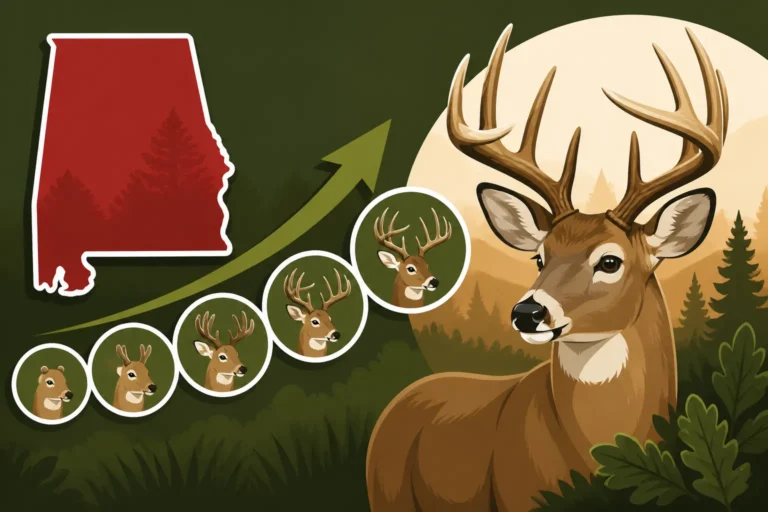
Perhaps the most significant factor in the coyotes' successful establishment and population boom in Alabama was the burgeoning white-tailed deer population. After decades of conservation efforts and regulated hunting, deer numbers exploded across the state by the late 20th century. For coyotes, this represented an enormous, easily accessible food source: fawns.
While adult deer can often outrun or deter a single coyote, fawns are vulnerable, especially in their first few weeks of life when they are most susceptible to predation. A healthy deer herd means a consistent supply of fawns each spring, providing a crucial caloric boost for breeding coyotes and their growing litters. This abundance of food allowed coyote populations to grow rapidly, reaching densities that would have been impossible without such a reliable food base. You can learn more about the overall deer population in Alabama Deer Herd Size.
It's a classic ecological ripple effect:
- Deer population increases: Through successful management and habitat.
- Coyotes arrive and find abundant food: Especially vulnerable fawns.
- Coyote populations thrive: Leading to more coyotes in more areas.
This dynamic illustrates how even seemingly disparate species are connected in the complex web of an ecosystem.
Impact on Alabama's Ecosystem
The arrival and establishment of coyotes in Alabama wasn't just an interesting biological event; it fundamentally altered the ecological dynamics of our woods and fields. Suddenly, a new apex predator was on the scene, impacting everything from deer and turkey populations to smaller game animals and even domestic livestock. For hunters and wildlife managers, understanding these impacts is crucial for adapting strategies and ensuring healthy game populations. The pressure they exert can be felt across various species, truly changing the predator-prey balance we had grown accustomed to.
Pressure on Fawn and Poult Survival
Without a doubt, one of the most significant and often discussed impacts of coyotes in Alabama is their predation on deer fawns and turkey poults. For deer, coyotes are highly effective fawn predators, particularly during the first few weeks after birth. While a healthy deer herd can generally sustain some level of fawn predation, high coyote densities, combined with other factors like poor habitat quality or unusually severe weather, can certainly depress fawn recruitment – the number of fawns that survive to breeding age. This can lead to concern among hunters eager to see future generations of bucks. You can delve deeper into this specific impact in Alabama Predator Impact on Fawn Recruitment.
Similarly, wild turkey poults are extremely vulnerable to coyotes. Turkey hens often nest on the ground, and once the poults hatch, they are small, flightless, and easy targets for a hungry coyote. While bobcats, foxes, and raccoons have always been predators of turkeys and their nests, coyotes added another layer of predation pressure. The challenge is often compounded by habitat fragmentation, which can push nesting turkeys into less secure areas, making them easier targets for opportunistic predators. This is a critical factor for anyone interested in Alabama Turkey Population Trends.
Shifting the Predator Landscape
The presence of coyotes didn't just add a new predator; it shifted the entire predator landscape. Coyotes are incredibly competitive, and their arrival often meant increased pressure on other medium-sized predators like red and gray foxes. Coyotes are larger, more aggressive, and often more efficient hunters. This can lead to a phenomenon known as "mesopredator release," where the arrival of a dominant predator like the coyote can actually suppress populations of smaller predators, sometimes leading to complex and unpredictable changes in the ecosystem.
For example, if coyotes suppress fox populations, it could theoretically lead to a temporary increase in some small game species that foxes typically prey on, but then those same small game animals face new pressure from the coyotes. It’s a delicate balance. Coyotes and Predators in Alabama is a great resource for understanding this complex web. What’s clear is that coyotes have cemented their place at or near the top of the food chain in many Alabama ecosystems, and their influence isn’t going away.
Managing the Modern Coyote Population
Given their widespread presence and their impact on game species, managing coyote populations has become a significant topic for Alabama hunters and landowners. The key characteristic of coyotes that makes them so successful – their adaptability – also makes them incredibly challenging to manage. They reproduce efficiently, learn quickly, and can survive in a wide range of habitats. While complete eradication isn't a realistic goal, various strategies are employed to mitigate their impact, particularly on deer and turkey populations.
Understanding coyote behavior, their preferred habitats, and their population dynamics is essential. Tools like GoHunt can be incredibly useful for hunters looking to identify potential coyote travel corridors, denning sites, or areas where fawn and poult predation might be highest, helping them focus their management efforts. Knowing the lay of the land, including areas with dense cover or water sources, can give you an edge.
Year-Round Hunting Opportunities
One of the primary tools for managing coyotes in Alabama is liberal hunting regulations. Unlike most game animals with specific seasons and bag limits, coyotes can be hunted year-round, day or night, and there are no bag limits on private land. This allows hunters to target them aggressively, especially during crucial times like deer fawning season or turkey nesting season. Many hunters integrate coyote hunting into their regular deer and turkey pursuits, viewing it as a beneficial activity for the overall health of the game populations they pursue.
Whether it’s calling them in, sitting over bait, or even night hunting with lights and thermal optics (where legal, of course, always check Night Hunting Rules for Alabama Coyotes), there are numerous methods available. While it’s unlikely that hunting alone will significantly reduce the statewide coyote population, focused, consistent effort in specific areas can certainly help reduce local pressures on fawns and poults. Every coyote removed from a deer fawning area, for instance, potentially means one more fawn that makes it to adulthood.
The Role of Hunter and Landowner
Hunters and landowners play a critical role in local coyote management. By actively hunting coyotes, they contribute to population control and can alleviate some of the predation pressure on other wildlife. This often involves proactive scouting and understanding the signs of coyote activity on your property or public land. Knowing where coyotes travel, where they might den, and their general habits can significantly increase your success.
Furthermore, sound habitat management practices are also important. Creating diverse habitat with good cover can sometimes give deer and turkeys a better chance to evade predators. For landowners, exploring options like fencing or specific husbandry practices can help protect livestock from Alabama Coyote Attacks on Livestock. Ultimately, the ongoing presence of coyotes means that hunters and land managers in Alabama must continually adapt their strategies, incorporating predator management into their overall wildlife plans to foster healthy and balanced ecosystems.
Here's a quick look at the estimated arrival timeline of coyotes in Alabama:
| Decade | General Coyote Presence in Alabama | Key Characteristics |
|---|---|---|
| Pre-1960s | Virtually non-existent | Native to Western North America, rare in Southeast. |
| 1960s-1970s | First scattered sightings | Western border counties, likely natural dispersal. |
| 1980s | Gradual establishment, increasing | Spreading eastward, population growth noticeable. |
| 1990s | Widespread and expanding quickly | Established across much of the state, higher densities. |
| 2000s-Present | Common statewide, well-established | Integrated into ecosystem, management discussions common. |
Disclaimer
This article is for general informational purposes only and does not constitute professional advice. Laws, prices and regulations vary by location and change over time. Consult a qualified professional for guidance on your specific situation.