Alabama Public Land Antlered-Only Windows
It’s a tale as old as time for Alabama hunters: you’re buzzing with excitement for opening day, you’ve scouted your spot, and you’re ready to fill your tag. But then, you step onto public land, and suddenly, the rules you thought you knew from private tracts go right out the window. The confusion around public land antlered-only windows can be truly maddening, leading to missed opportunities or, worse, accidental violations. This guide is here to untangle that knot, helping you confidently navigate Alabama’s public hunting areas so you know exactly when you can chase those antlered bucks and when either-sex season truly opens up for you.
The Public Land Rulebook: Why it Differs for Deer
Hunting Alabama's vast public lands, from the sprawling National Forests to the numerous Wildlife Management Areas (WMAs), is an incredible privilege. It offers accessibility and diverse terrain that private land often can't match. However, with that privilege comes a layer of regulation that often baffles even seasoned hunters. It’s not simply a matter of knowing your deer zone; public lands operate under their own specific set of rules, particularly concerning deer harvest dates, and misunderstanding them can quickly turn a hopeful hunt into a frustrating one.
Not Your Grandpappy's Private Land Rules
You might hear your buddy talking about taking an antlerless deer on opening weekend in your zone, but when you check the WMA regulations, it's strictly bucks-only. Frustrating, right? This disconnect is a major source of confusion. Unlike private lands, which generally follow the broader county or zone regulations set by the Alabama Department of Conservation and Natural Resources (ADCNR), public lands are often managed with more conservative harvest strategies in mind.
The ADCNR manages WMAs and National Forest hunting compartments with specific goals: to provide quality public hunting opportunities, manage deer populations sustainably, and spread hunting pressure effectively. This often means more restrictive bag limits, shorter seasons, and, crucially for this discussion, specific antlered-only windows that differ from the surrounding private land. These regulations aim to protect younger deer, allow bucks to reach older age classes, and ensure a healthy deer herd for future generations of hunters. It’s a delicate balance, and that’s why the WMA supplements are your absolute bible when you step onto public ground.
Decoding Alabama's Deer Zones and How They Inform Public Land
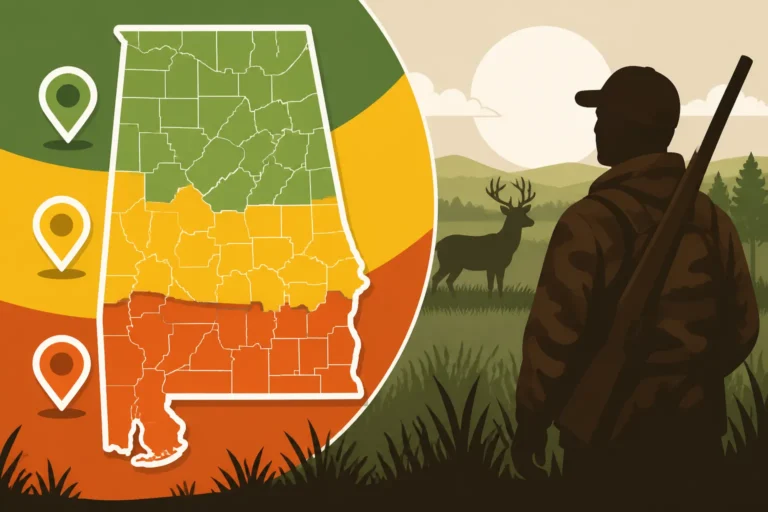
Alabama is divided into five distinct deer zones (A, B, C, D, and E), each with its own general season dates, bag limits, and often, differing rut timing. Understanding these zones is the foundational first step for any deer hunter in Alabama, and you can get a great overview from resources like Alabama's Five Deer Zones. However, for public land, these zones primarily establish the earliest possible opening date for deer season in a given region. They do not dictate the specific antlered-only or either-sex windows on WMAs or National Forests within those zones.
Think of the zone system as the overarching framework, and the public land regulations as detailed blueprints laid on top. For instance, Zone A might have an early archery opener and a relatively long either-sex gun season on private land. However, a WMA located within Zone A might delay its gun season opener, have a much shorter either-sex window, or enforce an extended antlered-only period to manage its specific deer population and hunting pressure. The ADCNR, through its Wildlife and Freshwater Fisheries Division, implements these localized rules to achieve specific management objectives unique to each public land area, which often see much higher hunting pressure than private properties.
Pinpointing Public Land Antlered-Only Seasons
Now, let's get down to the nitty-gritty: actually figuring out when you can legally tag an antlered buck on public land. This requires diligence and a commitment to checking the official sources, because making assumptions will almost certainly lead you astray.
The Critical First Phase: Early Antlered-Only Windows
For a significant number of Alabama's WMAs and National Forest lands, the deer season kicks off with an "antlered-only" period. This means that even if the private land in the surrounding county or deer zone has already opened for either-sex harvest, public land hunters are often restricted to taking only antlered bucks for the initial weeks of the season. This early antlered-only window is a common management tool designed to spread out hunting pressure and allow for a more controlled harvest of does later in the season.
For example, many WMAs, especially those in the northern and central parts of the state, might open for gun hunting in mid-November but only allow the harvest of antlered deer for the first two to four weeks. Only after this initial period will either-sex hunting be permitted, and even then, often with specific daily or season bag limits that are more restrictive than private land. It's vital to check the WMA brochure or online regulations for the specific area you plan to hunt. For a general overview of the statewide season, you can consult Alabama Deer Season Structure Explained, but remember, that's just the starting point for public land.
Beyond Opening Day: Later Antlered-Only Periods
While the most prominent antlered-only periods usually occur at the beginning of the season, some WMAs might occasionally implement additional antlered-only periods later in the season. These are less common but can happen, perhaps during what's considered a "late-rut" phase or in specific management zones within a WMA. The logic here could be to target bucks when they are most active or to provide a specific type of hunting opportunity. However, it's much more common for public lands to transition from an initial antlered-only period directly into an either-sex period.
The only truly reliable source for these specific dates, and any special conditions, is the official WMA regulation supplement or the Outdoor Alabama app. Relying on outdated information from previous years or assuming rules are consistent can lead to serious legal trouble. These regulations are updated annually, so make it a habit to download and review the latest information before every season. Services like GoHunt can also be incredibly helpful here, offering detailed map overlays with WMA boundaries and regulations, but always cross-reference with official ADCNR documents.
Understanding "Antlered Deer" Definitions
In Alabama, the definition of an "antlered deer" is straightforward: it's any deer with visible antlers that extend above the natural hairline. There's no minimum length requirement, and generally, antler point restrictions (APRs) are rare on public lands in Alabama. While some states have complex rules about antler size or number of points, Alabama typically keeps it simple for public land hunters – if it has antlers above the hairline, it’s considered an antlered buck.
However, some WMAs may have special APRs or minimum antler requirements for certain harvest opportunities, particularly on some special management hunts or certain quota hunts. These exceptions will always be explicitly stated in the WMA's specific regulations. Always double-check this detail, especially if you're hunting a quota area or a particularly managed segment of a National Forest.
Here’s a simplified look at the general pattern for public lands, but always refer to specific WMA regulations for exact dates:
| Deer Zone | Typical Public Land Archery Opener (Antlered-Only) | Typical Public Land Gun Opener (Antlered-Only) | Transition to Either-Sex (Public Land) |
|---|---|---|---|
| Zone A | Mid-October | Mid-November | Early-to-Mid December |
| Zone B | Mid-October | Mid-November | Early-to-Mid December |
| Zone C | Mid-October | Mid-November | Early-to-Mid December |
| Zone D | Late October/Early November | Late November/Early December | Late December/Early January |
| Zone E | Late October/Early November | Late November/Early December | Late December/Early January |
| Note: This table provides general patterns. Actual dates and regulations vary significantly by individual WMA and National Forest unit and are updated annually. Always consult the official ADCNR WMA Regulations. |
Strategies for Success in Antlered-Only Windows
Hunting during antlered-only windows means your focus is singular: finding a buck. This requires a specific set of strategies, from intense scouting to precise stand placement, all aimed at intercepting an antlered deer.
Intensive Scouting and Buck Behavior
Since you're specifically targeting bucks, your scouting efforts need to be laser-focused on buck sign and their typical travel patterns. Before the season, dedicate time to Scouting Alabama Public Land Before Season. Look for rubs – fresh ones indicate recent activity and can tell you the general direction a buck is traveling. Scrapes, particularly large primary scrapes along ridge lines or old logging roads, are also huge indicators. Note their size and freshness. Larger, more numerous scrapes often mean bigger, more dominant bucks are in the area.
During the early antlered-only periods, bucks are often in predictable patterns, moving between bedding areas and food sources. They might still be in bachelor groups, though these start breaking up as the pre-rut approaches. Look for subtle terrain features that funnel deer movement: creek crossings, saddles between ridges, dense thickets bordering more open timber. A good mapping tool like GoHunt can help you identify these features from your couch, then confirm them on the ground. Understanding how bucks use terrain, especially on varied public land, is crucial. For instance, Reading a Ridge for North Alabama Deer can offer insights into how topography dictates deer movement, helping you pinpoint those buck travel corridors.
Stand Placement and Scent Control for Buck Encounters
Once you've identified potential buck travel routes or feeding areas, effective stand placement becomes paramount. During antlered-only season, especially early on, bucks are often less vocal and require you to be in the right place at the right time. Consider classic ambush points:
- Pinch Points: Areas where the terrain narrows, forcing deer into a smaller corridor. This could be between a steep hill and a creek, or a dense thicket and an open area.
- Saddles: Low spots on ridges that deer often use to cross from one side to another. These are natural funnels.
- Food Sources: Early season bucks will hit acorns, persimmons, or leftover agricultural fields on the edge of public land.
- Bedding Areas: Identifying thick cover where bucks prefer to bed, and then setting up on the downwind side of their likely entry or exit routes.
Scent control is absolutely critical when targeting bucks. They have an incredible sense of smell, and a single whiff of human odor can send them packing. Shower with scent-free soap, wash clothes in scent-free detergent, and use a cover scent or ozone generator. Also, plan your entry and exit routes carefully to avoid blowing your scent into the area you intend to hunt. For tips on setting up a good ambush point, check out advice on Treestand Setups in Talladega National Forest, which covers key considerations for public land. While calling tactics like Rattling and Grunting in Alabama become more effective closer to the rut, early season bucks might respond to subtle grunts or social bleats, but don't overdo it. Patience and stealth are your best friends.
Avoiding Pitfalls and Maximizing Your Public Land Experience
Navigating public land regulations, especially those related to antlered-only windows, can feel like a minefield. But with the right approach, you can avoid common mistakes and have a productive, enjoyable, and most importantly, legal hunting season.
The Perils of Assumption: Always Double-Check
The biggest mistake a public land hunter can make is assuming that the regulations are the same as last year, or the same as private land, or even the same across different WMAs. This couldn't be further from the truth. Regulations, especially on WMAs, can change annually due to management decisions, habitat conditions, or other factors. The legal consequences of harvesting an antlerless deer during an antlered-only window can range from hefty fines to license revocation and the loss of your harvested game. It's simply not worth the risk.
Before every season, and before every trip to a new public hunting area, take the time to:
- Visit the Outdoor Alabama Website: Look for the specific WMA or National Forest supplement. Download the PDF to your phone or print it out.
- Use the Outdoor Alabama App: This app often has current regulations and mapping features. Using the Outdoor Alabama Map Tool can save you a lot of guesswork and help you locate boundaries.
- Cross-Reference (if desired) with Third-Party Apps: Tools like GoHunt can provide an excellent visual overlay of WMA boundaries and can sometimes include regulation summaries, but always, always confirm with the official ADCNR documents.
And once you do harvest a deer, remember your duties. Alabama has clear Alabama Deer Reporting Rules that require you to report your harvest through Game Check. Failing to do so is another common mistake that can lead to penalties.
Managing Pressure and Finding Your Spot
Public land hunting often means dealing with more hunting pressure than private tracts. During antlered-only openers, popular WMAs can see significant crowds, especially on weekends. This pressure can alter deer behavior, making them more nocturnal or pushing them into thicker, less accessible cover. Don't let this deter you; instead, adapt your strategy.
Consider hunting during weekdays when pressure is typically lighter. If you’re limited to weekends, be willing to walk further than most hunters. Many public land hunters stick close to roads and established trails. By pushing a little deeper into less-traveled areas, you can often find pockets of undisturbed deer, including mature bucks. Look for areas with dense cover, steep terrain, or natural barriers that deter casual hunters. Understanding Hunting Pressure on Alabama Public Land and how to mitigate its effects is a skill every public land hunter needs to develop.
Finally, remember that patience is a virtue in deer hunting, especially on public land during specific windows. Not every hunt will result in a harvest, but every moment spent in the woods, learning, observing, and appreciating nature, contributes to the overall experience. Take note of Late-Season Food Sources for Alabama Whitetails if your antlered-only period extends into colder months, as bucks will be focused on replenishing energy. And always be mindful of how Hunting the Alabama Rut by Zone can affect buck movement, even within these restrictive windows; a buck chasing a doe might throw caution to the wind, offering a brief, exciting opportunity.
Disclaimer
Always consult the official Alabama Department of Conservation and Natural Resources (ADCNR) regulations for the most current and accurate hunting season dates, bag limits, and specific rules for Wildlife Management Areas (WMAs) and other public lands. Regulations are subject to change annually.