Hunting Flooded Timber for Mallards
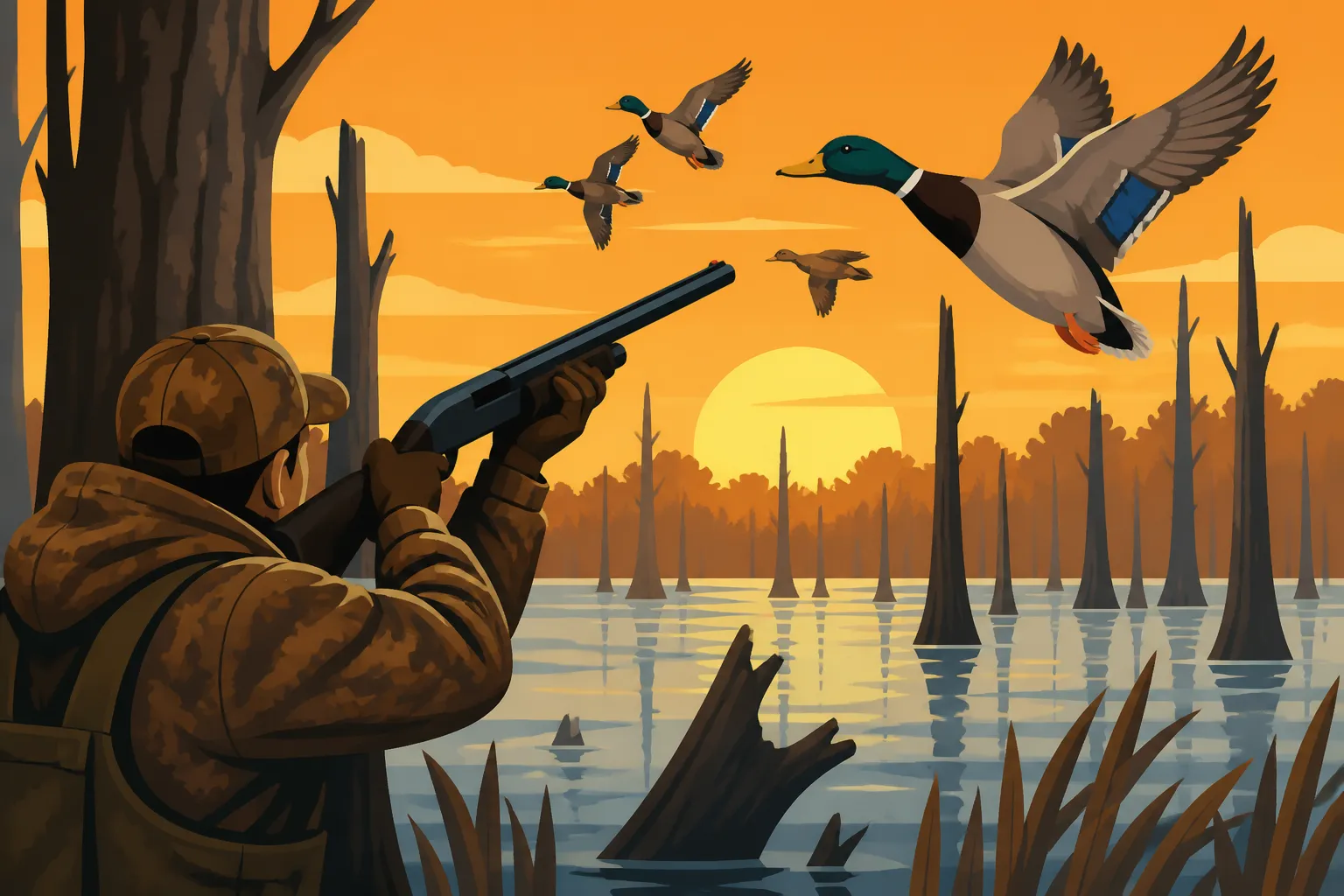
There's nothing quite like the sound of mallards cupped and committed, wings set, whistling through the tops of flooded timber, only to descend into your decoys. But let's be honest, getting them to do that in the thick, often unpredictable flooded timber of Alabama can feel like trying to solve a complex puzzle with missing pieces. The dense cover, changing water levels, and evasive nature of these smart birds can leave even seasoned hunters scratching their heads. This comprehensive guide is designed to cut through that frustration, offering practical strategies and insights specifically for hunting mallards in Alabama's unique flooded timber environments, helping you understand where they want to be, how to set up, and how to call them in effectively.
Understanding Alabama's Flooded Timber Habitat for Mallards
Hunting flooded timber for mallards is a quintessential Southern waterfowl experience, and Alabama, with its vast river systems and bottomland hardwoods, offers some incredible, albeit challenging, opportunities. It’s a completely different ballgame than hunting open fields or big water, and understanding the nuances of this habitat is your first step toward success.
The Allure and Challenge of Timber Hunting
Mallards are notoriously intelligent birds, and they are drawn to flooded timber for very specific reasons. Primarily, it's about food and cover. Those acorns dropping from pin oaks, water oaks, and willow oaks are like candy to a mallard, providing high-energy sustenance during the cold winter months. When the water rises and covers these mast-producing trees, it opens up a veritable smorgasbord for them. Think of it from a duck's perspective: an endless buffet beneath a natural canopy, offering concealment from predators like eagles and hawks, and protection from harsh winds. The timber provides a sense of security and plentiful groceries, making it an irresistible magnet.
However, this very allure presents significant challenges for us hunters. The dense canopy and thick understory that provide such great cover for ducks make it incredibly difficult for hunters to see them coming, much less get a clear shot. Sound travels differently in the timber, often distorting calls or making it hard to pinpoint the direction of working birds. Plus, the sheer amount of cover means ducks can land 10 yards from your spread and disappear completely. You really need to be on your game, not just with your calling, but with your overall awareness and ability to adapt.
Key Timber Features That Attract Ducks
Not all flooded timber is created equal in the eyes of a mallard. While any flooded hardwoods can hold birds, certain features consistently concentrate them. The most crucial factor is food availability. Look for areas with a heavy concentration of acorn-producing oaks. Green timber with a good mast crop will almost always outperform areas with few acorns. Beyond the oak species, consider the water depth. Mallards are dabblers; they prefer water that's shallow enough for them to tip up and feed, typically less than 18 inches deep. If the water is too deep, they can't reach the acorns, and they'll move on.
Another critical element is shelter and security. Look for areas with a mix of dense trees and small openings. These openings act as landing zones, while the surrounding timber provides that crucial sense of safety. Avoid vast, unbroken stands of timber where ducks might feel exposed, or conversely, areas so thick they can't even land. The ideal spot often has a slight current or flow, keeping the water from stagnating and sometimes indicating a connection to a larger waterway, making it easier for ducks to find. Often, these ideal spots are found slightly off the main flow of a river or slough, in more secluded pockets. When you're using aerial maps, perhaps on a platform like GoHunt, pay close attention to the subtle changes in tree density and signs of water flow.
Navigating the Alabama Landscape
Alabama offers a diverse range of flooded timber environments. One of the most prominent is the Mobile-Tensaw Delta, a massive, intricate network of rivers, bayous, and swamps where the Alabama and Tombigbee rivers converge before flowing into Mobile Bay. This delta is a prime area for migrating waterfowl, and its extensive bottomland hardwoods become incredible mallard magnets when flooded. Think about hunting in the vast expanses of the Delta, where you might find yourself navigating intricate channels to reach secluded pockets of green timber. For those interested in the broader picture, exploring articles like Waterfowl Hunting Alabama's River Deltas can provide valuable context on these unique hunting grounds.
Further north, the Tennessee River Valley also boasts significant flooded timber opportunities, especially when winter rains swell the tributaries and backwaters of impoundments like Wheeler or Guntersville Lakes. Here, you'll often find more mature timber stands, and hunting can be a bit more straightforward in terms of navigation, though the ducks are no less wary. When scouting these areas, look for smaller sloughs and oxbow lakes that fill with water, creating ideal feeding grounds. Understanding Hunting the Tennessee River Delta for Waterfowl can give you an edge in these areas. While these areas are distinct, the core principles of seeking food and cover remain constant. Always double-check Alabama Waterfowl Zones and Seasons for specific dates and regulations, as they can vary across regions.
Essential Gear and Setup for Flooded Timber Success
Once you've identified a promising spot, your gear and setup become paramount. Flooded timber hunting demands a specialized approach that differs significantly from hunting open water. Every piece of equipment and every setup decision needs to be made with the unique challenges of the timber in mind.
Decoy Spreads for Tight Spaces
Forget those sprawling decoy spreads you use in big fields or open water. In flooded timber, less is often more, and strategic placement is everything. You're trying to replicate a small, natural feeding congregation, not a massive raft of birds.
Key principles for timber decoy spreads:
- Small and Realistic: Six to twelve decoys are often plenty. Focus on realism. High-quality, lifelike mallard decoys, including some with active feeding positions, will be more effective than a huge spread of cheap ones.
- Create a Landing Hole: The most critical element is a clear, open water space for ducks to land. This might be a natural opening, or you might have to clear some brush. Position your decoys around the edges of this opening, leaving the center clear. Think of it as a funnel leading directly to your clear shot zone.
- Mix in Motion: A jerk string is highly effective in flooded timber. The subtle ripple and movement it creates can be incredibly lifelike and help break up the static appearance of the spread, especially on calm days. Mojo-type spinning wing decoys can also work, but use them sparingly; sometimes, the flash can be too much in a tight timber spot and spook wary birds. Consider a single spinning wing decoy placed low to the water or partially obscured to mimic a bird stretching its wings.
- Shallow Water Feeders: Place some decoys in "feeder butt-up" positions where the water is shallowest to signal that this is an active feeding area. This reinforces the idea that your spot offers prime foraging opportunities.
Here's a quick comparison of typical decoy setups:
| Setup Type | Water Depth & Cover | Decoy Count (Mallards) | Key Features & Strategy |
|---|---|---|---|
| Open Water/Field | Deep/Open | 2-4 Dozen | Large, diverse spreads for visibility from afar. Multiple species, full-body field decoys. Emphasis on numbers and variety. |
| Flooded Timber | Shallow/Dense | 6-12 | Focus on realism and creating a clear "landing hole." Majority drakes and hens, maybe a few feeders. Strategic placement around openings. Jerk string highly effective. |
| River Slough | Variable/Flowing | 12-24 | A mix of open water and timber tactics. Account for current. Spread along natural bends or eddies. Some motion crucial to cut through movement, but not overdo it. You might want to consider Reading a Delta Slough for a Morning Flight if you're targeting those shifting river systems. |
Calling Strategies Tailored for Timber
Calling in flooded timber is an art form. The sound dynamics are drastically different than open country. Your booming hail calls will likely echo unnaturally and spook birds.
- Soft and Subtle is Best: In the timber, sound doesn't travel far without distortion, and ducks are often closer than you think. Start with soft greeting calls, clucks, and feed calls. A soft, pleading comeback call when they start to drift can be incredibly effective.
- Listen More, Call Less: Let the birds tell you what they want. If they respond to soft quacks, stick with them. If they start to turn away, a slightly louder, more insistent call might be needed. The goal is to sound natural and inviting, not aggressive.
- Directional Calling: Don't just blast your call forward. Try calling slightly to the side or even behind you sometimes. This can create a more natural, diffuse sound that makes it harder for wary mallards to pinpoint your exact location.
- Don't Overcall: This is perhaps the most common mistake. Once birds are committed and working your hole, put the call down. Let the realism of your spread and the natural environment do the rest. A final "chuckle" or "feed call" as they cup their wings can be the perfect touch. This is where patience truly pays off.
Concealment is King
In the timber, you can't rely on expensive pop-up blinds as much as you might in a field. Your best blind is the natural environment itself.
- Boat Blinds/Layout Boats: If you're hunting deeper timber, a small boat or kayak, especially one with a natural camouflage wrap or paint job, can be your blind. Simply tuck it into a thicket of cypress or willow, cover it with natural vegetation, and become one with the woods. Remember that when you're targeting areas where you might need to use these, you should consult guides like Layout Blind Hunting Delta Farm Fields for tips, even though it's not strictly timber, the principles of concealment remain.
- Natural Cover: Fallen logs, dense saplings, or thick clumps of brush make excellent natural blinds. Position yourself so you have a clear view of your landing hole but are completely hidden from above and from the direction the ducks are likely to approach. Pay attention to shadows and light – you want to blend in seamlessly.
- Wear the Right Camo: Breakup patterns with good depth and natural colors are crucial. Face paint or a face mask is non-negotiable. Ducks have incredible eyesight, and a glint of sunlight off your skin or a bright piece of clothing can blow your hunt.
- Stay Motionless: This is probably the hardest rule to follow, but it's the most important. As soon as you hear those wings, freeze. Even a subtle head movement can be picked up by an incoming mallard. Practice drawing your gun slowly and smoothly, minimizing any sudden movements.
Mastering the Hunt: Tactics and Timing
Beyond gear and setup, the actual execution of the hunt – knowing when to go, how to approach, and how to react – is what separates a successful timber hunter from one who goes home empty-handed.
Reading the Birds and the Weather
Successful timber hunting relies heavily on observation and adapting to conditions. Mallards are creatures of habit, but they also respond acutely to changes in weather and water levels.
- Cold Fronts are Your Friend: A sharp drop in temperature often pushes new birds south and encourages resident birds to feed more aggressively. The days immediately following a strong cold front can be fantastic.
- Rain and Rising Water: While heavy rain during a hunt can be miserable, rising water levels from recent rains are often a blessing in the timber. It expands the available feeding grounds, making more acorns accessible, and often concentrates birds into newly flooded areas. However, too much water can spread them out, making them harder to pinpoint.
- Scouting is Non-Negotiable: You can't just show up and expect success. Use tools like GoHunt's satellite imagery to identify potential flooded timber pockets. Then, before the season, or even the day before a hunt, walk or boat into potential spots to look for fresh duck sign: droppings, muddy water where they've been feeding, and most importantly, listen for birds. Scouting Alabama Public Land Before Season is an excellent resource for general scouting tips that can be adapted to timber.
- Morning vs. Afternoon: Mallards often feed heavily in the morning, making first light a prime hunting time. However, don't discount the late afternoon. As ducks leave their resting areas to feed before roosting, you can often catch them working into timber pockets. Pay attention to local patterns; sometimes birds will loaf in open water during the day and hit the timber in the afternoon.
Entry and Exit Strategies
One of the biggest mistakes hunters make in flooded timber is spooking birds before they even get set up. Your entry and exit need to be as stealthy as possible.
- Darkness is Your Ally: Plan to arrive at your chosen spot well before first light. Navigate slowly and quietly, whether by boat, kayak, or foot. Avoid shining bright lights directly into the timber, as this can alert ducks that may already be roosting or feeding in the area.
- Minimize Noise: Every paddle stroke, every step through the water, every bump of your gear against a tree can send ducks flaring. Wear soft clothing, secure loose gear, and move with deliberate, quiet motions. If you're running a small outboard, cut it well before you reach your hunting zone and paddle the rest of the way in.
- Wind Direction Matters: Always approach with the wind in your face, or at least across, so your scent (if any) is not blowing into the birds and any noise you make is carried away. It also positions the ducks to land into the wind, ideally right into your landing zone.
- Be Patient on Exit: Resist the urge to pack up and leave immediately after you've shot your birds or the flight dies down. Often, a second wave of birds might come through later, or you might flush birds you didn't know were there. Give the area time to settle before making your exit, and do so as quietly as you entered. This also prevents you from educating other birds on future hunts.
Safety First in the Swamps
Flooded timber can be a beautiful but treacherous environment. Safety should always be your top priority.
- Know Your Limits: Don't wade into water that's too deep or has an uncertain bottom. Wear waders appropriate for the temperature and always wear a PFD (personal flotation device) if you're in a boat or even just wading in deeper, swift-moving water.
- Buddy System: Never hunt alone in remote flooded timber. If something goes wrong – you slip, get disoriented, or an emergency arises – having a partner can be a lifesaver. Share your hunting plans with someone not in your party.
- Navigation: It's incredibly easy to get turned around in dense timber, especially in the dark. Use a reliable GPS device or a mapping app like GoHunt on your phone with downloaded offline maps. Mark your entry and exit points, and plot your route. A compass and physical map are excellent backups.
- Watch for Wildlife: Alabama's swamps are home to more than just ducks. Be aware of venomous snakes, alligators, and other critters. Give them their space.
- Firearm Safety: Always be aware of your muzzle and what's beyond your target. In dense timber, visibility can be limited, and stray pellets can travel further than you think. Use appropriate shot sizes and chokes for close-range timber shooting. Review Alabama Legal Firearms for Deer Hunting as an example of safety and equipment considerations, though it's for deer, the overarching principles apply.
Post-Hunt Considerations and Conservation
The hunt doesn't end when the shot is fired. How you handle your harvest and your commitment to conservation are crucial parts of the experience.
Retrieval and Handling
Retrieving downed birds in flooded timber can be a real challenge. The dense cover that makes for great hunting also makes finding birds tough.
- A Good Dog is Invaluable: If you have a well-trained retriever, this is where they truly shine. A dog can navigate thick cover and deep water far better than a human, drastically reducing the number of lost birds.
- Mark the Fall: As soon as a bird is shot, keep your eyes glued to where it falls. Pick out a prominent tree or landmark near the fall zone. This is much harder than it sounds, especially when multiple birds are flying, but it’s critical.
- Immediate Retrieval: Don't wait. As soon as the shooting is over, or there's a lull, go directly to where the bird fell. Wounded birds can swim, dive, or crawl into impossibly thick cover. The sooner you get to them, the better your chances.
- Boat or Kayak Advantage: In deep timber, a small boat or kayak makes retrieval infinitely easier and safer than wading through murky water. Use a sturdy push pole to navigate silently.
- Game Care: Once retrieved, field dress your birds as soon as possible, especially in warmer Alabama weather. This helps cool the meat and preserves its quality. Store them in a cooler with ice. Remember to always check your Alabama Duck Daily Bag Limit and comply with all harvest reporting regulations.
Being a Responsible Timber Hunter
Being a good steward of the resource and the land is paramount. Our actions today impact tomorrow's hunting opportunities.
- Respect Private Property: Even in public areas, know your boundaries. If you're on private land, ensure you have explicit permission. This is especially true when navigating adjacent properties. For general information about land access, look at articles such as Getting Private Land Permission in Alabama.
- Leave No Trace: Pack out everything you pack in. Shell casings, food wrappers, empty water bottles – all of it comes out with you. Leave the timber cleaner than you found it.
- Know and Follow Regulations: Ignorance of the law is no excuse. Stay informed about current federal and state waterfowl regulations, including season dates, bag limits, shooting hours, and steel shot requirements. Utilize resources like the Outdoor Alabama website or the GoHunt app to stay up-to-date. Ensure you have your Alabama State Duck Stamp Cost and Alabama Federal Duck Stamp Requirement met, along with your Alabama Migratory Bird Certification.
- Support Conservation: Your purchase of hunting licenses and duck stamps directly funds habitat conservation efforts. Consider joining and supporting organizations like Ducks Unlimited or Delta Waterfowl that actively work to protect and enhance waterfowl habitat in Alabama and across the flyways.
- Mentor New Hunters: Share your knowledge and passion responsibly. Introduce new hunters to the unique experience of timber hunting, instilling in them the same respect for the birds, the land, and the traditions that you hold dear.
Disclaimer
Hunting is an inherently dangerous activity. Always prioritize safety, adhere to all local, state, and federal regulations, and obtain proper licenses and permits before engaging in any hunting activities. This guide is for informational purposes only and should not replace official safety training or regulatory guidelines.