When Alabama Gobblers Go Quiet in May
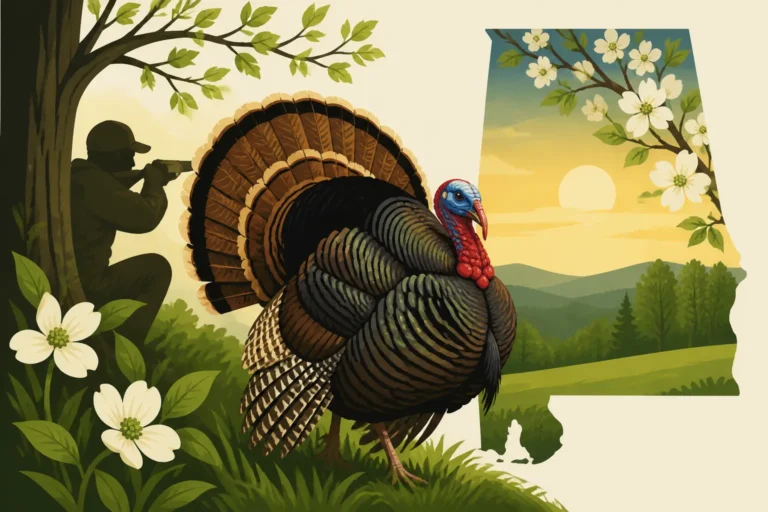
It's late May in Alabama, and those roaring gobblers that made your early season hunts so exciting have suddenly gone silent. You're out there at dawn, listening intently, only to be met with an eerie quiet, and it's enough to make you wonder if all the birds have vanished. This guide will dive deep into why Alabama gobblers clam up as the season winds down and, more importantly, what you can do to still punch your tag when the woods get quiet.
Understanding the Late-Season Shift in Gobbler Behavior
By May, the rhythm of the Alabama turkey woods changes dramatically. The intense, often frantic, activity of the early season gives way to a more subdued, methodical phase. It's not that the birds disappear; they just have different priorities. Understanding these shifts is key to adapting your strategy and finding success when others have given up.
The Post-Breeding Phase and Decreased Gobbling
The primary reason for the quiet woods in May is simple: the peak of breeding season is largely over. Those boisterous morning gobblers were primarily trying to attract hens and establish dominance. Now, most hens are already bred and committed to nesting. They're sitting on eggs, often for weeks, and their availability for breeding has drastically decreased.
Think about it from the gobbler's perspective. Why expend all that energy gobbling when the prize (a receptive hen) is scarce? His biological imperative to breed has largely been met, and his desire to loudly broadcast his presence diminishes. Instead, he might still be interested in a late-breeding hen, but he's often doing it more discreetly. You might hear an occasional shock gobble if something spooks him, or a soft, almost conversational series of clucks and yelps, but the loud, consistent morning serenades of March and April are mostly a thing of the past. The frustration of sitting in a silent timber stand, knowing birds are around but hearing nothing, is a common late-season dilemma for many hunters.
Increased Pressure and Educated Birds
Another significant factor contributing to the late-season silence is the sheer amount of hunting pressure Alabama gobblers have endured since opening day. They've heard every call, seen every decoy, and likely dodged a few close calls. By May, these birds, especially the mature longbeards, are incredibly "educated." They’ve learned that consistent, loud calling often leads to danger, not companionship.
This pressure makes them wary and call-shy. A gobbler that might have come charging into a locator call or aggressive yelps in April will now often hang up, circle wide, or simply ignore the sounds altogether. Public land birds are particularly susceptible to this, as they face continuous pressure from multiple hunters daily. Even on private land, if it's been hunted consistently, birds will quickly become more cautious. It’s a real testament to their survival instincts, but it certainly makes our job harder.
Tactics for Locating and Engaging Silent May Gobblers
So, the birds are quiet. Does that mean you should just pack it in? Absolutely not! It means you need to shift your strategy from being a "caller" to being a "hunter" in the truest sense – relying more on woodsmanship, scouting, and patience. Many seasoned hunters find late-season hunts incredibly rewarding precisely because they demand a higher level of skill and cunning.
Scouting for Visual Cues and Sign
When the sound isn't there, your eyes become your most valuable tool. Instead of listening for a gobble, you need to be looking for turkeys. This means covering ground, quietly, and systematically. Look for fresh tracks in soft dirt along logging roads, creek bottoms, and field edges. Droppings can tell you if birds are regularly using an area and whether they are gobblers (larger, J-shaped droppings) or hens (smaller, coiled droppings).
Feather dustings, where a turkey has preened, or actual shed feathers, are great indicators of activity. Pay close attention to strut zones – these are often elevated, open areas like old logging decks, field corners, or ridge tops where gobblers display. You'll often find distinct drag marks from their primary wing feathers. Get out during mid-morning and mid-day when the woods are quiet and walk, walk, walk. Use quality binoculars to scan distant fields or clearings for any sign of movement. Sometimes, the first hint of a gobbler will be seeing him strutting silently in an open field, often a good distance away, far from where he might have gobbled if it were earlier in the season. Scouting with the Outdoor Alabama App can also reveal potential hotspots.
Adapting Your Calling Strategy
The loud, aggressive calling that might have worked in March will often spook a May gobbler. Now is the time for subtlety and finesse. Think "conversational" rather than "commanding." Focus on soft clucks, purrs, and quiet tree yelps. These are the sounds a lone hen might make, and a weary gobbler might be more inclined to investigate a quiet, unassuming hen than a loud, aggressive one that screams "trap!"
Consider using a soft, contented series of hen yelps, then going completely silent for 15-20 minutes. Patience is paramount. Often, a May gobbler will circle wide, approach silently, or simply take his time. If you hear him spit and drum but can't see him, resist the urge to call loudly again. A soft cluck or purr might be all it takes to convince him to take those last few steps. As the season progresses, I find myself listening much more than calling, only offering a little coaxing when I feel it's truly necessary. Don't be afraid to pull out a friction call like a pot call or box call for those soft, realistic sounds that carry just enough, but not too much.
The Art of Still-Hunting and Ambush
When gobblers are quiet, the hunter becomes the predator, relying on stealth and observation. Still-hunting, which involves moving extremely slowly and deliberately through the woods, pausing frequently to listen and scan, can be incredibly effective. Focus on known travel corridors, like old logging roads, game trails along creek bottoms, or the edges of food plots and fields. Moving at a snail's pace, taking only a few steps every minute or two, allows you to pick up on subtle cues you might miss if you rush.
Another fantastic late-season strategy is the ambush. If you've been scouting and identified a consistent pattern – perhaps a gobbler is always seen crossing a particular creek bottom, or he consistently uses a specific ridge to move between two feeding areas – then setting up an ambush is your best bet. A well-placed ground blind or using natural cover to conceal yourself along a high-traffic route, even for a few hours in the mid-day, can pay off. Make sure your setup allows you to remain still and blend in, as these birds have excellent eyesight. Getting into position early in the morning, perhaps before Alabama Legal Turkey Hunting Hours begin, gives you the best chance. Using a subtle decoy can still be effective, but remember When Alabama Turkey Decoys Become Legal and consider less aggressive setups.
Late-Season Habitat and Food Source Focus
Just like deer, turkeys are driven by food, water, and security. As May progresses and temperatures rise, these needs become even more pronounced. Understanding where to find these crucial resources will significantly increase your chances of finding those quiet gobblers. It’s less about listening for a gobble and more about knowing where he wants to be.
Targeting Water Sources and Shady Areas
May in Alabama can get hot and humid. Just like us, turkeys need to stay hydrated and seek relief from the sun. This means that creek bottoms, shaded hardwood drains, areas around spring heads, and even small puddles can become magnets for birds, especially during the mid-day heat. Focus your scouting and hunting efforts on these cooler, often wetter, areas.
A gobbler might spend his mornings in open fields or on high ridges, but as the sun climbs, he'll often retreat to the cool, dark timber along a water source. Setting up near a secluded water source or a dense, shady creek bottom where birds can escape the heat can be a prime ambush spot. This is particularly true if you're out during those middle-of-the-day hours when many hunters have already gone home. Consider a slow, quiet approach to these areas, paying close attention to fresh tracks in damp soil.
Identifying Remaining Food Sources
While early season birds are often focused on strutting, late-season gobblers are more focused on feeding and recuperating. As the woods green up, their diet shifts. Look for areas with fresh, tender green vegetation, like clover plots (if they're still palatable), new growth in clear-cuts, or areas with an abundance of insects. Insects, in particular, become a significant food source in May.
Worms, grubs, and various bugs are plentiful in disturbed soil or moist areas. If you find signs of turkeys scratching extensively, you've likely found a food source they're keying in on. Residual mast, like acorns that might have remained from the previous fall, can also still be found in certain areas, particularly in richer bottomlands. A good hunting app like GoHunt can help you analyze terrain and vegetation to pinpoint these potential feeding areas. Understanding the specific food preferences of late-season birds in your local Alabama Spring Turkey Zones and Dates is crucial.
| Season Phase | Gobbler Behavior | Calling Strategy | Location Focus | Key Tactic |
|---|---|---|---|---|
| Early Season | Frequent, aggressive gobbling; actively seeking hens. | Aggressive yelps, cutting, locator calls. | Roosts, open fields, strut zones. | Get close, call them in. |
| Mid-Season | Moderate gobbling; hens may still be with gobblers. | Mix of aggressive/subtle; locator calls. | Travel corridors, feeding areas. | Adapt to hen presence. |
| Late Season | Minimal gobbling; wary; focused on food/water/security. | Soft clucks, purrs, contented yelps; less calling. | Water sources, dense cover, specific food. | Still-hunting, ambushing, roosting. |
Roosting Tactics for May Birds
Even if gobblers aren't gobbling much in the morning, they still fly up to roost at night. Locating an evening roost can give you a significant advantage for a quiet morning hunt. This means being in the woods an hour or two before dark, quietly slipping into an area you suspect might hold birds. Listen for fly-up cackles, limb drumming, or even the sound of heavy wings beating as a bird pitches up into a tree.
Once you pinpoint a roost, back out quietly. The next morning, approach silently, well before first light, and set up within comfortable shooting range, but not so close that you risk spooking them as they fly down. Position yourself so you have a clear shot when the bird hits the ground, ideally in an area where he's likely to land. Being near their roost gives you the first opportunity to intercept them before they move off to feed or water. A prime example of this is learning How to Call an Alabama Gobbler Off the Roost by setting up in a strategic location near their evening perches, perhaps Setting Up Against a Big Oak that offers concealment and a clear shot lane. Remember to manage your daily limit responsibly, especially when Making the Most of a One-Bird-Per-Day Limit.
For birds that might be moving across large tracts, consider Run-and-Gun Turkey Tactics on Public Land, but adjust your calling to be much softer and less frequent than in early season. Focus on covering ground and looking for fresh sign rather than blasting out calls. If you're hunting in specific agricultural areas, understanding Turkey Tactics for Black Belt Field Edges can also be highly effective, as these areas often retain food sources and offer good visibility for spotting quiet birds. GoHunt's mapping features can be a real asset for identifying potential roosting areas and strategic ambush points. Finally, mastering Roost Hunting Alabama Gobblers is perhaps the most effective late-season tactic when the birds are tight-lipped during the day.
Disclaimer
Hunting is an inherently dangerous activity. Always prioritize safety, understand and follow all Alabama hunting regulations, and be aware of your surroundings. This information is for educational purposes and should not replace professional guidance or official state resources. Verify all season dates, bag limits, and licensing requirements with the Alabama Department of Conservation and Natural Resources (ADCNR) before heading afield.