Recovering a Deer From a River Bottom
Finding a deer after the shot is always a moment of mixed emotions, but when that prized buck or doe takes its last breath in the unforgiving embrace of an Alabama river bottom, the challenge truly begins. The thought of losing your hard-earned harvest to swift currents, thick mud, or deep water is a hunter's nightmare. This guide is here to walk you through the often-stressful, sometimes dangerous, but ultimately rewarding process of safely recovering a deer from these challenging aquatic environments.
The Initial Shock and Safety First in Alabama's River Bottoms
It’s that gut-wrenching feeling – you made a great shot, you heard the thud, but then you saw it, the deer crashing into the brush along the creek, or worse, directly into the river. Your heart sinks. Before you charge in, remember that adrenaline can be a dangerous thing. Alabama's river bottoms, from the Tennessee River to the Mobile-Tensaw Delta, are beautiful but can be incredibly deceptive and hazardous. Prioritizing your safety, and that of anyone you bring along, is paramount. No deer is worth risking your life for.
Evaluating the Immediate Danger and Deer's Location
The very first thing you need to do is pause and truly assess the situation. Did the deer fall into fast-moving water, or a stagnant, shallow slough? Is it stuck in deep, quicksand-like mud, or did it just cross a small stream and expire on the other side? These details drastically change your recovery strategy. Consider the time of day – is it getting dark? Trying to navigate a swampy river bottom after sunset, especially if you're Blood Trailing After Dark in Alabama, significantly increases the risk of getting lost, falling, or encountering venomous snakes, which are active in these wet environments.
Next, think about the conditions of the river or creek itself. Has it rained recently? Is the water high and swift, or is it low and slow? Strong currents can sweep a deer away surprisingly fast, turning a challenging recovery into an impossible one. Mud conditions are another huge factor. Some areas of the Black Warrior River bottom, for instance, are notorious for their sticky, bottomless gumbo mud that can suck boots right off your feet. Understand what you're up against before taking another step.
Marking Your Spot and Planning Your Approach
Once you've taken a moment to breathe and size up the situation, your next critical step is to mark the deer's last known location. This is absolutely crucial, especially if visibility is poor due to thick vegetation, waning daylight, or an expanding blood trail that might be difficult to follow near water. Look for prominent landmarks on both banks of the waterway – a distinctively bent tree, a large rock, a unique tangle of vines. Use these as reference points.
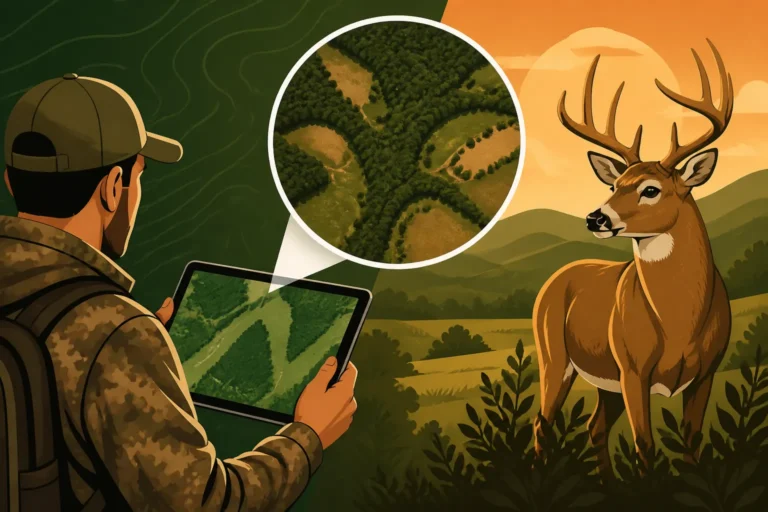
If you have a GPS device or a mapping app on your phone, like GoHunt, now is the time to use it. Drop a pin precisely where you last saw the deer or where it entered the water. This digital breadcrumb can be a lifesaver when you're trying to re-orient yourself in dense, disorienting cover. Before you even think about entering the water or mud, mentally (or even physically, with a stick) trace a safe path. Look for stable ground, avoid areas of obvious deep water or thick mud, and identify potential escape routes. Taking a little time now to plan can save you a lot of grief and danger later, especially if you're trying to navigate a challenging area like a Hunting a Funnel Between Two Creek Bottoms.
Assembling Your Crew and Equipping for the Deep South Challenge
Attempting a river bottom recovery alone is a recipe for disaster. The challenges presented by water, mud, and dense vegetation are often too much for one person to handle safely and effectively. This isn't the time for bravado; it's the time for teamwork and smart preparation.
The Indispensable Role of a Recovery Team
Finding a deer in an Alabama river bottom is almost always a multi-person job. Even if the deer isn't in deep water, the sheer effort of Dragging a Deer Out of a River Bottom through thick mud, over fallen logs, and through dense briars demands extra hands. A good recovery team isn't just about muscle; it's about safety. Having someone to watch your back for hazards – be it a hidden hole, a venomous snake, or simply a slippery bank – is invaluable.
Think about who you call. Your hunting buddies are often the first choice, but ideally, you want someone with experience in these types of recoveries or at least someone who understands the physical demands and potential dangers. If you're near private land, always ensure you have landowner permission before crossing property lines, even in a recovery situation, as Alabama has strict trespass laws. For public land, remember to adhere to rules like Alabama Public Land Hunting Hours and any WMA-specific regulations, which might include having an Alabama WMA Permit Requirement.
Gear Essentials for a Wet and Muddy Retrieval
Having the right gear makes a world of difference. You wouldn't go deer hunting without your rifle and ammo, and you shouldn't attempt a river bottom recovery without these essentials. This isn't just about convenience; it's about efficiency and safety.
Let's break down the crucial items:
| Item | Purpose | Notes |
|---|---|---|
| Ropes (50-100 ft) | Pulling deer, securing gear, safety lines | At least two, strong synthetic, bright color. Essential for leverage. |
| Waders/Chest Waders | Staying dry in shallow water/mud | Neoprene for warmth, rubber for durability. Check for leaks beforehand. |
| Headlamp/Flashlight | Visibility, hands-free operation | Waterproof with fresh batteries, and a spare set. Crucial if dark. |
| Life Vest | Safety in deep or swift water | Non-negotiable if boating or swimming involved. Even in shallow water, a fall can be dangerous. |
| First-Aid Kit | Addressing cuts, scrapes, snake bites | Include insect repellent, emergency blanket, and hand warmers if cold. |
| Mapping App (e.g., GoHunt) | Pinpointing location, assessing terrain | Download offline maps. Mark last seen, entry, and exit points. |
| Game Bags/Tarp | Protecting meat from dirt/debris | Keeps the deer clean during extraction and the drag. |
| Strong Knife | Field dressing, cutting brush | Always sharp, easily accessible. Consider a backup. |
| Water/Snacks | Staying hydrated and energized | Recovery can be long, physically demanding, and mentally taxing. |
| Extra Clothes | Change after mud/water exposure | Especially important in cooler weather to prevent hypothermia. |
| Small Boat/Canoe/Kayaks | For reaching deer in deep water/across channels | Only if safe and feasible; ensure stability and proper flotation. |
| Recovery Sled | Reduces friction for dragging | A heavy-duty plastic sled can be a game-changer over long distances. |
A quality mapping app like GoHunt is also great for Scouting Alabama Public Land Before Season. You can mark potential crossing points, avoid dead-end sloughs, and identify areas of thicker cover where a deer might hide. Having this information upfront can greatly reduce the unknown variables during a stressful recovery.
Practical Strategies for Extracting Deer from Water and Gumbo
Now for the nitty-gritty: actually getting that deer out. This is where the planning, the gear, and your team's collective effort really come into play. It's often slow, arduous work, but persistence and smart tactics will win the day.
Managing Deer in Swift Currents or Deep Water
If your deer is in deep water or a significant current, your options are more limited and safety becomes even more critical. If it's floating downstream, and you have a boat or canoe readily available and safe to launch, you might be able to intercept it. Always approach from downstream, allowing the current to help guide you. Use a long pole or gaff to gently hook an antler or leg, then carefully pull the deer alongside your vessel. Do not attempt to pull it into a small boat; this can easily capsize you. Instead, tow it to the nearest stable bank.
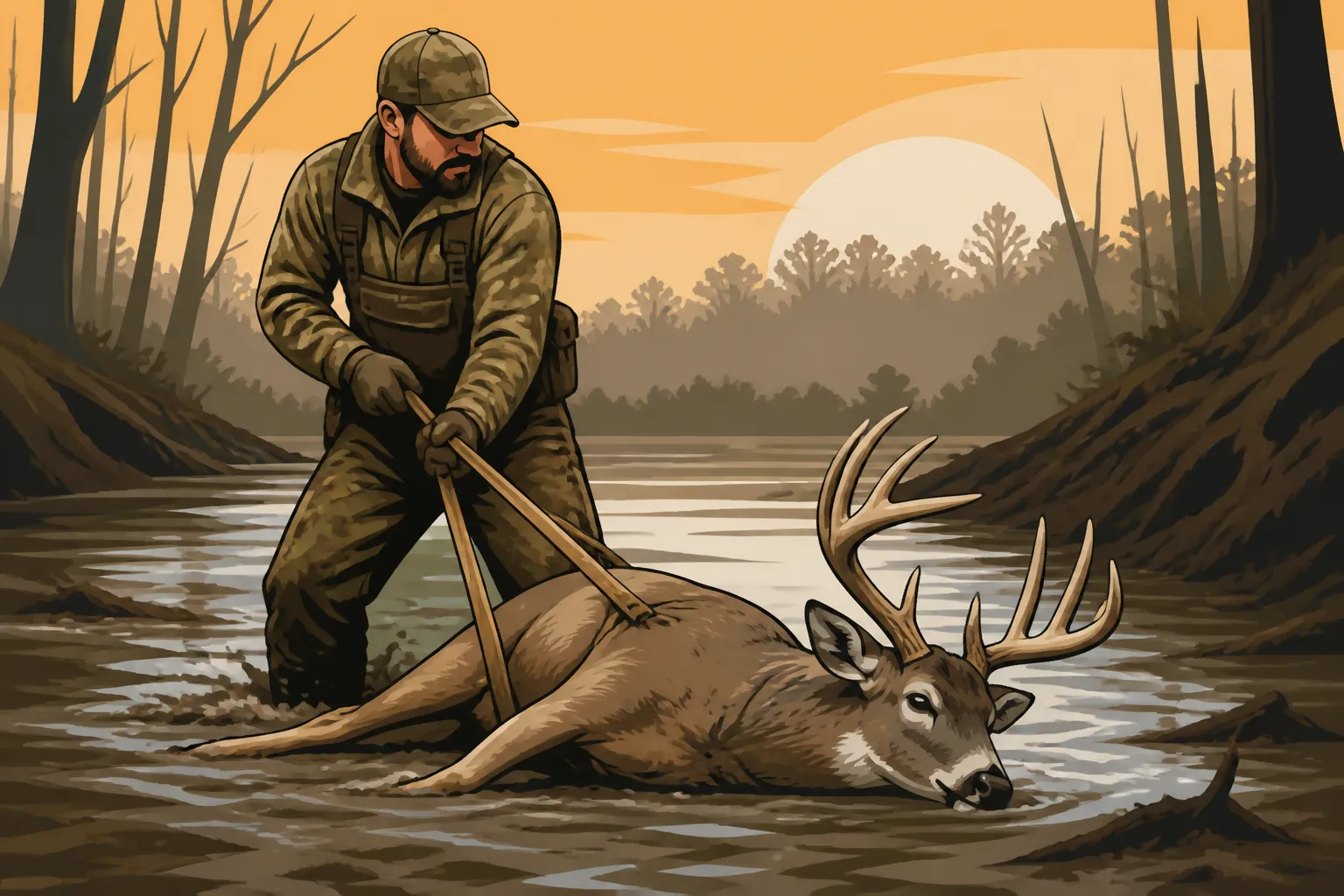
For deer that are submerged in shallow water, perhaps in a quiet backwater slough of the Mobile-Tensaw Delta or a flooded timber area, waders become indispensable. Move slowly and deliberately, testing the depth and stability of the bottom with each step. Alabama's river bottoms can have sudden drop-offs or deep pockets of mud, even in seemingly shallow areas. Use ropes to secure the deer and gently pull it towards solid ground. If the water is chest-deep and you're unsure of your footing, consider using a life vest, even if you’re a strong swimmer. The added buoyancy and visibility are worth it.
Conquering Alabama's Infamous River Mud and Thick Cover
This is often the most brutal part of an Alabama river bottom recovery. The mud, especially after heavy rains, can be thick, heavy, and clingy. It can feel like it's actively trying to keep your deer, and your boots, forever. When dealing with a deer stuck in mud, try to approach from the most stable side. If the deer is half-submerged, use ropes wrapped around the antlers or legs (being careful not to damage the cape if you plan to mount it) to create leverage.
Multiple people pulling simultaneously will be key. Sometimes, laying down logs or sturdy branches can create a temporary "path" over the worst of the mud, offering you better footing and allowing you to distribute weight. Clearing a path through tangled briars and thickets with a good knife or even a small machete will be essential. Areas near the Alabama River, for example, are notorious for their dense undergrowth that can turn a 100-yard drag into an hour-long ordeal. Remember, a mapping app like GoHunt can help you spot slightly higher, drier ridges or less dense areas through the aerial imagery, making the drag out marginally easier.
When to Know Your Limits and Prioritize Personal Safety
Despite all your best efforts and careful planning, there might come a point where the situation becomes too dangerous. The current is too strong, the mud is too deep, or daylight is fading too fast, and you're losing your bearings. This is the hardest decision to make, but it's vital: know when to back out. Your life, or the lives of your recovery team, are not worth a deer.
If you have to abandon a deer, the ethical thing to do is to report it to the Alabama Department of Conservation and Natural Resources (ADCNR). Even if you can't retrieve the animal, knowing you made every safe effort is important. Make sure you understand Alabama Deer Reporting Rules for any harvested deer, even those you might lose to the elements. While it's a bitter pill to swallow, sometimes the wild claims its own.
Preserving Your Hard-Won Harvest After the Ordeal
You've done it! You've wrestled your deer from the clutches of the river bottom. The relief is immense, but the work isn't over yet. Now, it's about preserving that hard-won venison, especially given Alabama's often warm climate.
Field Dressing Under Less-Than-Ideal Conditions
Ideally, you want to get your deer to higher, cleaner ground before field dressing. However, in many river bottom scenarios, this simply isn't feasible immediately. You might find yourself having to field dress the deer in a muddy clearing or even in shallow water. Do your best to keep the meat as clean as possible. If working in water, be mindful of currents carrying away entrails and contaminating the water downstream. Use gloves, as always, and work efficiently.
The warm temperatures common in Alabama for much of deer season mean that quick field dressing is paramount to preserve meat quality. Even a short delay in warm weather can lead to spoilage. Ensure all organs are removed cleanly. If you're Field Dressing a Deer in Warm Weather, consider using game bags immediately after dressing to protect the meat from flies and dirt during the drag out. A small amount of black pepper sprinkled on exposed meat can help deter insects.
The Long Drag Out and Protecting Your Venison
With the deer field dressed, the final challenge is getting it back to your vehicle. This is where those ropes and recovery sleds really earn their keep. A good sled can significantly reduce the friction of dragging, especially over uneven or muddy terrain. If you're on public land, remember vehicle access might be limited, meaning a longer drag.
During the drag, try to keep the deer as clean as possible. Laying it on a large tarp or in game bags will prevent dirt, leaves, and other debris from clinging to the meat. If your recovery took a long time, and the weather is warm, consider packing ice into the chest cavity if you have any available and can quickly get the deer to a cooler. Once you reach your vehicle, transport the deer quickly to a processor or your butchering setup. This final push to protect your venison ensures that all your hard work in the river bottom results in delicious, healthy meat for your table.
Disclaimer
This guide offers general advice for recovering a deer from a river bottom in Alabama. Hunting conditions, regulations, and personal capabilities vary. Always prioritize safety, be aware of your surroundings, and adhere to all local, state, and federal hunting laws and regulations. The author and publisher are not responsible for any accidents, injuries, or legal issues that may arise from using this information. When in doubt, consult with experienced local hunters or game wardens.