Warm-Weather Sitting Strategy in Alabama
There's nothing quite like the excitement of an Alabama deer season opener, or even those late-season hunts in February, but let's be honest: when the thermometer is still pushing 70 degrees in November, or when a warm front rolls in during January, it can feel like your chances of seeing a mature whitetail disappear faster than a deer in thick cover. The frustration of sweating in your stand, battling mosquitoes, and wondering if any deer are even moving is a common one. This guide is here to walk you through a solid warm-weather sitting strategy, helping you adapt your approach so you can still find success when Alabama's weather decides to be less than cooperative for deer hunting.
Understanding Alabama's Warm-Weather Challenges
Hunting in Alabama often means dealing with conditions that would be considered unseasonably warm in many other deer hunting states. It’s not uncommon to have shirt-sleeve weather well into December, and even parts of January and February can surprise you with mild, humid days. This isn't just uncomfortable for us hunters; it fundamentally changes how deer behave and where you're likely to find them. Ignoring these realities is a surefire way to spend many hours in a stand with little to show for it.
The Frustration of Unpredictable Temperatures
You've done all your scouting, checked your trail cameras, and the calendar says it's prime time, but the forecast is stubbornly warm. It’s a gut punch, isn't it? We anticipate crisp, cool mornings that get deer up and moving, especially during the rut. But here in Alabama, those perfect days can be few and far between. We often face high humidity, which makes warm temperatures feel even hotter, and persistent warmth that keeps deer largely nocturnal. This isn't a problem unique to early bow season; late season can throw curveballs too, making traditional "cold front" strategies utterly useless. The air hangs heavy, scents linger or dissipate unpredictably, and every step feels like a battle against the elements. It’s enough to make you want to stay home, but with a few adjustments, you don't have to.
Impact on Deer Movement and Behavior
When it’s hot, deer are just like us: they seek comfort. Their metabolism dictates a need to conserve energy, and running around in the heat isn't energy efficient. This means daylight movement plummets. Instead of cruising fields and open timber, they'll be holed up in the densest, shadiest cover they can find. Think deep creek bottoms, thick pine plantations, and the darkest parts of hardwood swamps. They'll also shift their feeding patterns, often moving from open food plots to areas with more readily available browse or soft mast that provides quick hydration. A hot day might see them moving only a few hundred yards from their bedding to a water source, then back again, almost entirely under the cover of darkness. This makes conventional stand locations, like field edges, far less productive during the peak daylight hours. You'll need to learn how to read Alabama mud for fresh deer movement in these conditions.
Human Comfort and Scent Control
Beyond the deer, warm weather creates immense challenges for the hunter. Sweat is your biggest enemy when it comes to scent. Even with the best scent elimination sprays and clothing, if you're pouring sweat on your hike in, you're leaving a significant odor trail. Bugs, especially mosquitoes and gnats, are also relentless in warm, humid Alabama air, making it incredibly hard to sit still and quiet. The struggle to remain comfortable and focused without fidgeting or swatting at insects can quickly erode your patience and ruin your hunt. You might find yourself breathing heavier, making more noise, and ultimately, getting busted by a deer you never even knew was there.
Strategic Sitting Locations for Warm Weather
Forget your usual go-to spots when the mercury climbs. In warm weather, deer change their priorities. You need to think like a deer that's trying to stay cool, hydrated, and concealed. This means focusing on areas that offer immediate relief from the heat and sun, while still providing access to essential resources.
Prioritizing Water and Shade
Water sources become magnets for deer in warm weather. This isn't just about big rivers; think small seeps, muddy wallows, damp creek beds, or even a stagnant puddle left after a rain. These smaller, more secluded water points often receive less pressure than larger, more obvious ones. When scouting, look for fresh tracks around these damp areas, especially those tucked away in thick cover.
Shade is equally critical. North-facing slopes, dense evergreen thickets (like cedars or pines), and deep, canopied hardwood bottoms provide crucial thermal cover. These areas can be several degrees cooler than open timber or field edges. Deer will bed down in these cool spots, only moving short distances to feed or drink. A prime warm-weather stand location might be on the edge of a thick pine plantation overlooking a damp depression or a small, shaded creek. Remember, deer will often travel along the path of least resistance that also offers shade, so a shaded trail near water can be a goldmine. Using tools like the Outdoor Alabama App or GoHunt's mapping features can help you identify these topographical features and thick cover areas before you ever step foot in the woods.
Identifying Active Food Sources
While acorns are king in cooler weather, their appeal might wane on hot days, especially if deer are seeking more succulent, hydrating forage. Look for browse in cool, damp areas – tender new growth in creek bottoms or the edges of dense swamps. Soft mast like persimmons or muscadines, if available, can also draw deer looking for a quick, hydrating snack. Early season green fields can be productive, but deer might visit them only after dark in warm conditions. Instead, focus on transition lines near these fields, especially where dense cover meets the field, providing a quick escape to shade and security. For late season, even a tiny clover plot at first light can be a great draw, as the dew on the leaves provides both food and moisture. Deer will often work these small, cooler areas that are tucked away.
Funnels and Travel Corridors
Funnels and travel corridors still matter in warm weather, but their location might shift. Instead of open saddles on ridges, look for tighter, thicker funnels that offer more cover and shade. Think about narrow strips of timber between two clear-cuts, or a dense thicket separating a bedding area from a water source. Deer will use these covered routes to move between their preferred warm-weather bedding and feeding/watering areas. Creek bottoms, especially those with dense undergrowth, become superhighways for deer moving discreetly in the heat. They offer cooler temperatures and a natural travel lane. A well-placed stand overlooking a small opening in such a funnel, or even still-hunting Bankhead Forest ridges where thermals might be more predictable, can pay off.
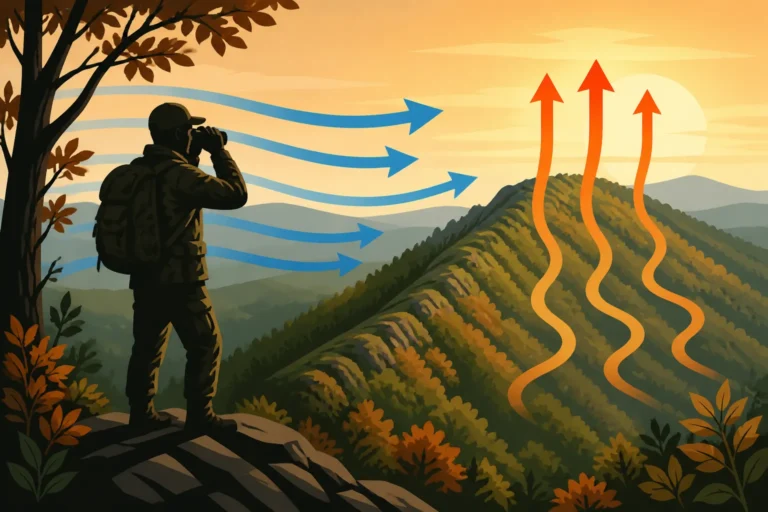
When scouting these funnels, pay close attention to which way the prevailing wind is blowing, and how that interacts with thermals in the mornings and evenings. A mobile mapping application like GoHunt can be invaluable here, helping you visualize elevation changes and potential wind currents. Consider hanging a stand on a Talladega ridge, but adjusting your specific setup to account for afternoon thermals pulling scent upwards if deer are still bedding in those dense, higher elevation spots.
| Behavior Aspect | Typical Cold Weather | Warm Weather Strategy |
|---|---|---|
| Daylight Movement | High, especially during rut | Very Low, mostly nocturnal |
| Bedding | Sunny, south-facing slopes, open timber | Dense, shady cover; north-facing slopes, swamps, thick pines |
| Food Sources | Acorns, large food plots | Hydrating browse, soft mast, small secluded green patches |
| Water Needs | Moderate | High; frequent visits to seeps, puddles, small creeks |
| Travel Routes | Open woods, field edges, ridge tops | Thick cover, creek bottoms, dense funnels, shaded trails |
| Scent Control | Important, but less critical | Absolutely paramount, constant battle with sweat and humidity |
| Hunting Hours | All day sits, especially during rut | Early morning, late evening; sometimes mid-day if deeply shaded |
Adjusting Your Sitting Tactics and Gear
Once you've identified your potential warm-weather spots, it's time to fine-tune your approach. Hunting in these conditions demands a different mindset, smarter timing, and specialized gear to maximize your chances and maintain your sanity.
Timing Your Entry and Exit
Forget the notion of all-day sits in warm Alabama weather unless you've found an exceptionally cool, deep-woods sanctuary. Your best chances will likely be during the first hour or two of daylight and the last two hours before dark. Deer might only move those few critical minutes. However, a less conventional tactic for warm weather can sometimes be a short mid-day sit in a deeply shaded, cool bedding area if you can get in undetected. This targets deer that might shift slightly within their core bedding area, or those that get up for a quick drink.
Crucially, your entry and exit routes must be meticulously planned to avoid spooking deer. In warm weather, deer are often bedded closer to their food and water. Minimize noise, use terrain features and wind to your advantage, and consider longer, circuitous routes that avoid likely bedding or travel areas. If you're hunting small woodlots near suburban Birmingham, for example, your entry and exit strategy needs to be even more precise to avoid residential disturbances. Don't be afraid to take a longer, slower walk in if it keeps you from pushing deer.
Advanced Scent Control and Thermals
This is where many warm-weather hunts go south. Humidity in Alabama means that any scent you emit will hang in the air for longer, or be carried on subtle breezes you might not even feel. Your typical scent control regimen might not be enough.
- Layers: Even if it's warm, light base layers designed for wicking sweat away from your body are crucial. Avoid cotton. As soon as you stop walking, shed an outer layer if you're still sweating, then put it back on right before you settle into your stand.
- Scent Elimination: Use a heavy-duty scent elimination spray on everything: clothes, boots, backpack, even your bow. Consider using ozone generators in your gear bag or vehicle before the hunt.
- Wind and Thermals: These are your absolute best friends – or worst enemies. In warm, still air, thermals are less pronounced, but they still exist. Morning thermals typically pull scent downhill, while evening thermals rise. Look for micro-currents created by terrain features. A trick is to use a milkweed puff or commercial wind checker constantly, not just when you get to your stand, but throughout your sit. This will give you real-time feedback on how your scent is traveling. Even on a Piedmont ridge, warm air behaves differently than cold.
Gear for Comfort and Stealth
Your gear choices can make or break a warm-weather sit.
- Clothing: Lightweight, breathable, moisture-wicking materials in quiet fabrics are a must. Brands like Sitka or First Lite offer excellent options designed for warmer climates and active hunting. You need clothes that dry quickly and don't make a rustling sound with every slight movement.
- Bug Control: This is non-negotiable. A Thermacell is a lifesaver; the hum is usually quiet enough not to bother deer, and the repellent mat creates a mosquito-free bubble. Permethrin-treated clothing can also be effective, but always follow application instructions carefully. A head net might be necessary for truly buggy situations.
- Hydration: Bring plenty of water. Dehydration can quickly sap your focus and make you uncomfortable. Consider an insulated water bottle to keep your drink cool.
- Optics: Binoculars are still vital for picking apart the dense cover where deer might be bedded.
- Quiet Everything: From your bow rest to your backpack zippers, every piece of gear needs to be quiet. Modify anything that rattles or clangs.
Patience, Adaptability, and Realistic Expectations
Hunting in warm weather often means encountering fewer deer, or at least fewer deer moving during daylight. It tests your resolve and can be mentally draining. The key is to manage your expectations, celebrate small victories, and stay flexible in your approach.
The Mental Game of Warm Weather Hunting
Sitting still for hours in the heat, swatting at invisible bugs, and questioning every decision is tough. It’s easy to get discouraged when you’re not seeing much action. The mental game is perhaps the biggest challenge. Remind yourself that you're out there, actively learning and adapting. Focus on the sounds of the woods, the subtle changes in light, and practice your breathing to stay calm and quiet. Celebrate the small victories, like successfully entering and exiting your stand without disturbing anything, or identifying a new subtle travel route. Sometimes, just enjoying the peace of being in Alabama's wild places is a win in itself, even if you don't punch a tag.
Scouting and Adaptability
Warm weather makes fresh sign even more critical. Old tracks and rubs mean nothing if the conditions have changed. Use trail cameras extensively, but place them in cool, shaded areas near water or dense bedding to avoid heating them up and keep deer from altering their behavior. Check them often for current patterns. Look for fresh tracks in the mud, fresh droppings, and newly browsed vegetation. If your scouting reveals deer are going completely nocturnal, don't be afraid to adjust your plans entirely. Maybe it's time for a morning squirrel hunt in Alabama bottomland hardwoods instead, or focus on other game until a cold front pushes through. The GoHunt app can help you keep track of your scouting notes, photos, and potential stand locations, allowing you to adapt quickly as conditions change. You might even find success focusing on predator hunting in Alabama farm country during these slower deer periods.
Knowing When to Hold 'Em and When to Fold 'Em
Don't burn out your best spots by hunting them too frequently in poor conditions. If you sit a prime warm-weather stand a few times with no luck, it might be time to move on, or at least give that spot a rest. Deer are incredibly sensitive to pressure, especially when movement is already restricted.
Also, know when to prioritize your own safety and well-being. If you're feeling lightheaded, severely dehydrated, or simply not enjoying the experience, it's okay to call it a day. Pushing yourself to the point of exhaustion or frustration isn't productive, and it can be dangerous. The woods will always be there, and another, cooler day will come. Sometimes, the best warm-weather strategy is to take a break and come back refreshed. This adaptability is crucial whether you're deer drives on Alabama public land or sitting a single stand.
Disclaimer
Hunting is an inherently dangerous activity. Always follow all local, state, and federal hunting regulations. Ensure you have the proper licenses and permits. Prioritize safety by wearing hunter orange when required, knowing your target and what is beyond it, and properly handling all firearms and archery equipment. The information provided here is for educational purposes and should not replace professional advice or official regulations.