Rattling Volume in Thick Pine Cover
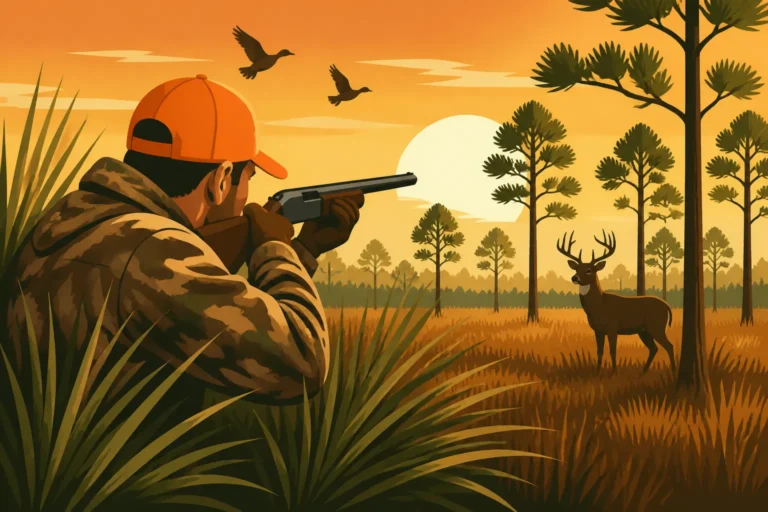
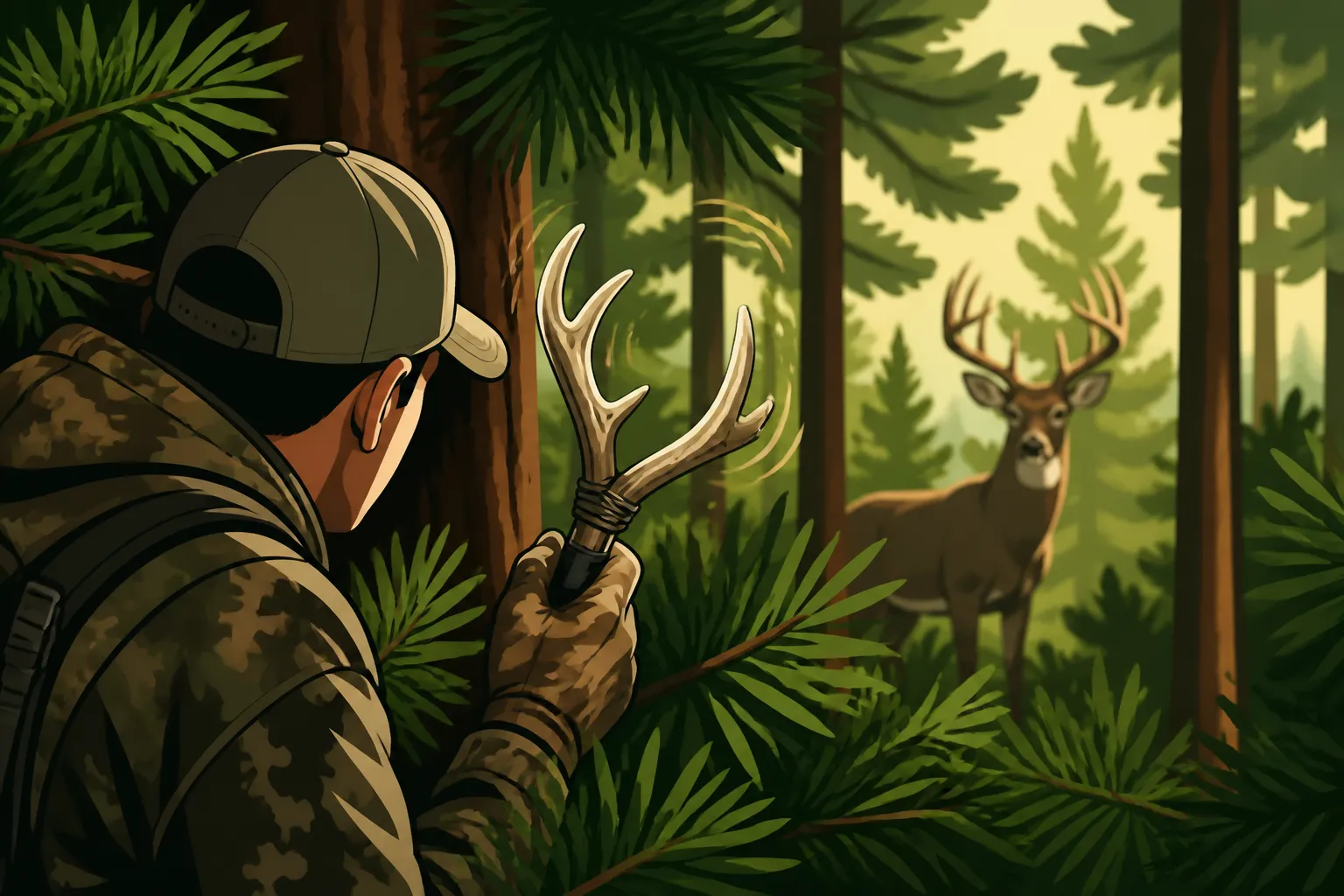
There’s nothing quite like the sound of rattling antlers cutting through the crisp morning air, especially when you’re hoping to call in a big Alabama buck during the rut. But let’s be real, rattling in thick pine cover often feels like shouting into a pillow. The dense woods seem to swallow every sound, leaving you wondering if any deer could possibly hear your efforts. This guide is all about mastering the art of rattling in those challenging, sound-absorbing pine stands, ensuring your calls reach those hidden bucks.
The Unique Acoustic Challenges of Thick Alabama Pine
Hunting in Alabama offers a diverse range of habitats, but thick pine plantations or natural pine stands present a specific set of hurdles for deer hunters relying on sound. It’s not just about what you do, but understanding why it's so tough.
How Pine Needles and Dense Undergrowth Absorb Sound
If you've ever walked through a mature pine plantation, you know it's a different world than an open hardwood bottom. The ground is often covered in a thick, spongy layer of pine needles that literally dampens sound. Add to that the dense canopy, which acts like a giant sound sponge, and the tight thickets of young pines, briars, and undergrowth that create physical barriers for sound waves. These elements combine to scatter and absorb sound, drastically reducing how far your rattling efforts will carry.
Imagine trying to have a conversation across a noisy room versus a quiet, open field. That’s essentially the difference between rattling in thick pine versus a more open hardwood forest. In open hardwoods, a moderate rattling sequence might carry for hundreds of yards, drawing in curious bucks from a distance. But in a dense pine stand, that same sound might only reach 50 or 75 yards before it’s completely muffled. This isn’t a reflection of your technique; it’s just the physics of the environment. It can be incredibly frustrating to put effort into a rattling sequence only to feel like it disappears into the ether. You might even hear distant movement, but the lack of clarity means a buck can't pinpoint the sound, leading to hesitation rather than a direct approach.
Limited Visibility and Deer Behavior in Thick Cover
Beyond the sound issue, thick pine cover fundamentally changes how deer behave and how they respond to calls. Deer seek security in dense cover, and pine thickets offer exactly that. They often bed in these areas and move through them with a stealth that borders on invisibility. When a buck hears rattling in such a tight space, his primary concern isn't just investigating; it's self-preservation. He knows he's vulnerable in thick cover, and another buck fight could mean an ambush.
The limited visibility means a buck might hear your aggressive rattling but can't immediately see the "fight." This lack of visual confirmation makes them incredibly cautious. Instead of charging in, they'll often circle downwind, trying to get a nose-full of the situation before committing. This can be agonizing for the hunter, as you might hear faint footfalls or breaking twigs, but never get a clear line of sight. It's a classic Alabama hunting scenario: you know he's there, but you just can't get an ethical shot. This cautious circling is why understanding wind and thermals is paramount when rattling in dense pine, which we'll get into later. They're trying to figure out if it's two bucks fighting or if you're the one making the noise.
Adjusting Your Rattling Approach for Pine Forests
Since the environment actively works against sound transmission, your rattling technique needs a significant upgrade in volume and aggression when you're deep in the pine. This isn't the time for subtle sparring.
Amplifying Your Rattling Volume and Aggression
When you're dealing with thick pine, you have to throw subtlety out the window and embrace raw, loud, and aggressive rattling. Think of two big, angry bucks in a full-blown brawl, antlers smashing and grinding with all their might. That's the sound you need to emulate. This means using larger, heavier rattling antlers, or even synthetic calls specifically designed for maximum volume. Forget the small, quiet tines; you want something that creates a deep, resonant crash.
To achieve this, don't be afraid to put some real muscle into your rattling sequences. Instead of gentle taps, give them hard, sustained crashes. Grind the antlers together with more force and for longer durations, simulating a prolonged, intense fight. Your sequences should be longer, too – often 1 to 2 minutes of constant action, followed by a period of absolute silence. This aggressive, sustained approach is designed to produce sound waves powerful enough to cut through the dense foliage and reach deer that are further out than your limited visibility suggests. It's an all-or-nothing approach; if you're not loud, you're not going to be heard effectively. You’re trying to create a sound event that’s simply too big for a buck to ignore, even if the distance is against you.
Strategic Call Placement and Duration
Beyond just being loud, where and how long you rattle in thick pine can make a world of difference. If you have the option, setting up your stand with even a slight elevation can help your sound carry better. A few feet off the ground in a good sturdy treestand can make a surprising difference in how far your rattling echoes. When you’re thinking about Treestand Setups in Talladega National Forest, remember to consider sound propagation as much as sightlines.
The duration of your rattling sequence is also key. In open country, short, frequent bursts might work, but in thick pine, you need sustained action. Picture a fight: it's rarely a quick tap; it's a series of shoves, crashes, and grinding, often lasting a minute or more. Emulate this. After an aggressive 1-2 minute sequence, enter a period of absolute silence. This "listening window" is crucial. It gives any buck that heard you a chance to process the sound, approach, and hopefully reveal himself. Don't be too quick to call again; a wary buck might be closing in silently. Waiting 5-10 minutes, listening intently, and then repeating the sequence (perhaps a bit less aggressively to simulate the fight dying down) can be effective. It’s a fine balance between being loud enough to be heard and patient enough to let the deer respond on their terms.
Incorporating Grunts and Estrus Bleats
While rattling is the primary draw for aggressive bucks, adding other calls can create a more complete and irresistible scenario in thick pine. Rattling alone might pique a buck's interest, but adding a deep buck grunt or an excited doe estrus bleat can really paint a vivid picture of what's happening. A loud, challenging buck grunt (like those discussed in Grunt Calls in Mature Alabama Timber) right after a rattling sequence can simulate a buck that just won or is still looking for a fight. A doe estrus bleat suggests that the fight was over breeding rights, making the scenario even more compelling.
These supplementary calls work by adding realism and urgency. A buck hearing a fight and then a doe bleat might think, "Not only is there a fight, but there's a receptive doe involved!" This can be the tipping point that draws a hesitant buck in. Use them in conjunction with your rattling – perhaps a few aggressive grunts immediately after a crash, or a bleat during your silent listening period to check if anyone is close. Don't overdo it, but judiciously adding these vocalizations can be the secret sauce to bringing in those dense-pine dwellers. It turns a generic "fight sound" into a full-blown drama that a rutting buck simply can't ignore.
Locating Ideal Rattling Setups in Pine Country
Rattling success, especially in challenging environments like thick pine, often comes down to scouting and choosing the right location. You can be the best caller in the world, but if you’re rattling where no deer are, you won’t have much luck.
Key Terrain Features to Exploit
Even in vast pine forests, deer tend to move along predictable paths. Your goal is to find these natural travel corridors and set up where your rattling has the best chance of interception. Look for edges: the transition lines between a dense pine stand and an open clear-cut, a fire lane, or a logging road that cuts through the timber. These are natural funnels where deer feel safer moving between bedding and feeding areas. Creek bottoms, even small ones, running through pine stands also create travel routes and provide better cover and potential food sources. These linear features help direct deer movement, increasing your odds.
Using a good mapping tool like GoHunt is invaluable for this kind of scouting. You can overlay aerial photos with property lines and topography to identify subtle elevation changes, pinch points, or those crucial edges and funnels without even stepping foot in the woods. Before you head out, spend time digitally scouting; it pays dividends. For more detailed information on deciphering these features, check out Reading Aerial Photos for Piedmont Deer. Identifying these high-traffic areas gives your aggressive rattling a much better chance of connecting with a curious buck. Remember, even in thick pine, deer will choose the path of least resistance or greatest security.
Reading Wind and Thermals in Pine Timber
Understanding wind and thermals is always critical for deer hunting, but it becomes absolutely non-negotiable when rattling in thick pine. As mentioned, bucks will almost always try to circle downwind to scent-check the "fight" before showing themselves. If your scent cone is blowing directly into their approach, your hunt is over before it begins. Dense pine can sometimes create unpredictable thermal drafts, so pay extra attention to wind direction throughout your hunt.
Your setup needs to account for this. Always try to position yourself so that your scent is blowing away from the likely approach routes. In the mornings, thermals tend to rise, pulling your scent upwards. In the evenings, they fall, pushing your scent down into the valleys. A small ridge or hump can be a great place to set up, using the rising thermals to carry your scent away from a bottomland approach. Continuously check your wind with a powder bottle or similar indicator. If you see or hear a buck approaching, and he starts to swing wide, he's likely trying to get downwind. Be ready for that; he might give you a fleeting shot as he passes through a small opening. This cautious circling is a hallmark of Hunting Pressure on Alabama Public Land, making scent control even more vital.
Patience and Persistence in Thick Cover
Rattling in thick pine isn't always a quick affair. It demands patience and persistence. Due to the sound dampening and limited visibility, a buck might take a significant amount of time to respond, or he might approach incredibly slowly and cautiously. It's easy to get discouraged or to move too soon, especially when you're straining your ears for any sign of movement. But moving too early can bust a buck that was almost in range.
After an aggressive rattling sequence, commit to a long listening period – at least 20-30 minutes, or even longer if you've done your Scouting Alabama Public Land Before Season and know there are deer in the immediate area. Every snap of a twig, every rustle in the leaves, should be scrutinized. He might be coming in silent, using the thick cover to his advantage. It's the ultimate test of nerves. The payoff, however, can be immense. When a phantom buck finally materializes out of the thick green, it’s one of the most exciting experiences in deer hunting. Remember, deer might respond to Finding Sign in Big Talladega Timber you’ve observed in the area, so knowing they’re there should fuel your patience.
Advanced Tactics and Considerations
To truly master rattling in Alabama's pine country, it's worth exploring a few more nuanced tactics and gear choices that can tip the scales in your favor.
The Role of Decoys in Thick Pine
In a situation where visual confirmation is severely limited, a decoy can be a game-changer. A small buck or even a doe decoy strategically placed can provide that visual cue a cautious buck desperately needs after hearing your aggressive rattling. If he circles downwind and sees a realistic decoy, it can overcome his hesitation and draw him into range. Decoys help sell the story, making him believe there's truly a fight or a receptive doe involved.
However, using a decoy in super thick pine presents its own challenges. You need to place it in a spot where it's visible enough for an approaching deer, but not so open that it looks out of place. A small opening, a clearing along a fire lane, or even just a slightly less dense patch of timber can work. Make sure your decoy is facing toward your expected approach, giving the buck a clear target to focus on. Sometimes, even just a head and shoulder decoy, or a realistic rump, is enough to get a buck to commit that extra few yards. Just be mindful of other hunters, especially on public land, and ensure your setup is safe and clearly identifiable.
Hunting Pressure and Timing Your Rattling
Alabama's deer season can be long, and public land, in particular, can see a fair amount of Hunting Pressure on Alabama Public Land. This pressure makes deer warier, and they might be less likely to respond to rattling in highly trafficked areas or during peak hunting times. If you're on public land, consider rattling during the middle of the day, when many hunters are back at camp, or on weekdays when pressure is generally lower. Targeting harder-to-reach areas, even in thick pine, can also pay off, as deer in these spots are often less disturbed.
The timing relative to the rut is also crucial. While you can sometimes draw in a curious buck outside the rut, aggressive rattling is most effective when bucks are actively seeking does and are more prone to fighting. Understanding Hunting the Rut in the Southern Zones or other parts of Alabama will help you gauge when bucks are most susceptible. Early rut, when bucks are establishing dominance, and the peak rut, when competition for does is fierce, are prime times. Late season, when bucks are more interested in feeding up, might require a more subtle approach, or a different tactic altogether like Still-Hunting Bankhead Forest Ridges.
Equipment Choices for Pine Rattling
The tools you choose can significantly impact your rattling volume and effectiveness. As mentioned, larger, real antlers or high-quality synthetic rattling systems are your best bet for making enough noise to penetrate dense pine. Some synthetic calls, like those from Rattling Forks or Knight & Hale, are designed specifically for maximum volume and realism. Experiment with different materials to find what you can wield most effectively and loudly.
Beyond the rattling itself, consider your overall setup. A good grunt tube with an adjustable tone can enhance your calling. A reliable wind-checker is essential. And, of course, your mapping software. Tools like the GoHunt app are indispensable for scouting, marking stand locations, and understanding terrain features that will influence where you set up and how your sound travels. Don't just rely on guesswork; use every tool at your disposal to gain an edge in the challenging, yet rewarding, environment of Alabama's thick pine country during Alabama Deer Season Structure Explained.
| Feature/Technique | Thick Pine Cover (Alabama) | Open Hardwoods (Alabama) |
|---|---|---|
| Volume | High to very high (aggressive, sustained) | Moderate to high (realistic sparring, varied) |
| Aggression | Intense crashes, long grinding, thrashing | Realistic sparring, pushing, short clashes |
| Duration | Longer sequences (1-2 minutes) | Shorter sequences (30-60 seconds) |
| Frequency | Less frequent, but more committed sequences | More frequent, varied calling sessions |
| Supplementary Calls | Essential (loud grunts, estrus bleats) | Optional, but enhances realism |
| Decoy Use | Beneficial for visual confirmation | Very effective for visual confirmation |
| Expected Approach | Cautious, circling downwind, slow, silent | More direct, but still mindful of wind |
| Visual Range | Extremely limited | Moderate to good |
Disclaimer
Hunting is an inherently dangerous activity. Always prioritize safety, understand and follow all Alabama hunting regulations, and be aware of your surroundings and other hunters. This guide provides general information and recommendations; local conditions and deer behavior can vary. Always scout thoroughly and obtain appropriate licenses and permissions before hunting.