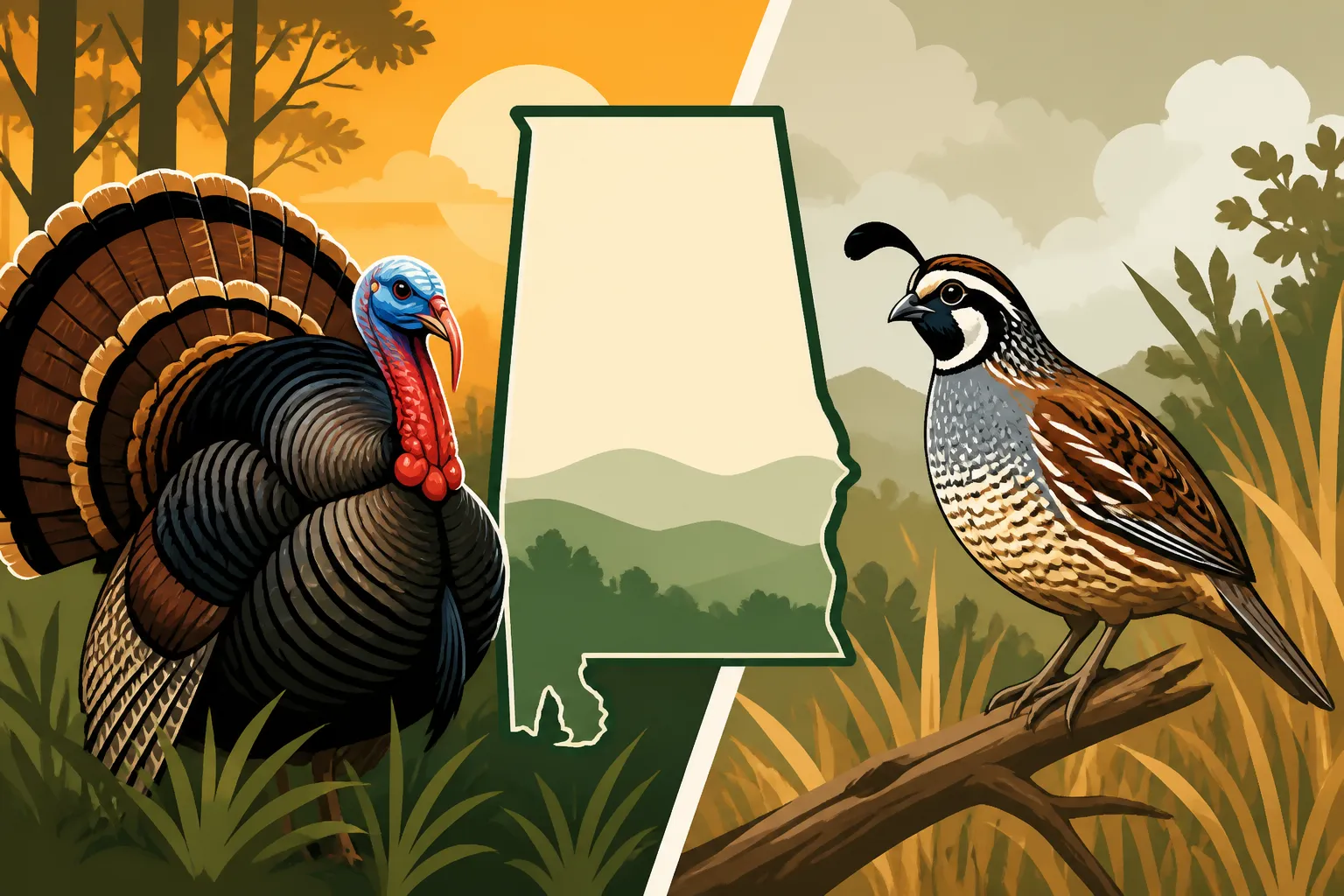
Combining a Turkey and Quail Trip in Alabama
So, you've got that hankering for a truly unique Alabama hunting adventure – maybe a gobbler in the morning and a covey flush in the afternoon? It’s a dream many of us share, wanting to maximize our time afield. The truth is, combining a turkey and quail trip in Alabama presents some distinct challenges due to differing seasons, habitats, and hunting styles, but it's far from impossible with careful planning and a realistic approach, especially if you're leaning towards guided experiences or have access to diverse private land. This guide will walk you through the nuances of making such a dual-species hunt a reality.
Understanding the Seasonal Overlap (Or Lack Thereof)
The first, and often biggest, hurdle to combining a turkey and quail hunt in Alabama is the calendar. Wild turkey season in Alabama is strictly a spring affair, starting in mid-March in Zone 1 and late March in Zone 2, running through early May. Quail season, on the other hand, typically opens in November and extends through late February or early March. This means a direct overlap for wild birds is usually non-existent. However, this isn't the end of the road for your multi-species dream.
The Spring Turkey Season Window
Alabama's spring turkey season is a magical time, filled with the promise of thundering gobblers in blooming hardwoods. Hunters eagerly anticipate the Alabama Spring Turkey Zones and Dates, scouting hard for roosts and strut zones. The season is a relatively short, intense window, and every day counts. You're usually dealing with dense cover, trying to call in a wary bird, often requiring patience and stealth.
For instance, if you're targeting a gobbler in the Talladega National Forest, you're likely working ridge lines and creek bottoms, covering a lot of ground by foot. This pursuit often demands your full attention, from pre-dawn setup to mid-morning calling sequences. The intensity of spring turkey hunting means that fitting in another species on the same day can be a logistical puzzle, even if seasons did align. You're focused on one bird, and its habits dictate your schedule.
The Quail Season Window and Managed Hunts
Alabama's wild bobwhite quail season is firmly a fall and winter pursuit, often closing before spring turkey season even begins. This is where the concept of "combining" really shifts. If you're hoping for truly wild quail, a combined trip in the same calendar year, requiring two separate trips, is the only way. You'd hunt quail, say, in January, and then return for turkeys in April. This is a perfectly viable approach for many dedicated hunters who make multiple trips to the state.
However, many quail hunters in Alabama, especially those looking for consistent action and a classic experience, focus on managed quail plantations. These operations often have longer seasons or special provisions for preserve-raised birds, which can sometimes extend into spring. This is where the potential for a "combined" trip in a single journey opens up, albeit often with different types of hunting for each species. It’s critical to verify the specifics with any managed facility you consider, as their rules might differ from statewide wild bird regulations.
Strategic Planning for a Combined Hunt
Since the wild seasons don't overlap, your strategy must pivot. You're either looking at two separate trips, or a single trip that leverages managed quail hunting operations during turkey season.
Option 1: Two Dedicated Trips
For the purist who wants to hunt truly wild birds for both species, two separate trips are the most straightforward answer. This allows you to fully immerse yourself in each hunt without compromise.
| Aspect | Spring Turkey Trip (March-May) | Winter Quail Trip (Nov-Feb) |
|---|---|---|
| Primary Goal | Calling in a wary gobbler | Finding and flushing coveys of bobwhite quail |
| Habitat | Mixed hardwood/pine forests, river bottoms, timbered ridges | Managed pine forests, broom sedge fields, agricultural edges |
| Gear Focus | Calls, camo, lightweight vest, shotgun (turkey choke) | Shotgun (open choke), bird vest, good walking boots, pointing dogs (if self-guided) |
| Time of Day | Dawn to mid-morning, sometimes late afternoon | Mid-morning to late afternoon |
| Strategy | Stealth, calling, patience, precise shot placement | Walking, dog work, quick flushing shots |
| Physicality | Often strenuous hiking, sitting for long periods | Consistent walking, potentially long distances |
If you choose this route, you can plan one trip for Spring Turkey Hunting in Alabama and another for Quail Hunting Alabama's Black Belt. Each trip would have its own focus, allowing for maximum enjoyment of both. You might even find opportunities to hunt other small game during quail season, like squirrels or rabbits, further maximizing your winter trip.
Option 2: Leveraging Managed Quail Operations During Turkey Season
This is the most likely scenario if you want to experience both species on a single visit. Some private plantations that offer Booking a Black Belt Quail Plantation Hunt also manage their properties for wild turkeys, or at least have turkeys on adjacent lands. Crucially, some of these operations might offer controlled hunts for preserve-raised quail even during spring months, or have specific windows where their managed quail season extends slightly due to being private operations.
Here’s how this might look:
- Morning Gobbler: You start your day pre-dawn, heading out with a turkey guide to a pre-scouted area on the plantation or nearby private land. You're focused on calling a bird off the roost or working a strutting gobbler. Success here means an exciting start to your day.
- Afternoon Quail: After a successful (or unsuccessful but exhilarating) turkey hunt, you return to the lodge, perhaps grab a quick bite, and then switch gears for a quail hunt. This usually involves a dog handler, a string of pointing dogs, and a vehicle (often a buggy or wagon) to transport you to prime quail habitat. The pace is different, more social, and focused on fast-flying action.
When exploring this option, it's absolutely vital to communicate clearly with any potential outfitter about your dual-species aspirations. Ask specific questions about:
- Their turkey hunting success rates during the time you're considering.
- Whether their quail hunts during that period are for wild birds or preserve-raised birds (most likely preserve-raised for spring).
- The proximity of turkey and quail hunting grounds – are you driving an hour between spots, or are they on the same contiguous property?
- The total cost, as this will typically be a premium experience. Platforms like BookYourHunt can be a good starting point for finding outfitters who advertise multi-species packages, but always follow up with direct conversations.
Key Considerations for a Dual-Species Trip
Beyond the calendar, several other factors come into play when planning such an ambitious trip.
Habitat Differences and Overlap
While both turkeys and quail are "game birds," their preferred habitats are quite different.
- Turkeys: Thriving in large tracts of mixed pine and hardwood forests, particularly those with mature trees for roosting and open understories for strutting and bugging. They utilize creek bottoms, ridge lines, and transition zones.
- Quail: Preferring early successional habitats – open pine stands with a well-developed native grass and forb understory, broom sedge fields, field edges, and brushy cover. Think Longleaf Pine Savanna for Deer with a lot of ground cover, but for quail.
The challenge is finding a property that offers both in close proximity and with high enough quality to support good hunting for both species. Private land, especially large, well-managed timberlands or plantations, is your best bet. Public lands like National Forests or WMAs often have turkeys, but truly prime quail habitat for consistent hunting can be harder to find, and managing for both on the same small tract is rare. Public Hunting Land in Alabama will often offer one or the other, but rarely both at the same high quality for simultaneous pursuit.
Gear and Logistics
Packing for two distinct types of bird hunting means bringing more gear.
- Turkey Gear: Full camouflage, friction calls, box calls, mouth calls, turkey vest, comfortable walking boots, a shotgun with a tight turkey choke and heavy loads.
- Quail Gear: Often more open-patterned camo or earth tones, a lighter shotgun (often a 20 gauge or 28 gauge) with improved cylinder or skeet chokes, lighter birdshot, a bird vest with plenty of shell loops and a game pouch, and comfortable boots for walking many miles.
A table can help visualize the differences:
| Category | Turkey Hunting Focus | Quail Hunting Focus |
|---|---|---|
| Camouflage | Full body camo, head net, gloves, sit-still patterns | Lighter camo, earth tones, more freedom of movement |
| Footwear | Sturdy, waterproof boots for quiet movement/sitting | Comfortable, broken-in boots for extensive walking |
| Shotgun Gauge | 12 gauge, 10 gauge (for maximum range/pattern density) | 20 gauge, 28 gauge (lighter, faster swing for flushing) |
| Choke | Extra Full or Turkey Specific (tight patterns) | Improved Cylinder, Skeet, Light Modified (open patterns) |
| Ammunition | Heavy turkey loads (4, 5, 6 shot) | Light field loads (7.5, 8 shot) |
| Calls | Box, pot, diaphragm, gobble tubes | Whistle calls for dogs (if applicable) |
| Other Gear | Decoys, folding stool, rangefinder, binos | Bird vest, dog collar/leash, water for dogs |
Managing two different shotguns, or at least two different chokes and ammunition types, will be necessary. If you're using a guide, they might provide some of the specialized quail gear, especially if it involves dogs. For scouting and planning, utilizing tools like GoHunt's mapping features can help identify potential areas that might have a mix of habitat types, though confirmation on specific bird populations would require direct communication or boots on the ground.
Physical Demands
Both turkey and quail hunting can be physically demanding, but in different ways.
- Turkey hunting often involves periods of intense, quiet movement, followed by long periods of sitting perfectly still. You might hike miles in the dark to a roost, only to sit for three hours.
- Quail hunting, especially behind dogs, is a constant walk. You'll be covering ground, often through thick cover, for several hours. A Quail Hunting Alabama's Black Belt trip often involves significant mileage.
Ensuring you're physically prepared for both types of activity will make the experience much more enjoyable. It's not uncommon to walk five to ten miles during a good quail hunt, and a turkey hunt can involve miles of scouting and stalking.
Finding the Right Outfitter or Property
Given the complexities, finding an outfitter or securing access to a diverse private property is often the most practical route for a combined trip.
Outfitter Services
Many outfitters in Alabama offer specialized hunts for either turkey or quail, but fewer explicitly market combined packages, especially for truly wild birds. The key is to seek out those operations that manage large tracts of land for multiple species or are known for their diverse habitat offerings.
- Research and Inquire: Start by looking at outfitters in regions known for both species, such as the Alabama Black Belt. Use platforms like BookYourHunt to search for "Alabama turkey and quail hunts" or "multi-species hunts." Don't just look at their advertised packages; contact them directly. Explain your specific desire to combine both species in one trip. Ask about their land, their success rates for each species, and whether they cater to such unique requests.
- Private Land Access: Outfitters typically operate on large private land leases. This gives them the flexibility to manage different habitat types for different species and control hunting pressure, increasing your chances of success. They can often provide the necessary expertise, dogs, guides, and even lodging, streamlining your trip.
- Cost Implications: Expect a combined guided trip to be a premium experience. You're essentially booking two separate guided hunts, plus the logistics of coordinating them on the same property. Be upfront about your budget and expectations. Understand what is What a Guided Alabama Deer Hunt Costs as a reference point, knowing that a custom turkey and quail trip will likely be even more specialized.
Self-Guided on Private Land
If you have access to a large private tract of land in Alabama that you know holds both turkeys and quail, a self-guided combined hunt is certainly possible.
- Habitat Assessment: You'll need to thoroughly scout the property for both turkey sign (roosts, strutting areas, food sources) and quail sign (coveys, dusting areas, suitable cover). The property would ideally have mature hardwoods for turkeys transitioning into early successional pine stands or open fields for quail.
- Timing: Even on private land, you're still bound by statewide season dates. If you want truly wild quail and turkey on a single trip, you might need special permits for managed preserve hunts or be limited to seasons that don't overlap.
- Work Involved: This option requires significant preparation: scouting, setting up blinds, potentially running your own dogs, and handling all logistics. However, for those with the land and the experience, it offers the ultimate flexibility and satisfaction.
Realistic Expectations
Combining a turkey and quail hunt in one Alabama trip is an ambitious undertaking, and setting realistic expectations is crucial for enjoyment.
Success Rates
While a good outfitter will work hard to put you on birds, a combined hunt for two different species on the same day can be demanding. Success means bagging both species. While a turkey hunt might take the entire morning, and a quail hunt can occupy the afternoon, it's not a guarantee. Be prepared for the possibility of harvesting one species but not the other, or enjoying the experience without filling all your tags.
Remember that a successful hunt isn't always measured in pounds of meat or feather count. The experience of being in Alabama's diverse wilderness, hearing a gobbler sound off at dawn, and seeing a covey rise, is a reward in itself.
The Alabama Hunting Experience
Alabama offers a rich hunting tradition, and regardless of whether you bag both a turkey and a limit of quail, you'll be immersed in it. From the unique sounds of the spring woods to the camaraderie of a quail hunt with good dogs, it’s an experience worth cherishing. Whether you're targeting a Run-and-Gun Turkey Tactics on Public Land on a different trip or simply enjoying the guided experience, take it all in.
Consider the time of year carefully. Early spring turkey season means milder weather, but late spring can bring heat and humidity. Quail season is in the cooler months, generally offering more comfortable conditions for walking. Your combined trip would lean heavily on the spring weather conditions, so plan accordingly.
Ultimately, a combined turkey and quail hunt in Alabama is more than just bagging two species; it's about embracing the challenge, the unique natural beauty of the state, and the sheer joy of the chase. With the right planning and a bit of flexibility, it can be an unforgettable adventure.
Disclaimer
This article is for general informational purposes only and does not constitute professional advice. Laws, prices and regulations vary by location and change over time. Consult a qualified professional for guidance on your specific situation.