Still-Hunting Bankhead Forest Ridges
There's a special kind of challenge that comes with hunting Alabama's public lands, especially somewhere as vast and rugged as the William B. Bankhead National Forest. You might find yourself staring at an aerial map, seeing endless timber, and wondering how in the world you're supposed to find a deer, let alone get a shot at one, without bumping every critter in a mile radius. It's frustrating to know the deer are there but feel like you're just wandering aimlessly. This guide is all about equipping you with the tactics and mindset to overcome that feeling, focusing on the highly effective, yet often underestimated, art of still-hunting those challenging Bankhead ridges.
Decoding Bankhead's Ridge Country
Hunting Bankhead National Forest isn't like hunting manicured private land. It demands a different approach, a deeper understanding of the land itself, and how deer interact with its unique features. The terrain here can be brutal, but it also offers incredible opportunities for the hunter willing to slow down and observe.
Understanding the Lay of the Land: Topography and Cover
The William B. Bankhead National Forest, often affectionately called "The Bankhead," is renowned for its wild, untamed beauty, but also its challenging topography. We're talking about deep ravines, cascading waterfalls, massive rock outcrops, and, yes, those endless ridges. These aren't gentle rolling hills; many of the ridges here are steep, dissected by drainages that can feel like canyons. The primary forest types are a mix of mature hardwoods (oaks, hickories) in the bottoms and on north-facing slopes, and more pine-dominated areas or mixed stands on the drier, south-facing slopes and ridge tops.
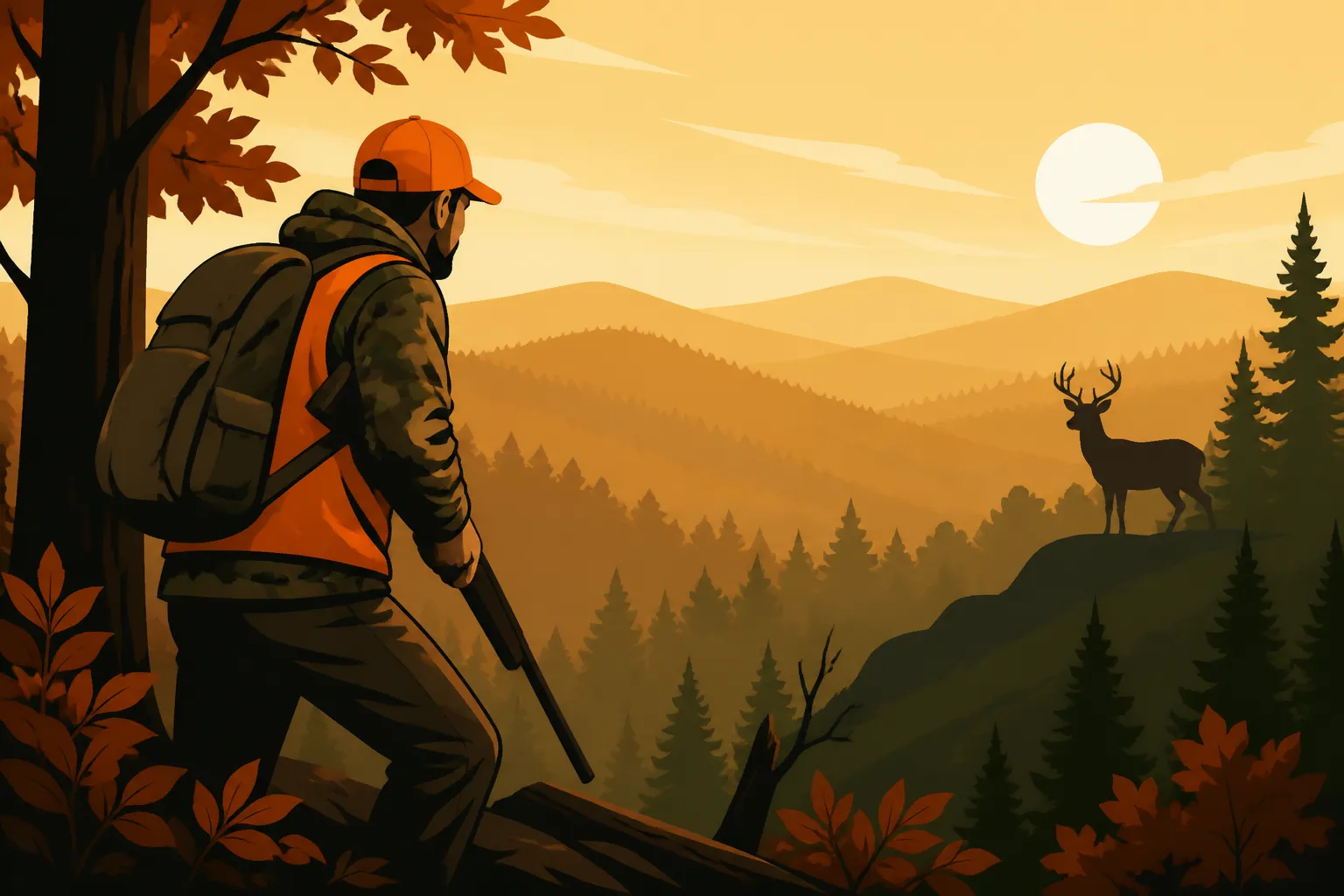
What does this mean for still-hunting? It means deer are constantly using these elevation changes to their advantage. They'll bed on points or benches along the ridge sides, especially those with good visibility and prevailing wind. They'll travel the ridge tops as highways, but also drop into the drainages for water and thicker cover. Identifying these natural travel corridors and bedding areas is your first step. A well-placed rock outcrop might offer a perfect vantage point for a deer, or a thick stand of young pines on a steep slope might be where they feel most secure. Knowing this terrain allows you to anticipate deer movement and approach accordingly, giving you a significant edge over simply walking through the woods.
Deer Behavior and Pressure Dynamics
Deer in Bankhead National Forest are, generally speaking, wilder and warier than their counterparts on private lands with less pressure. They've seen it all, heard it all, and probably smelled it all. This means they are masters of using the terrain and cover to stay hidden. You'll find them more nocturnal, especially during gun season, and they'll quickly relocate to the thickest, nastiest cover once hunting pressure increases. Ridges serve as critical arteries for deer movement. Bucks, especially, will often travel just below a ridge top on the downwind side, giving them the ability to scent check the ridge above while staying out of sight.
The sheer amount of public land within the Bankhead, particularly within areas like the Black Warrior WMA inside Bankhead Forest, means there are hunters around. This constant human presence shapes deer behavior. They learn to be extremely cautious, moving during low-light hours or seeking refuge in areas that most hunters deem too difficult to access. This is where still-hunting truly shines. Instead of stomping through the woods and pushing deer, you're easing through, hoping to catch them unawares in their natural movements. Understanding Hunting Pressure on Alabama Public Land is key to recognizing why these deer are so cagey. You're not just hunting deer; you're hunting deer that are perpetually on high alert.
Essential Gear for the Silent Hunter
Still-hunting is a game of details, and your gear choice can make or break your success. You don't need a ton of gadgets, but what you do carry needs to be quiet, comfortable, and effective.
Clothing, Footwear, and Scent Control
Your clothing needs to be a silent sentinel. Forget noisy materials that rustle with every step; in still-hunting, silence is golden. Look for wool, fleece, or brushed synthetic fabrics that are soft and don't make a sound when you brush against branches or shift your weight. Layering is crucial in Alabama, where a chilly morning can turn into a warm afternoon quickly. You'll want to shed layers as you warm up to avoid overheating and sweating, which only amplifies your scent. A good base layer, a mid-layer for insulation, and a quiet outer layer are ideal.
Footwear is arguably the most critical component. You need boots that are comfortable enough for miles of walking over uneven, rocky terrain, yet quiet enough to allow you to feel every twig and leaf before you put your weight down. Lightweight, flexible hunting boots with good ankle support are generally a solid choice. Avoid stiff, heavy boots that clunk. Practice walking in your boots before the season to understand how much noise they make and how to minimize it. Finally, scent control cannot be overstated. With still-hunting, you're often getting much closer to deer than if you were sitting in a stand. Shower with scent-free soap, use scent-free deodorant, and store your hunting clothes in airtight bags with natural scent absorbers like pine needles or cedar. Consider a spray-down before you head out, but remember, nothing beats playing the wind.
Optics, Mapping, and Navigation Aids
While still-hunting emphasizes close-range observation, a good pair of binoculars is an indispensable tool. You're trying to pick out subtle details – an ear flick, a horizontal line in a vertical world, the glint of an antler. High-quality 8x or 10x binoculars allow you to effectively scan ahead, scrutinizing every shadow and clump of brush before you take another step. They help you identify potential deer before they identify you.
For navigation, a reliable GPS unit or a robust hunting app on your smartphone is essential in Bankhead's expansive woods. Apps like GoHunt offer detailed topographical maps, satellite imagery, and public land overlays that can reveal hidden benches, steep drop-offs, and subtle terrain features you might miss on a paper map. Before you even set foot in the woods, use these tools to scout potential routes and identify key features. Mark your truck, likely deer bedding areas you've identified during pre-season scouting, and any notable landmarks. Don't forget a headlamp for walking in before dawn or out after dusk. While you'll rely heavily on your digital maps, having a compass and knowing how to use it as a backup is always a smart move. Remember, cell service can be spotty in the deep hollers and remote reaches of Bankhead.
The Art of Moving Like a Shadow
Still-hunting isn't just walking slowly; it's an intentional, deliberate dance with the forest. It requires patience, keen observation, and the ability to merge with your surroundings.
The "Stop, Look, Listen" Method
This isn't just a catchy phrase; it's the core philosophy of effective still-hunting. The rhythm is simple: take a few slow, deliberate steps, then stop completely. When you stop, become a statue. During this pause, you're not just resting; you're actively engaging all your senses. Your eyes should slowly scan, not in a frantic sweep, but methodically. Look for horizontal lines that don't belong in a vertical forest, the curve of a deer's back, a flicking tail, or the dark patch of an eye. Pay close attention to changes in light and shadow that might outline a deer's form. Use your binoculars to pick apart dense cover ahead of you.
Simultaneously, open your ears. Listen for the subtle sounds of the woods. A crunch of leaves that wasn't you, a twig snap, a branch scrape, the soft blowing of a deer. Often, you'll hear deer before you see them, especially in the thick cover of Bankhead. Learn to differentiate the sounds of squirrels and songbirds from the heavier, more deliberate movements of a deer. How long do you pause? As long as it takes. Sometimes it's a minute; sometimes it's five. The goal is to move so slowly and deliberately that you cover ground almost imperceptibly, effectively blending into the natural rhythm of the forest. This methodical approach allows you to detect deer before they detect you, giving you the upper hand in a game where detection usually means evasion.
Utilizing Cover and Terrain to Your Advantage
Moving silently means more than just being careful where you place your feet. It's about using the natural contours of the land and the available vegetation to conceal your presence. Always try to move into the wind or with a crosswind. Deer rely heavily on their sense of smell, and if your scent is blowing ahead of you, your hunt is likely over before it begins. Use the topography to your advantage: walk just below the crest of a ridge, staying out of sight of what might be on the other side. This is often called "ridge running," and it allows you to peek over the top periodically.
When moving, focus on your foot placement. Roll your foot from heel to toe, feeling for twigs, rocks, and crunchy leaves before you commit your weight. Avoid areas of dry leaves or thick, crunchy undergrowth if possible. Sometimes, the path of least resistance isn't the quietest. Instead, choose a slightly harder path if it offers better cover or quieter footing. Use trees, thickets, and even large rocks as natural shields, breaking up your outline. Imagine yourself as a predator, flowing through the landscape, always aware of your surroundings and how you appear within them. In areas of very dense cover, sometimes the best approach is to slow down to an absolute crawl, taking only a few steps every minute, using every bit of available cover.
Interpreting the Language of the Woods
To be a successful still-hunter in Bankhead, you need to become a detective, constantly reading the subtle clues that deer leave behind. These signs tell a story of movement, feeding, and bedding.
Reading Fresh Sign: Rubs, Scrapes, and Tracks
Deer sign isn't just random; it's a communication system, and understanding it can guide your still-hunt. Rubs, where bucks rub their antlers on saplings and small trees, are like signposts. Fresh rubs, those with exposed, moist wood, indicate recent buck activity. The direction the buck was generally traveling can often be discerned by which side of the tree is rubbed or the orientation of a series of rubs. Scrapes, areas where bucks paw away leaves and urinate, are communication hubs, especially during the rut. Fresh scrapes will have moist earth, a strong musky odor, and possibly fresh tracks in the soft soil. These are prime locations to slow down even more, as bucks will frequently revisit them.
Tracks are perhaps the most direct evidence of deer movement. Look for tracks that are clear and well-defined, indicating recent passage. The size of the track can give you an idea of the deer's age and sex (larger, more splayed tracks often indicate a bigger, heavier deer). Pay attention to the direction of travel and the gait – a buck might have a more deliberate, even stride. Tracking after a rain shower is particularly effective as tracks will be crisp and the forest floor quiet. On the ridges of Bankhead, look for these signs along natural funnels, like saddles between two points or subtle benches that serve as travel corridors. Being able to discern a fresh track from an old one is a skill that comes with practice and can literally put you on the trail of a deer.
Wind, Thermals, and Scent Management
The wind is your most important ally or your worst enemy when still-hunting. Always, always, always be aware of the wind direction. In hilly and mountainous terrain like Bankhead, wind can be notoriously tricky, influenced by topography and changing throughout the day. Thermals are air currents that rise as the ground warms and fall as it cools. In the morning, as the sun heats the ridge tops, thermals will rise, carrying your scent uphill. In the evening, as the air cools, thermals will fall, carrying your scent downhill into the bottoms.
This means that in the mornings, it's often more effective to hunt lower on the ridge and work your way up, letting your scent rise above you. In the evenings, it's generally better to hunt higher on the ridge or work your way down, allowing your scent to fall behind you. However, a strong prevailing wind can override thermals. Use an app like GoHunt for its wind and weather overlays to understand these dynamics in real-time. Continuously check the wind using a small puff bottle or milkweed seeds. Your scent management practices (scent-free clothing, showering, sprays) are critical, but they are always secondary to playing the wind correctly. A deer's nose is thousands of times more sensitive than yours; a single waft of human scent is usually all it takes to ruin your hunt.
Strategic Ridge-Top Still-Hunting Tactics
Successfully still-hunting Bankhead's ridges requires more than just quiet movement; it demands strategic thinking about how deer use these features.
Hunting Benches, Saddles, and Funnels
Ridges aren't just continuous lines; they have distinct features that deer gravitate towards. Benches are subtle, flatter areas that break up the steepness of a ridge side. These are often used by deer for bedding, especially if they offer good cover and a view down the slope. Still-hunting along these benches, slowly and deliberately, can surprise a bedded deer or catch one traveling between bedding and feeding areas. Saddles, or dips in a ridge, are classic deer funnels. They offer the path of least resistance for deer crossing from one side of a ridge to another. These are high-traffic areas, and still-hunting through a saddle, or setting up to observe one, can be incredibly productive.
Funnels, in general, are any topographical feature that concentrates deer movement. This could be a narrow strip of timber between two clearcuts, a thicket leading to a food source, or a distinct break in elevation on a ridge. Identify these on your maps, like with the detailed layers on GoHunt, and approach them with extreme caution. As you get close to a known funnel or saddle, slow your pace even more, and increase your "stop, look, listen" intervals. Deer will often pause in these areas, scent-checking the wind before committing to crossing. This gives you a precious window of opportunity. Understanding how to find and hunt Reading a Ridge for North Alabama Deer is fundamental here.
Adapting to Different Weather and Times of Day
Weather significantly impacts deer behavior and, therefore, your still-hunting strategy. A light, steady rain can be your best friend. The rain muffles your footsteps, washes away some of your scent, and often makes deer feel more secure, moving more freely. Still-hunting after a good rain, when the forest floor is damp and quiet, offers some of the best opportunities for silent movement. Conversely, dry, crunchy leaves on the ground can make still-hunting incredibly challenging. In these conditions, you might focus your efforts near creek bottoms or areas with more sparse ground cover.
Cold fronts after a period of warm weather can ignite deer movement. Deer tend to feed heavily before a front and then move actively after it passes. This is an excellent time to be out still-hunting, as deer are more likely to be on their feet during daylight hours. Different times of day also call for different approaches. Early mornings are prime for catching deer moving from feeding areas back to bedding on the ridges. Mid-day can be effective for still-hunting bedding areas on steep slopes or in thick cover, where deer might be slightly less alert. Late evenings are again productive as deer begin to move back towards feeding areas. Understanding these patterns allows you to focus your efforts when deer are most likely to be active.
Overcoming Public Land Pressures
Hunting Bankhead National Forest means contending with other hunters. But with smart tactics and a willingness to work harder, you can find success where others might not.
Finding Sanctuary: Going Deeper and Smarter
The biggest frustration on public land is often hunting pressure. On Bankhead, especially during peak season, you'll see truck after truck parked at popular access points. The key to still-hunting success here often lies in finding the areas that other hunters overlook or deem too difficult to reach. This means going deeper, hiking further, and being willing to navigate steeper, rougher terrain. Use your mapping tools, like the satellite view on GoHunt, to identify areas with rugged topography, dense cover, or remote access points that might deter less determined hunters. Look for fingers of timber that extend into clearcuts, steep north-facing slopes, or remote benches tucked away from main trails. These are the natural sanctuaries Where Bankhead Forest Bucks Bed to escape pressure.
Consider non-traditional access points. Instead of parking at the main WMA entrance, find a lesser-known forest road or even an old logging road that might require a longer walk to get to your hunting area. Even small changes in elevation can deter hunters. If a spot requires dropping into a deep hollow and then climbing back out, many will skip it. These "hard-to-reach" areas are precisely where you'll find less pressured deer that are more likely to move during daylight hours. Remember, if it's easy to get to, everyone else is probably hunting it too.
Patience, Persistence, and Ethical Hunting
Still-hunting is not for the impatient. It's a game of slow, deliberate movements, careful observation, and often, long stretches of nothing before a sudden encounter. There will be days where you walk all day and see nothing, or perhaps only a fleeting glimpse of a doe. Don't get discouraged. Every step is a learning opportunity. Pay attention to the subtle changes in the terrain, the type of sign you're seeing (or not seeing), and how the wind and thermals are behaving. The mental fortitude to stay focused and disciplined for hours on end is a critical component of successful still-hunting.
When you do encounter a deer, ethical hunting practices are paramount. Ensure you have a clear, unhurried shot before taking it. Still-hunting often results in close-range encounters, which can be thrilling but also require quick, decisive action. Know your firearm or bow, its limitations, and your own shooting ability. If you take a shot, make every effort to recover your animal, even if it means Blood Trailing After Dark in Alabama or returning the next morning. Still-hunting in Bankhead National Forest is a deeply rewarding experience that connects you intimately with the land and its wildlife. It demands respect for the animal, the environment, and the challenges of the hunt itself.
| Ridge Feature | Description | Deer Usage | Still-Hunting Strategy |
|---|---|---|---|
| Ridge Top | The highest part of a continuous elevation. | Travel corridor (especially for bucks), sometimes feeding areas. | Move slowly along edges, peek over crests, hunt with crosswind. |
| Ridge Point | An extension or finger jutting off the main ridge. | Bedding (good visibility, wind advantage), staging areas. | Approach from downwind/downhill, check thick cover carefully. |
| Saddle | A dip or low point between two higher ridge points. | Major travel funnel, often connecting bedding and feeding areas. | Extremely slow approach, observe for deer pausing to scent check. |
| Bench | A relatively flat area along a steep ridge side. | Bedding (security cover), travel routes, sometimes feeding on acorns. | Hunt parallel to the bench, look for bedded deer or sign. |
| Drainage/Hollow | Steep valleys or ravines cutting through ridges. | Escape routes, water sources, dense cover, sometimes food. | Hunt edges, use thermals to your advantage, quiet footing. |
Disclaimer
Hunting is an inherently dangerous activity. Always prioritize safety, understand and follow all Alabama Department of Conservation and Natural Resources (ADCNR) regulations, and ensure you have the appropriate licenses and permits before heading afield. This guide provides informational content only and should not replace proper hunter education or professional guidance.