Elmore County Public Land Access
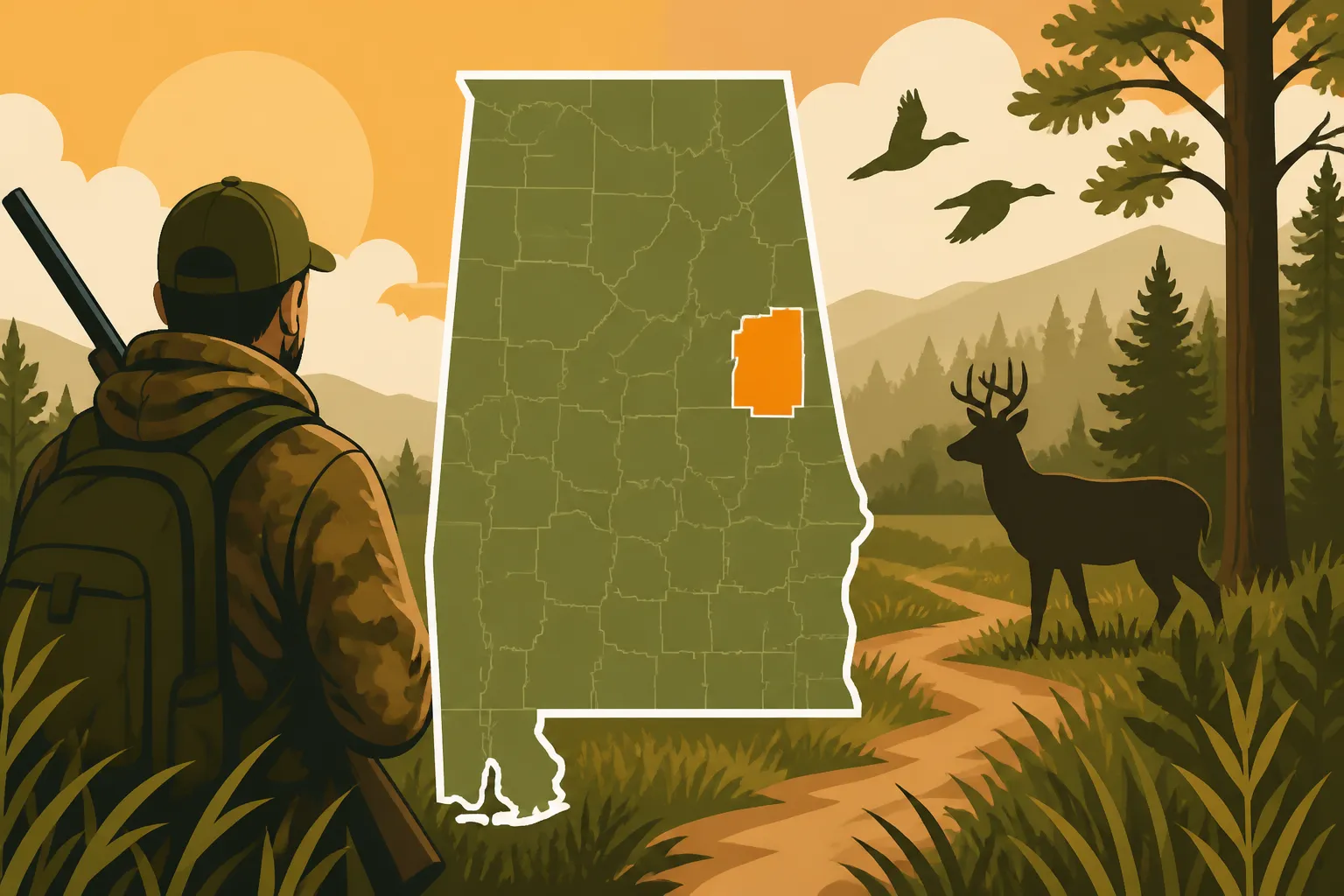
Finding a prime hunting spot in Alabama, especially in counties that aren't dominated by vast national forests, can feel like a real treasure hunt. Elmore County, nestled right in the heart of the state, offers a fantastic blend of rural charm and growing communities, but that also means public land access for hunters isn't always as obvious as it might be in some other areas. This guide is here to cut through the confusion and help you pinpoint viable public hunting opportunities, navigate their unique rules, and develop strategies for success right here in Elmore County and its immediate surroundings.
Understanding Elmore County's Public Land Landscape
When you look at a map of Alabama, you might notice that some counties are practically blanketed in federal land, like Talladega or Bankhead National Forests. Elmore County isn't one of those. This can be a bit disheartening for hunters who are used to sprawling tracts of public ground. However, thinking that Elmore is entirely private would be a mistake. The key is knowing where to look and understanding the unique characteristics of these more dispersed public hunting areas.
The Reality of Public Hunting in a Growing County
Elmore County is experiencing growth, and with that often comes development and a higher prevalence of private land, much of which is leased by hunting clubs. This means the days of simply knocking on a farmhouse door and gaining permission are becoming rarer, though it's still worth a try for small, overlooked parcels. The frustration of seeing prime habitat bordered by "No Trespassing" signs is real, and it's a challenge many Alabama hunters face. However, this doesn't mean public land hunting is impossible; it just requires a different approach. You'll find that public access in Elmore and its immediate vicinity often comes in the form of Wildlife Management Areas (WMAs) or smaller, state-managed properties that might not immediately jump out on a general map. These areas, while sometimes smaller or more fragmented, still hold plenty of game for those willing to put in the effort.
Key Public Land Areas and Their Characteristics
While Elmore County itself doesn't host massive federal forests, it benefits from proximity to several significant public hunting opportunities managed by the Alabama Department of Conservation and Natural Resources (ADCNR). The most prominent of these, and a fantastic option for Elmore County residents, is Coosa Wildlife Management Area (WMA). While not entirely within Elmore's borders, it's easily accessible and provides a substantial amount of public hunting ground.
Coosa WMA, stretching across parts of Coosa and Tallapoosa counties which directly border Elmore, offers thousands of acres of diverse habitat. You'll find a mix of mature hardwood bottoms, pine plantations, and upland areas. This variety means different hunting opportunities throughout the seasons. The river bottomlands are particularly attractive for deer and turkey, especially during periods of high water or when searching for Late-Season Food Sources for Alabama Whitetails. Pine plantations, while sometimes dense, can offer excellent cover for bedding deer and roosting turkeys, especially in areas with recent prescribed burns that open up the understory.
Aside from Coosa WMA, you might also find smaller, often overlooked parcels of public land, such as those along major power line rights-of-way or state-owned sections of river frontage. These can sometimes be golden nuggets for a stealthy hunter, especially for Squirrel Hunting Alabama Bottomland Hardwoods or jump-shooting ducks on smaller sloughs if the opportunity arises. It's all about digging a little deeper and understanding the lay of the land beyond the major highway corridors.
Navigating Access and Regulations in Elmore County Public Land
Once you've identified a potential patch of public land, the next hurdle is often figuring out exactly how to access it, where the boundaries lie, and what specific rules govern hunting there. This is where modern tools and diligent research become your best friends.
Essential Tools for Identifying Access Points and Boundaries
One of the biggest frustrations for public land hunters is the uncertainty of property lines. You can be walking through what you think is public land, only to find a no-trespassing sign suddenly appear. Thankfully, technology has made this a lot easier. Mapping applications like onX Hunt and GoHunt are absolute game-changers for identifying public versus private land boundaries, access roads, trails, and even topographic features.
I can't tell you how many times onX Hunt has saved me from inadvertently crossing onto private property or helped me pinpoint an isolated finger of public land that other hunters might overlook. These apps layer property ownership information onto detailed satellite imagery and topographic maps. You can see precisely where public land begins and ends, identify potential parking areas, and even track your movements in real-time. This is invaluable for planning your approach, understanding the terrain before you ever set foot on it, and avoiding any costly mistakes with landowners. Always download your maps for offline use, because cell service can be spotty in the more remote corners of Elmore County's public areas. For general land status, the Using the Outdoor Alabama Map Tool is also a solid resource, providing official ADCNR information.
Understanding WMA-Specific Rules and Permits
Hunting on a Wildlife Management Area like Coosa WMA isn't quite the same as hunting on unrestricted national forest land, which might not be as prevalent near Elmore. WMAs have specific rules designed to manage game populations, control hunter pressure, and ensure safety. The biggest difference is the permit requirement. Beyond your standard Alabama hunting license, you'll need an Alabama WMA license to hunt on any WMA. Alabama WMA Permit Requirement
Beyond the license, WMAs often have:
- Sign-in/Sign-out Procedures: Many WMAs require you to sign in when you enter and sign out when you leave. This helps the ADCNR monitor hunter numbers and success rates.
- Specific Season Dates and Bag Limits: WMA seasons might differ from the statewide calendar, and bag limits can be more restrictive. Always check the current year's ADCNR regulations for the specific WMA you plan to hunt.
- Vehicle Restrictions: Expect limited vehicle access. Many areas are walk-in only, or have specific designated parking spots.
- Treestand and Ground Blind Rules: There are often regulations on how long a stand can remain in place, what materials can be used, and whether screw-in steps are allowed. Make sure to consult the rules for Treestand Rules on Alabama Public Land and similar guidance for ground blinds.
- Trail Camera Policies: Some WMAs permit trail cameras, others don't, and there might be rules about how and where they can be placed. Check the specific Trail Camera Rules on Alabama Public Land for your chosen area.
It's absolutely crucial to download or print the specific regulations for Coosa WMA (or any other public land) before you go. Ignorance of the rules is never an excuse, and a friendly chat with a local game warden before the season can often clarify any ambiguities you might have.
Strategies for Successful Hunting on Elmore County's Public Lands
Public land often comes with a built-in challenge: hunter pressure. Everyone knows where the public land is, and everyone wants to fill their tag. Success on Elmore County's accessible public lands, therefore, often hinges on being smarter, more persistent, and willing to go where others won't.
Escaping the Crowds and Finding Unpressured Spots
On any piece of public land, a significant percentage of hunters won't venture more than a quarter or half-mile from a road or parking area. This presents an immediate opportunity for you! Don't be afraid to walk further, deeper into the woods. Use those onX Hunt or GoHunt maps to identify fingers of timber, hidden creek bottoms, or secluded ridge lines that are a good mile or more from any vehicle access. These are the places where deer and turkeys feel safer and are less likely to be disturbed.
Another strategy is to hunt during less popular times. While Opening Weekend Crowds in Zone A (or any zone) can be intense, hunting on a Tuesday afternoon or after a cold front has pushed through can often provide a much more solitary experience. Look for dense thickets or swampy areas that are difficult to traverse; these are natural sanctuaries for game. Pay attention to how the land funnels animals—even a small timber block can have a hidden travel corridor if you learn Hunting a Funnel Between Two Creek Bottoms.
Adapting Tactics to Smaller Tracts and River Bottoms
The public lands accessible from Elmore County, particularly WMAs like Coosa, often feature significant river frontage and bottomland habitat. This type of terrain demands specific hunting tactics. River bottoms are often rich in food sources like acorns, pecans, and other browse, making them attractive to deer. However, they can also be challenging due to thick cover, standing water, and fluctuating river levels.
- Still-Hunting: Moving slowly and deliberately through river bottoms, constantly scanning ahead, is an excellent strategy. The thick cover can hide animals at close range, so extreme stealth is key. Focus on areas where dry ground meets wet, or along subtle ridges within the bottomland.
- Finding Overlooked Bedding Areas: Deer will often bed in the thickest, nastiest cover they can find within the bottomlands, especially on small islands of high ground or dense cane thickets. Don't be afraid to push into these areas if the wind is right, and you're confident in your ability to move quietly.
- Late-Season Food Sources: In the late season, after acorns are gone, focus your efforts on overlooked food sources like honeysuckle, greenbriar, or any remaining agricultural fields adjacent to public land. The river can often provide crucial hydration, making these areas even more appealing. You might even find opportunities for Working a Creek Bottom for Late-Season Deer.
- Scent Control: In smaller, potentially higher-pressured areas, meticulous scent control is paramount. Deer in these areas are often warier than those on expansive, remote tracts.
Embracing Multi-Species Opportunities
Don't limit yourself to just deer! Elmore County and its surrounding public lands offer fantastic opportunities for a variety of game. This can be especially rewarding if deer hunting is slow, or if you simply want to expand your skill set.
- Feral Hogs: Alabama has a thriving population of feral hogs, and they are present on most public lands, including Coosa WMA. The good news? Hunting Alabama's Year-Round Feral Hogs is permitted on private land, and WMAs often have liberal seasons for them. Hogs can be incredibly destructive to habitat and crops, so taking one is doing a service. Look for their rooting sign in soft dirt, especially near water sources. Night hunting with lights is often legal on private land, but always check WMA rules carefully for specific regulations.
- Wild Turkeys: If you hunt Coosa WMA in the spring, you have a real shot at a gobbler. The mix of hardwoods and pines provides excellent habitat. Roost hunting, run-and-gun tactics, and setting up along field edges or food plots can all be effective. Make sure to review the Spring Turkey Hunting in Alabama regulations and the WMA's specific turkey dates.
- Small Game: Squirrels and rabbits are abundant in many of the mixed hardwood forests and fencerows. This is a great way to introduce new hunters to the sport or just enjoy a relaxing day in the woods. Squirrel and Small Game Hunting in Alabama is often an excellent way to learn the land without the pressure of a big game hunt, and a full limit of squirrels or rabbits makes for a delicious meal. Look for squirrels in hickory and oak groves, and rabbits along brushy edges and thickets.
Local Insights and Responsible Hunting Practices
Successful and responsible hunting goes beyond just knowing the rules and having the right gear. It involves being a good steward of the land, respecting others, and always prioritizing safety. These elements are especially important when navigating public access in areas like Elmore County.
Engaging with Local Knowledge and Resources
While maps and regulations are essential, there's often no substitute for local knowledge. Take the time to:
- Visit Local Businesses: Stop by local sporting goods stores, feed and seed shops, or even small-town diners in Elmore or surrounding communities like Wetumpka or Eclectic. Shop owners and regulars often have invaluable insights into game movements, recent sightings, or general conditions on local public lands. Don't go in asking for specific spots, but general questions about game activity or common travel corridors can yield useful information.
- Connect with ADCNR Staff: If possible, a quick phone call to the local ADCNR district office or a conversation with a game warden can provide clarity on regulations or specific WMA conditions. They are a great resource for official information.
- Pre-Season Scouting: Even with digital maps, there's no substitute for boots-on-the-ground scouting. Visit the WMA during the off-season. Look for deer trails, rub lines, scrapes, turkey tracks, and hog rooting. Identify bottlenecks, bedding areas, and potential food sources. Scouting Alabama Public Land Before Season is not just a good idea; it's often the difference between a successful hunt and a frustrating one. You'll learn the terrain, find quiet access points, and understand how animals are using the area without the pressure of hunting season.
Respecting Private Land and Ethical Conduct
In a county with a significant amount of private land bordering public tracts, respect for private property is paramount. Even with mapping apps, always double-check your location.
- No Trespassing: Never, ever knowingly trespass. It gives all hunters a bad name and can lead to serious legal consequences. Understand Alabama Trespass and Permission Law thoroughly. If you are unsure about a boundary, err on the side of caution.
- Game Recovery: If a wounded animal runs onto private property, you cannot retrieve it without the landowner's explicit permission. This can be a tough situation, but respecting property rights comes first. Always ask for permission, and be prepared to let the animal go if it's denied. Planning for quick and ethical shots can help mitigate this risk. Understanding Blood Trailing After Dark in Alabama is important, but permission is still key.
- Leave No Trace: Pack out everything you pack in, and then some. Leave the land cleaner than you found it. This includes spent shell casings, food wrappers, and anything else. Remove your treestands and ground blinds according to WMA rules.
- Ethical Hunting: Practice ethical shot placement and adhere to all fair chase principles. Our credibility as hunters depends on it.
Safety First: Planning and Preparedness
Hunting is an incredible experience, but safety must always be your top priority.
- Tell Someone Your Plan: Always inform a friend or family member exactly where you're going, your planned route, and when you expect to return. This is crucial, especially when hunting alone in remote areas.
- Be Prepared: Carry a small backpack with essentials: first-aid kit, water, snacks, a headlamp, a knife, and a charged cell phone (even if service is spotty, it might work in some spots, or be useful for its GPS). Dress in layers appropriate for Alabama's often unpredictable weather.
- Hunter Education: Ensure you have completed your Alabama Hunter Education Requirements if mandated. It covers critical safety topics, including firearm handling, tree stand safety, and basic first aid.
- Blaze Orange: When required (typically during gun season), wear enough blaze orange or blaze pink to be highly visible to other hunters. This is not just a rule; it's a life-saving measure.
Hunting Elmore County's public land requires a bit more intentionality than some other areas, but the rewards are there for those willing to embrace the challenge. By using the right tools, understanding the rules, adapting your tactics, and always prioritizing safety and ethics, you can find fulfilling hunting experiences close to home.
Here's a quick overview of what you might expect on public lands adjacent to Elmore County:
| Category | Coosa WMA (Example for Elmore Access) | General Elmore River Bottoms | Smaller State Tracts/Power Lines |
|---|---|---|---|
| Typical Habitat | Mixed hardwoods, pine plantations, creek bottoms, some clear-cuts | Mature hardwoods, thick undergrowth, cane thickets, sloughs | Scattered woodlots, fencerows, dense brush |
| Primary Game | Deer, Turkey, Hogs, Squirrel, Rabbit, Waterfowl (on specific water) | Deer, Hogs, Squirrel, Rabbit, occasional Turkey | Squirrel, Rabbit, Hogs, opportunistic Deer |
| Access Difficulty | Moderate (some designated roads, walk-in only areas) | Moderate to High (dense cover, wet areas, limited parking) | Easy to Moderate (often roadside, but can be thick) |
| Hunter Pressure | Moderate to High (especially opening weekends) | Moderate (can be lower if you walk deep into thickets) | Variable (can be high if easily accessible) |
| Key Considerations | WMA permit, sign-in/out, specific regulations, diverse terrain, check map often | Stealth, scent control, understanding water levels, difficult recovery | Respect private property, small footprint, quick scouting |
Disclaimer
This article is for general informational purposes only and does not constitute professional advice. Laws, prices and regulations vary by location and change over time. Consult a qualified professional for guidance on your specific situation.