Coosa County Public Hunting Ground
Finding quality public hunting ground in Alabama can sometimes feel like trying to solve a puzzle with half the pieces missing. You pour over maps, drive countless backroads, and often end up feeling like every accessible spot is already crawling with hunters. It's a real frustration, especially when you're just trying to get out there and enjoy the woods. This comprehensive guide is here to unravel the complexities of public hunting in Coosa County, giving you the lowdown on what to expect, how to prepare, and how to make the most of your time afield in this often-overlooked area.
Unpacking Coosa County's Public Hunting Opportunities
Coosa County, nestled in the heart of Alabama, offers some fantastic public land opportunities, primarily through its Wildlife Management Areas (WMAs) and portions of the Talladega National Forest. It's not always the flashiest destination compared to some of the Black Belt counties, but it holds its own with diverse habitat and solid populations of deer, turkey, and small game for those willing to put in the effort.
Diverse Habitats and Terrain
One of the best things about hunting in Coosa County is the variety of its landscape. You'll encounter rolling hills, steep ridges, creek bottoms, and a mix of pine plantations and mature hardwoods. This mosaic of cover provides excellent habitat for a range of species. For instance, the deeper creek bottoms with their dense undergrowth are often perfect bedding areas for whitetails, while the higher ridges with mature oaks can be hotspots for gobblers in the spring. Understanding these different terrain features and how game uses them throughout the year is your first step to success. It's not flat, easy walking like some parts of the state; be prepared for elevation changes and thicker timber in spots.
Wildlife Management Areas and National Forest Access
Coosa County is home to specific WMAs that are part of Alabama's robust public land system. These areas are actively managed by the Alabama Department of Conservation and Natural Resources (ADCNR) to promote wildlife populations and provide recreational opportunities. Additionally, the county includes sections of the Talladega National Forest, which offers vast tracts of land open to public hunting. While the WMA rules might have specific sign-in requirements or special permit hunts, the general National Forest land is typically more open access, though still subject to state hunting regulations. Always double-check the specific rules for the area you plan to hunt, as they can sometimes vary even within the same county. You'll want to ensure you understand Alabama WMA Permit Requirement before heading out.
Navigating Coosa County Public Land Access
Successfully hunting public land in Coosa County isn't just about knowing where the game is; it's about knowing how to get there, what you're allowed to do, and how to avoid frustrating run-ins with private property lines. Modern tools have made this much easier than it used to be, but a little local knowledge still goes a long way.
Essential Mapping and Scouting Tools
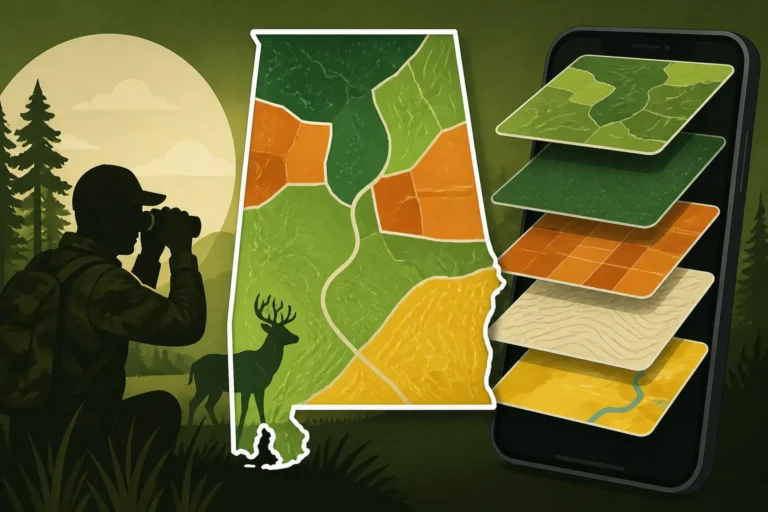
Gone are the days of relying solely on paper maps, though a physical map is still a great backup! Digital mapping applications like onX Hunt are absolute game-changers for navigating public land. These apps allow you to see public and private land boundaries, topo lines, satellite imagery, and even track your movements in real-time, even if you don't have cell service. Before you ever set foot in the woods, you can use these tools to identify potential access points, pinpoint hidden pockets of public land, scout for pinch points and funnels, and mark potential stand locations. This kind of e-scouting can save you hours of aimless wandering and help you find ground that other hunters might overlook. Another resource, though perhaps more general, could be GoHunt for broader planning and understanding land types. For a deeper dive into preparation, consider Scouting With the Outdoor Alabama App to supplement your mapping efforts.
Understanding Public Land Rules and Boundaries
Each WMA in Alabama will have its own specific rules, which are usually outlined in the annual hunting digest. These can include restrictions on vehicle access, camping, trail camera usage, and even specific weapon types during certain seasons. National Forest land, while generally more open, still has regulations regarding dispersed camping, motor vehicle use on designated roads, and of course, all state hunting laws apply. The biggest challenge often comes at the interface between public and private land. Always be hyper-aware of property lines, especially when tracking game. It's an honest mistake to cross a line unknowingly, but it's much better to have a clear understanding of your boundaries. Using your mapping app to verify property lines frequently, especially when moving into a new area or tracking, can prevent a lot of headaches.
Access Points and Parking Considerations
Accessing public land in Coosa County typically involves finding designated parking areas off main roads or sometimes even pulling off a dirt road onto a small, unmarked shoulder. Parking is often limited, especially during peak season, so be prepared to walk further than you might initially anticipate. Some areas might have small parking lots, while others might simply be pull-offs. Always be respectful of private landowners near public access points and ensure you're not blocking gates or driveways. Early mornings, particularly on opening days, can see these spots fill up quickly, so plan to arrive well before first light.
Targeting Game in Coosa County's Public Areas
Coosa County offers opportunities for several popular game species. While deer and turkey are often the main draw, don't overlook the potential for small game, which can provide a fun and challenging hunt, especially outside of peak big game seasons.
Whitetail Deer Hunting
Deer hunting is a cornerstone of Alabama hunting, and Coosa County is no exception. While it might not boast the same trophy potential as some parts of the Black Belt, the public lands here hold healthy populations. Expect to find deer in areas with mixed hardwood and pine stands, especially where food sources like acorns are abundant or where younger clear-cuts offer dense browse and cover. Targeting creek bottoms, saddles between ridges, and areas of thick cover are often productive. Remember that Coosa County typically falls into Deer Zone B, so understanding Alabama Deer Season Structure Explained is critical for planning your hunt.
| Game Species | Primary Habitat Types | Seasonal Considerations | Common Hunting Methods |
|---|---|---|---|
| Whitetail Deer | Mixed pine/hardwood forests, creek bottoms, clear-cuts, ridge lines | Fall/Winter, post-rut can be good on food sources | Still-hunting, stand hunting, rattling, grunting |
| Wild Turkey | Mature hardwoods, ridge tops, open timber, field edges | Spring, focusing on roosts and strut zones | Calling, run-and-gun, sitting blinds |
| Squirrels | Mature hardwood bottoms, hickory groves, oak ridges | Fall/Winter, early morning best | Still-hunting, dog hunting |
| Rabbits | Thick brush, fencerows, clear-cuts with dense regrowth | Fall/Winter, after frosts | Dog hunting, still-hunting along edges |
Spring Turkey Hunting Opportunities
For those who love chasing gobblers, Coosa County can be a great option. The rolling terrain and abundance of hardwoods provide excellent turkey habitat. You'll often find birds using ridge tops for strutting and roosting in tall pines or hardwoods in creek bottoms. Locating roosts the evening before your hunt can be a key strategy, as can utilizing run-and-gun tactics to cover ground and locate talkative birds. Be sure to check Alabama Spring Turkey Zones and Dates to confirm the exact season for Coosa County. Don't be afraid to employ Run-and-Gun Turkey Tactics on Public Land once the birds are on the ground.
Small Game and Furbearer Pursuits
Sometimes, the best hunt is the one that offers consistent action, and that's where small game comes in. Coosa County's public lands are excellent for squirrel hunting, particularly in mature hardwood bottoms and along creek drainages where acorns and hickory nuts are plentiful. Rabbit hunting can also be productive in thickets, fencerows, and areas of dense regenerating timber. For a different kind of challenge, the presence of coyotes offers predator hunting opportunities, which are often year-round on private land and generally follow furbearer seasons on public land. Learning about Alabama Squirrel and Rabbit Season Rules will ensure you're compliant.
Tips for a Successful Hunt on Coosa County Public Land
Public land hunting, no matter where you are, requires a different mindset than hunting private land. It often demands more effort, more scouting, and a greater understanding of how to adapt to pressure and changing conditions.
Pre-Season Scouting and E-Scouting
This cannot be stressed enough: success on public land starts long before opening day. Use those mapping apps like onX Hunt or even Google Earth to identify potential areas of interest. Look for features like saddles, natural funnels, unpressured creek drainages, bedding areas (often identifiable by dense cover), and potential food sources. Then, if possible, put boots on the ground to confirm what you saw on the map. Look for old rub lines, scrapes, turkey droppings, or signs of hog activity. Knowing Reading Aerial Photos for Piedmont Deer can really give you an edge in this type of terrain. The more you know about your chosen area before the season, the better equipped you'll be to make quick decisions when the time comes.
Adapting to Hunting Pressure
Coosa County public lands, like most accessible public areas, will experience hunting pressure, especially on weekends and during opening days. This pressure can change game patterns dramatically. Deer might become more nocturnal, move into thicker cover, or travel through less obvious routes. To counter this, consider hunting during weekdays if possible, or be willing to walk further into areas that most other hunters overlook. Sometimes the thickest, nastiest piece of cover, just a quarter-mile further than anyone else is willing to go, holds a buck that has learned to avoid human activity. Also, consider tactics like Deer Drives With Three or Four Hunters in certain situations, as they can be effective for moving deer out of thick cover.
Stand Placement and Entry/Exit Strategies
Your stand or blind placement is crucial, particularly on public land where you might have less control over surrounding activity. Always consider the wind direction and how your scent will carry. Think about your entry and exit routes – can you get to and from your spot quietly and without alerting game or other hunters? Utilize natural terrain features like creek beds, ridge lines, or thick timber to conceal your movements. If you're using a treestand, make sure you understand Treestand Rules on Alabama Public Land, as there are often specific regulations about how long stands can remain up or if they need to be clearly marked. For ground blinds, consider Using a Ground Blind on Alabama Public Land and brushing it in effectively to blend with the surroundings.
Respecting the Resource and Other Hunters
Finally, always remember that public land is a shared resource. Practice ethical hunting, follow all game laws, and leave no trace behind. Be courteous to other hunters you encounter; a friendly nod or wave goes a long way. If you find a spot someone else is already occupying, respectfully move on. By being a responsible and considerate public land hunter, you help ensure these opportunities remain available for everyone for generations to come.
Disclaimer
This article is for general informational purposes only and does not constitute professional advice. Laws, prices and regulations vary by location and change over time. Consult a qualified professional for guidance on your specific situation.