Sand Mountain Public Hunting Ground
For many hunters in Alabama, the thought of finding quality public land for a productive hunt can feel like a daunting task. You look at maps, you hear rumors, but actually getting boots on the ground in a promising spot often means navigating a patchwork of private properties and dense, unforgiving terrain. Sand Mountain, with its unique topography and scattered public access, is one such area that offers incredible potential but demands a thoughtful approach. This guide will walk you through the specifics of hunting public ground on Sand Mountain, helping you uncover its secrets and maximize your chances for success.
Understanding Sand Mountain's Public Hunting Landscape
Sand Mountain isn't a single, continuous hunting area; it's a broad geographical region that covers parts of DeKalb, Etowah, Marshall, Jackson, and Cherokee counties. It's a plateau, rising significantly above the surrounding valleys, and this elevation gives it a distinct character that influences everything from the type of timber you'll find to how game animals move. For hunters, understanding this landscape is the first step to unlocking its potential.
The Geography and Terrain of Sand Mountain
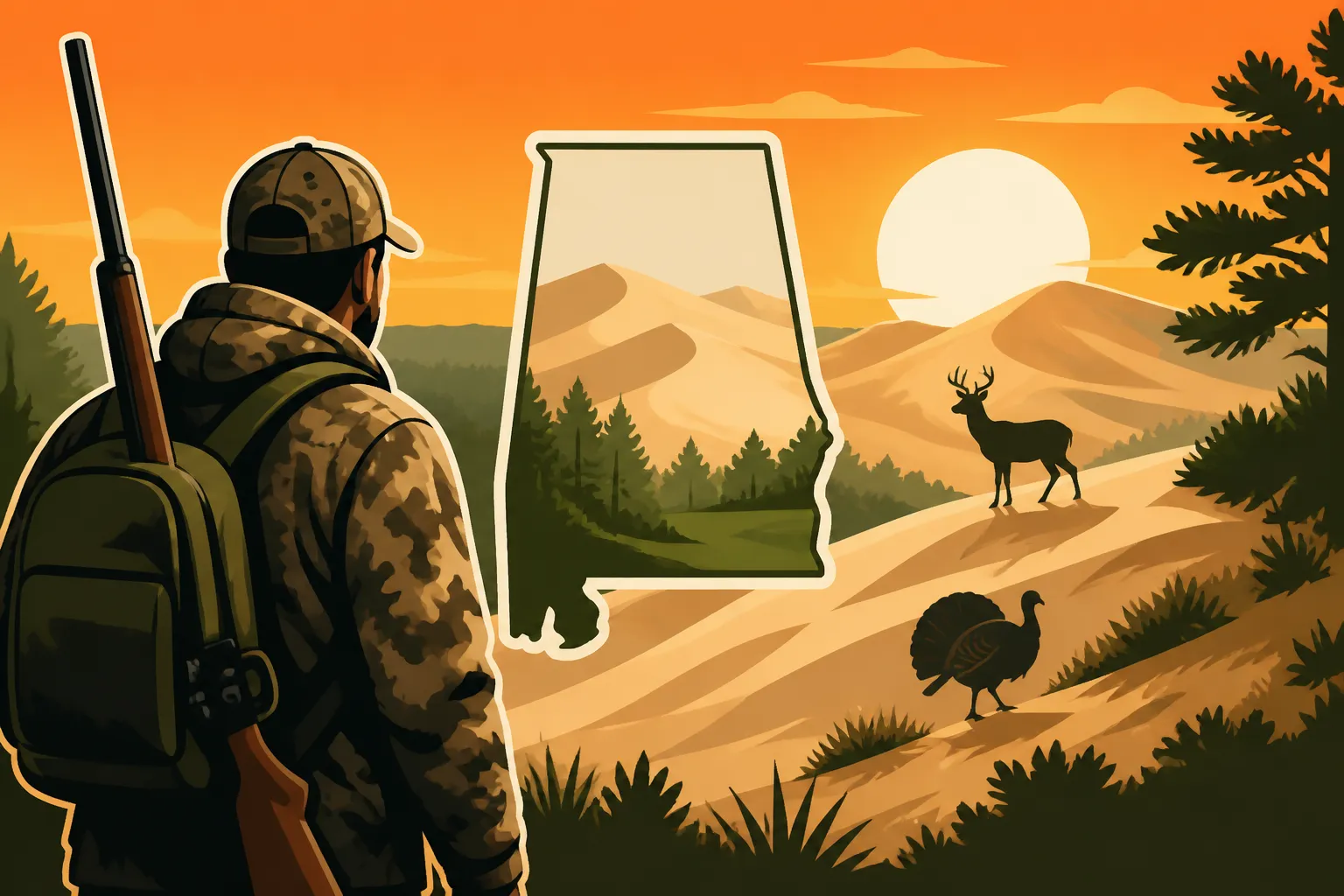
Imagine rolling uplands punctuated by deep, often steep hollows and narrow creek drainages cutting through sandstone bluffs. That's a pretty accurate picture of much of Sand Mountain. The timber is a mix of mature hardwoods – think oaks and hickories, perfect for deer and squirrel feed – interspersed with pine stands and dense undergrowth. Unlike the flatter Black Belt farmlands or the vast, sometimes monotonous pine plantations of the Wiregrass, Sand Mountain offers dramatic elevation changes and a more broken, diverse habitat.
This kind of terrain presents both challenges and opportunities. The steepness can make for strenuous hikes, especially when you're packing out a deer. Access points might be limited, requiring longer walks from designated parking areas. However, these natural features also create excellent funnels, pinch points, and thermal hubs that deer and turkeys instinctively use. Learning to read these topographical features on a map, especially using a tool like onX Hunt, can reveal hidden travel corridors and bedding areas that other hunters might overlook. The rocky outcrops and bluffs also provide fantastic cover and escape routes for game, making them prime spots to focus your scouting efforts.
Identifying Public Land Units and Access Points
One of the biggest frustrations for hunters new to Sand Mountain is figuring out exactly where the public land lies. It's rarely a massive, contiguous block. Instead, it’s often a collection of state-managed Wildlife Management Areas (WMAs), a few smaller parcels of national forest land, and some state-owned properties. These parcels can be quite fragmented, sometimes separated by private holdings, making accurate navigation absolutely critical.
This is where digital mapping applications become indispensable. Tools like onX Hunt and GoHunt allow you to overlay property boundaries directly onto satellite imagery and topographical maps on your phone or GPS device. Before you even set foot on the mountain, you can identify public sections, pinpoint potential parking areas, and trace out old logging roads or trails that might offer walk-in access. Many hunters find success by looking for those smaller, overlooked public fingers that extend into areas surrounded by private land, as these often receive less pressure. Always double-check your boundaries in the field, especially if you're approaching an area from an unexpected direction. Remember, trespassing is never worth the risk, and landowners on Sand Mountain can be very protective of their property.
Strategic Approaches to Hunting Sand Mountain
Hunting Sand Mountain requires a different mindset and different tactics than hunting flat agricultural lands or vast, open timber blocks. The terrain dictates how game moves and how you, as a hunter, should approach your hunt. Being flexible and adaptable is key to success here.
Deer Hunting Tactics for Mountainous Terrain
Deer on Sand Mountain are masters of using the topography to their advantage. They'll often bed on ridge tops where they can scent check below them, or along steep benches that offer quick escape routes down into hollows. Understanding these patterns is crucial. Instead of looking for wide-open feeding plots, focus on natural food sources like acorns in mature oak bottoms or browse along clear-cuts. When you're scouting, look for well-used trails traversing saddles between ridges – these are natural funnels where deer will travel. Deer will also use creek drainages as travel corridors, especially where thick cover provides a sense of security. Reading a Ridge for North Alabama Deer can offer more insights into this specific kind of terrain.
When planning your approach, consider the wind and thermals, which can be tricky in mountainous areas. Warm air rises in the morning and cool air falls in the evening, creating predictable air currents that deer use to detect danger. You might need to adjust your stand placement or approach route based on the time of day and the local terrain features. Understanding Wind and Thermals on a Piedmont Ridge can be a game-changer on Sand Mountain. Still-hunting, moving slowly and deliberately through promising areas, can be highly effective, as can setting up on a well-used trail between a bedding area and a food source. Due to the broken nature of the public land, deer drives can be challenging unless you have a detailed plan and a small group of hunters who know the terrain well.
Chasing Gobblers on the Ridges
Spring turkey hunting on Sand Mountain is a truly exhilarating experience. The gobblers here are tough, often vocal, and can be notoriously difficult to pinpoint in the steep, timbered terrain. You'll typically find them roosting on tall pines or hardwood trees along ridge lines or overlooking deep hollows. The morning fly-down can be a flurry of activity as birds pitch down into a drainage or onto a more open flat to begin their strutting.
Effective turkey hunting on Sand Mountain often involves a lot of walking – what many call "run-and-gun" tactics. You might need to cover significant ground to locate a gobbler, then quickly set up to call him in. Patience is essential, as a bird might hang up on an opposite ridge, requiring you to reposition. Focus your efforts on areas with mixed timber, where open glades or old logging roads provide good strutting areas, and denser sections offer cover. Look for signs like tracks in soft dirt, dusting bowls, and scratch marks where turkeys have been feeding. Familiarizing yourself with Roost Hunting Alabama Gobblers and Run-and-Gun Turkey Tactics on Public Land will give you a solid foundation for hunting the ridges.
Small Game Opportunities and Challenges
While deer and turkey get a lot of attention, Sand Mountain also offers fantastic opportunities for small game hunters. Squirrels are abundant, especially in the mature oak and hickory bottomlands that line the hollows. These areas provide a consistent food source and plenty of den trees. A morning spent slowly still-hunting a creek bottom, listening for the chatter of a fox squirrel or the rustle of a gray squirrel in the leaves, can be incredibly rewarding. Squirrel Hunting Alabama Hickory Groves will give you plenty of ideas for targeting these bushy-tailed critters.
Rabbit hunting is another popular pursuit, with cottontails and even swamp rabbits found in the briar patches, thickets, and overgrown fencerows that often border public and private lands. While the dense cover can make for challenging shooting, working with a good beagle pack can be incredibly effective. However, without dogs, identifying and navigating these thickets can be tough. Remember, the steep terrain and dense undergrowth that characterize Sand Mountain apply to small game hunting as well, so sturdy footwear and a keen eye are always necessary. For more specific tactics, check out Rabbit Hunting Thick Alabama Brush.
Essential Gear and Planning for Sand Mountain Success
Hunting Sand Mountain is not a casual affair; it requires thoughtful preparation and the right gear to ensure both success and safety. The rugged environment demands equipment that can withstand the elements and help you navigate challenging conditions.
Navigation and Communication
In many parts of Sand Mountain, cell service can be unreliable or completely absent, especially once you drop into a hollow or get away from main roads. This makes reliable navigation tools absolutely critical. While a traditional compass and paper map are always good backups, a modern GPS unit or a smartphone with downloaded offline maps (like those offered by onX Hunt or GoHunt) is invaluable. Make sure you download your maps before you lose service! These tools allow you to mark waypoints, track your route, and know exactly where you are in relation to public land boundaries and your vehicle. Using Outdoor Alabama Without Cell Service discusses how to prepare for such situations.
If you're hunting with a partner, two-way radios are an excellent investment, allowing you to communicate even without cell signal. Always let someone know your hunting plan, including where you're going and when you expect to be back. This simple step is paramount for safety in remote areas.
Footwear, Clothing, and Safety
Your feet will take a beating on Sand Mountain. Sturdy, waterproof hiking boots with good ankle support and aggressive tread are non-negotiable. Break them in before your hunt to avoid blisters. Layering your clothing is also key. Alabama weather can change quickly, from frosty mornings to warm afternoons, and the exertion of climbing hills means you'll want to shed layers as you heat up and add them back when you cool down or sit still. Durable, briar-resistant pants are also a wise choice for pushing through thick undergrowth.
Safety should always be your top priority. Carry a well-stocked first-aid kit, a whistle, a reliable headlamp (even for daytime hunts, just in case), and plenty of water. Be aware of venomous snakes, particularly during warmer months when they might be basking on rocky outcrops or near water sources. Always adhere to hunter orange requirements during gun seasons, as this greatly increases your visibility to other hunters.
Understanding Regulations and Permits
Before heading out, always consult the current Alabama Department of Conservation and Natural Resources (ADCNR) regulations for the specific WMA or public land you plan to hunt. While the general state hunting license is required, many WMAs also require an additional WMA permit, which can be purchased online. Familiarize yourself with the Alabama WMA Permit Requirement. Regulations can vary by zone and WMA, so confirm season dates, bag limits, and any special restrictions (like antler point restrictions or specific legal firearms). Alabama Deer Season Structure Explained provides a comprehensive overview of state regulations.
Remember to follow all deer and turkey reporting rules through Alabama's Game Check system. This is a mandatory step after harvesting game and helps biologists manage the state's wildlife populations. Understanding Reporting a Deer Through Game Check is crucial for every successful hunt. Be mindful of land boundaries, respect private property, and always pack out everything you pack in, leaving no trace of your presence.
| Public Land Unit (Mainly on Sand Mountain) | Primary Game Species | Key Terrain & Habitat | Access Considerations |
|---|---|---|---|
| Skyline Wildlife Management Area | Deer, Turkey, Hogs | Steep ridges, hardwood draws, some pine | Popular, can see pressure; mandatory CWD testing sometimes. |
| Little River Canyon WMA | Deer, Turkey, Small Game | Rugged canyonlands, bluffs, mature timber | Challenging terrain, good for fit, adventurous hunters. |
| Northeast Alabama Public Hunting Area | Deer, Turkey, Small Game | Fragmented parcels, mixed timber, some open | Requires detailed map study (e.g., onX Hunt) for boundaries. |
Sand Mountain offers a challenging but incredibly rewarding hunting experience for those willing to put in the effort. By understanding its unique geography, employing smart tactics, and coming prepared with the right gear and knowledge of regulations, you can have some truly memorable hunts on these rugged Alabama ridges. It's a place where patience, perseverance, and a good map often pay off in spades.
Disclaimer
This article is for general informational purposes only and does not constitute professional advice. Laws, prices and regulations vary by location and change over time. Consult a qualified professional for guidance on your specific situation.